This was my second visit to Amsterdam and it was even better than the first time. On my first visit, I winged it on my own. This time, we went on a two-day extension of our Viking River cruise . Our ship docked in Amsterdam and we immediately went on a 2 and 1/2 half-hour walking tour of the city.
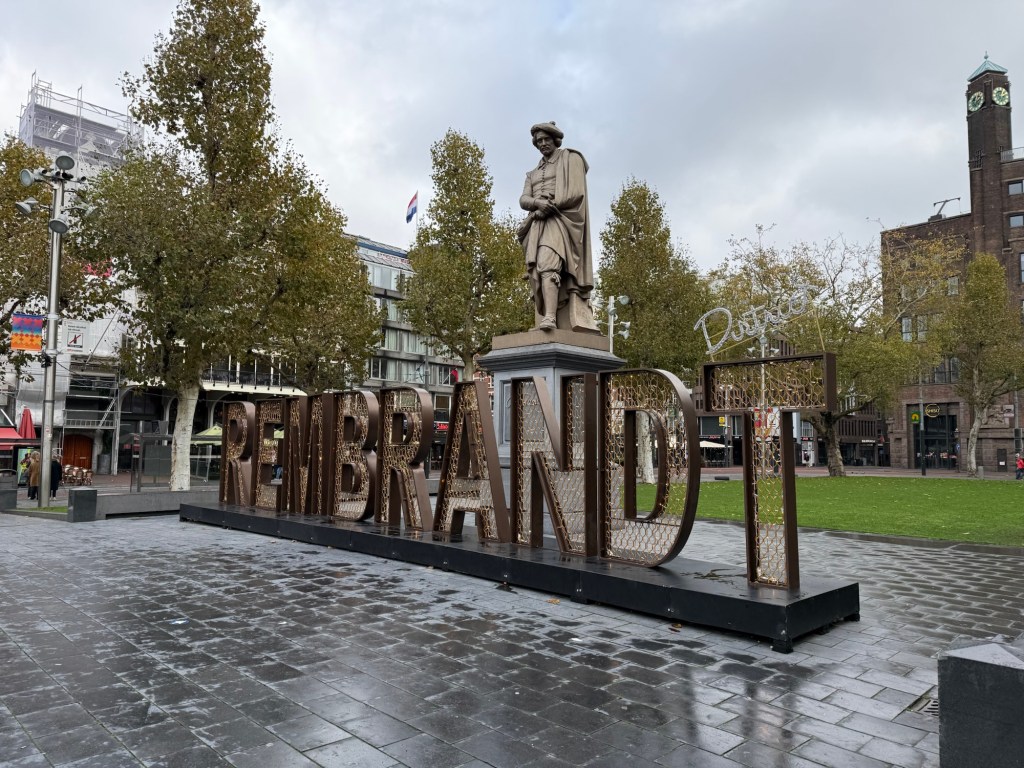
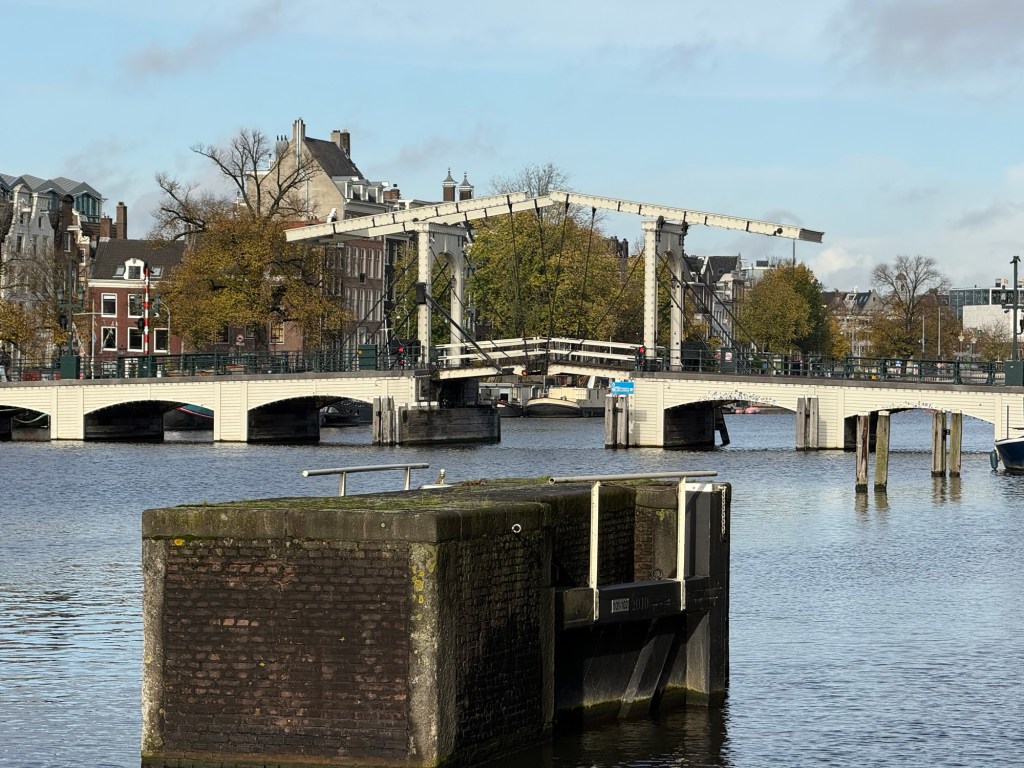
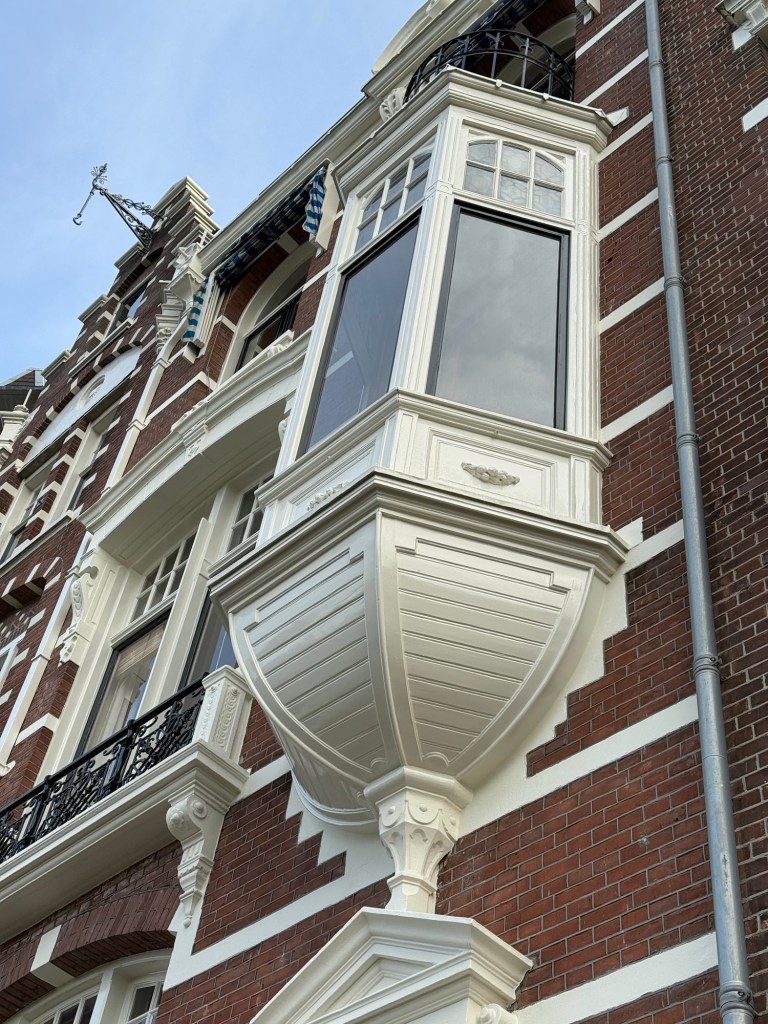
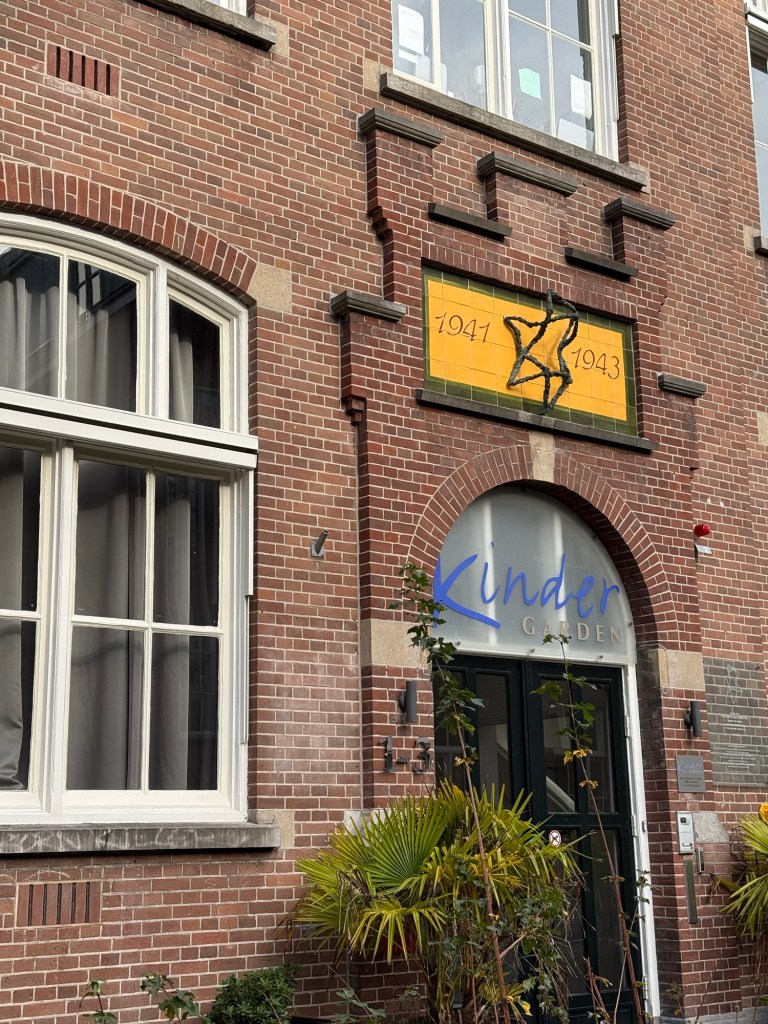
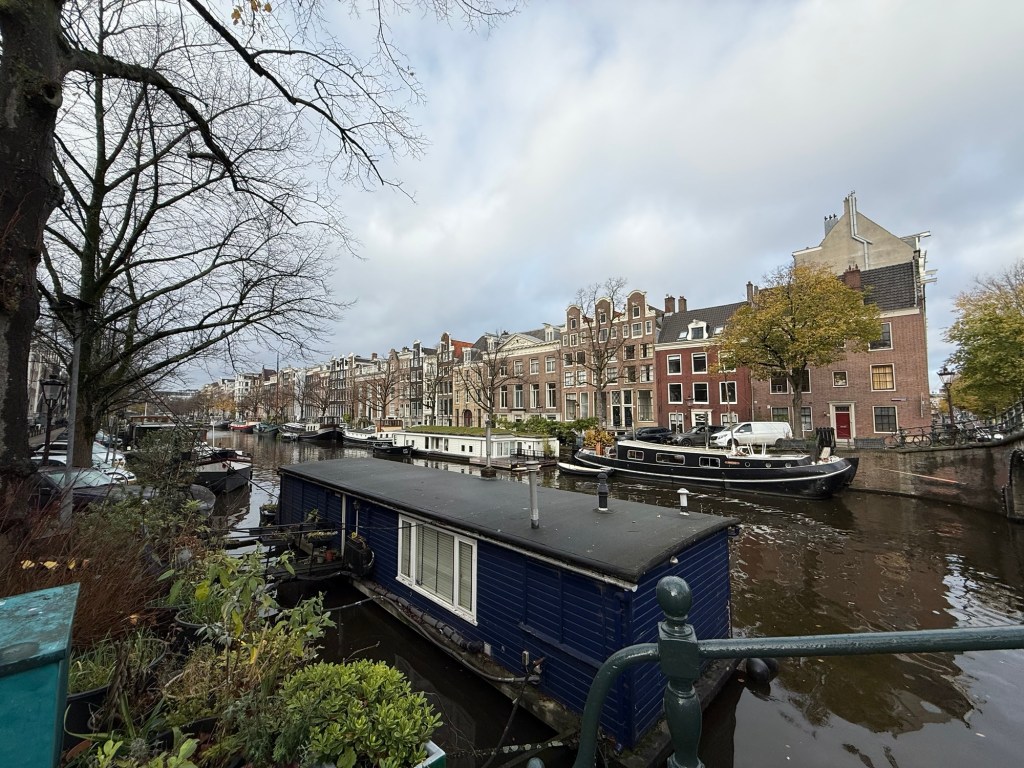
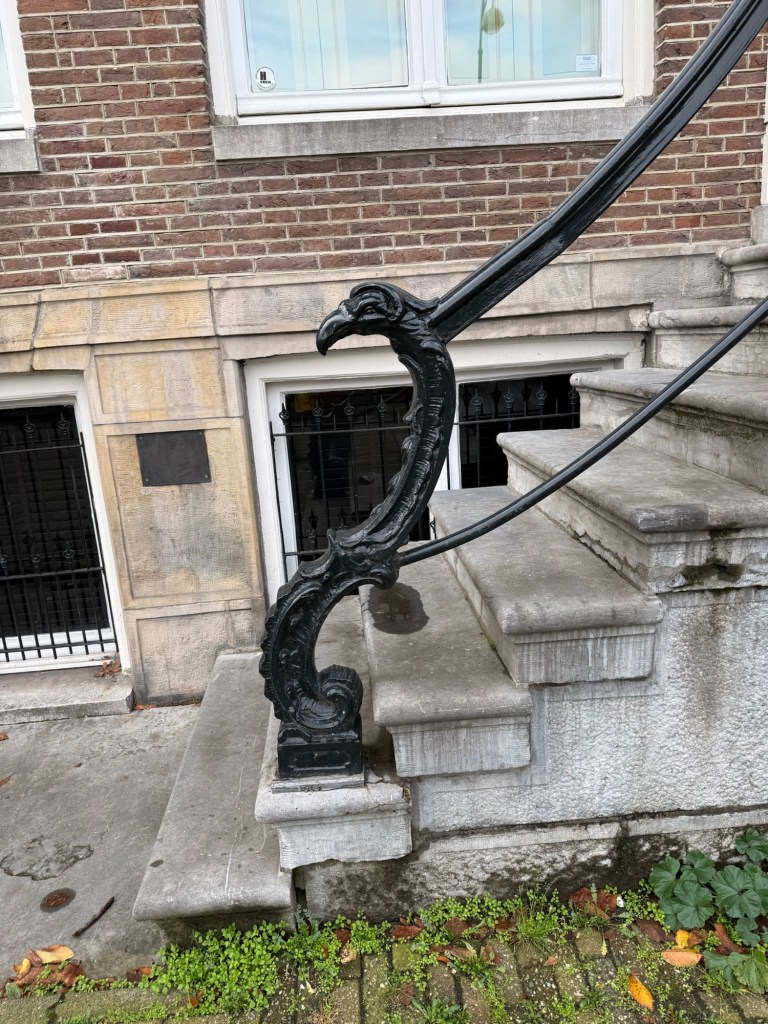
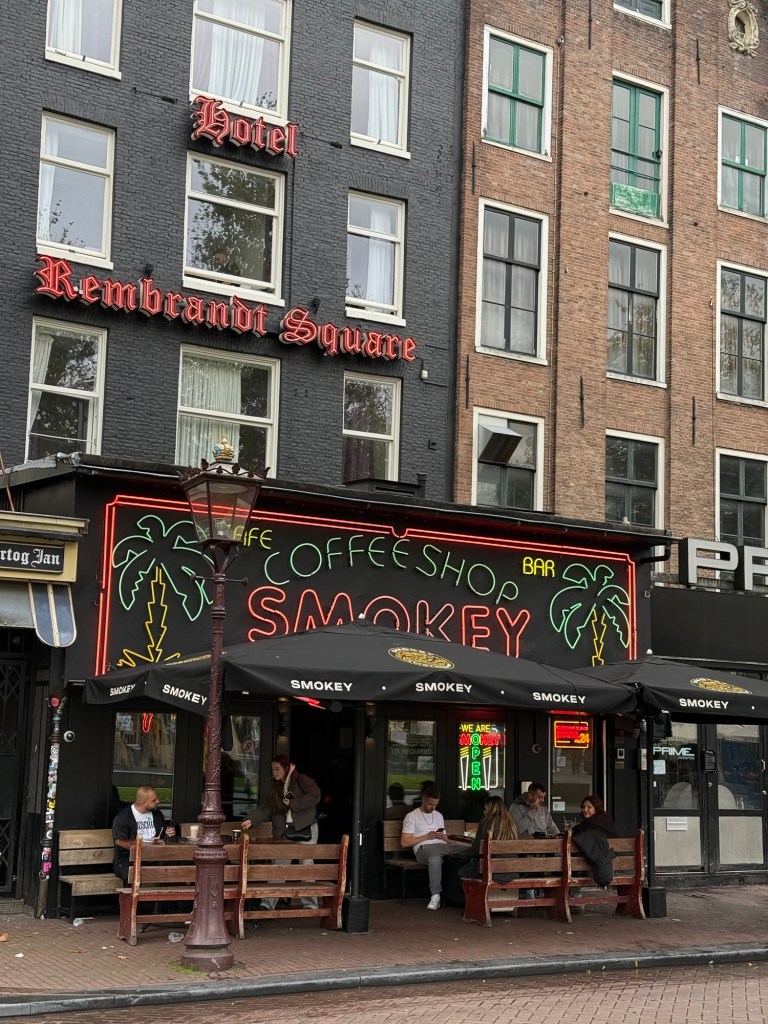
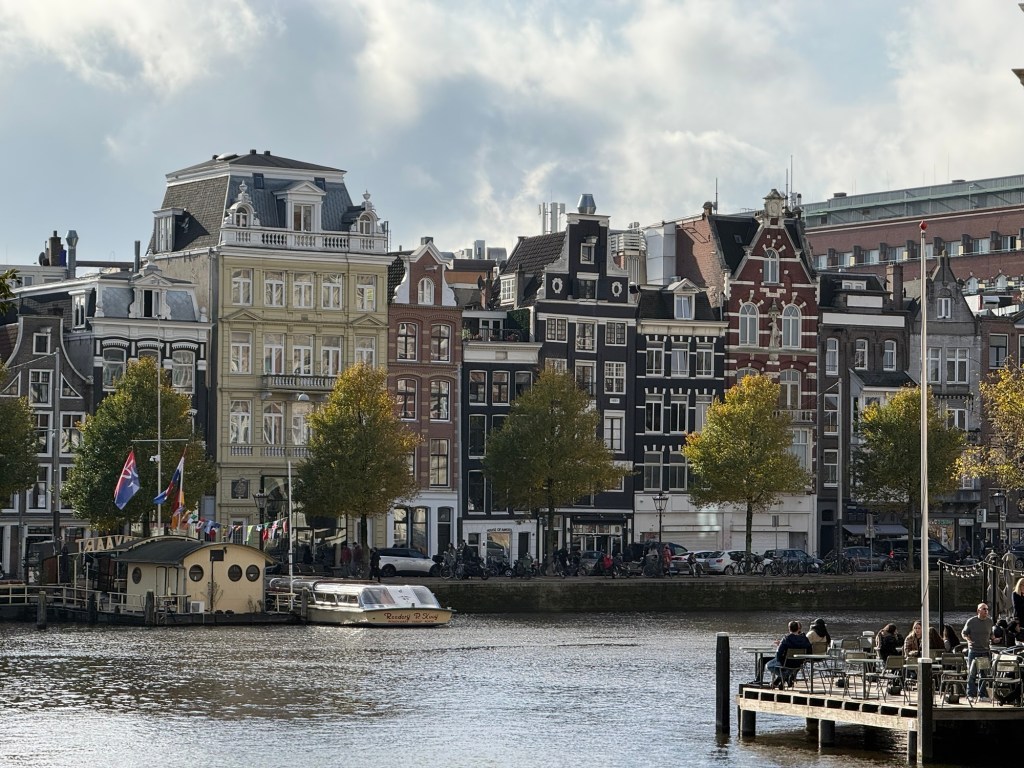
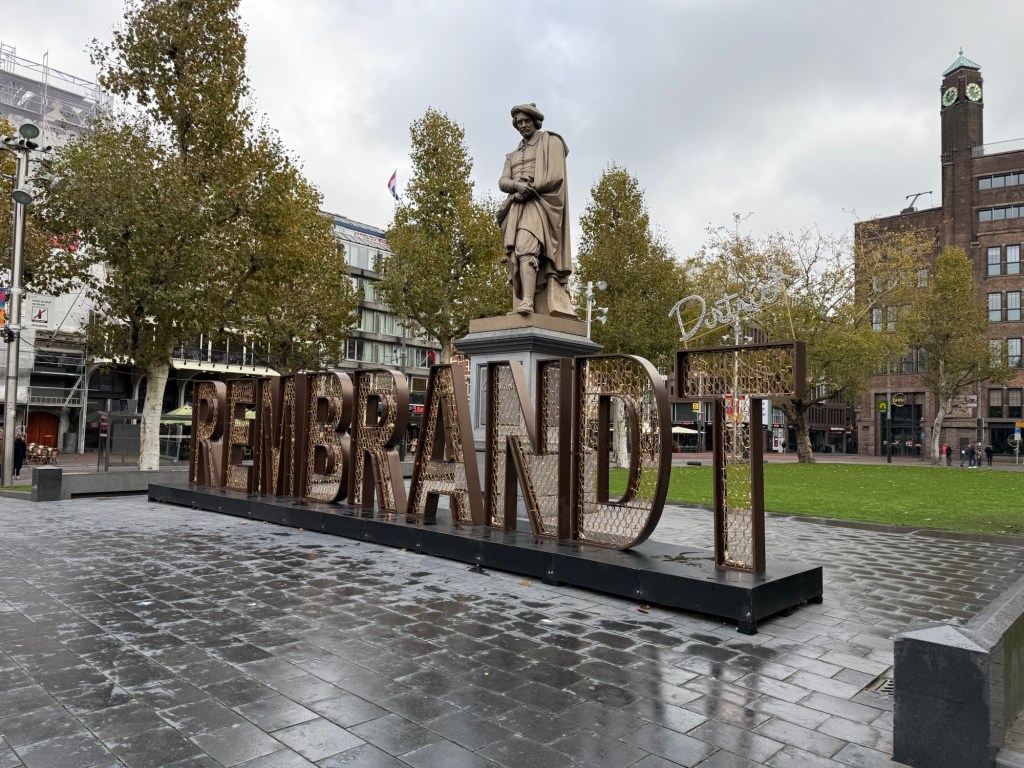
We lucked out with our guide. He was extremely knowledgeable regarding the architecture styles of Amsterdam. Some of the highlights he showed us included the famous Skinny Bridge (which I remember from the James Bond film Diamonds Are Forever), Rembrandt’s Square (where there are a ton of interesting restaurants as well as a plethora of pot cafes – strong aromas!) and the school where Anne and Margot Frank, as well as many other Jewish children, were segregated during WWII. Throughout our excursion, he made a point of showing us elaborate architectural details that other guides might ignore. Plus, he showed us an assortment of residential neighborhoods so that we really got a feel of how the locals live. Some of the building communities even have their own mini neighborhood libraries. Like many other cities, Amsterdam real estate is very expensive. Our guide showed us several very unimpressive house boats that recently sold for $1.5 million Euros. As the Realtors in California like to say – location, location!
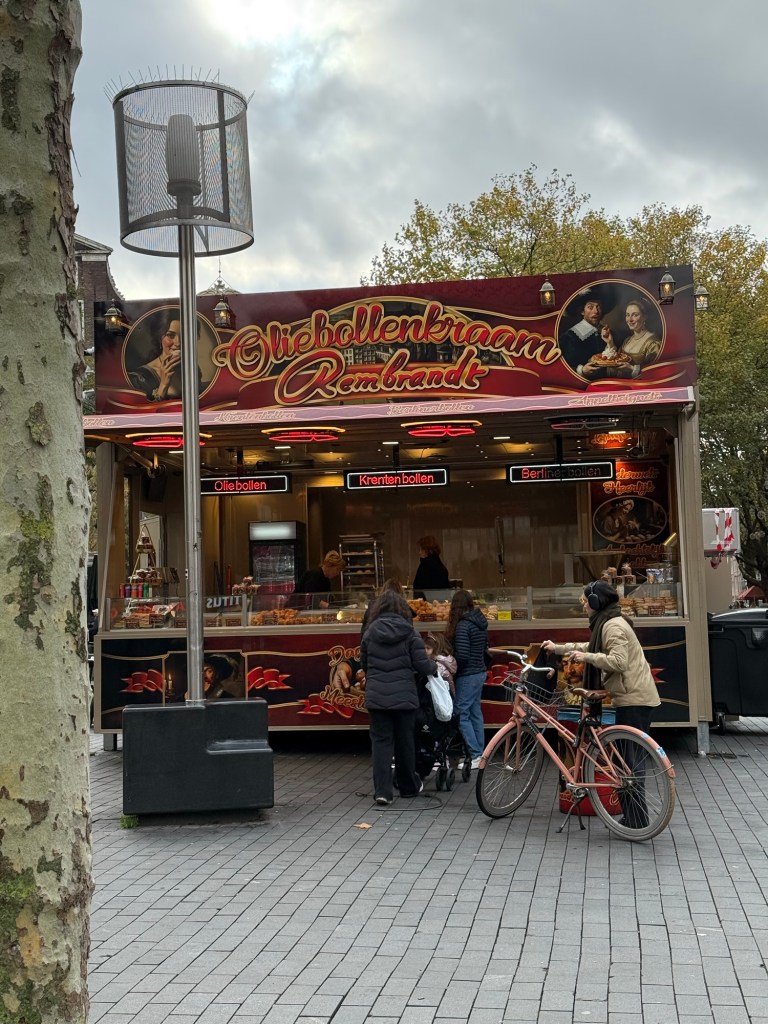
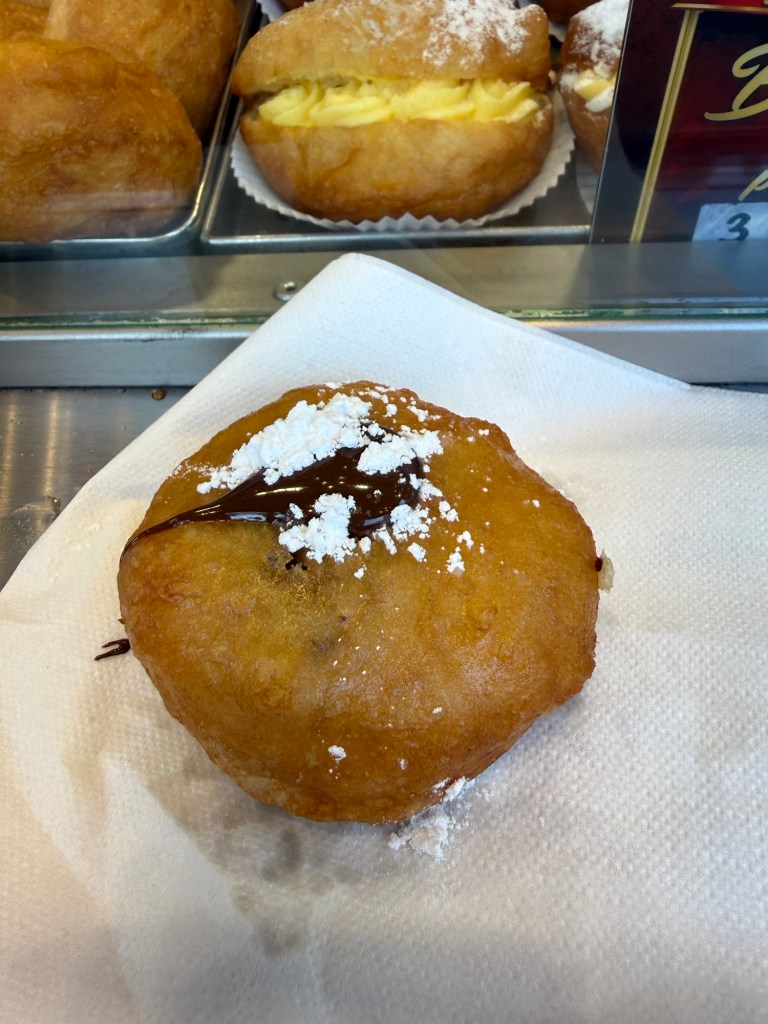
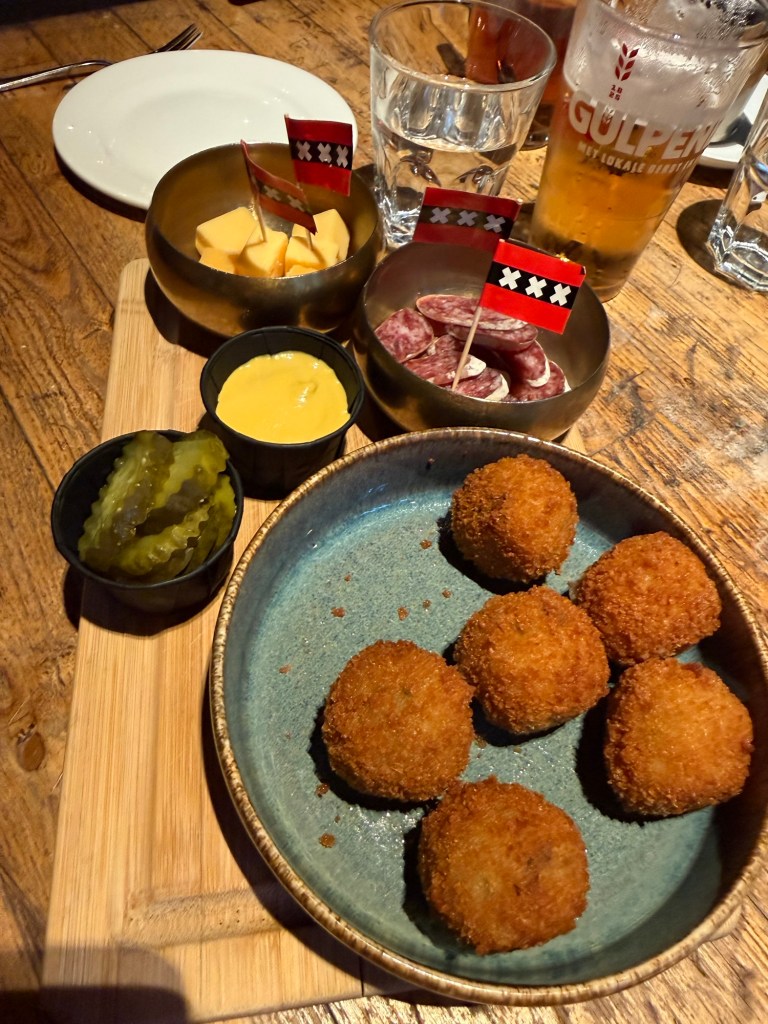
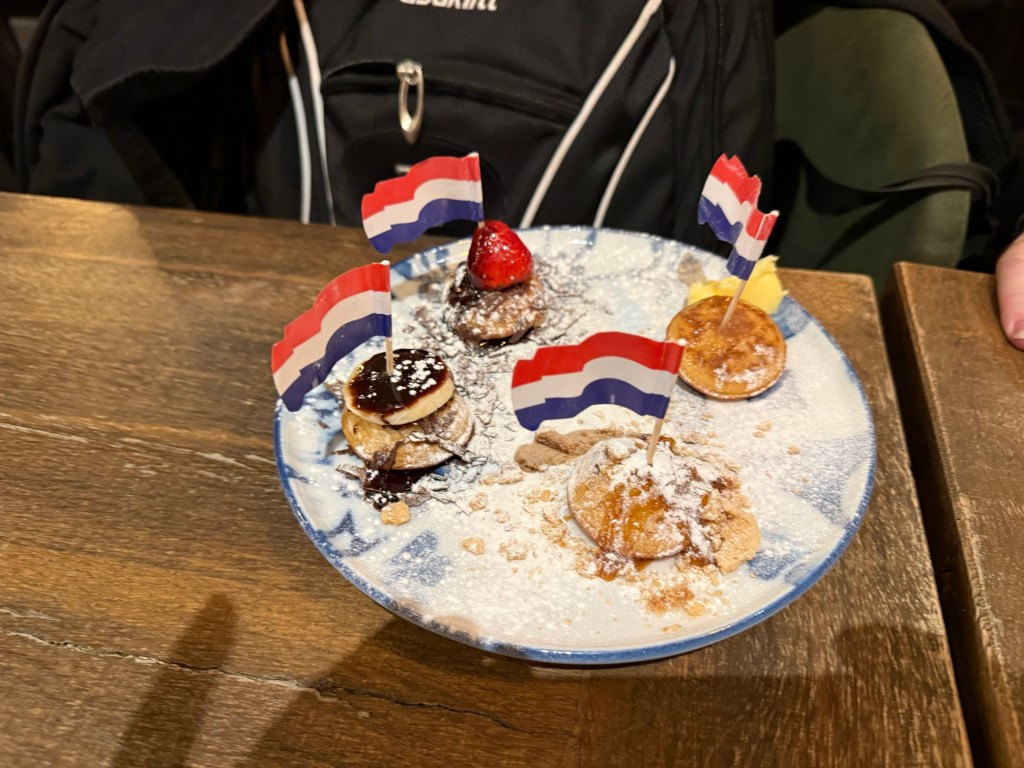
We really enjoyed the local food, too. Amsterdam is a very damp city and cold during the winter months. I can see why the Dutch enjoy so much fried food. We loved the Olieballen served warm with powdered sugar and a drizzle of Nutella. We first tried the Bitterballen on our taste of Amsterdam tour. We liked this dish so much that we ordered it, again, at the Rijksmuseum’s cafe. The balls are a mixture of beef, beef stock, flour and seasoning covered in breadcrumbs and deep fried. Traditionally, you dip them in mustard.French fries are really popular and the city has numerous fast- food outlets selling them hot with mayonnaise slathered over them. Since neither of us really likes mayonnaise, we passed. That said, tons of the locals were buying them.
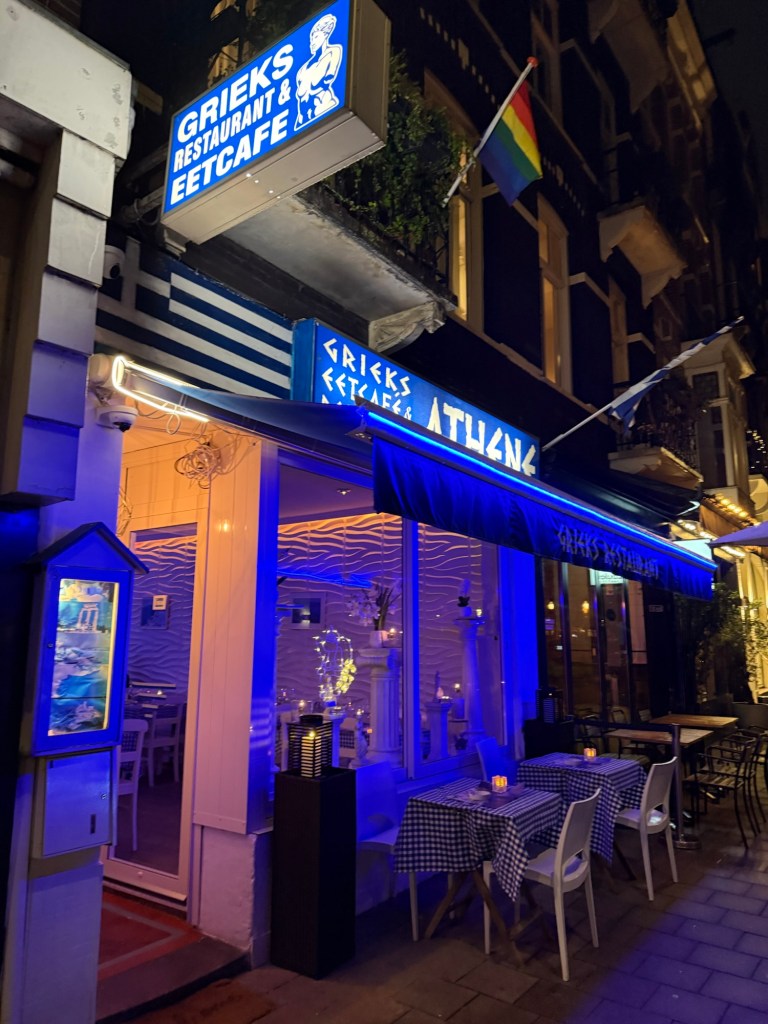
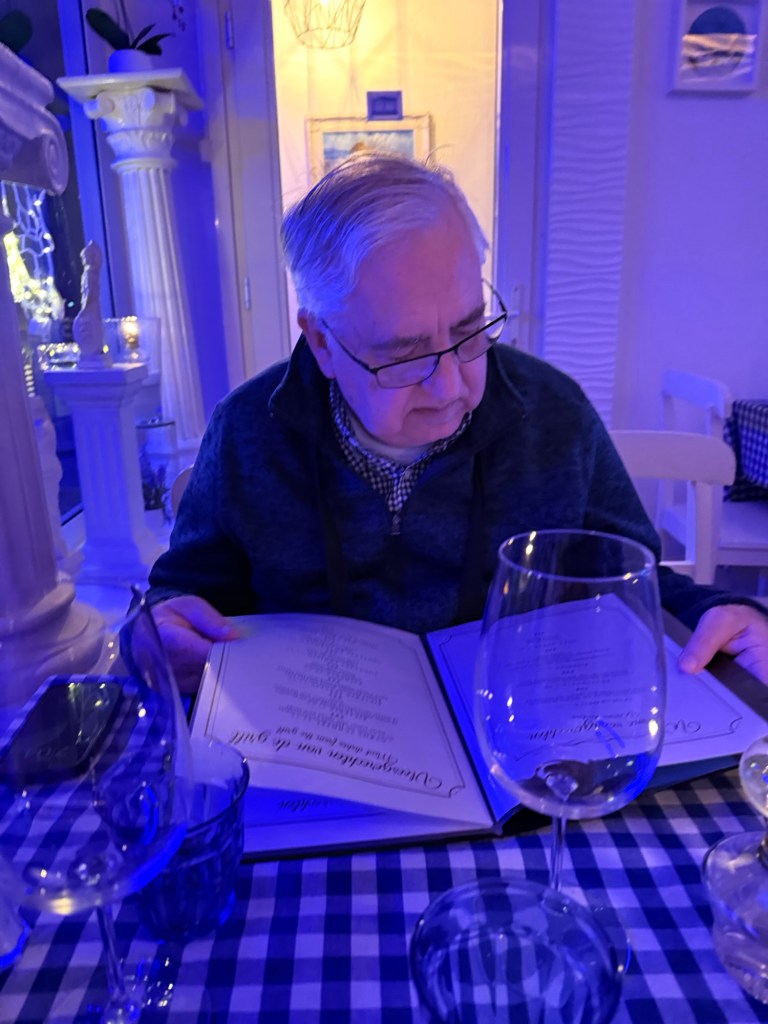
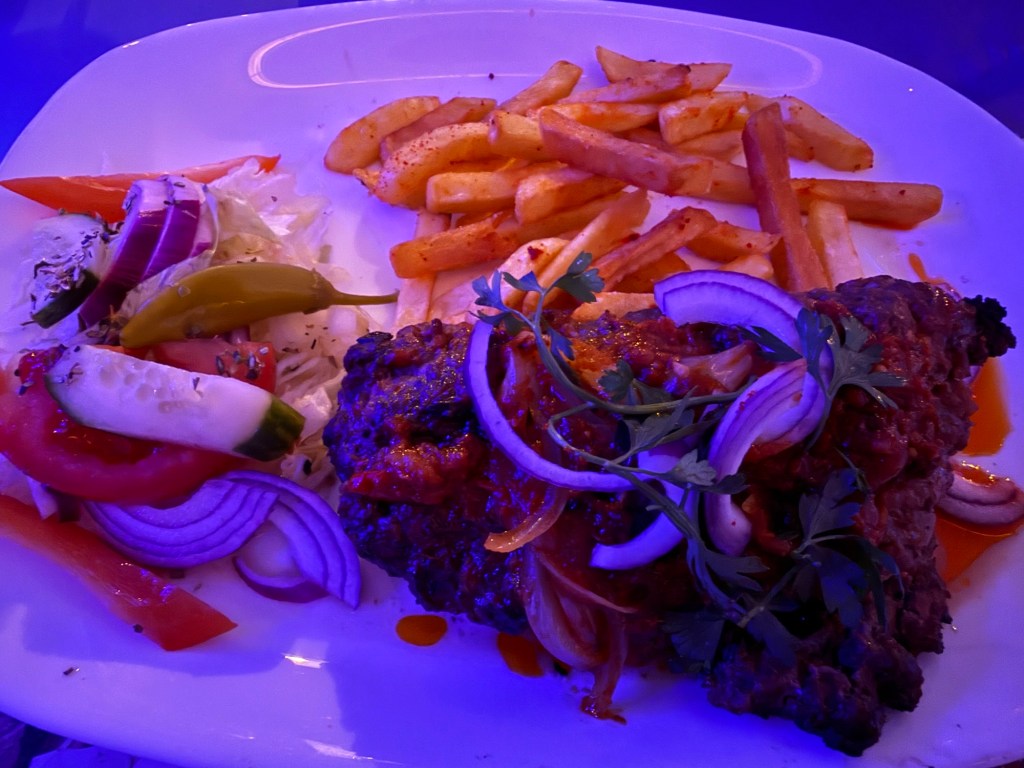
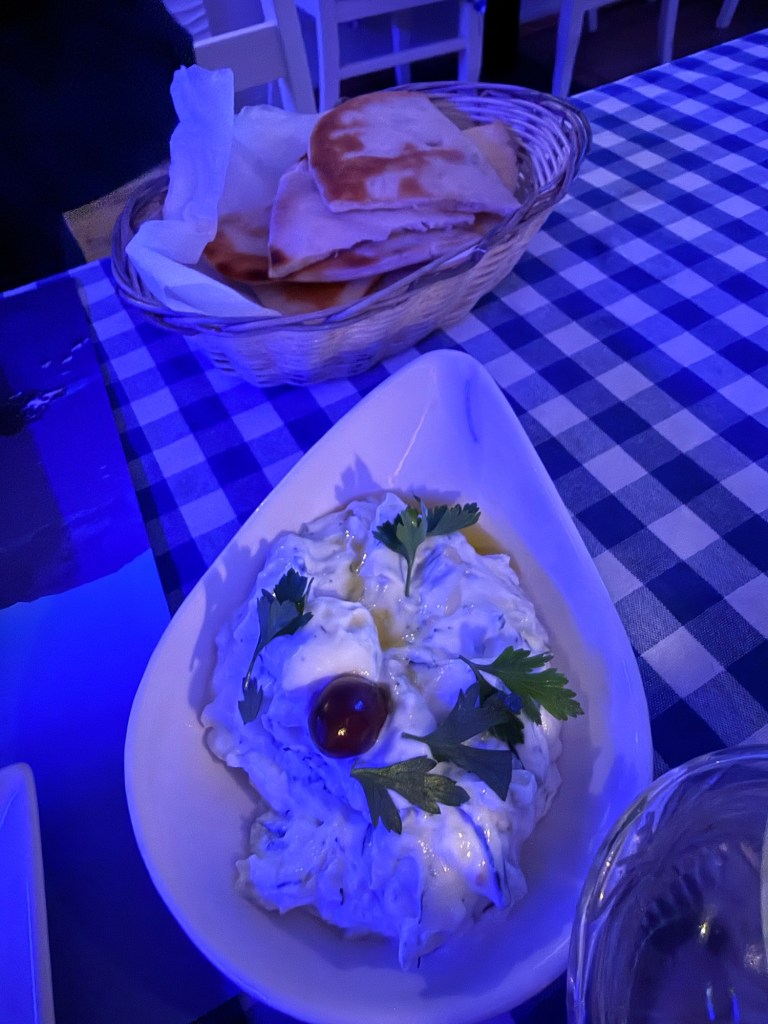
One of our favorite experiences was dinner at a Greek restaurant near our hotel. The Viking concierge recommended it and she was so right. My husband and I both thought it was the best Greek food we have ever eaten. The restaurant was owned by a Greek couple and the wife cooked everything from scratch.
While my husband John and I both have many more places we wish to visit, we can easily visualize another trip to Amsterdam in our future. Next time, we want to visit Amsterdam during tulip season.
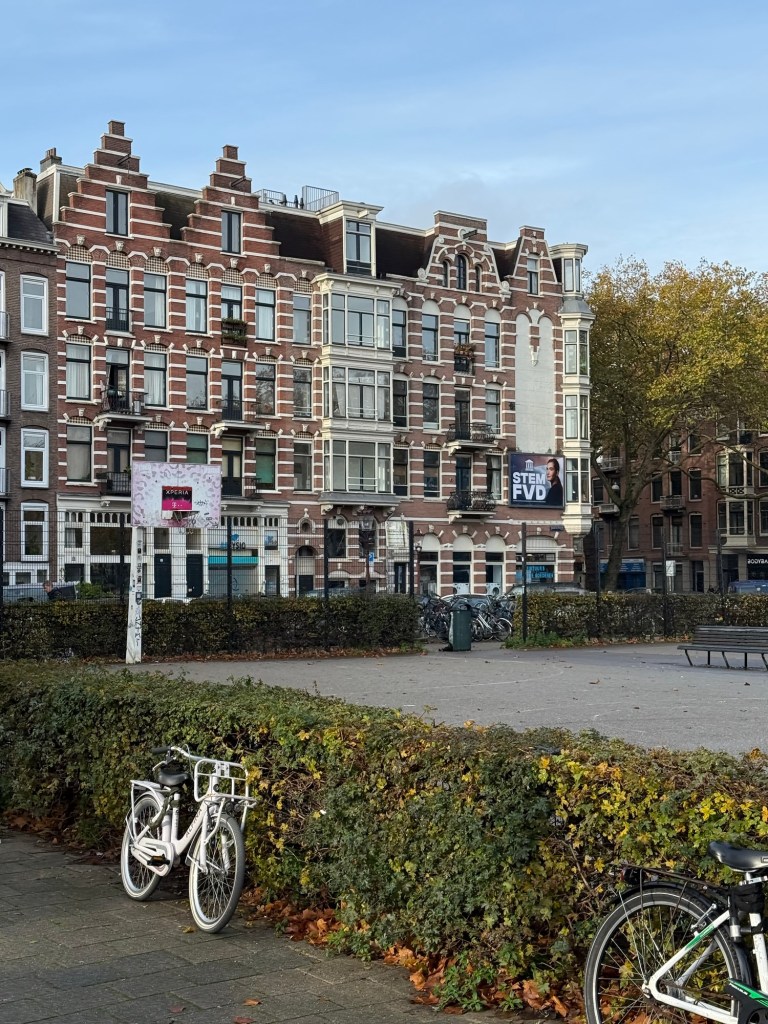
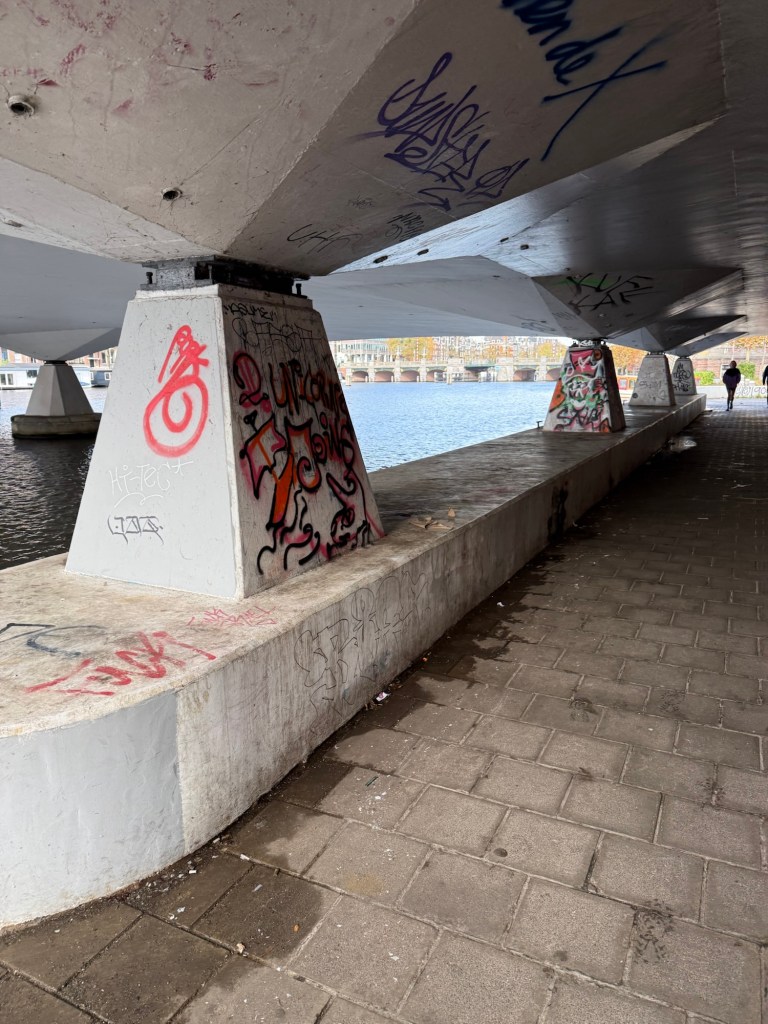
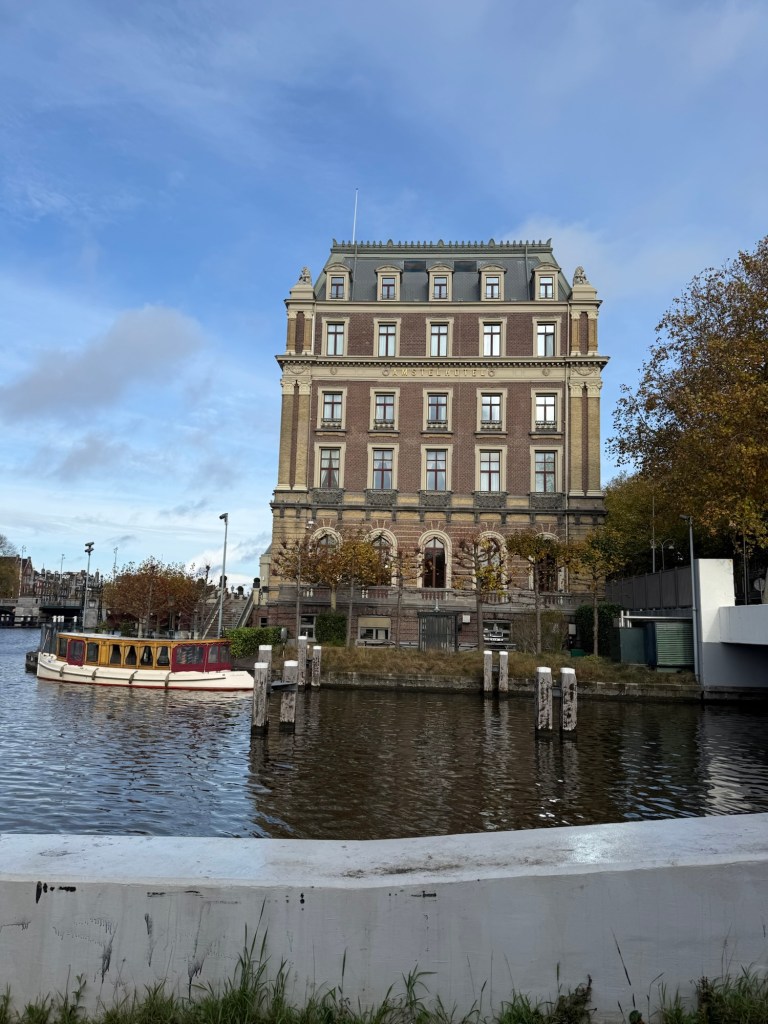
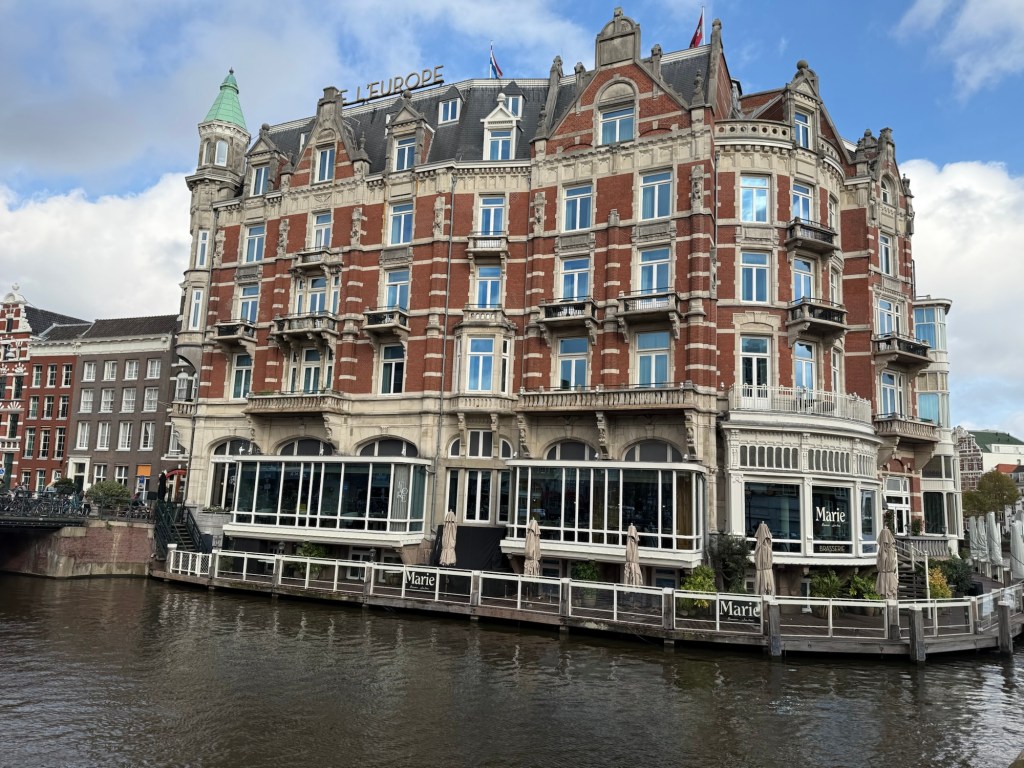
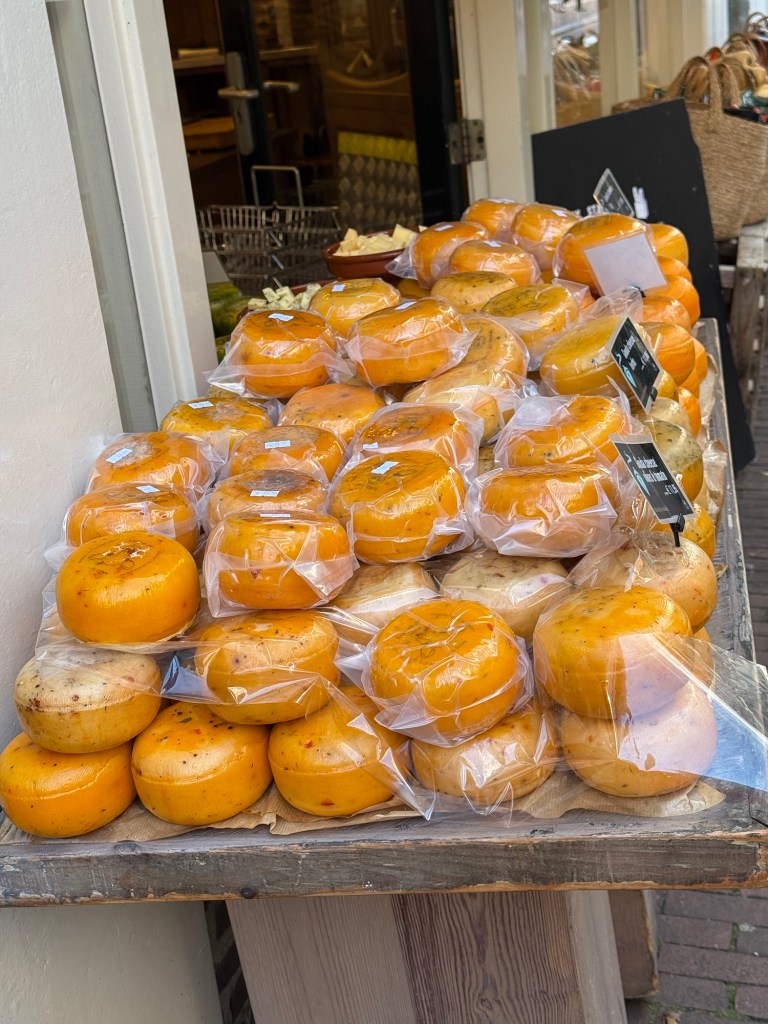
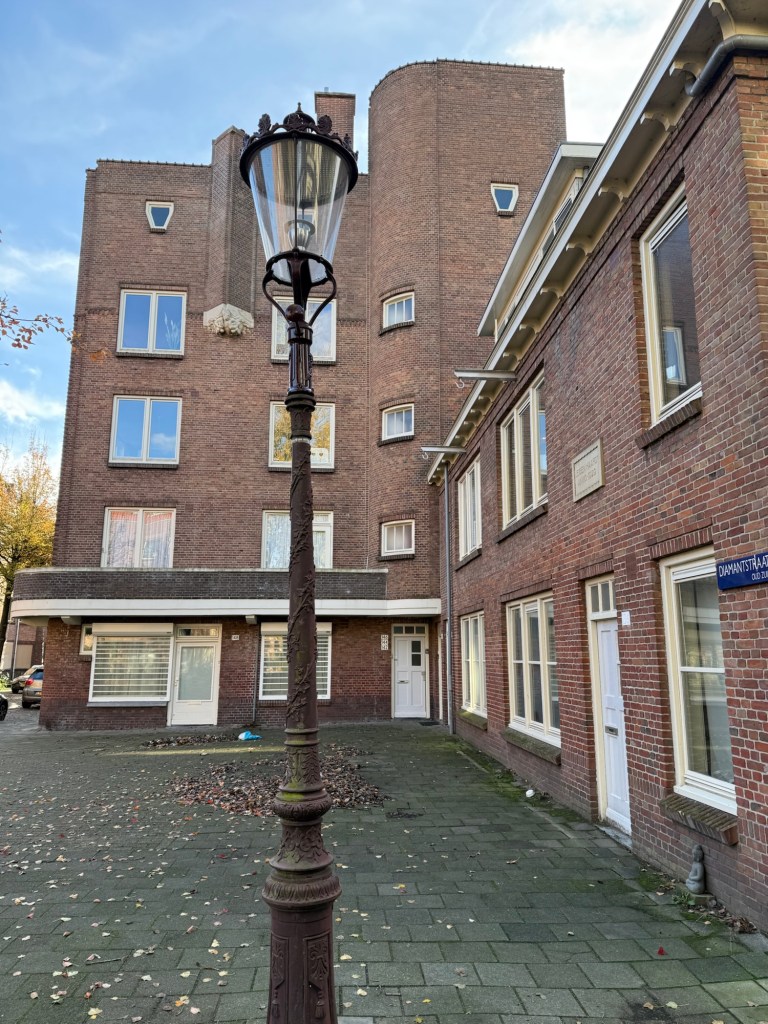
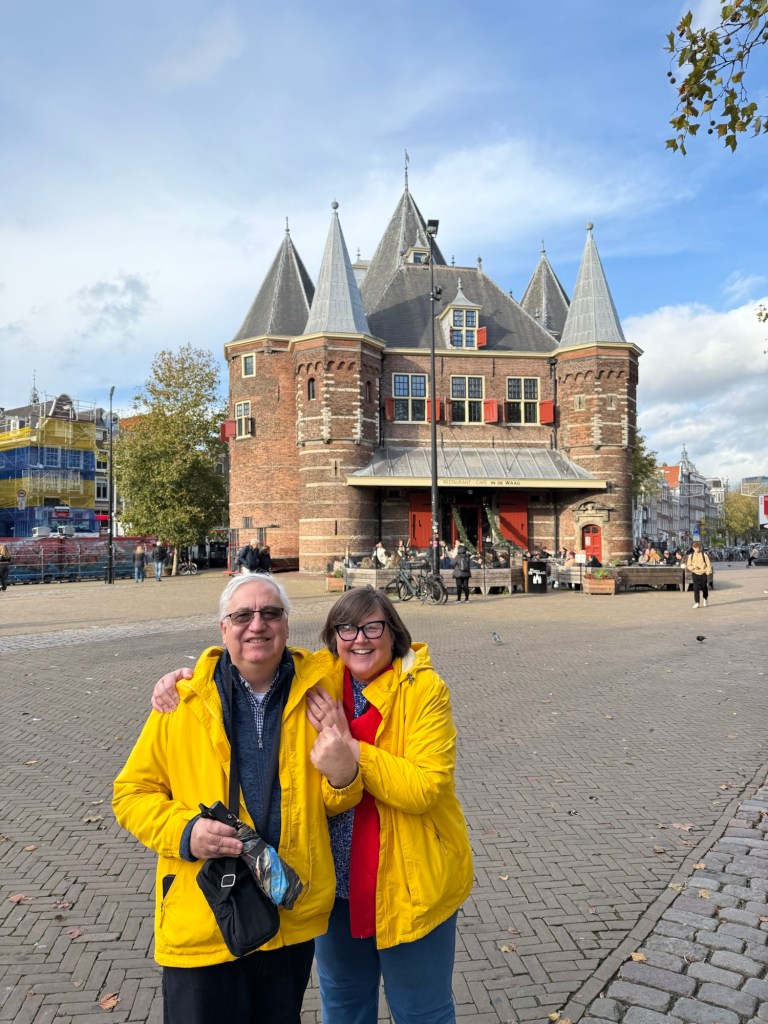
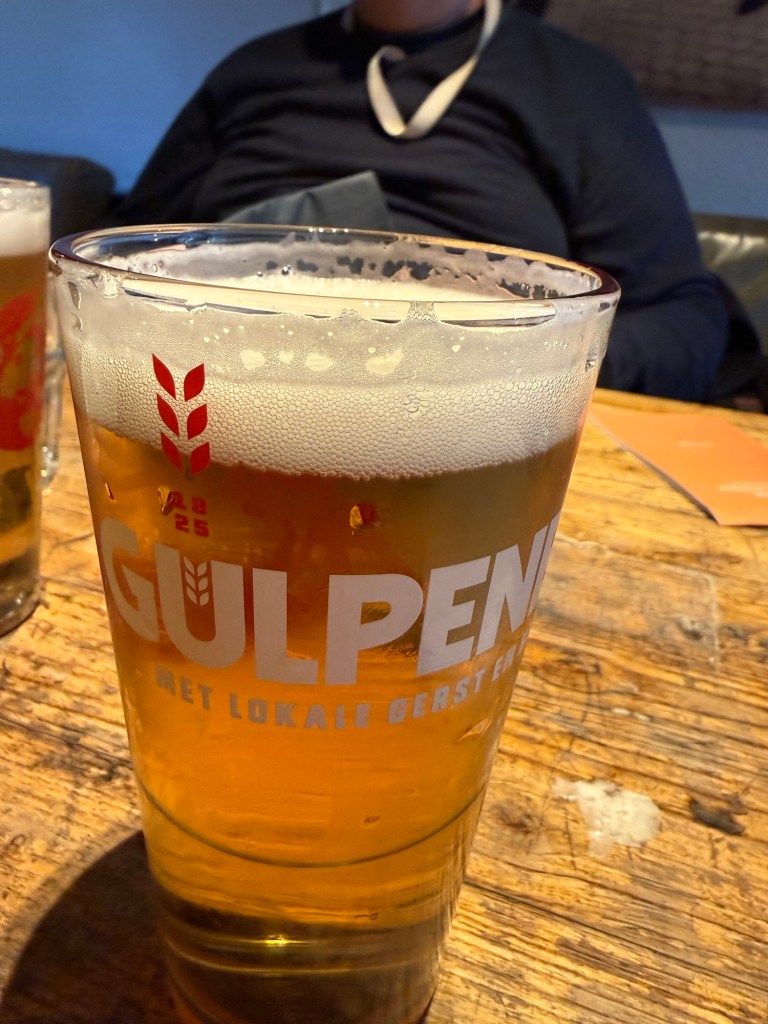
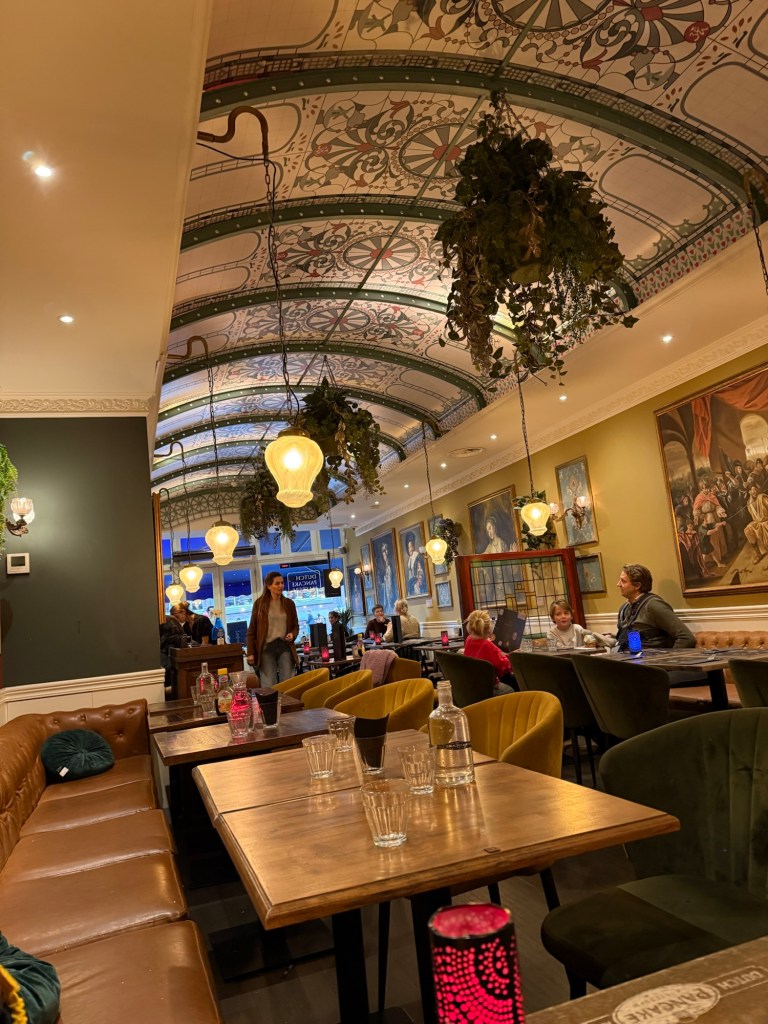
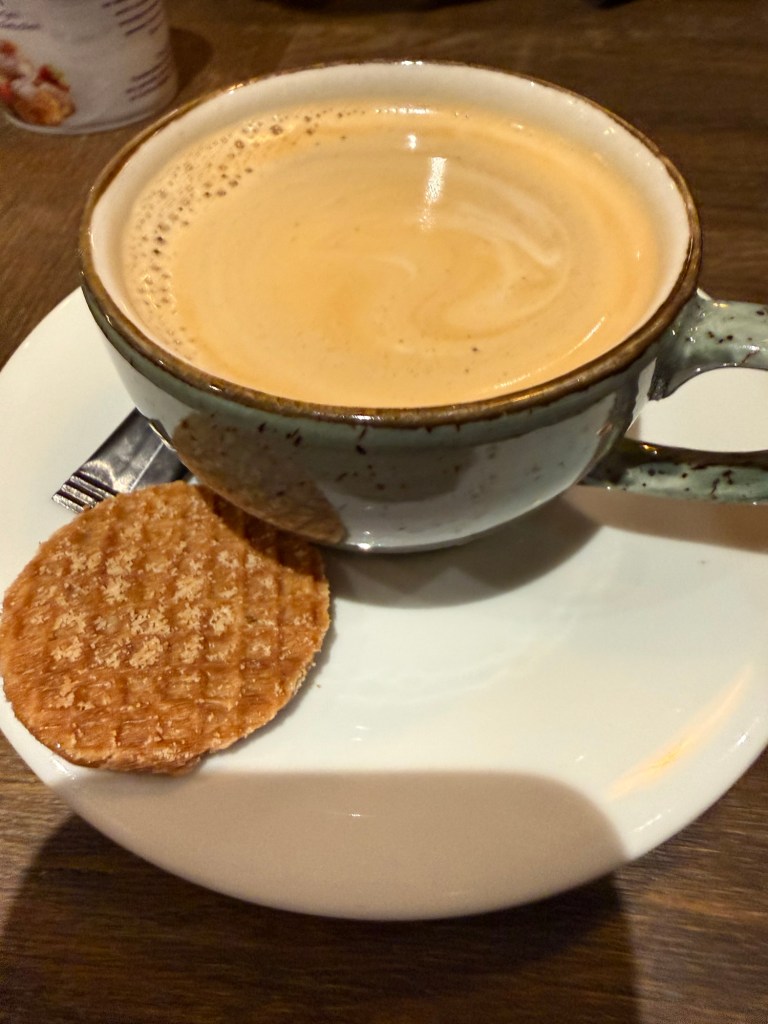
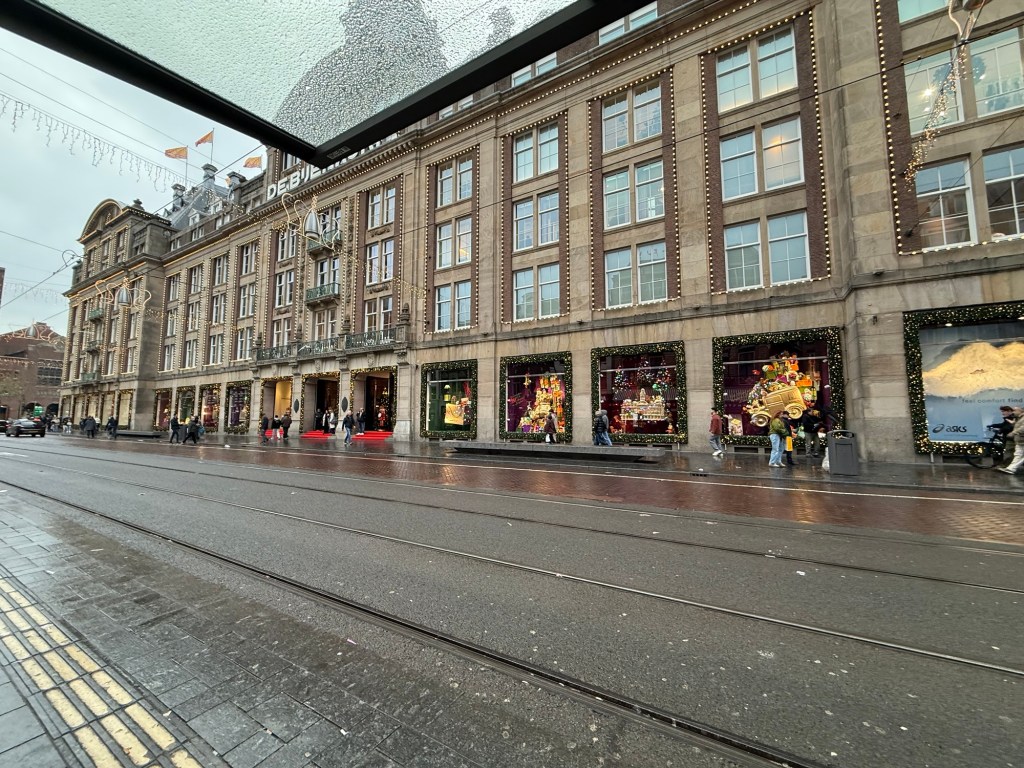
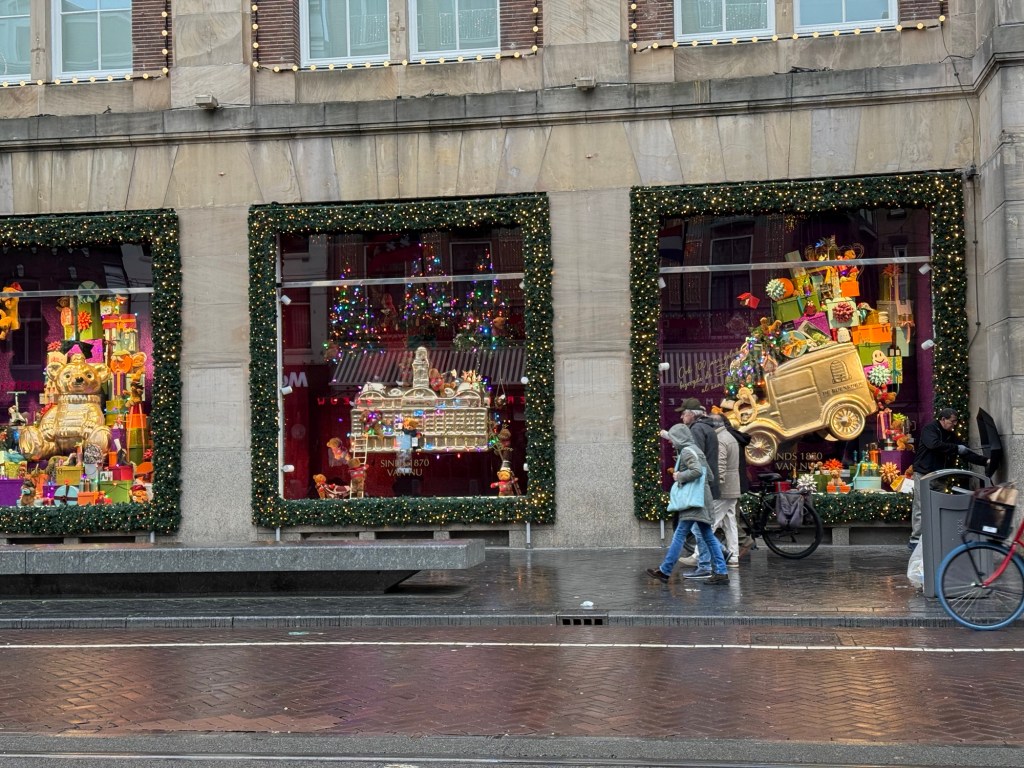
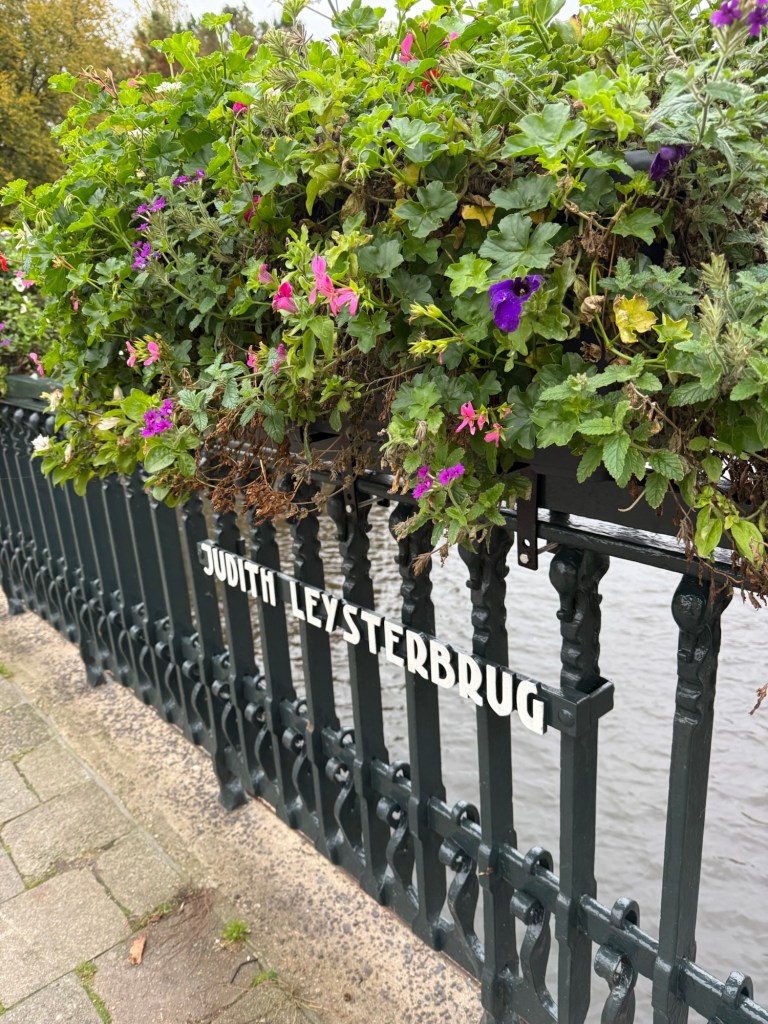
Rembrandt Square – Decorated for Christmas The Famous Skinny Bridge Traditional Row Houses – Amsterdam is Slowly Sinking So These Are Leaning Fun Architectural DetailGraffiti Is Here, too.InterContinental Amstel Hotel Amsterdam Lobby of the InterContinentalThe Jewish School the Nazis Made All Jews Attend During WWII House Boats Sell for Over $1 Million Amazing Architectural Details Everywhere “Coffee” Bars Are Prevalent Around Rembrandt Square Olieballen Shop at Rembrandt SquareOlieballen VendorLocal Sweet Treat – OlieballenHistoric Art Deco Cinema Theater Lobby Local Cheese ShopGouda!Fun Architectural Detail In a Residential Neighborhood 1920s Worker Housing In De Waag Restaurant – Building Dates Back to 1488Beer at In de WaagBitterballen Interior of a Popular Dutch Pancake CafeDutch Pancakes Coffee and Stroopwafelsde Bijenkorf Department StoreChristmas Window Displays at de BijenkorfMore Holiday Window Displays Local Greek Restaurant Hubby Reading the Menu My EntreeAppetizer At Our Greek Restaurant Even in November, the City Has Flowers Bitterballen Snack Plate at the Rijksmuseum Rembrandt Square
Amsterdam truly has an amazing collection of museums. While in Amsterdam, we visited Rembrandt’s House, the Museum of Contemporary Art, the Rijksmuseum and the Anne Frank House.
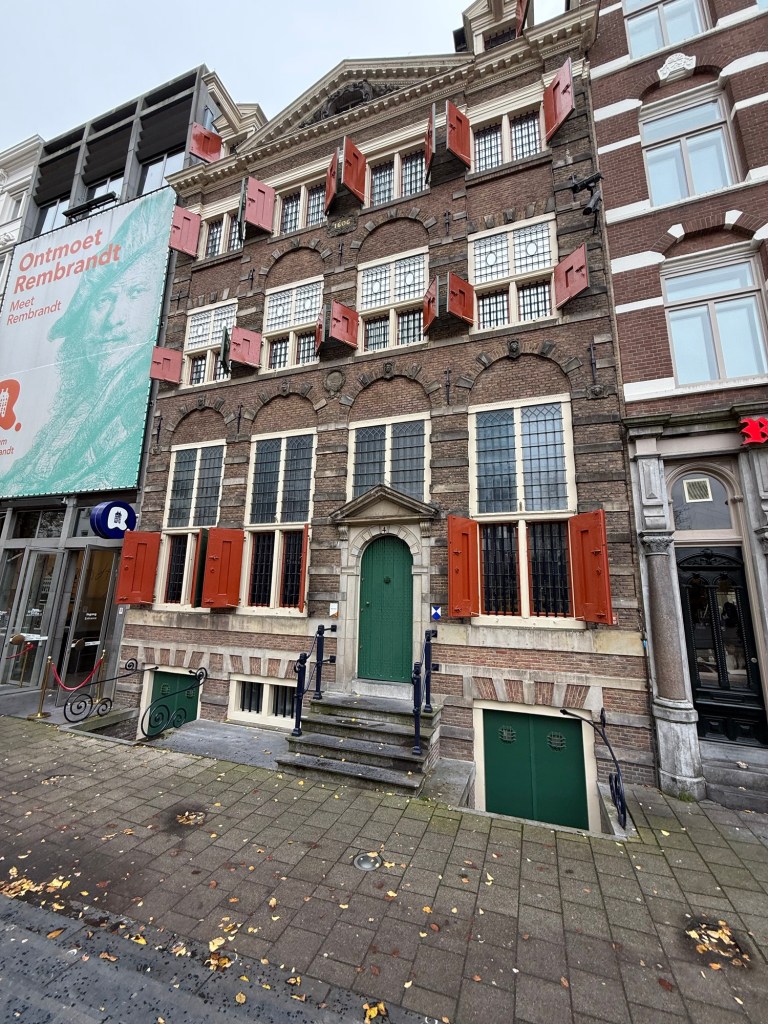
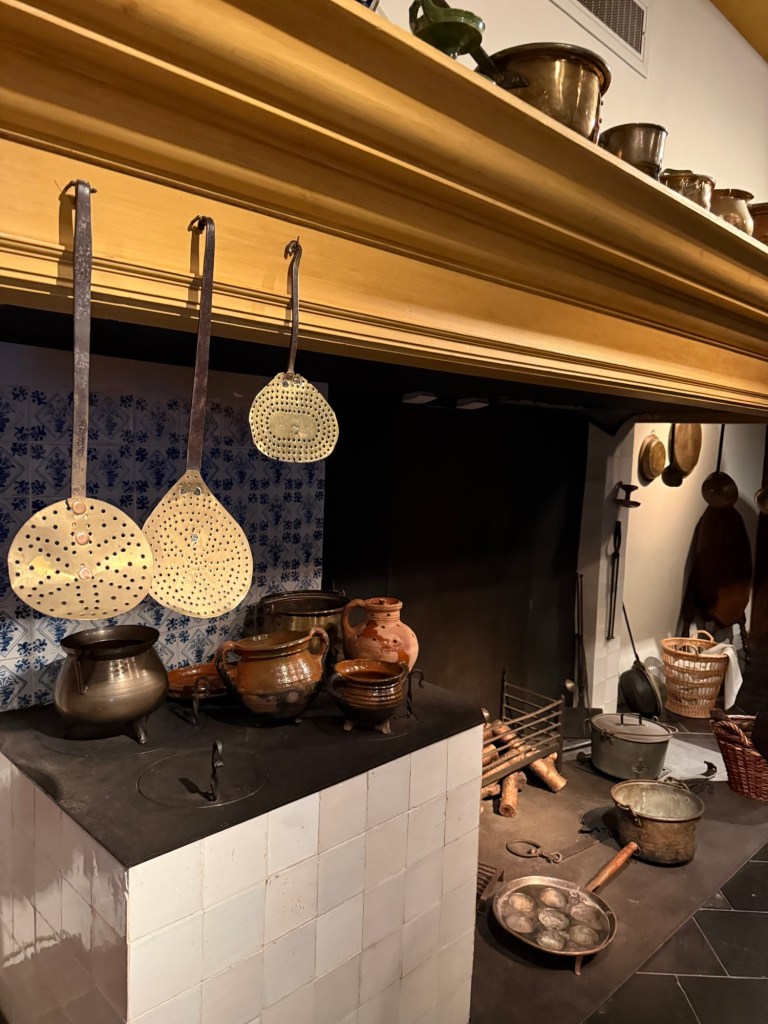
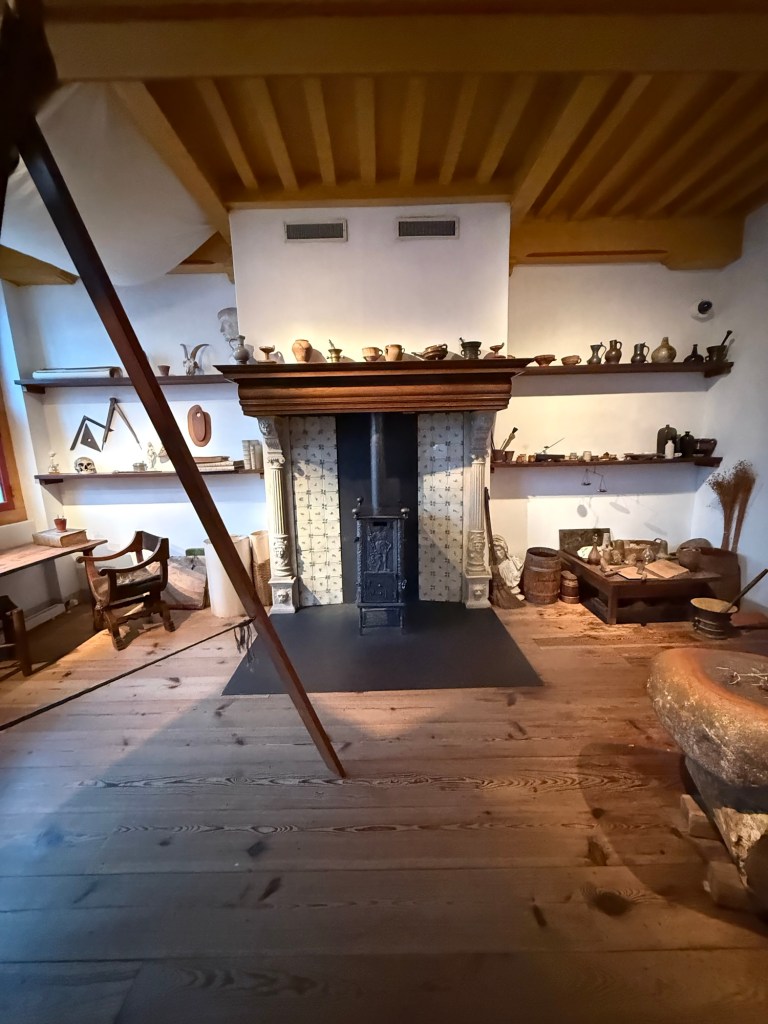
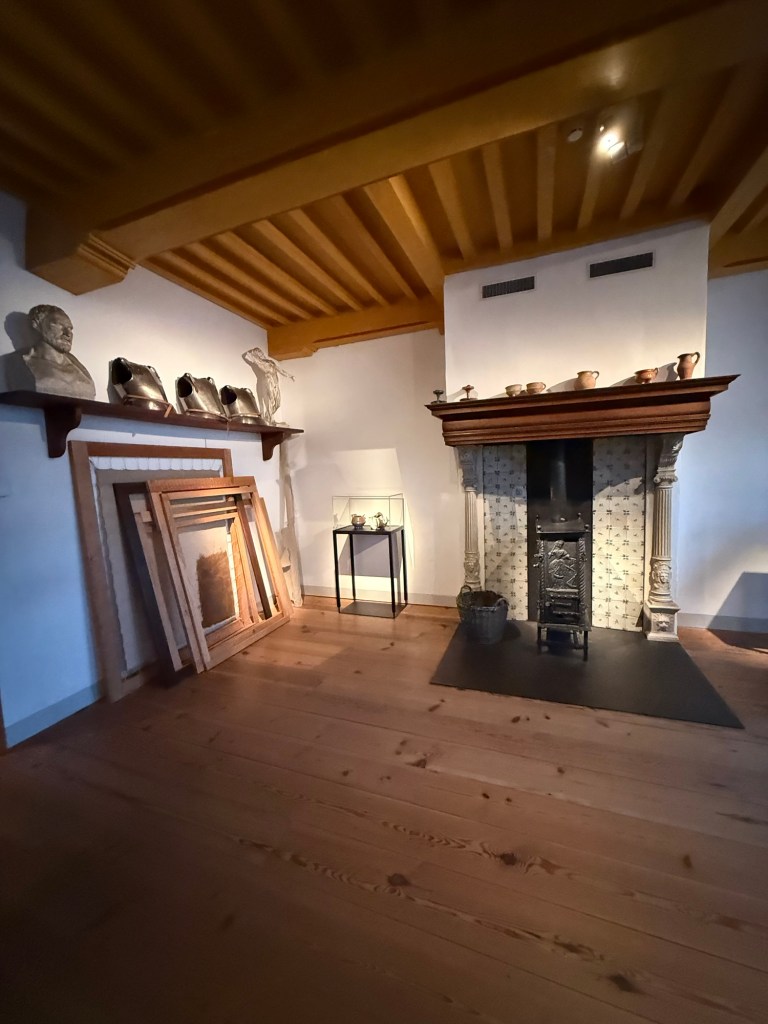
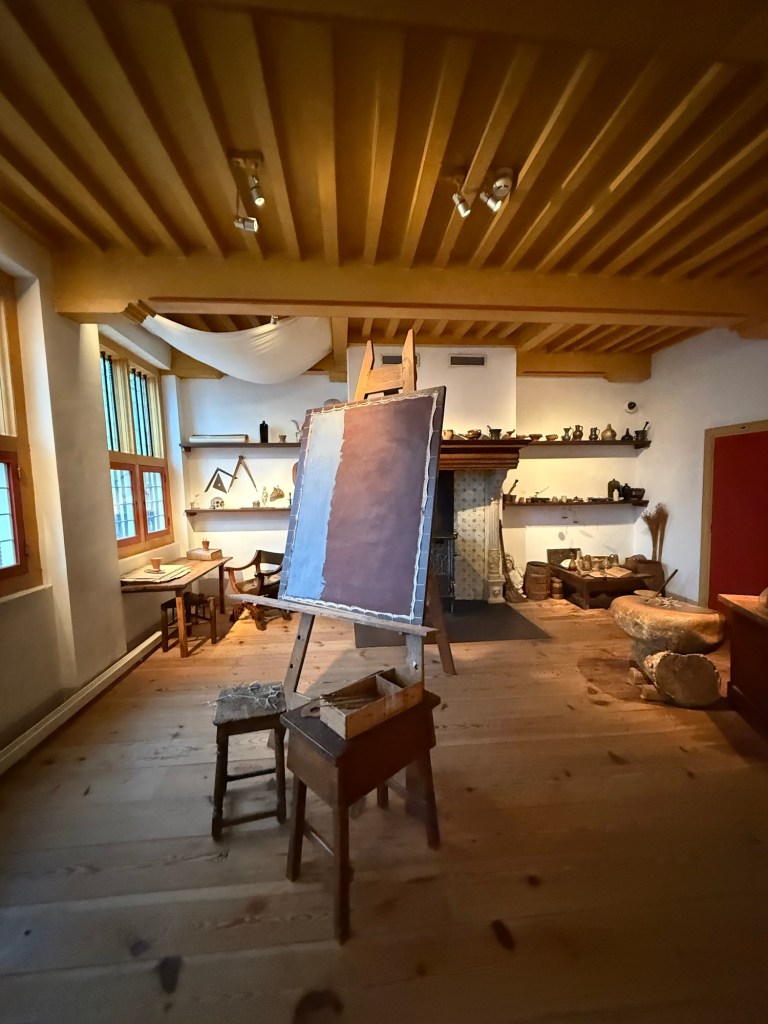
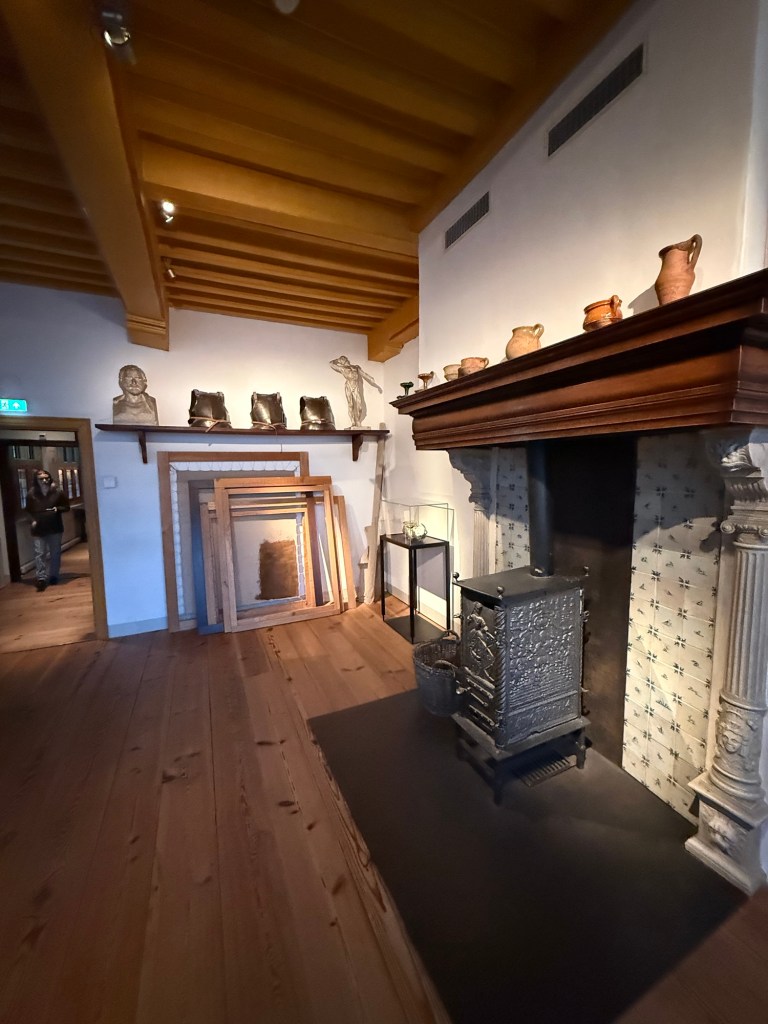
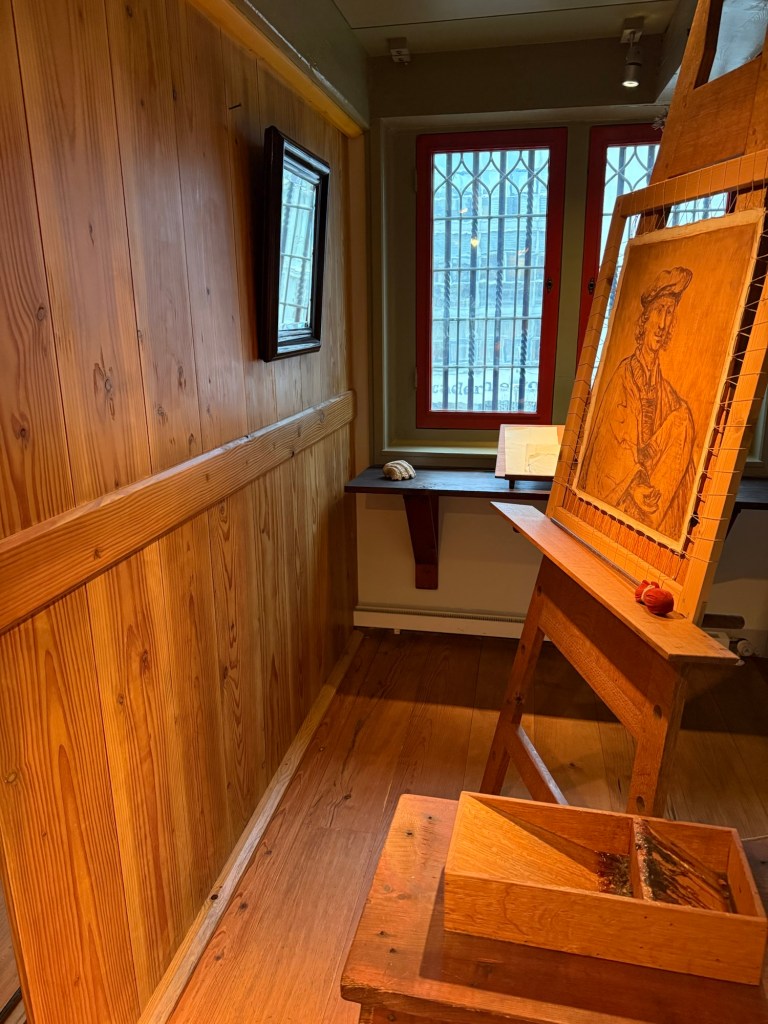
Rembrandt’s House was our first stop. Rembrandt spent the final years of his life in poverty with massive debts. To cover his debts, he was forced to sell his house in Amsterdam as well as all of his possessions. The detailed list is of his possessions is what makes the museum possible. The curators had a complete list of everything in the house. The house is spacious with both lots of living and working space. His studio is impressive with the massive windows that flood the room with light. He had a massive collection of everything from a stuffed alligator to unusual sea shells that he used for inspiration for his paintings. His enormous collection is partially responsible for his debt. Even as he struggled with paying his bills, he continued to acquire new items for his collection.
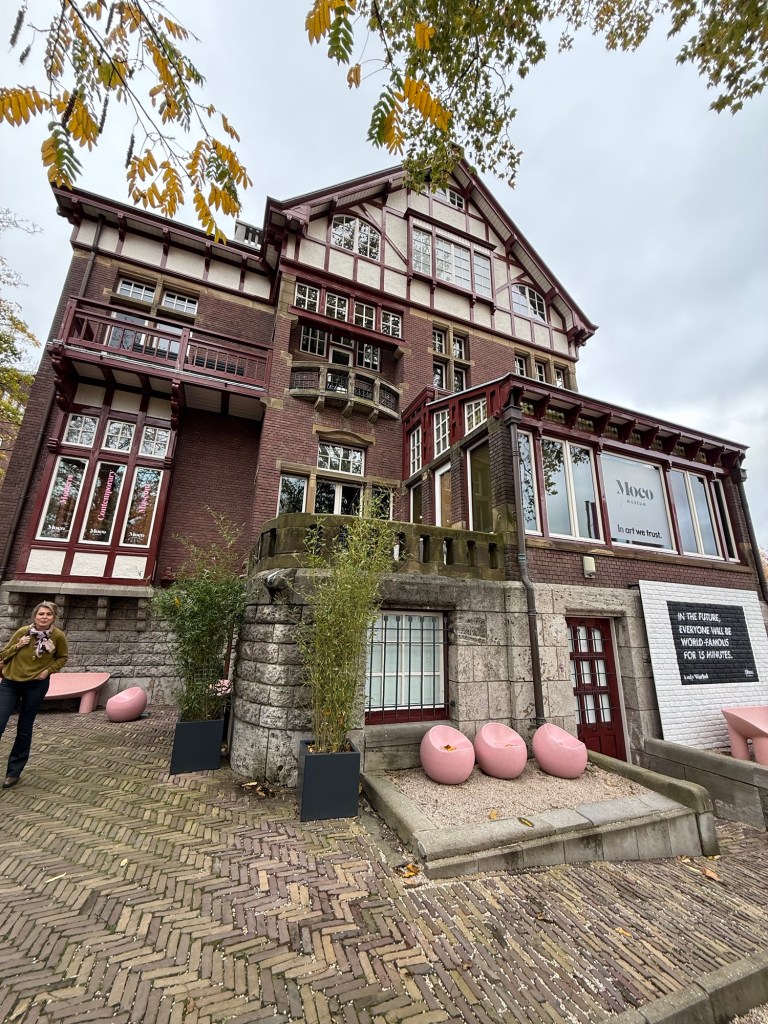
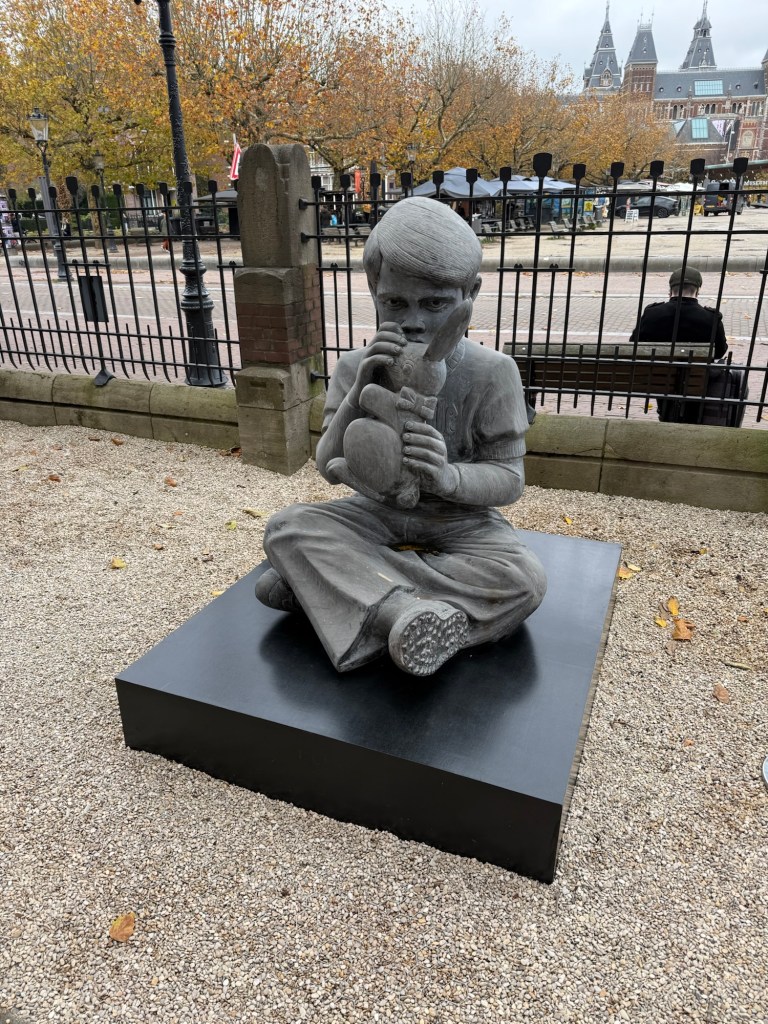
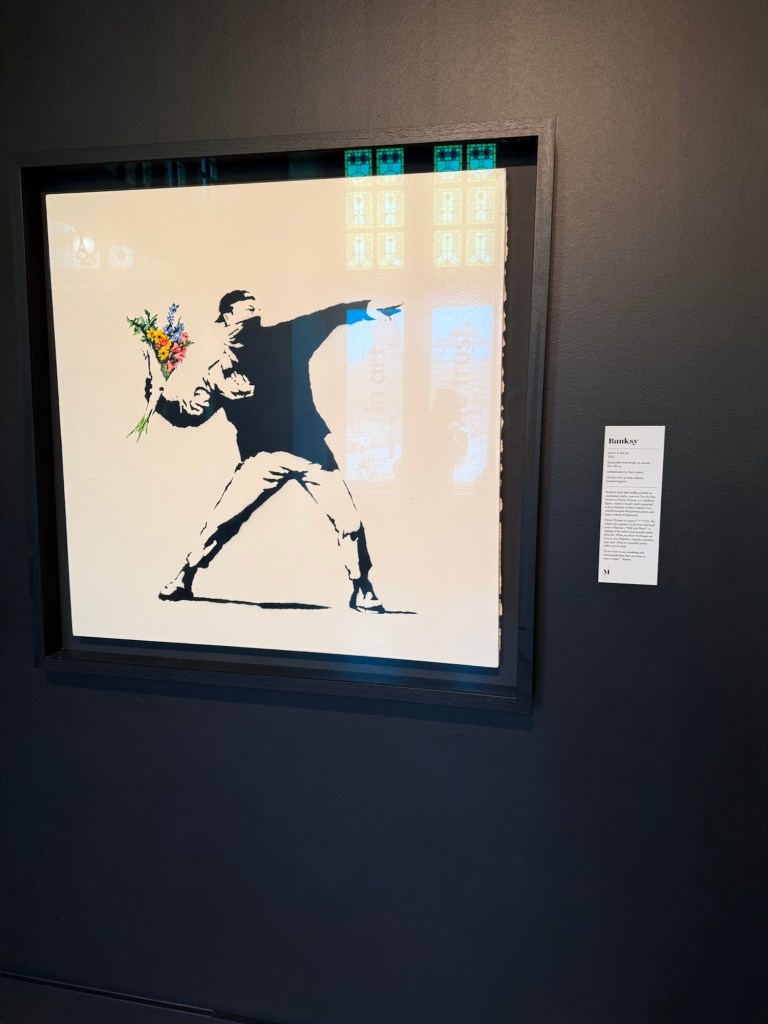
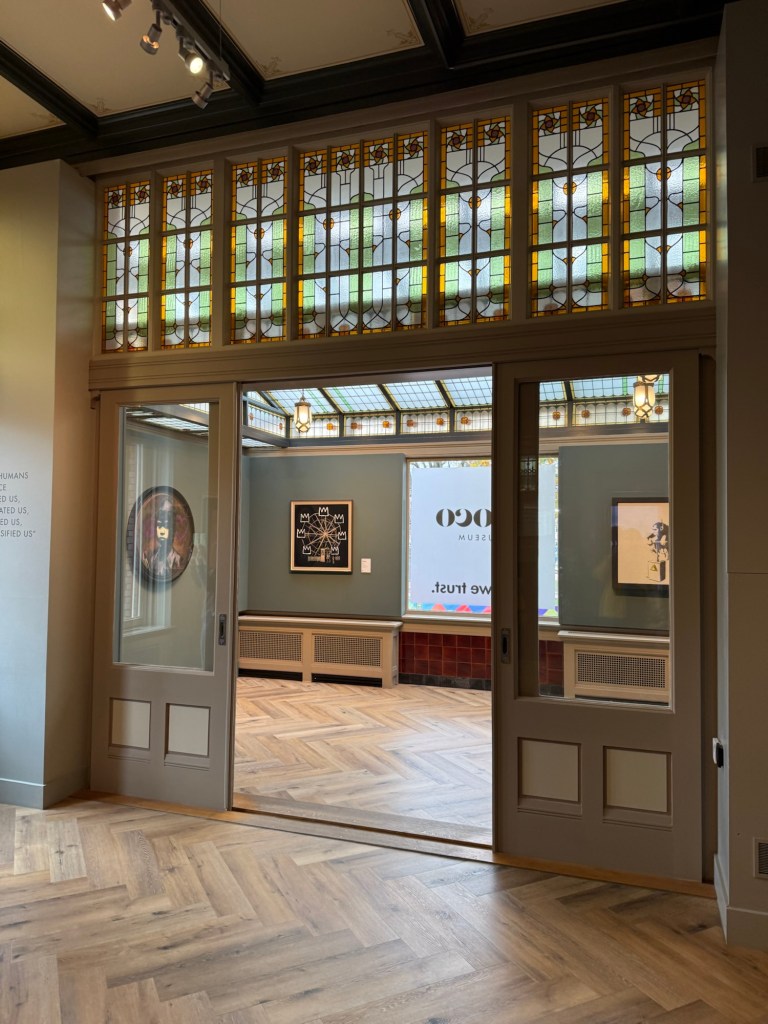
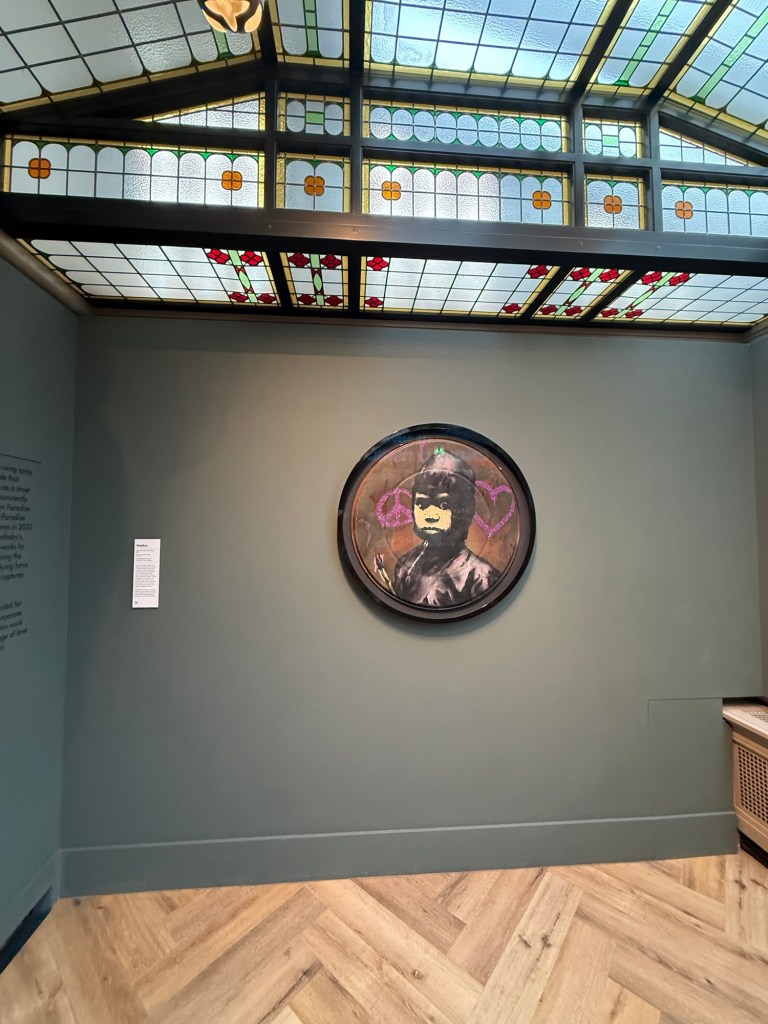
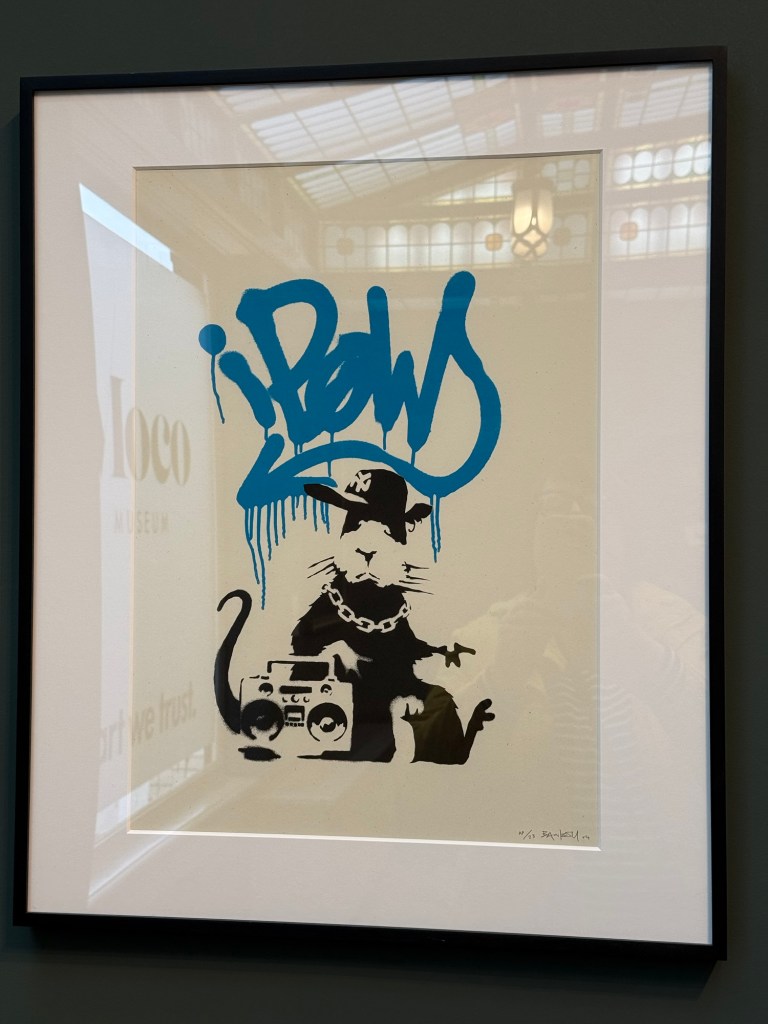
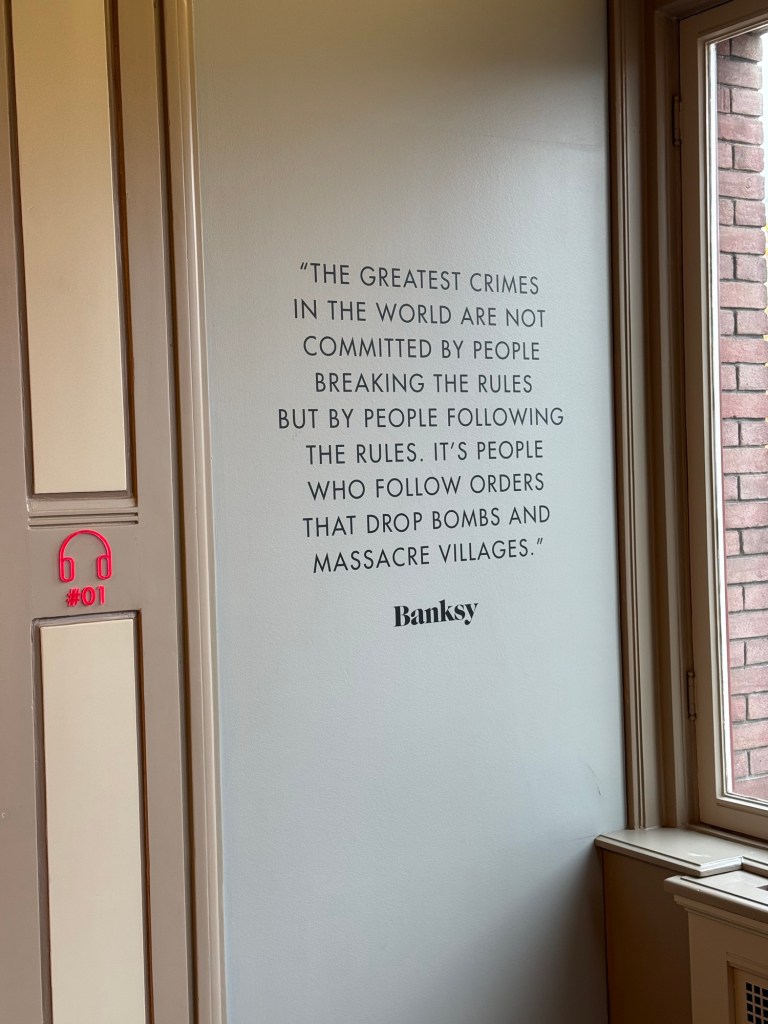
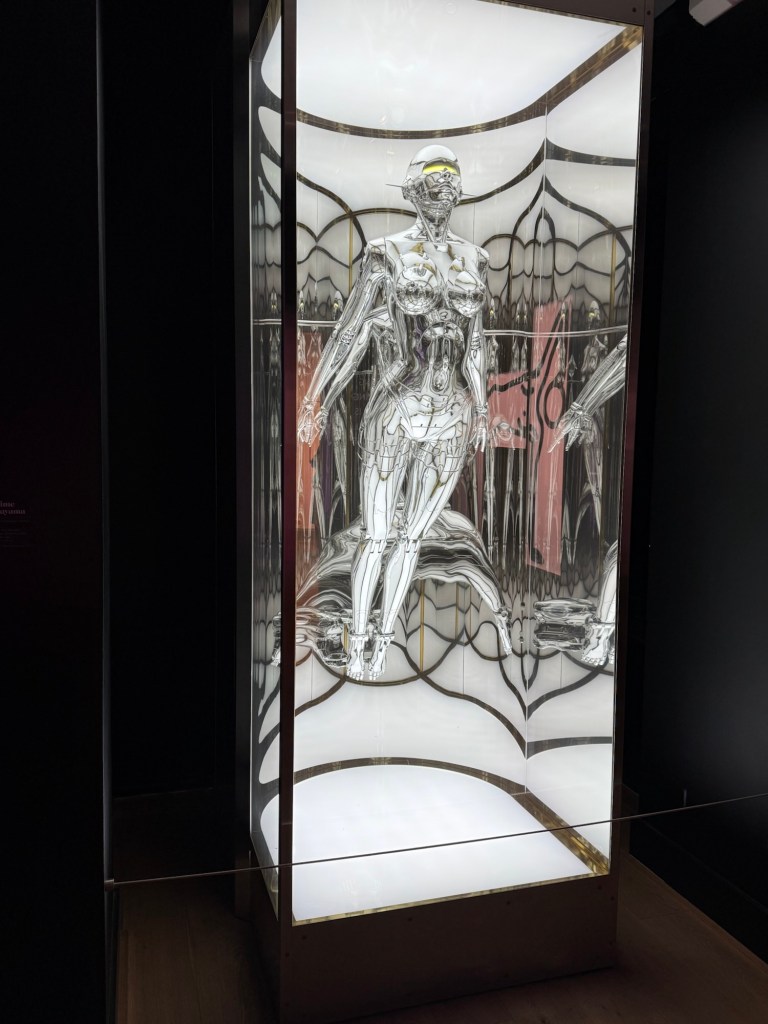
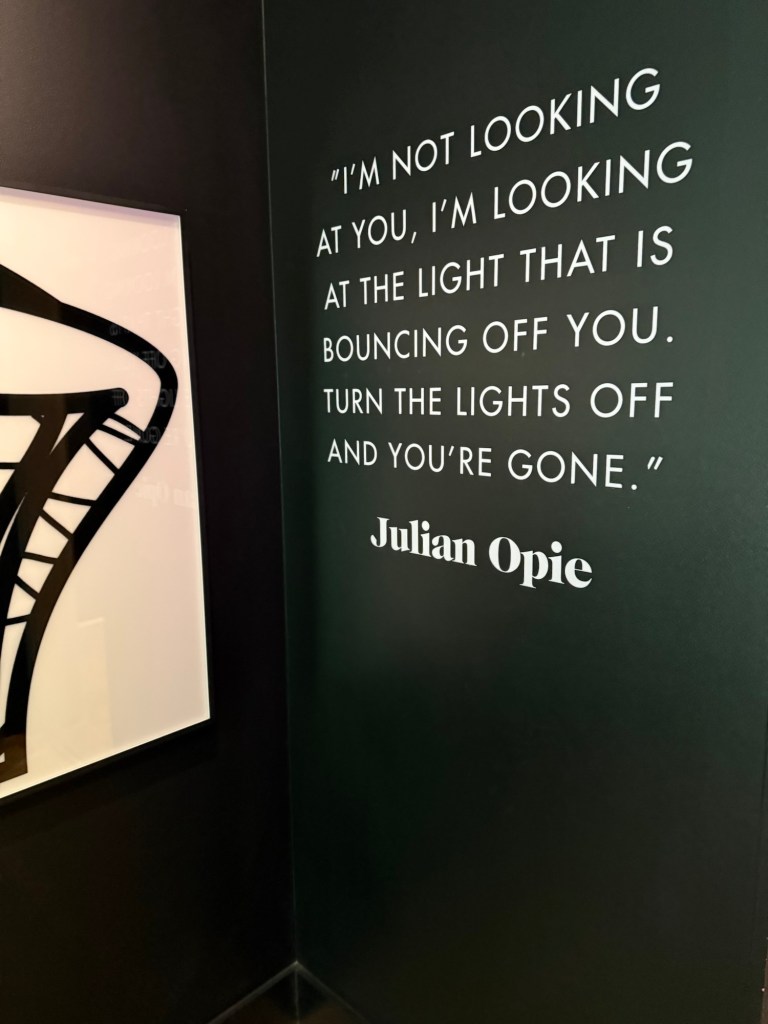
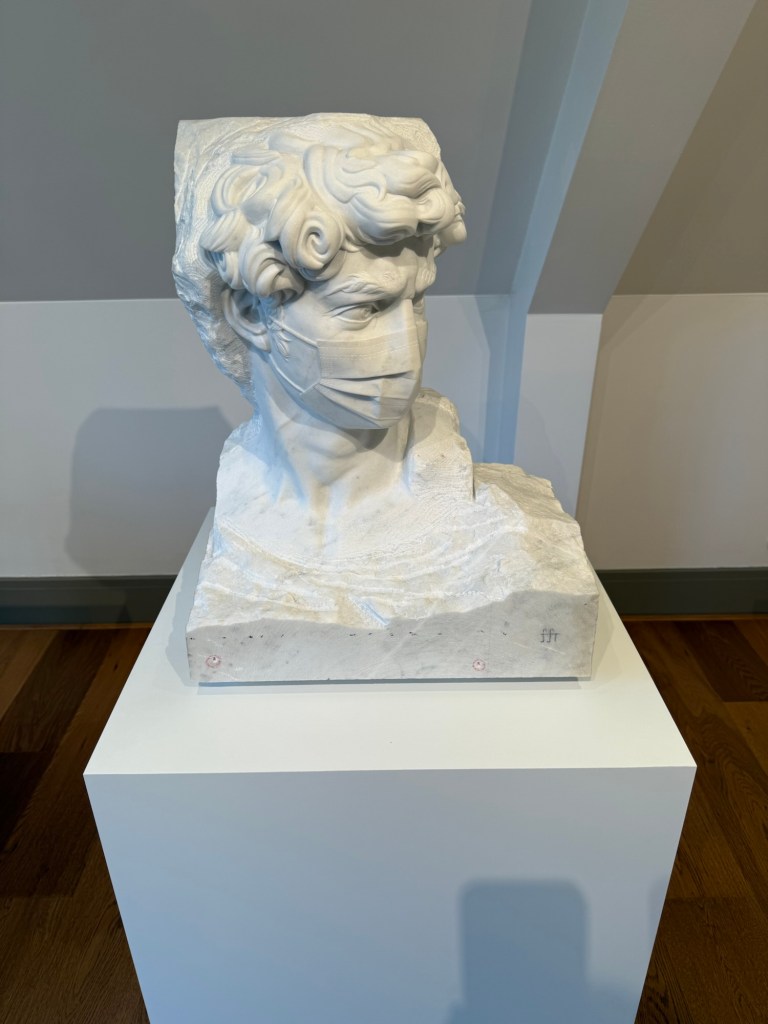
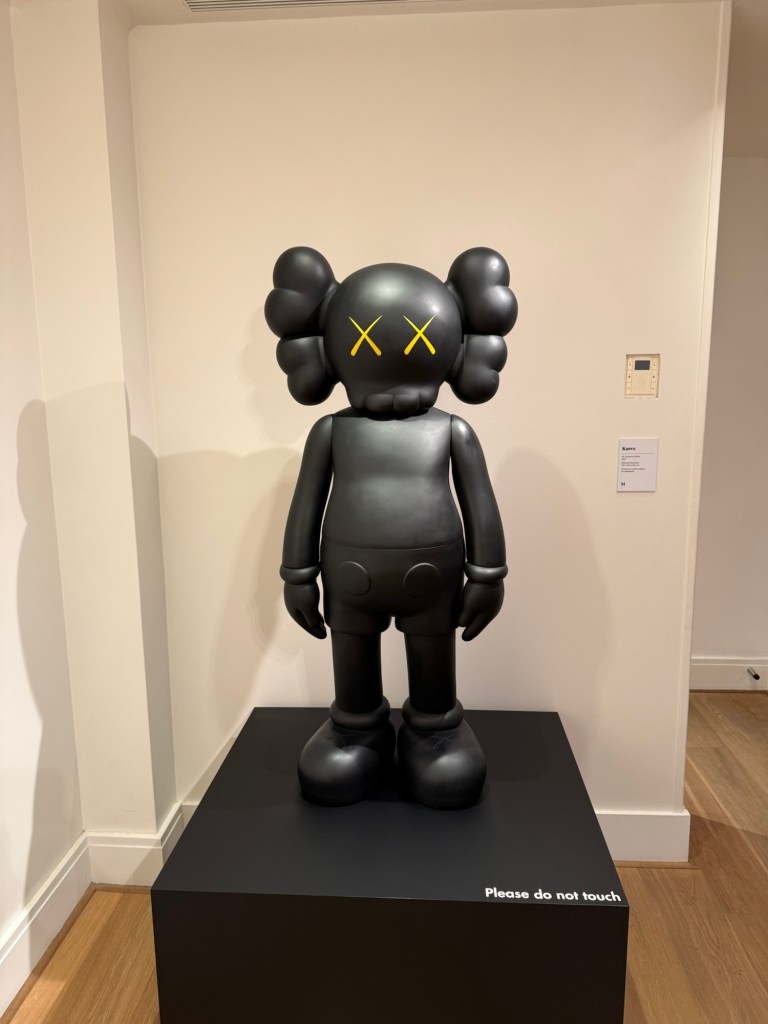
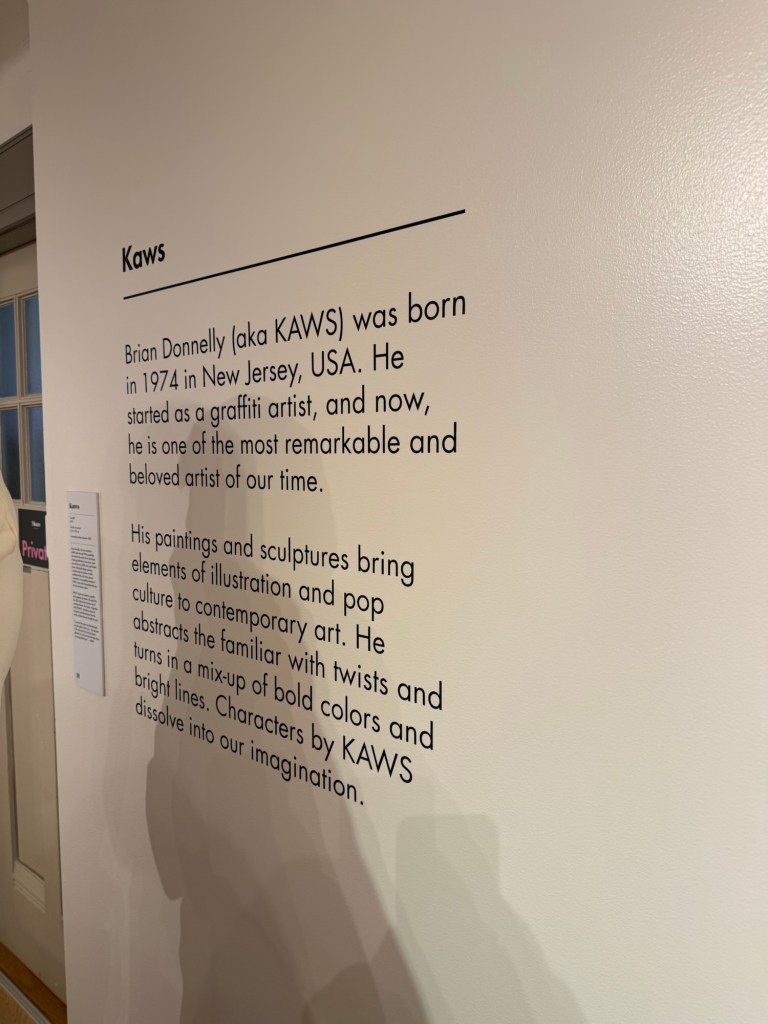
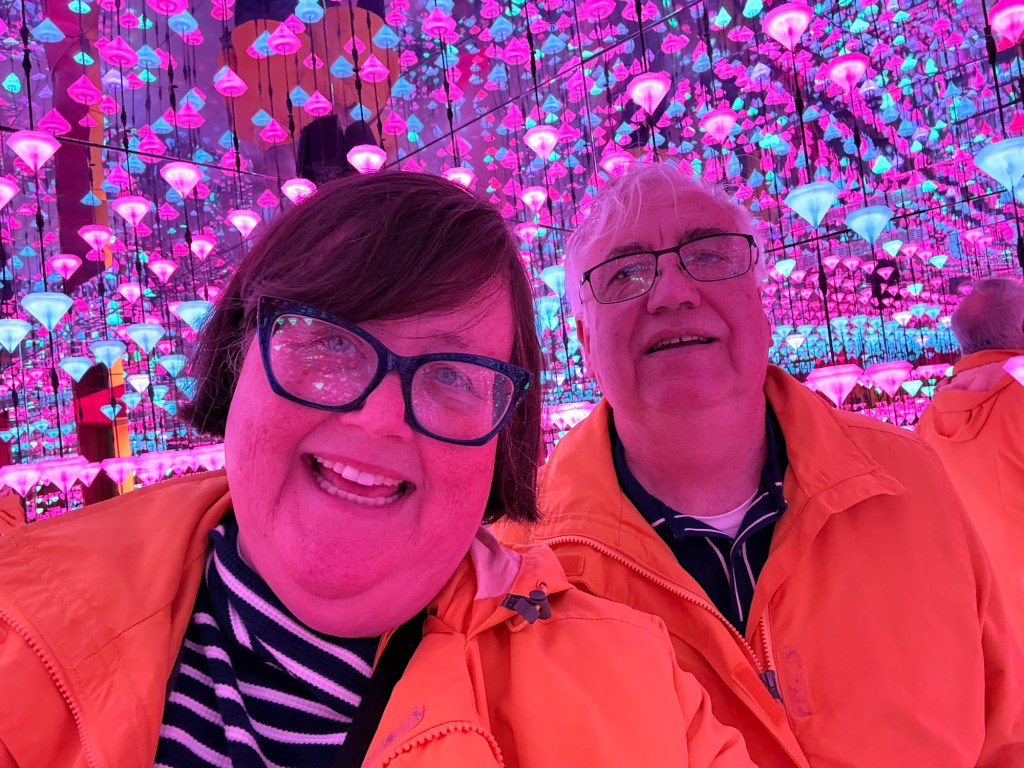
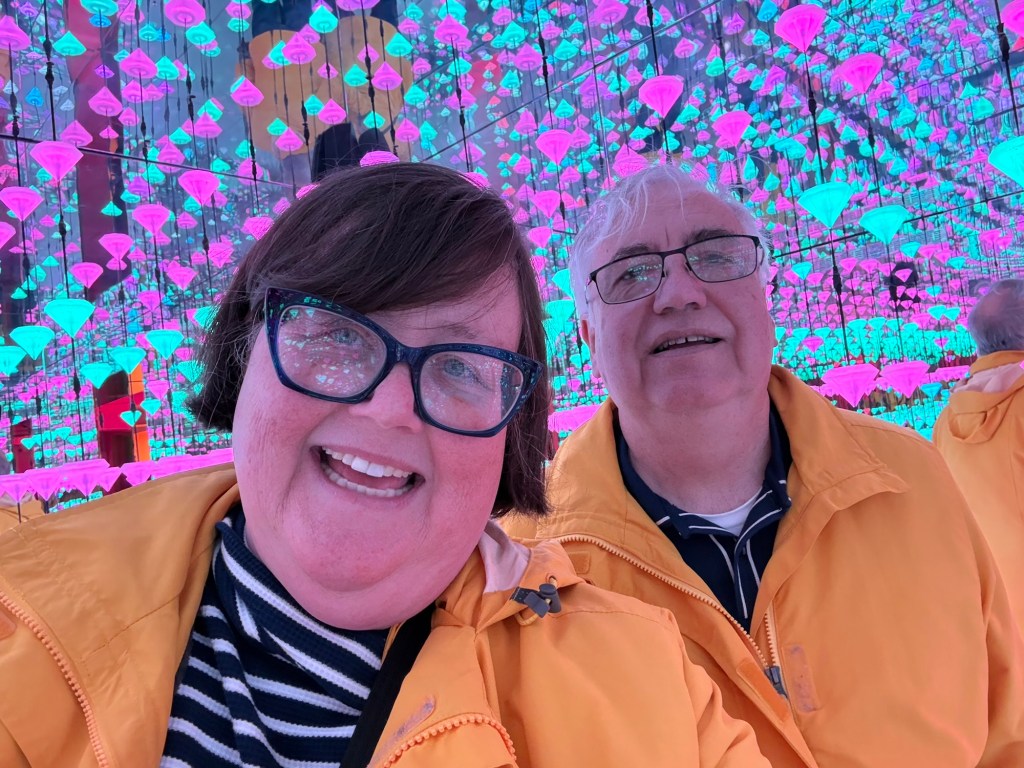
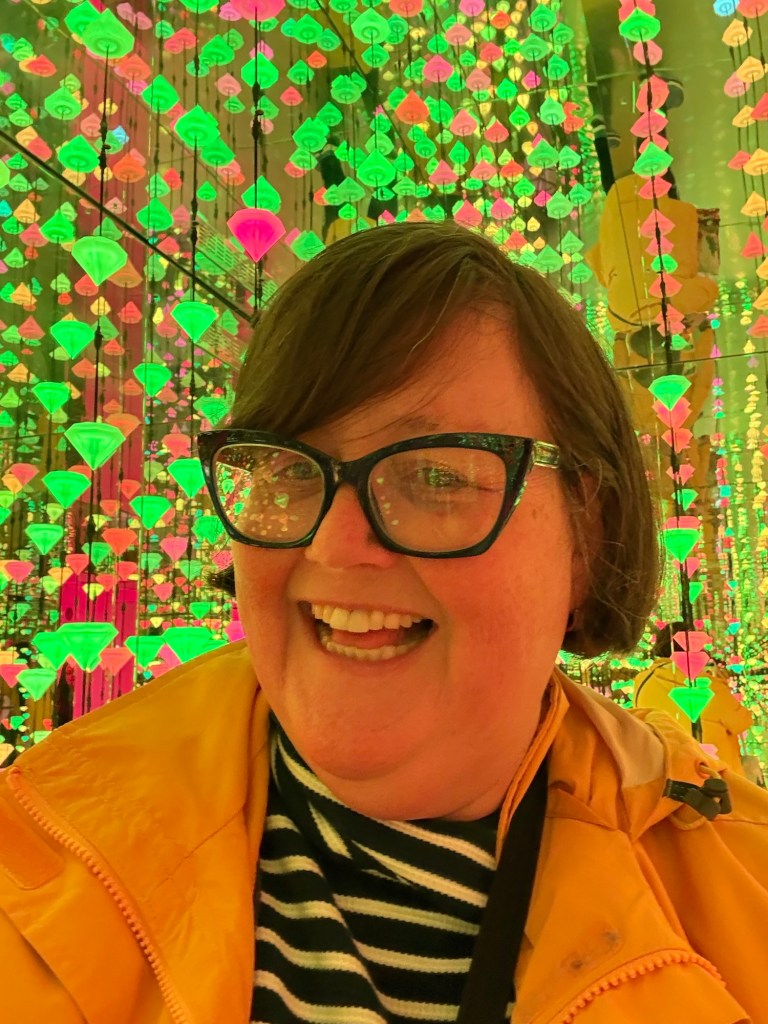
After spending the morning at Rembrandt’s House, we took the trolley to Museumplein. There we first visited the Museum of Contemporary Art. It was a real treat. It is located in a small art-deco building from the 1920s with a charming sculpture garden surrounding the museum. The exhibits included a fun Banksy exhibit downstairs and a star-studded exhibit upstairs including Keith Haring, Julian Opic and Jeff Koons.
Interestingly, it was the only museum where we did not need to buy tickets in advance. Over 20 years ago, on my first visit to Amsterdam, I was able to walk into Rembrandt’s House, the Rijksmuseum, the Van Gogh Museum and the Anne Frank House. Those days are long gone. We walked by the Van Gogh Museum and the line for those on standby was wrapped around the building.
For our next stop, we went to the Rijksmuseum where we had tickets. The museum let us in early and we had a fabulous lunch in the museum cafe. We sat next to a fun couple from Windsor England. They were on a cruise with a bus tour of Amsterdam and had a few hours off before returning to their ship. We shared travel stories and discussed our mutual dislike of Donald Trump and Boris Johnson . Upstairs in the Dutch Masters exhibit, we had another chat with a tourist from Toronto Canada. When people are on holiday, they are usually so relaxed and receptive to meeting new people.
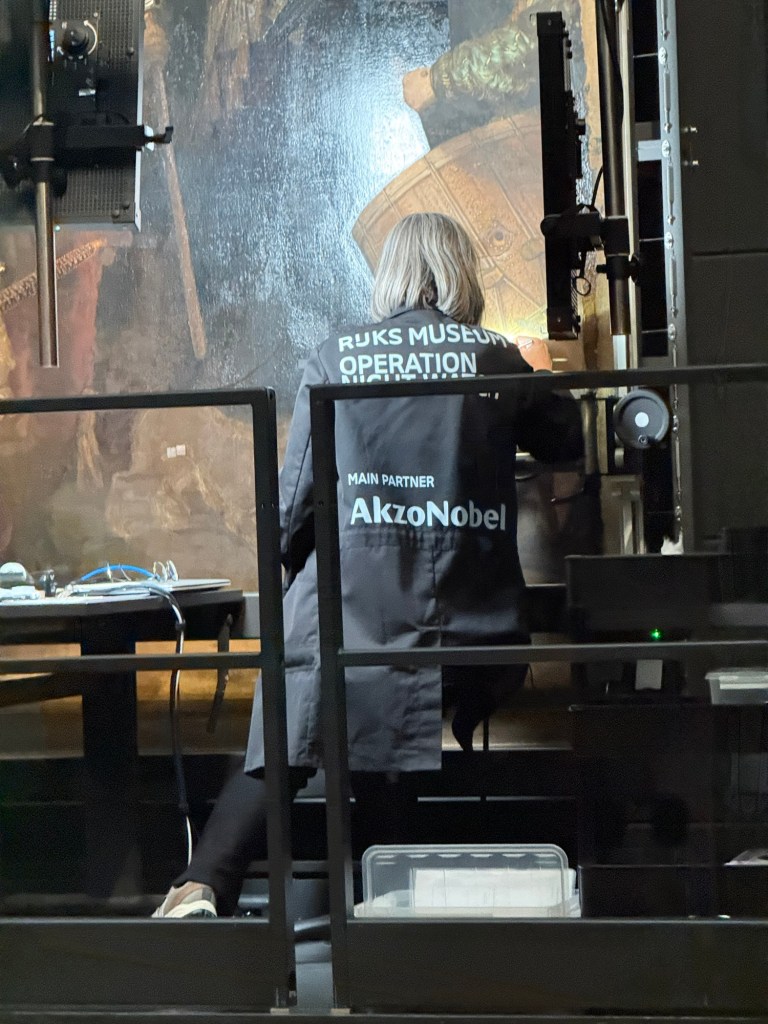
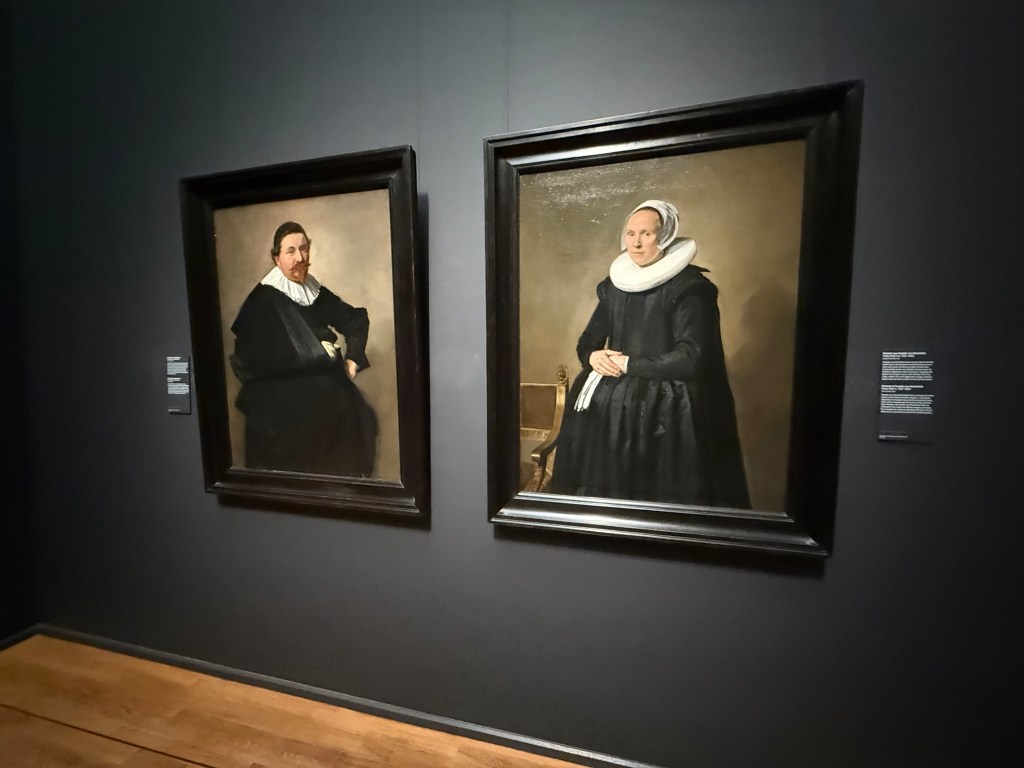
The Dutch Masters collection is impressive. Having just visited Rembrandt’s House, it was fun to see the museum’s extensive number of Rembrandt paintings. The only disappointment is that The Night Watch by Rembrandt is undergoing an extensive restoration that is anticipated to take 10 to 15 years. The museum has hired 8 art restorers to undertake this impressive project. This project is being done in public and visitors are able to see the restoration work being done. The first stage is the painstaking process of removing the old varnish. As a reminder, this painting has been vandalized twice – including in 1975 when a deranged man slashed it with a bread knife.
Our final museum visit for the day was an evening visit to the Anne Frank House. The museum is so popular that it stays opened until 10 PM at night. Our tickets were for 7PM and the museum was filled with a combination of people from The Netherlands and around the world. Tickets are only released online 6 weeks prior to the desired date. I actually had to set my alarm for 2 AM on a particular Tuesday to purchase our tickets. When I successfully purchased our tickets, I felt like I had won the lottery. I had previously visited the museum over 20 years ago and a lot has changed. The audio guide is phenomenal as is the revised curation of the Frank hiding place. The tour includes great video clips of Otto Frank as well of the former employees who helped with the hiding process. There was also a temporary exhibit about Otto Frank’s experience traveling from the concentration camp back to Amsterdam. The museum is extremely poignant and worth visiting. As an FYI, no photos are allowed.
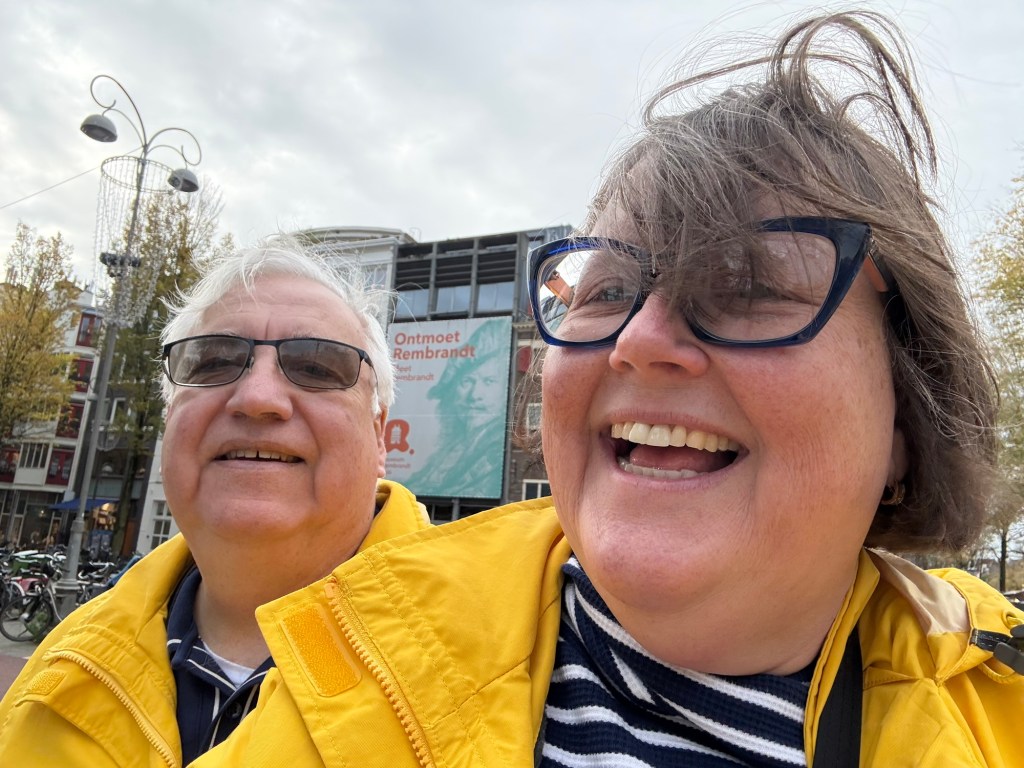
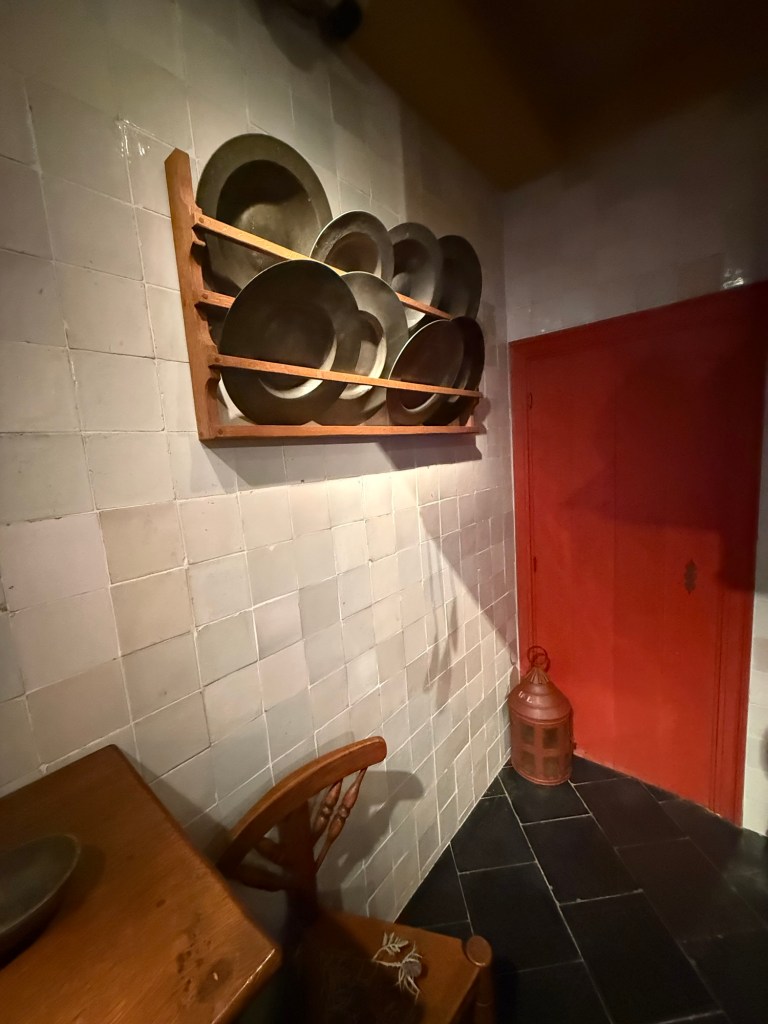
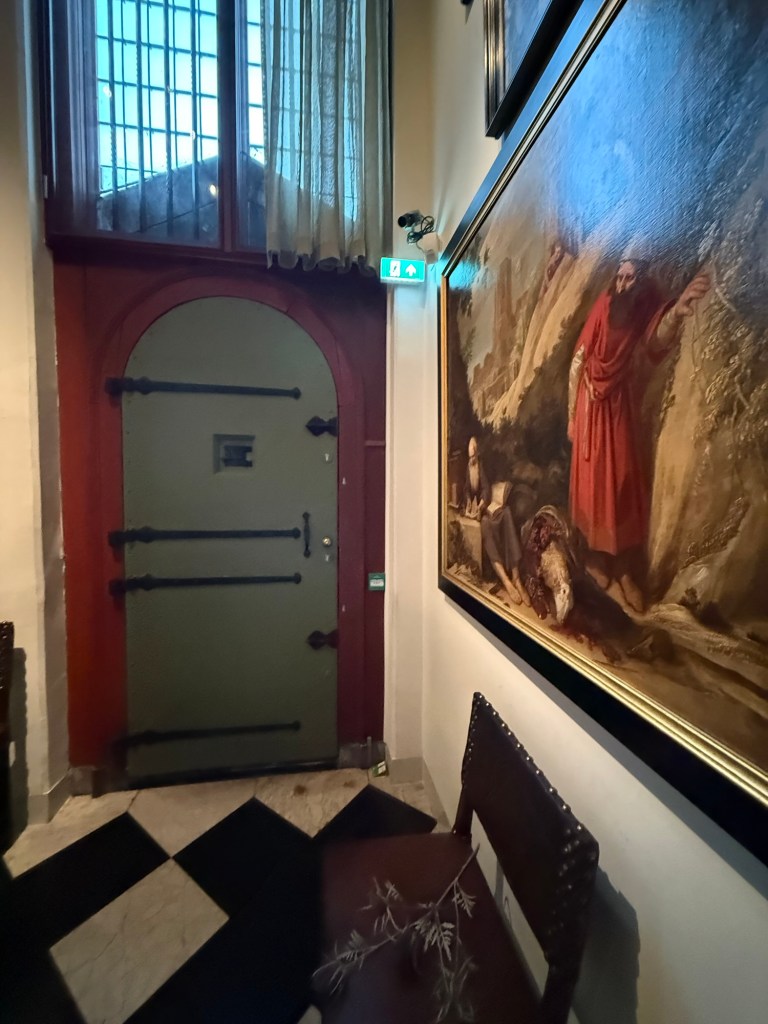
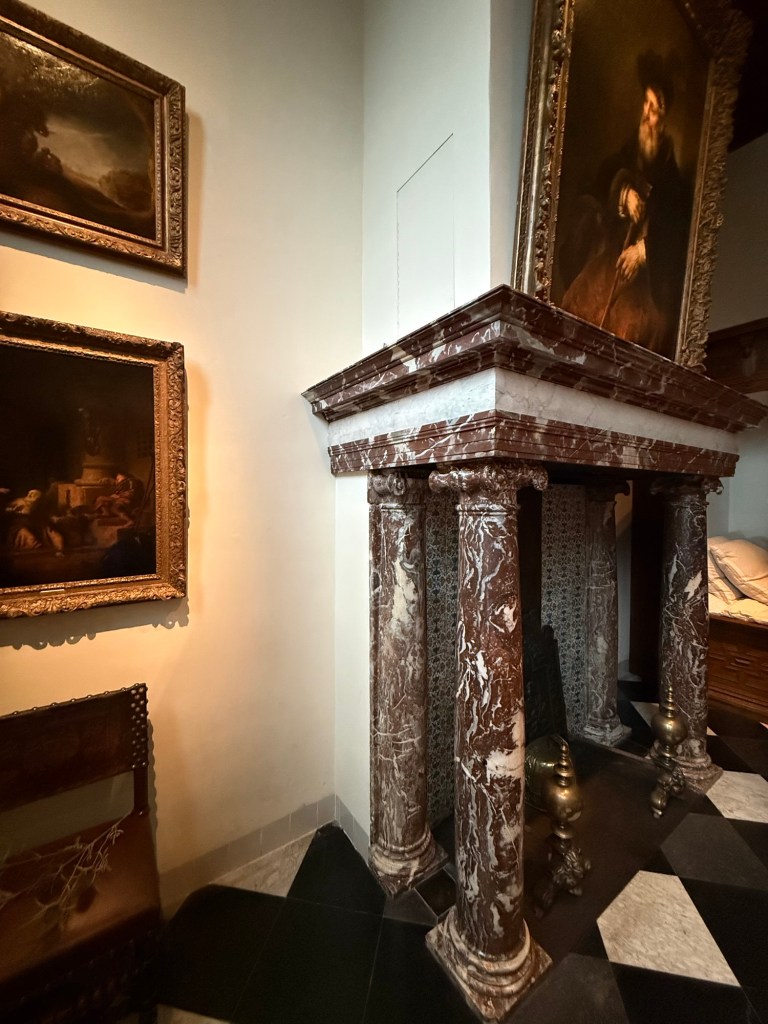
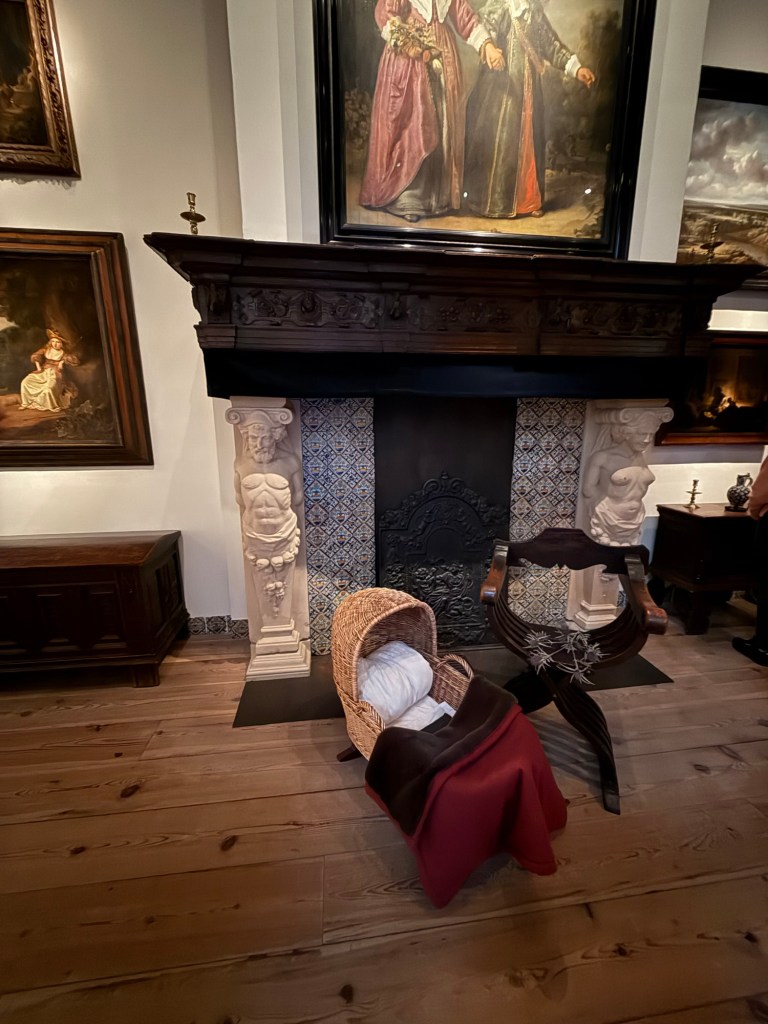
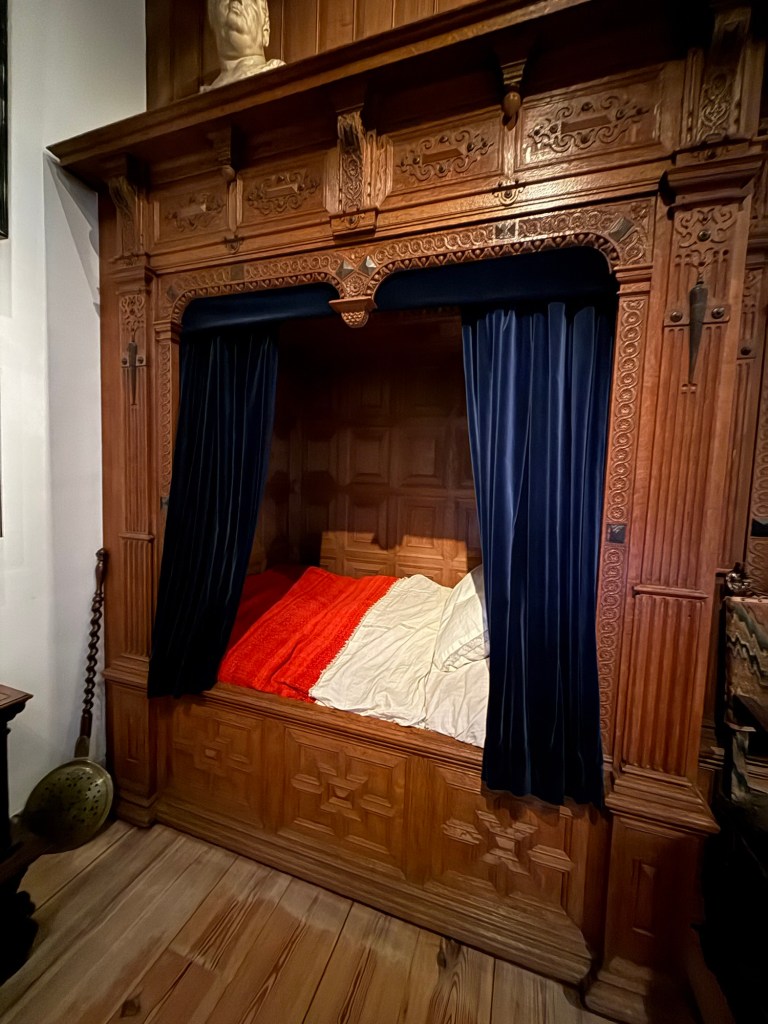
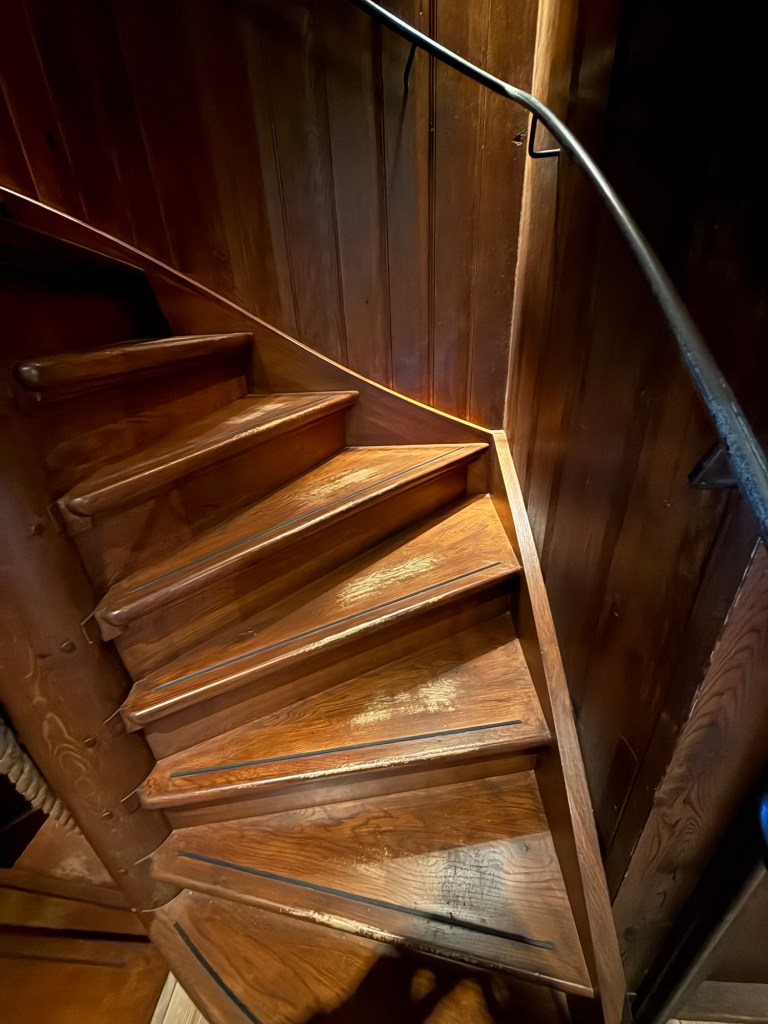
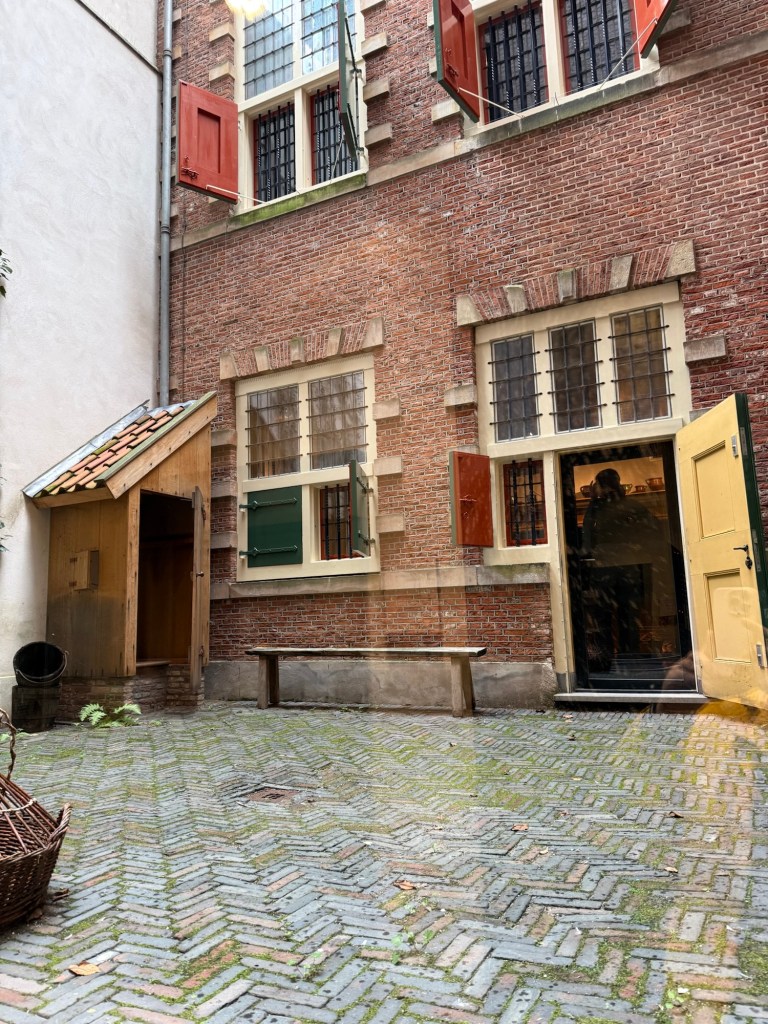
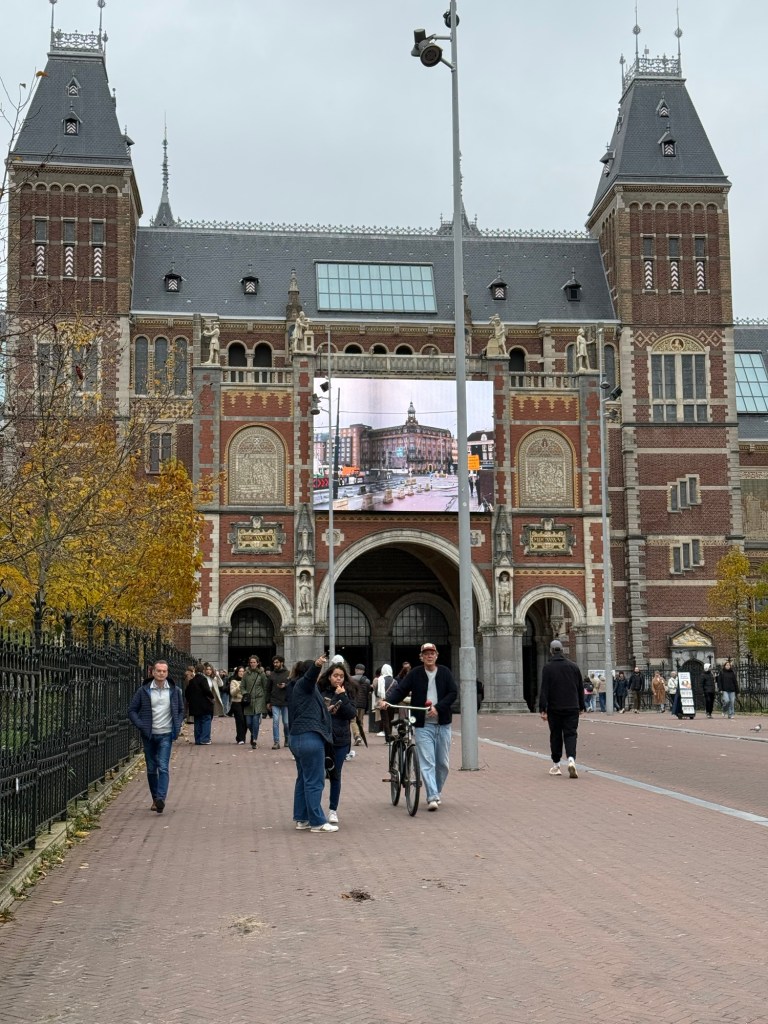
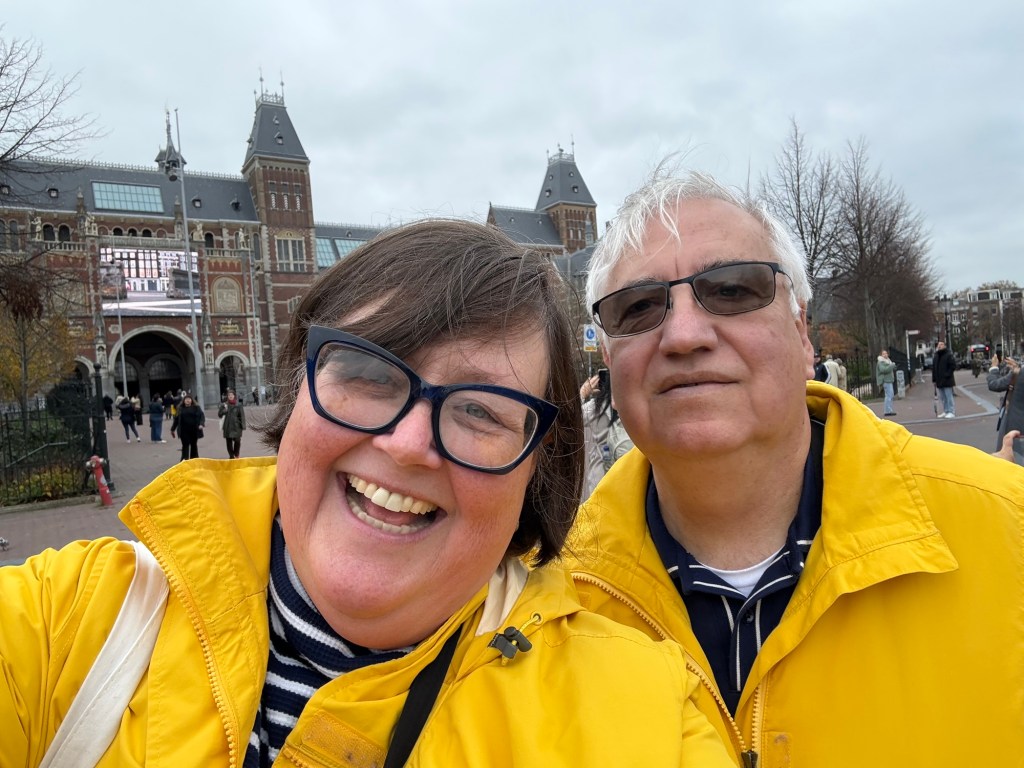
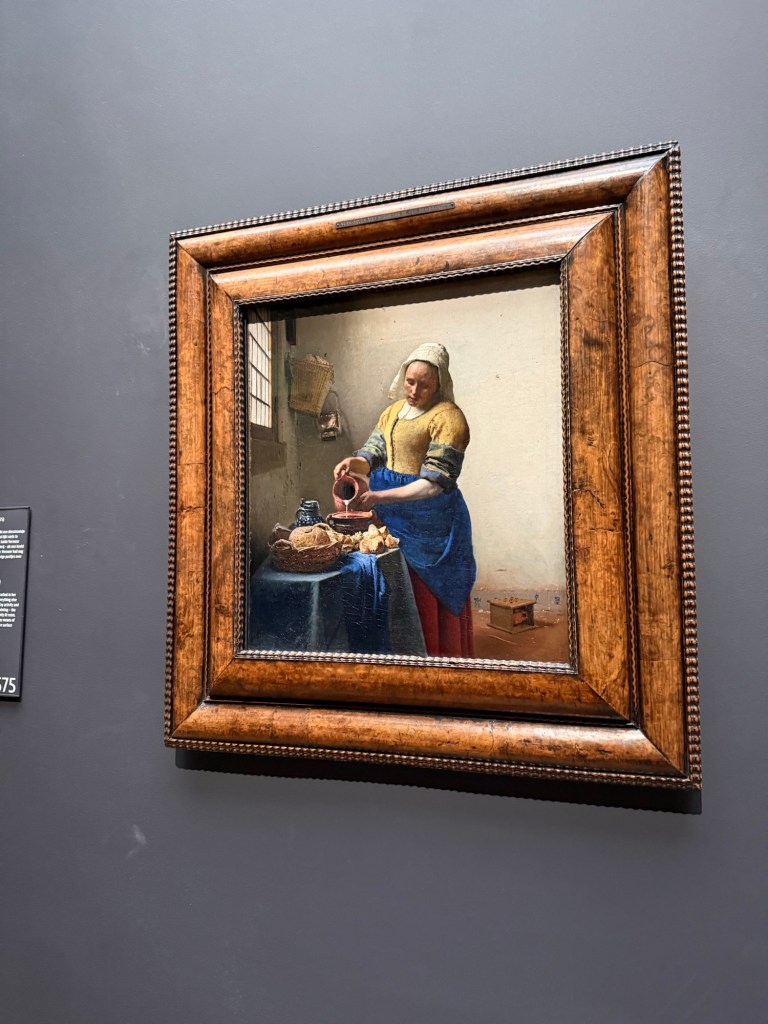
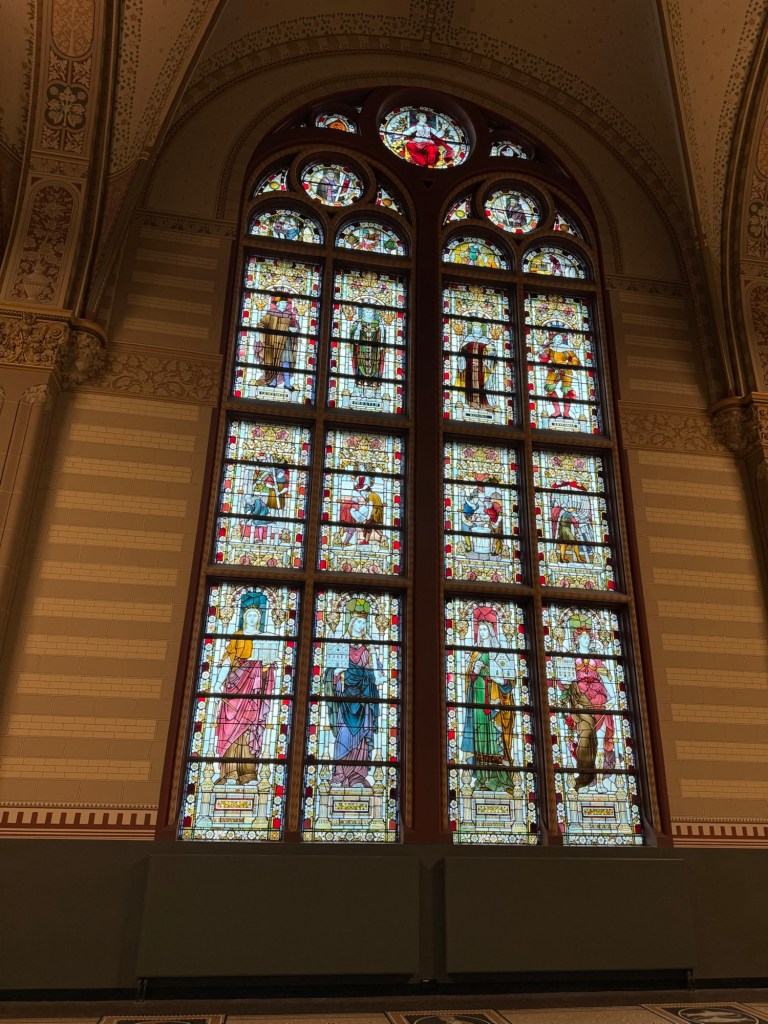
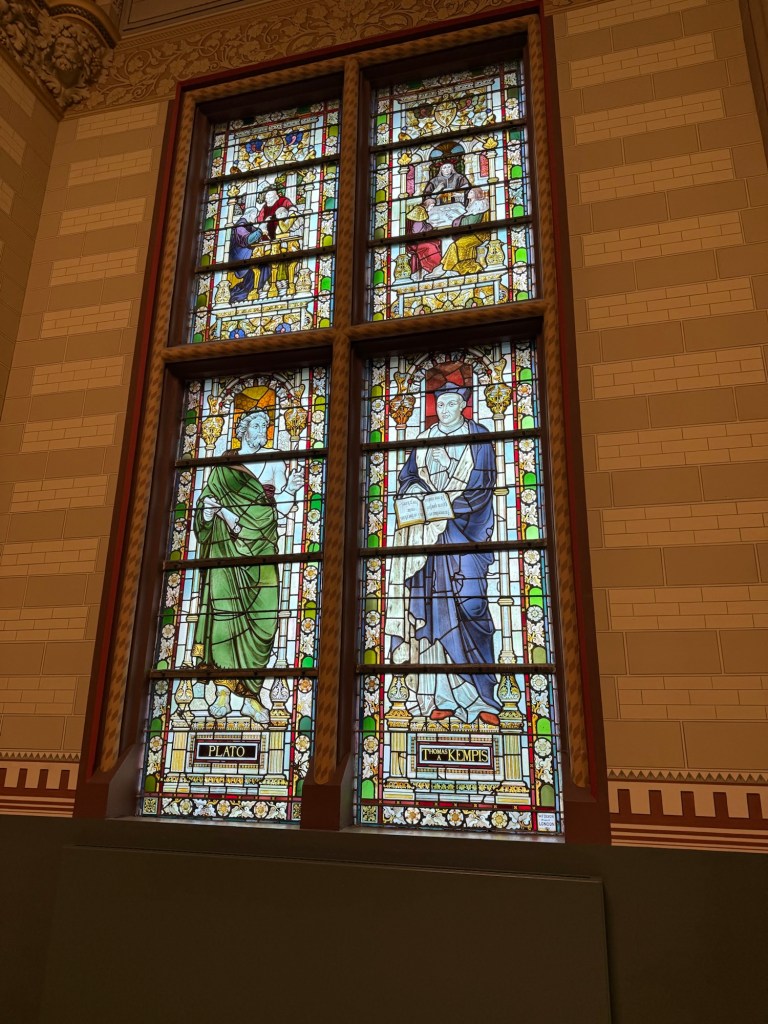
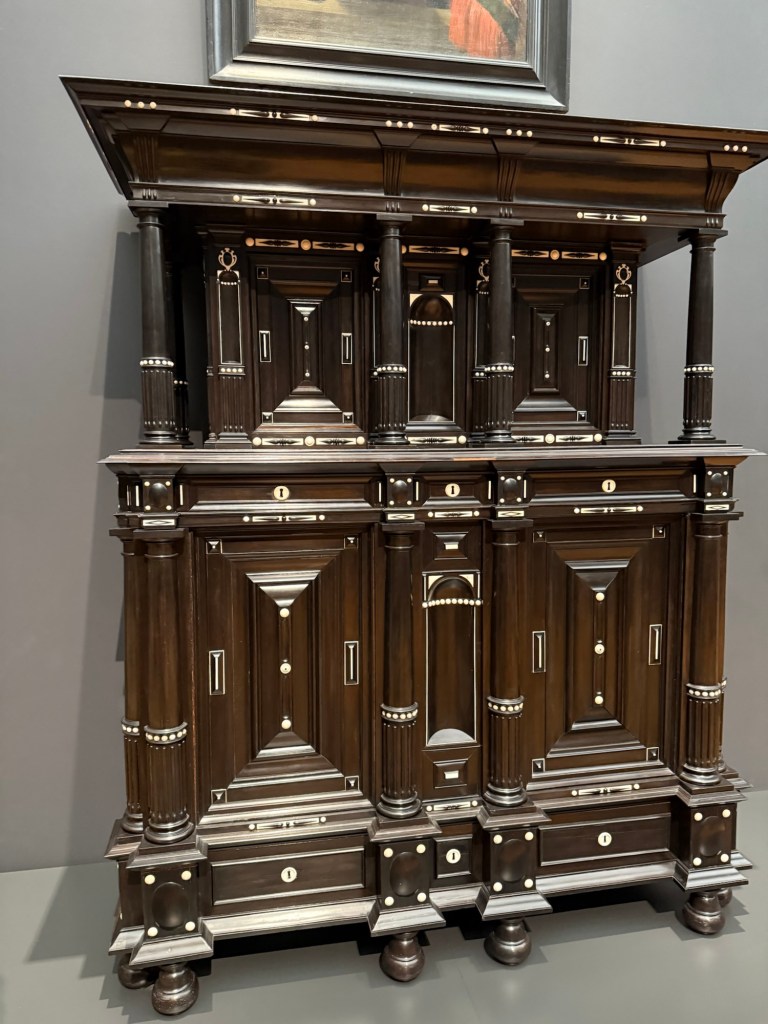
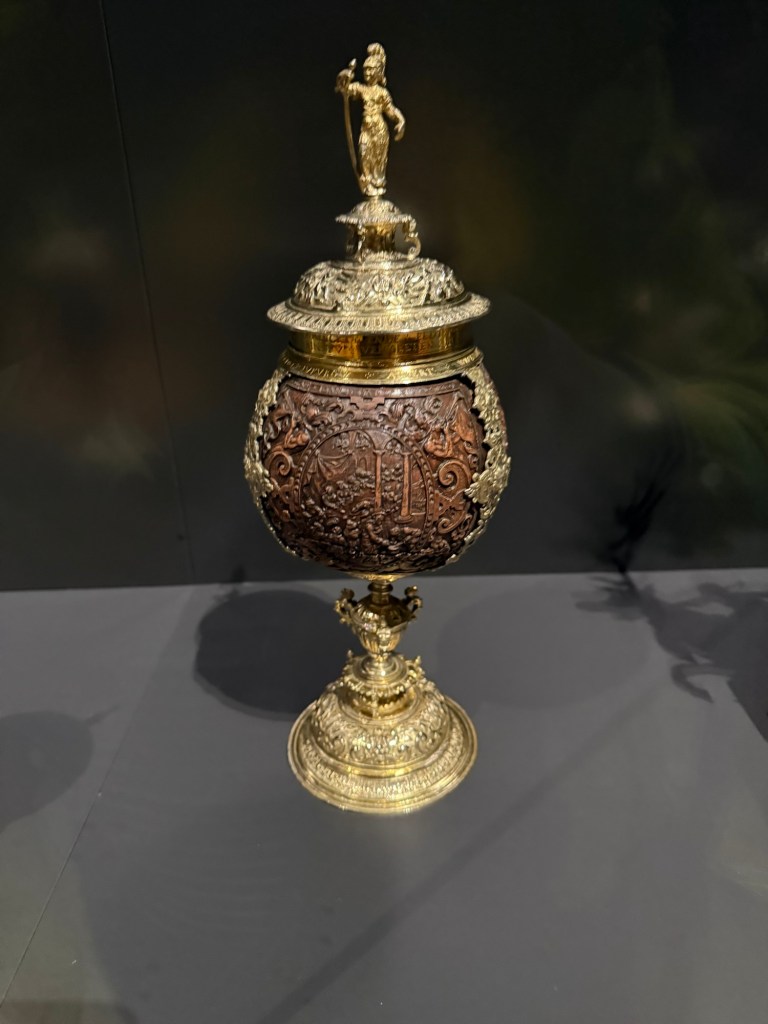
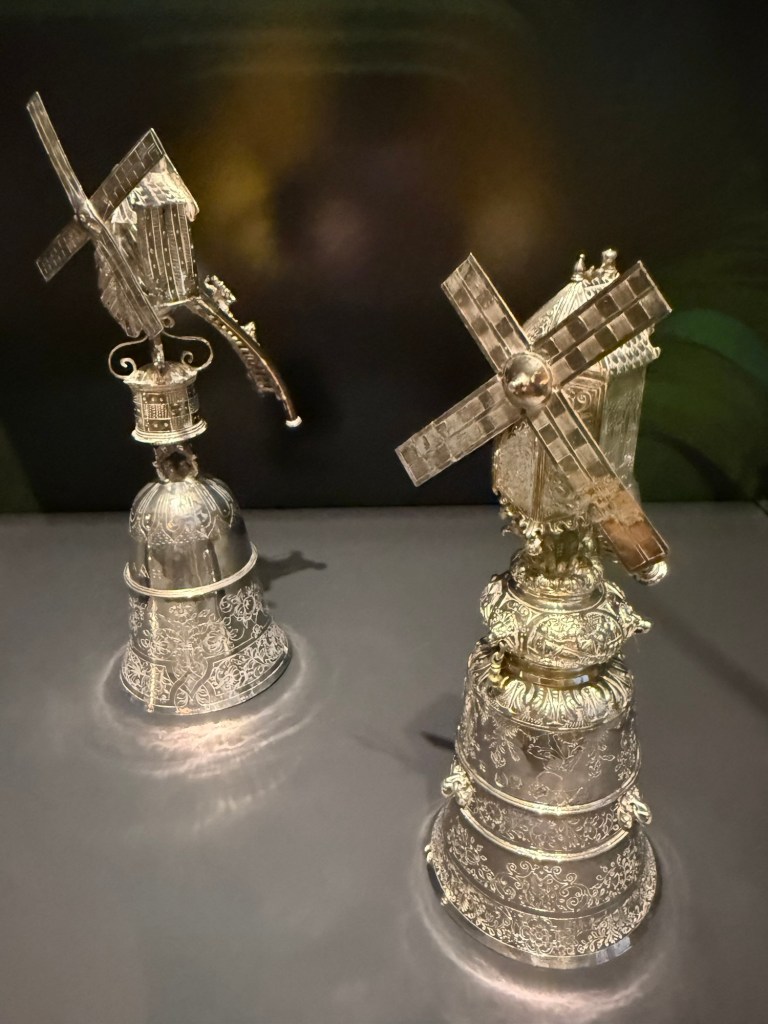
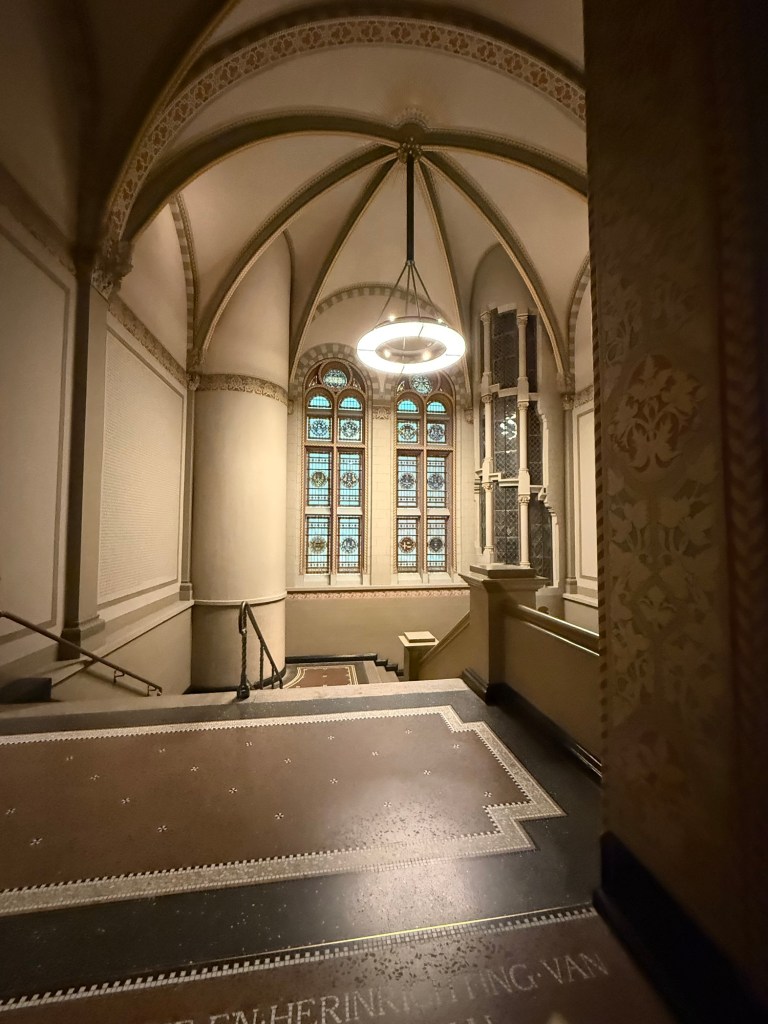
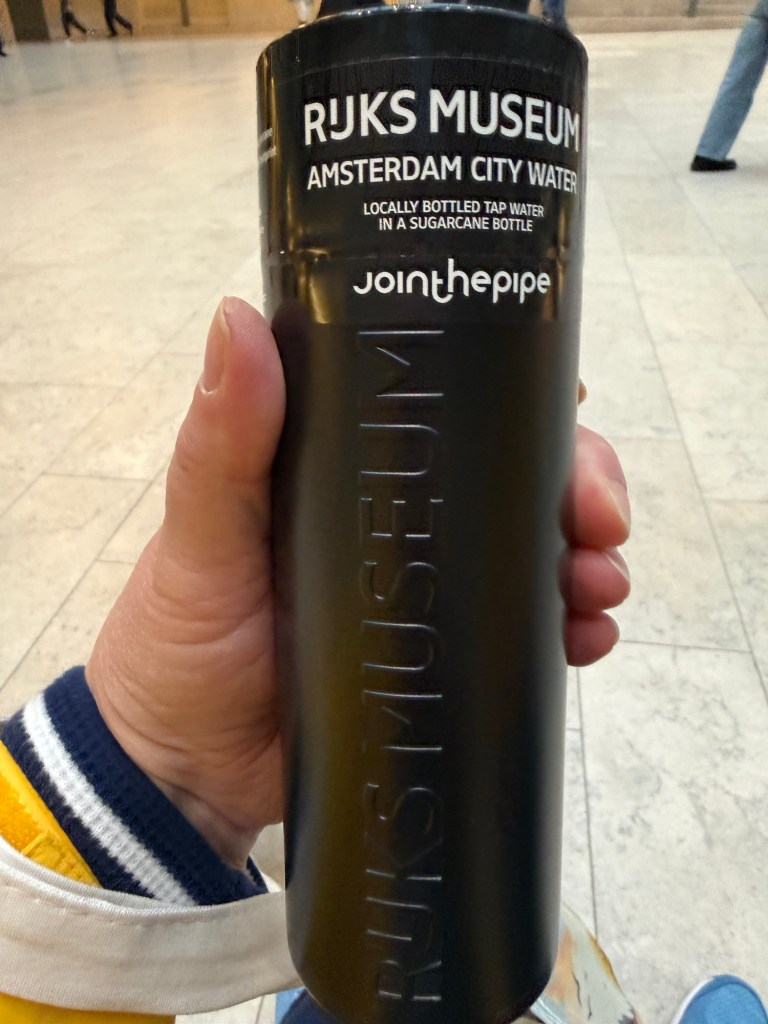
Rembrandt’s House Rembrandt’s House Standing in Front of Rembrandt’s House Kitchen At Rembrandt’s House Kitchen At Rembrandt’s House Foyer At Rembrandt’s House Main Reception Room At Rembrandt’s House Main Living Room At Rembrandt’s House Rembrandt’s Studio Rembrandt’s Studio One of the Box Beds in Rembrandt’s House when People Slept Sitting UpView of Rembrandt’s Studio Another View of Rembrandt’s Studio Lots of Steep Steps At Rembrandt’s House Teaching Studio Room At Rembrandt’s House Center Courtyard of Rembrandt’s House Rembrandt’s House Has A Great Audio Guide Museum of Contemporary Art in Amsterdam Courtyard Sculpture Exhibit At the Museum of Contemporary Art Garden At Museum of Contemporary Art in Amsterdam Interactive Sculpture At the Museum of Contemporary Art Part of the Museum’s Banksy Collection Art-Deco Detail of Museum of Contemporary Art in Amsterdam Art-Deco of Museum of Contemporary Art in Amsterdam Part of the Banksy Exhibit Banksy Created a Series of Gangster Rat Paintings Amazing Opic Sculpture Painting At the Museum of Contemporary Art Interactive Exhibit at the Museum of Contemporary Art Interactive Exhibit at the Museum of Contemporary ArtInteractive Exhibit at the Museum of Contemporary Art Front Exterior of the Rijksmuseum Exterior Front of the Rijksmuseum Restorer at Work on The Night WatchRestoration of The Night Watch Vermeer’s The Milkmaid from 1658Stained Glass Windows At the Rijksmuseum Stained Glass Windows At the Rijksmuseum Dutch Masters Section At the Rijksmuseum The Rijksmuseum Has a Beautiful Collection of Furniture This Is An actual Carved Coconut Salt Mills Beautiful Architecture At the Rijksmuseum Souvenir Water from the Rijksmuseum
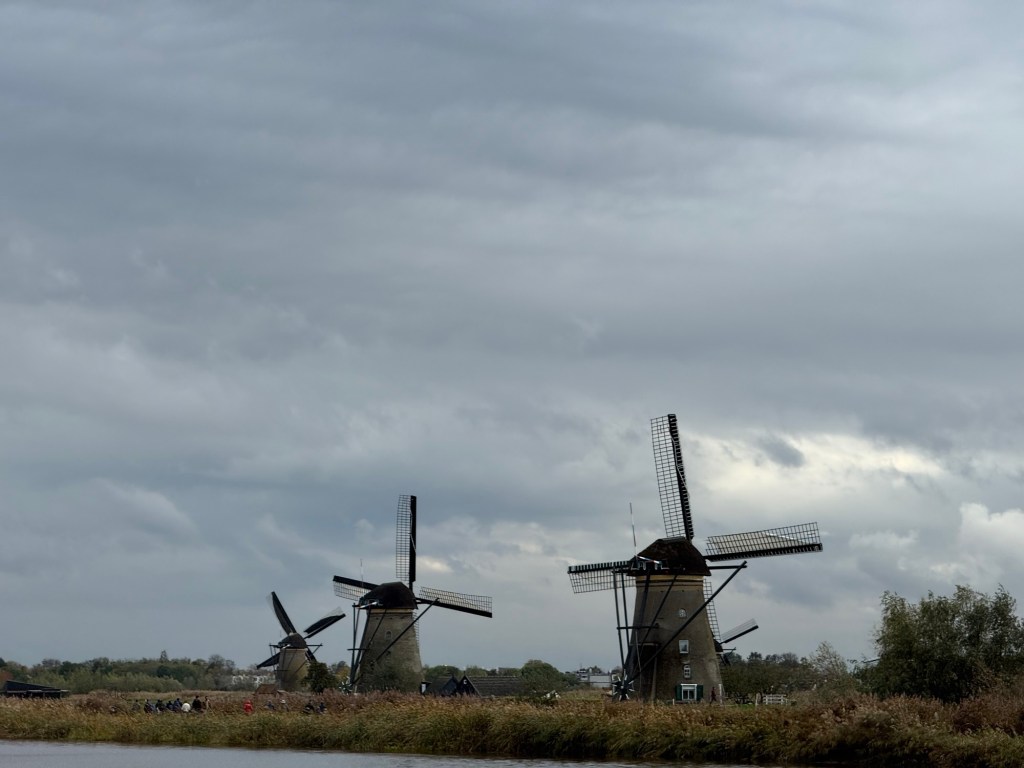
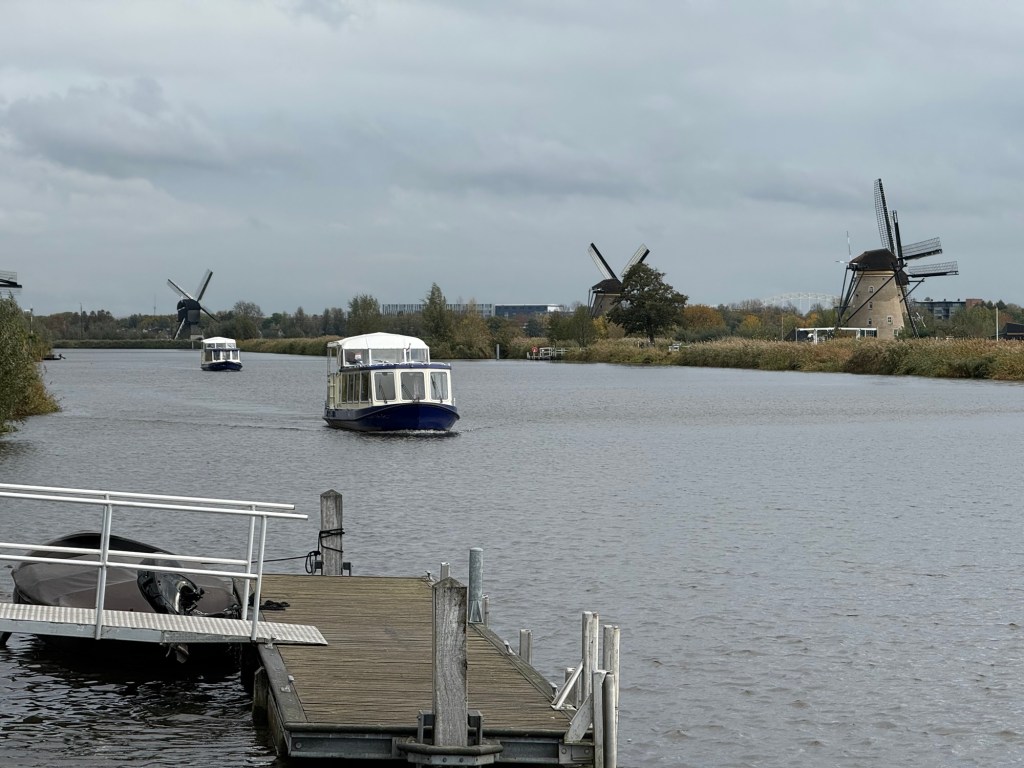
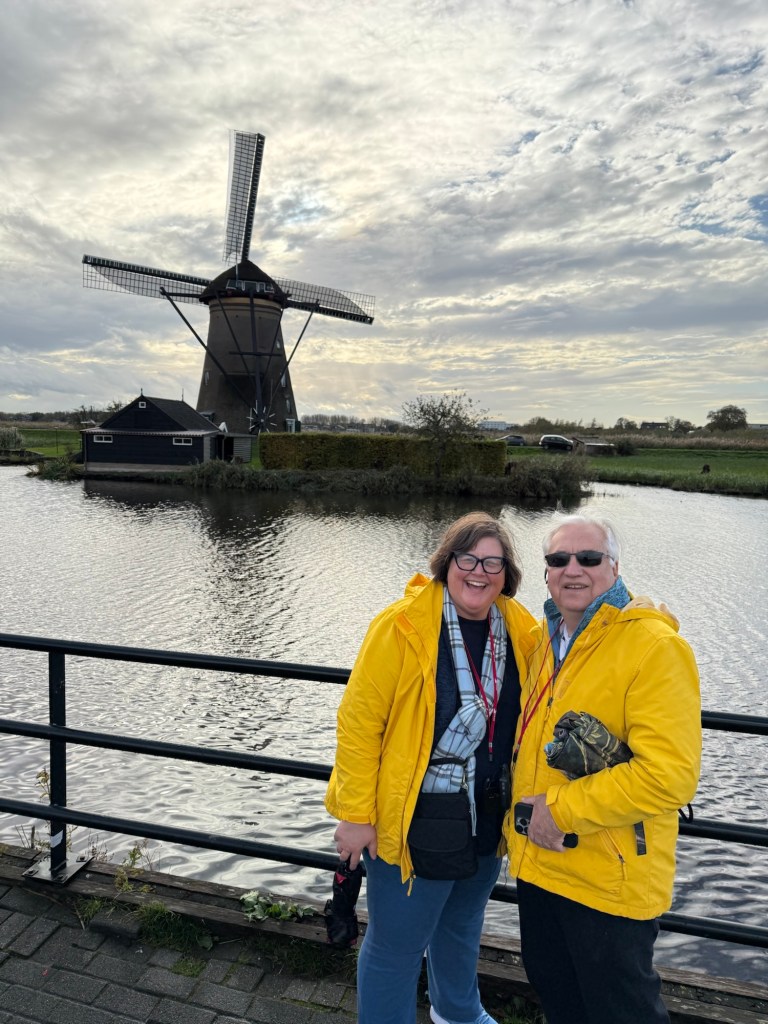
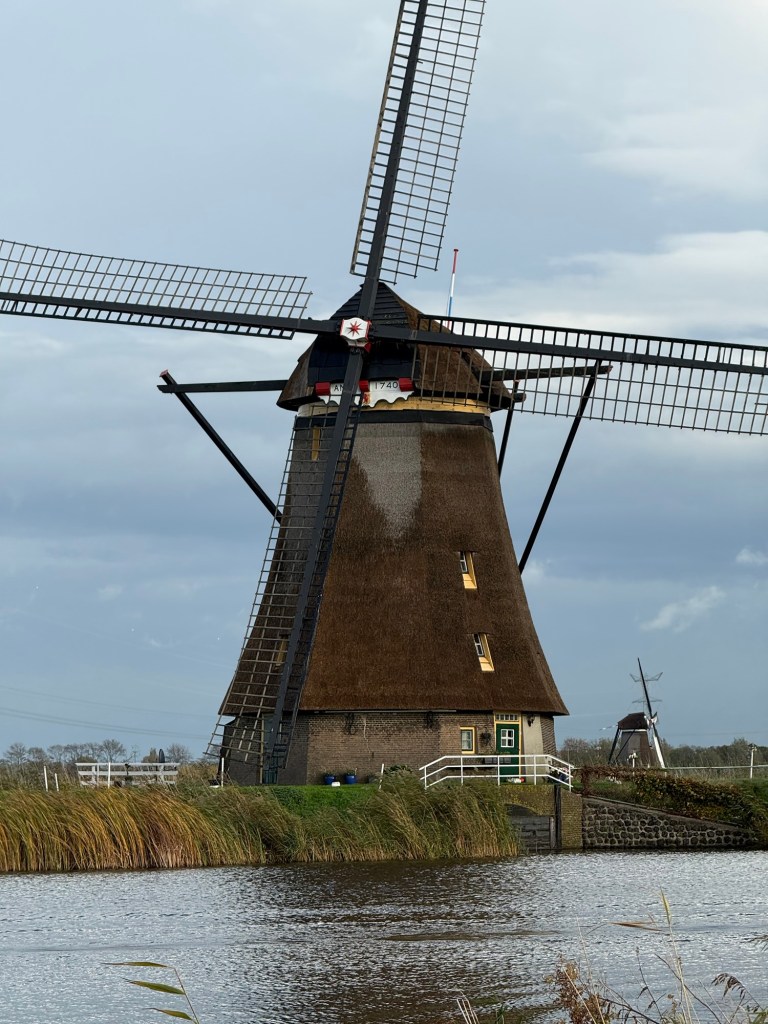
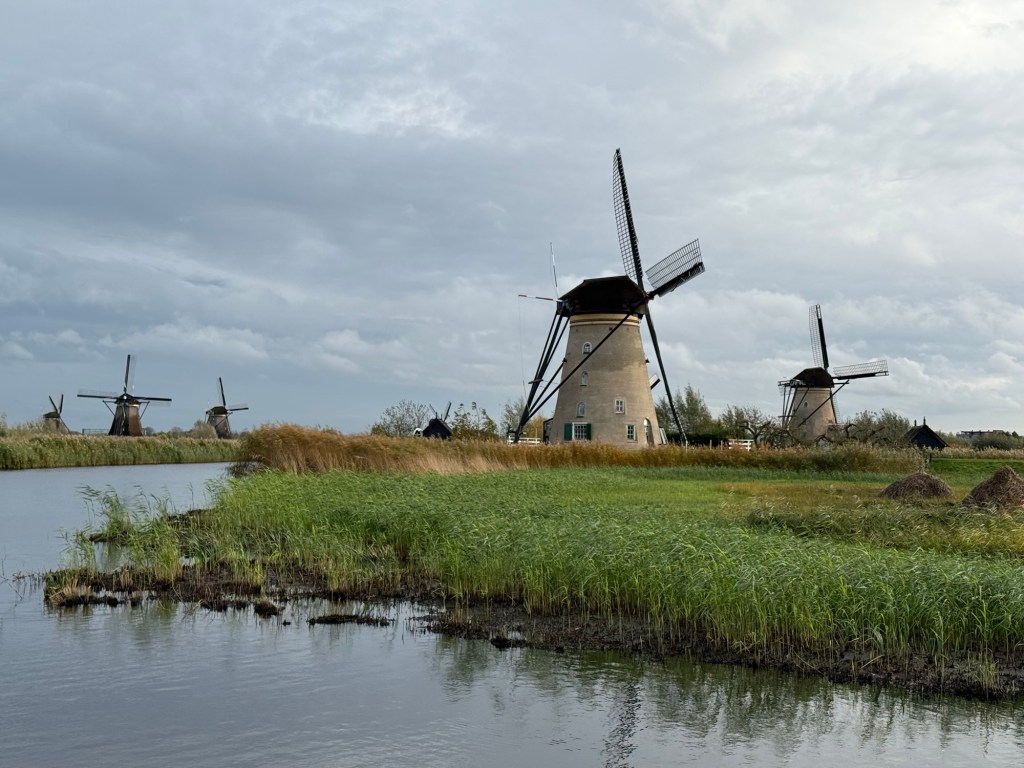
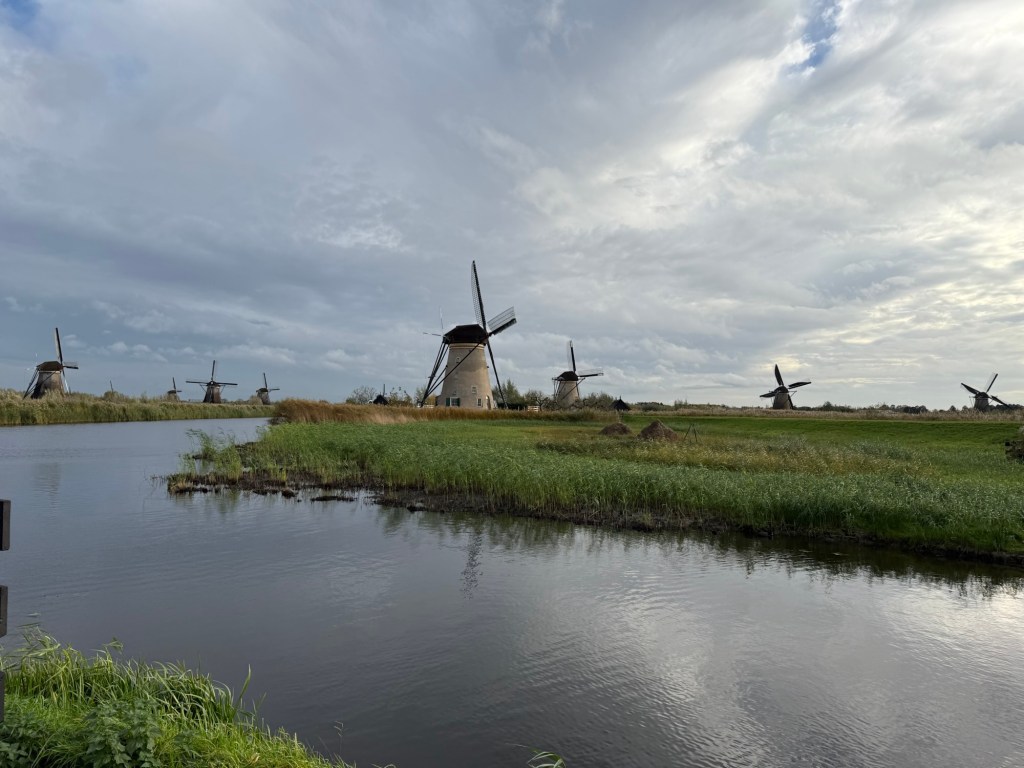
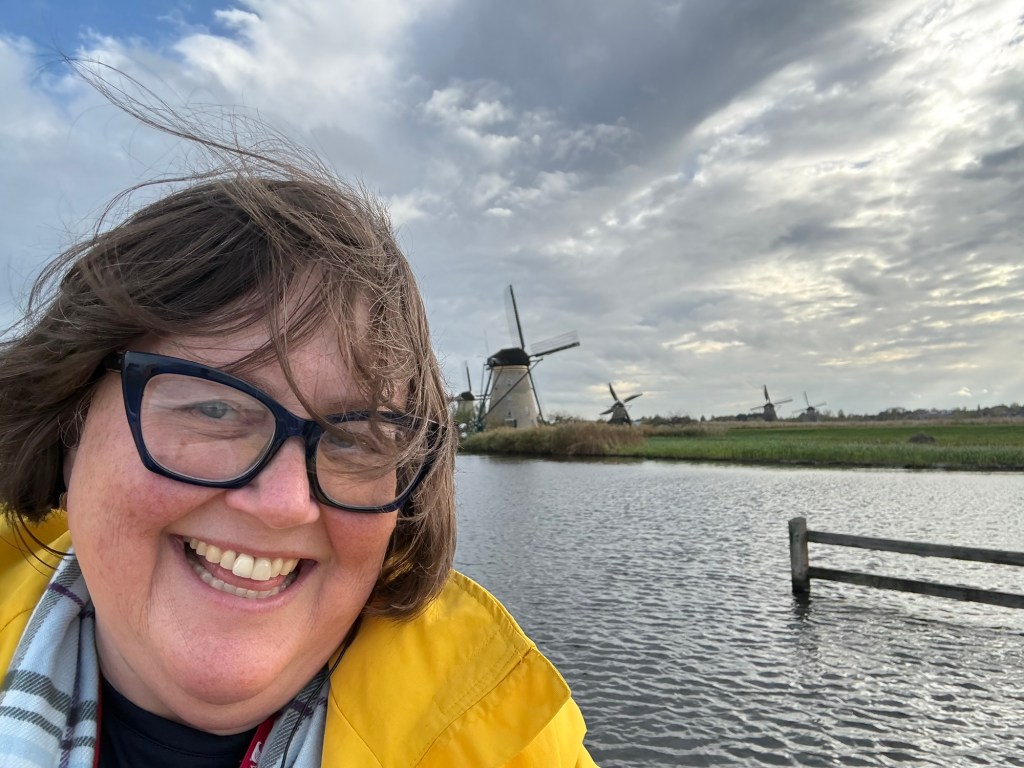
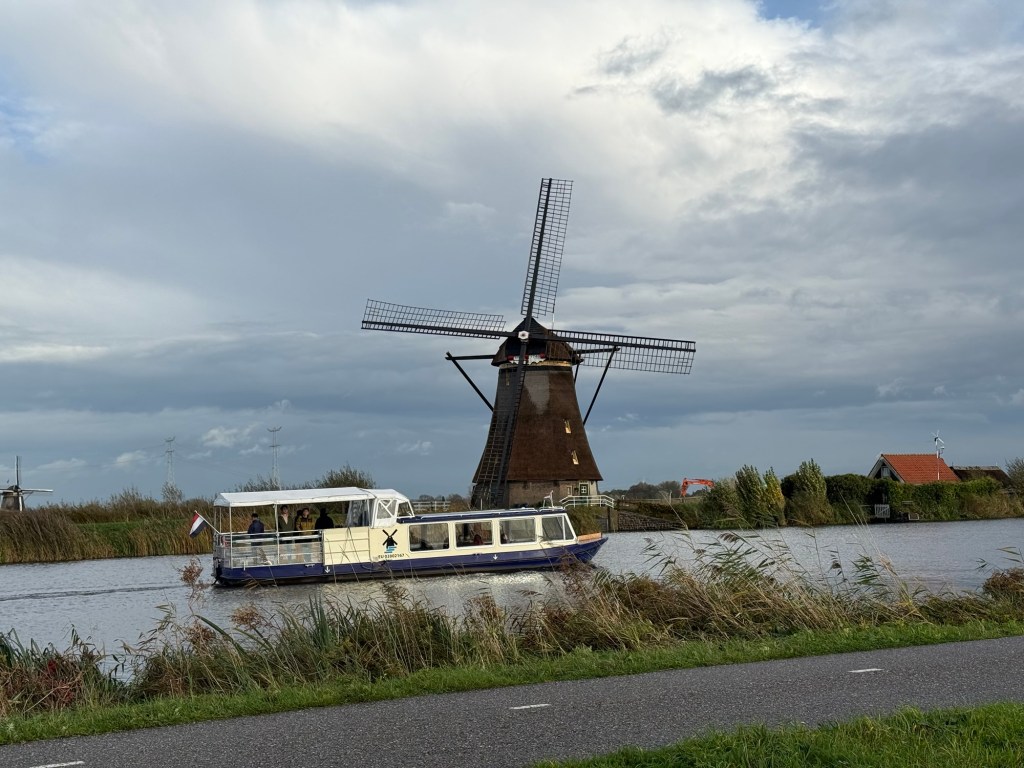
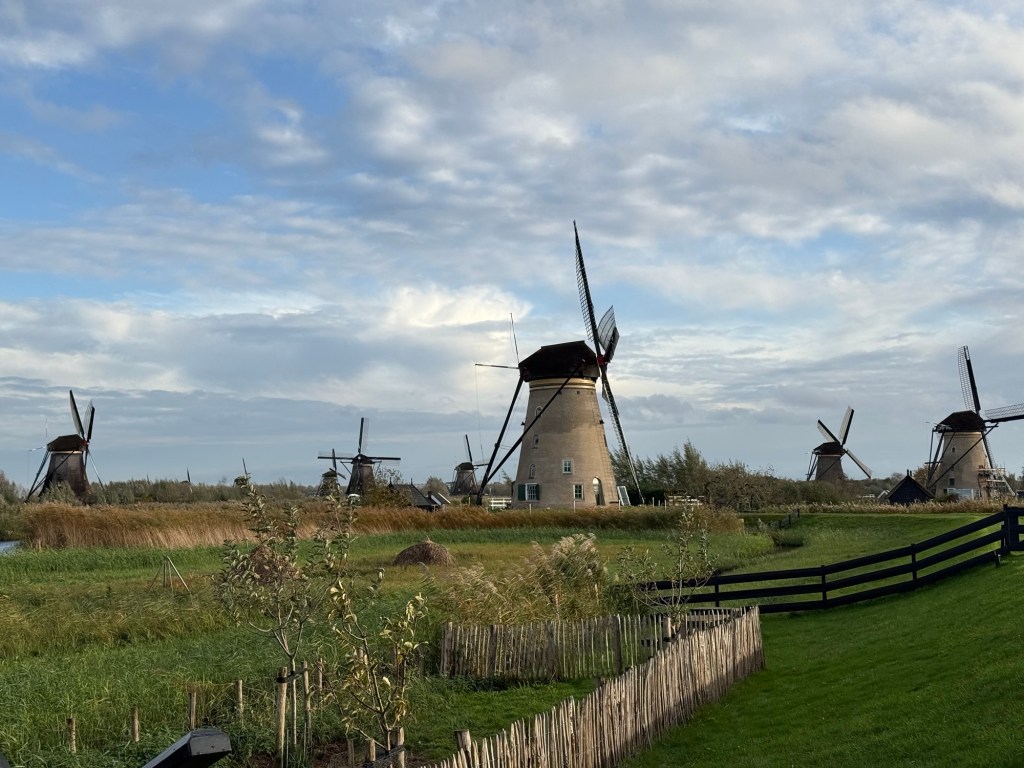
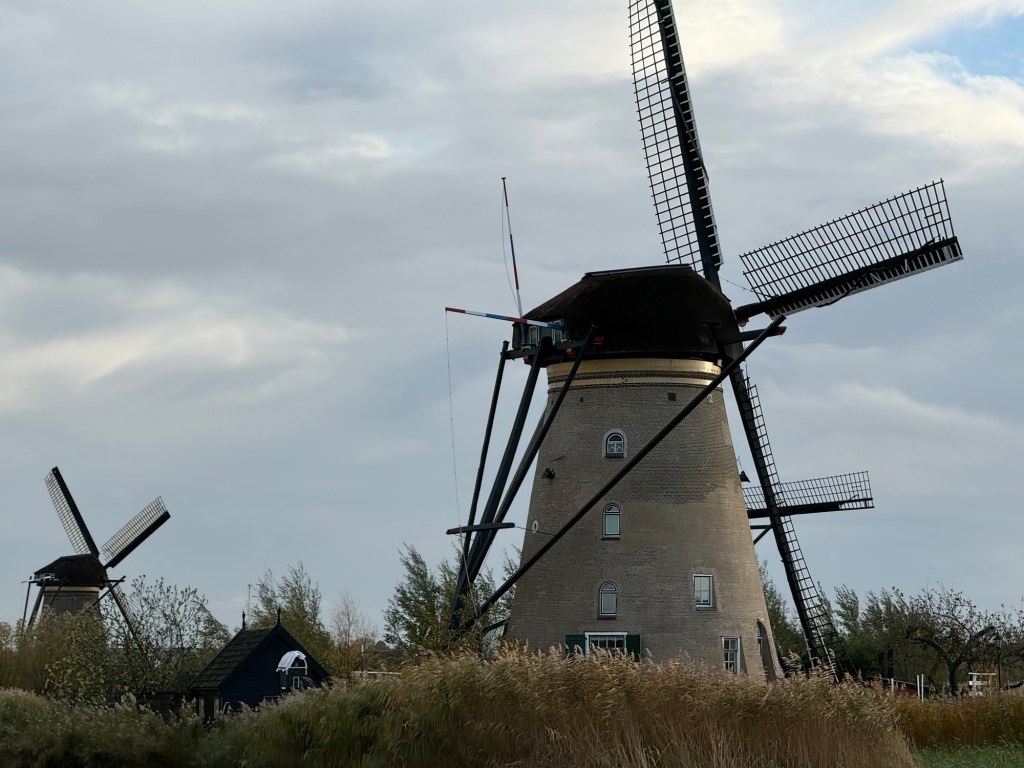
We visited Kinderdijk to see the windmills and they didn’t disappoint. At one, there were over 11,000 windmills throughout the country. Now, there are approximately 1,100. To be a miller requires years of training. If you make a mistake, you can cause the windmill to self-ignite.
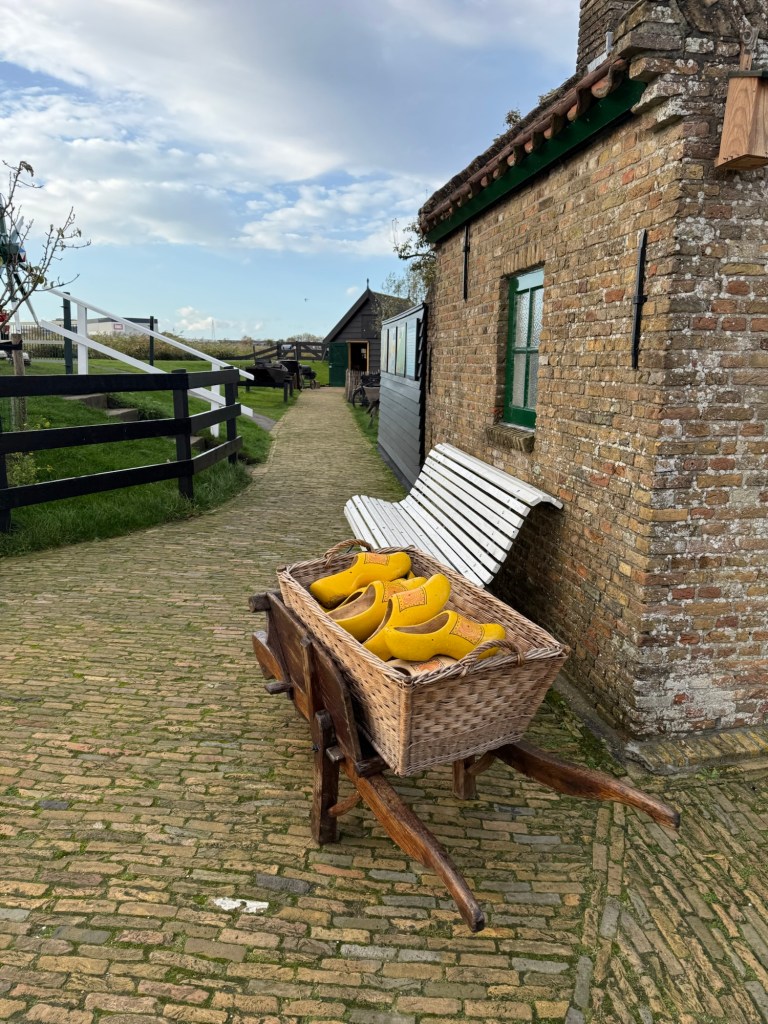
Also, it’s no myth – they really wear wooden clogs. Apparently, wooden clogs are waterproof and inexperienced. The millers we met wore unpainted clogs. Yellow clogs became popular as well because yellow use to be the cheapest color of paint. Painted designs on the clogs indicate which region of the Netherlands the person is from.
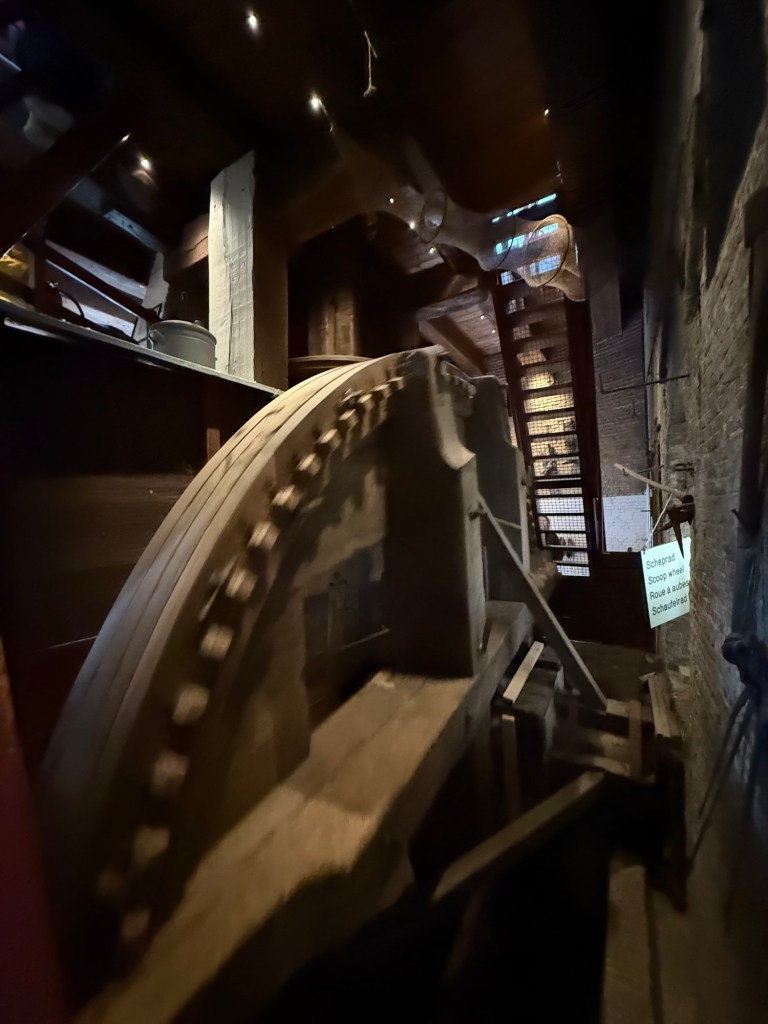
The windmills we visited serve a critical function. They pump water into the rivers to prevent flooding in the Netherlands. They are so hypnotic to watch. If we didn’t have an appointment with a cheese maker, I would have stayed for hours watching.
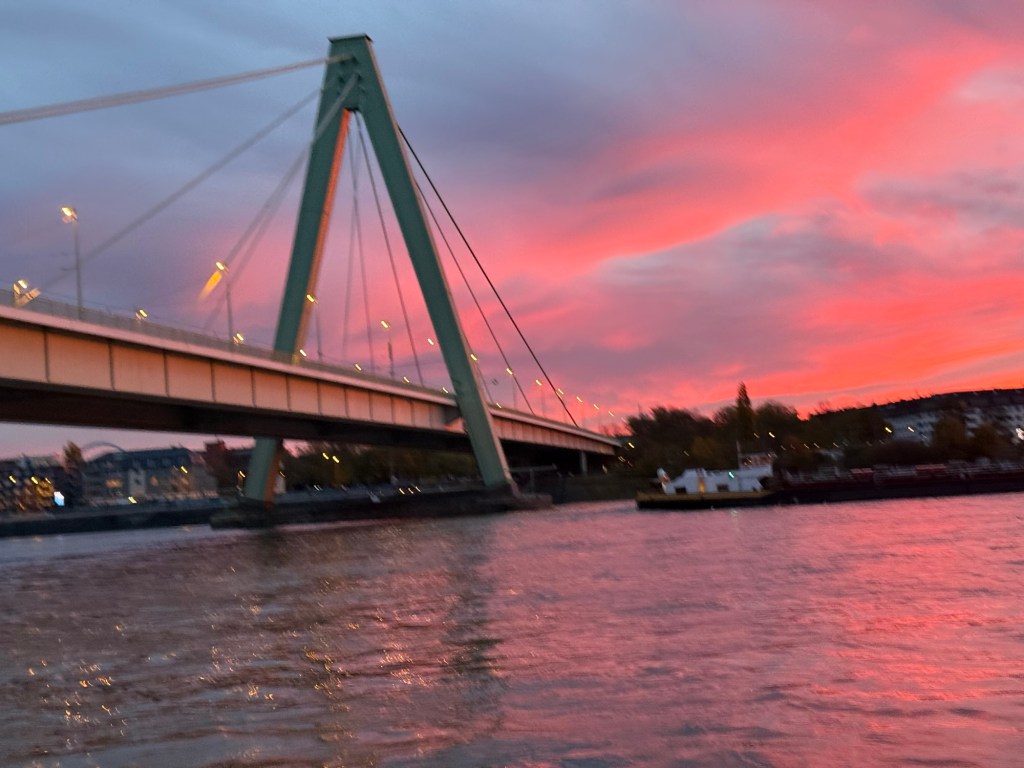
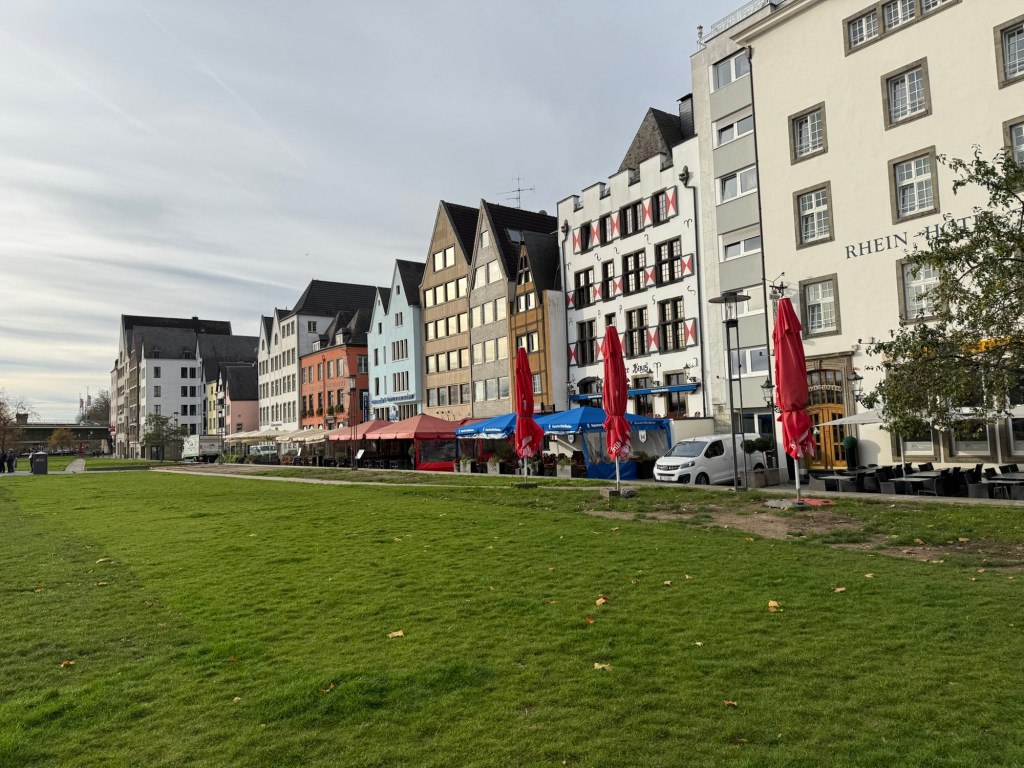
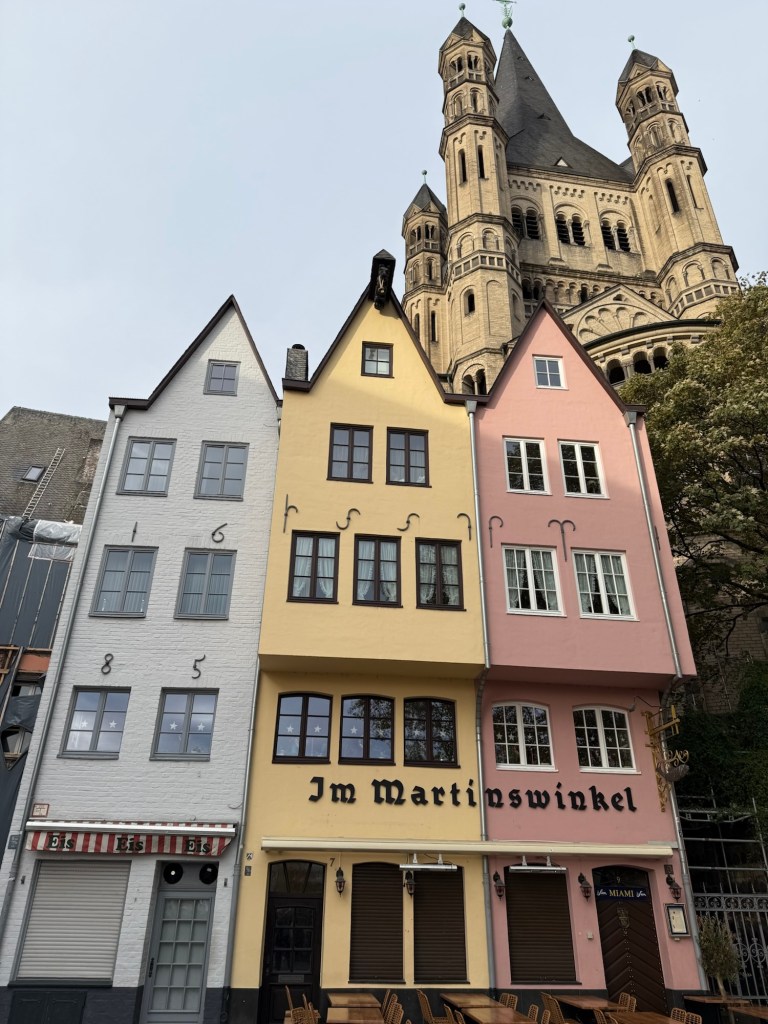
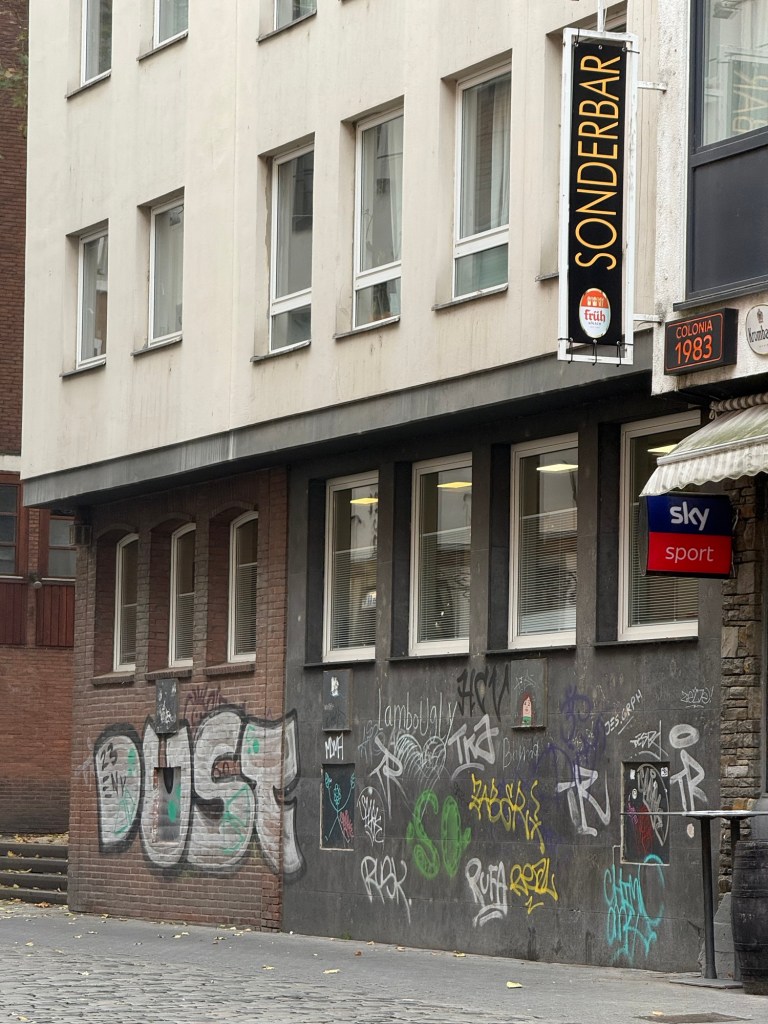
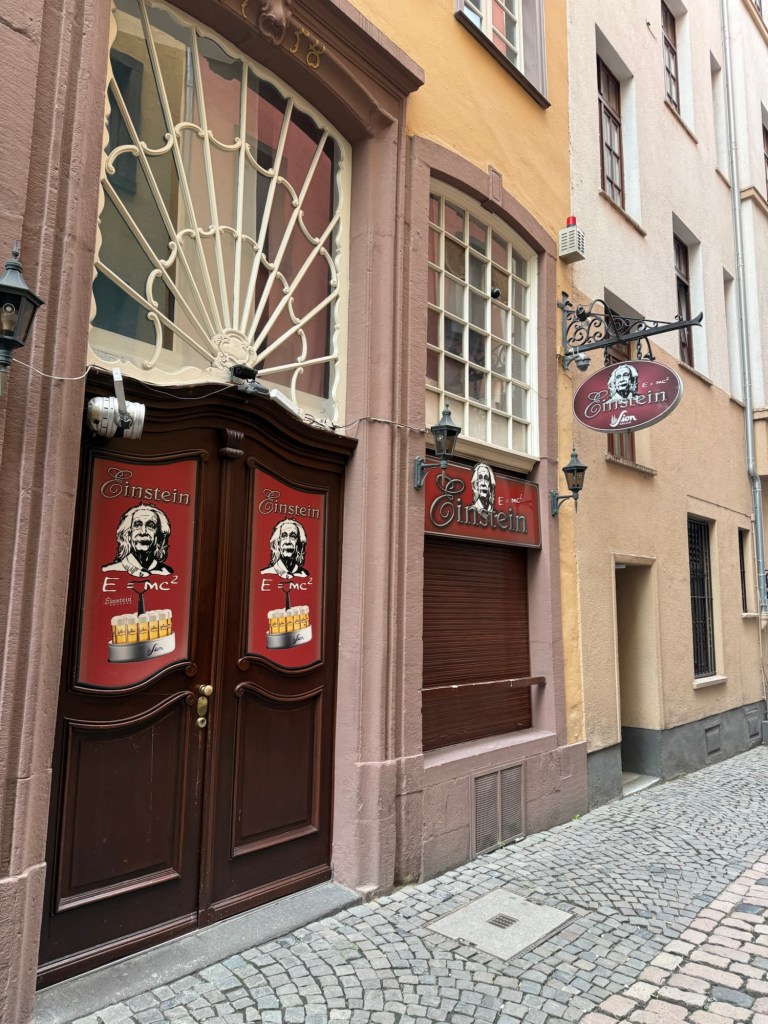
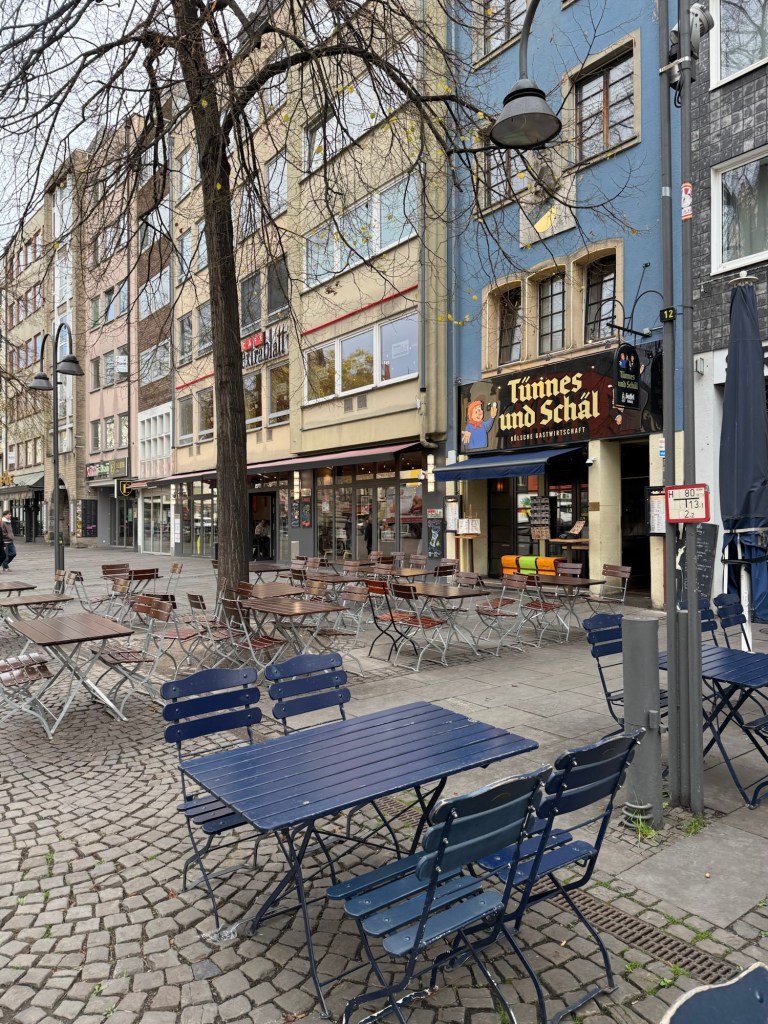
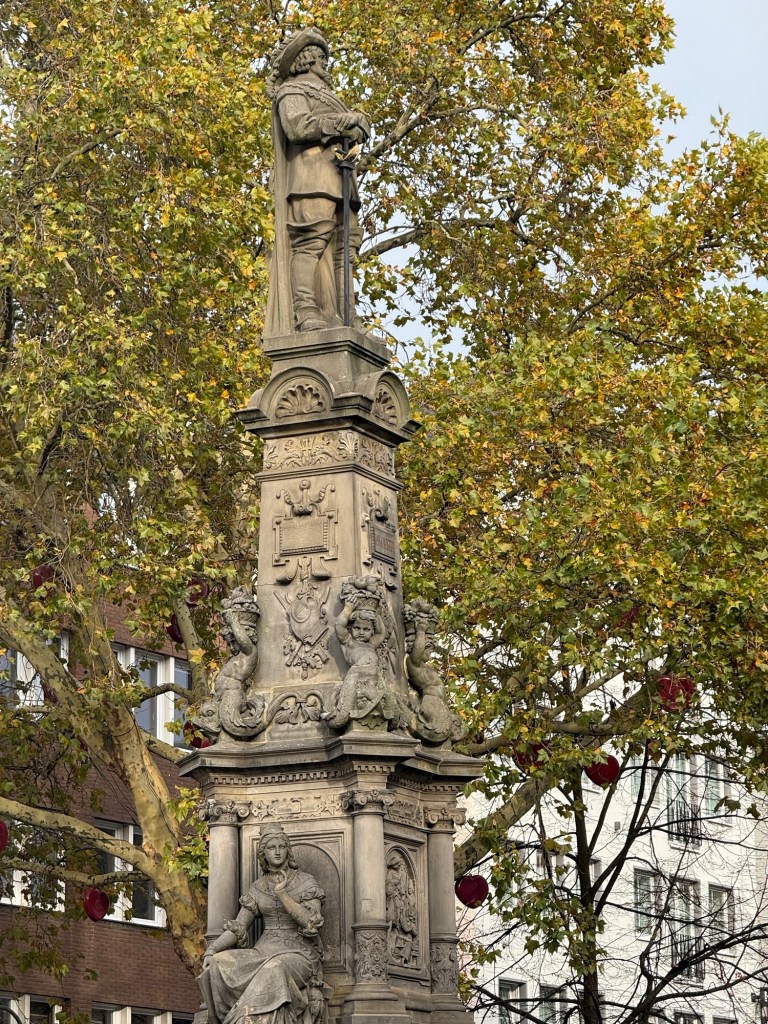
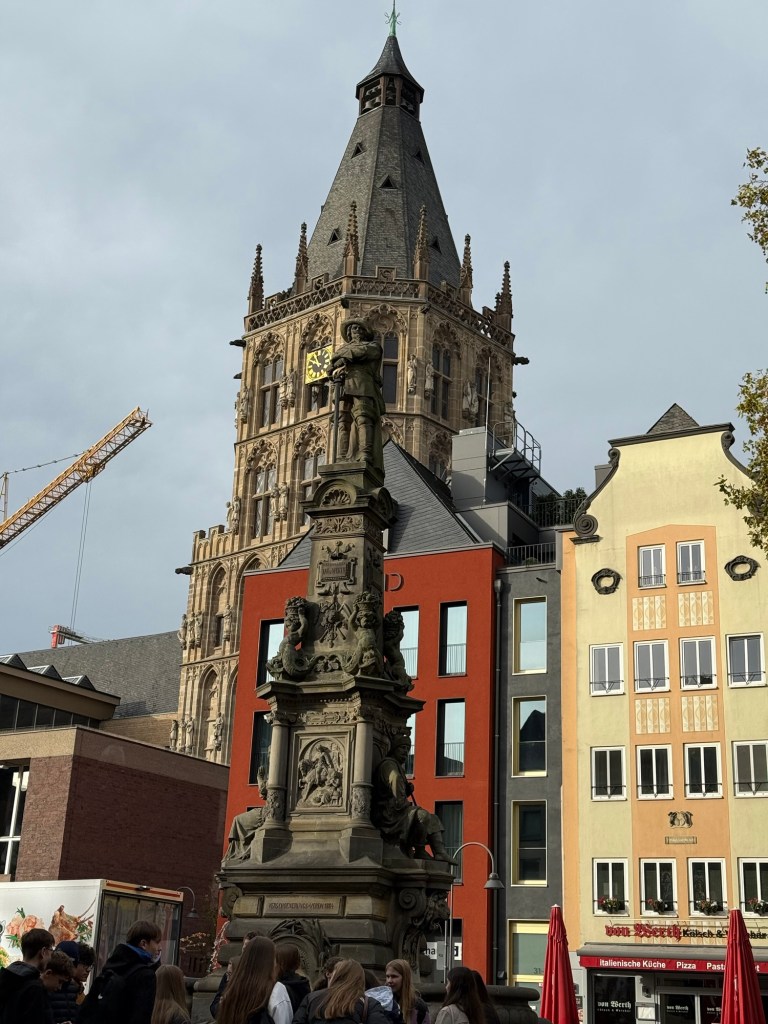
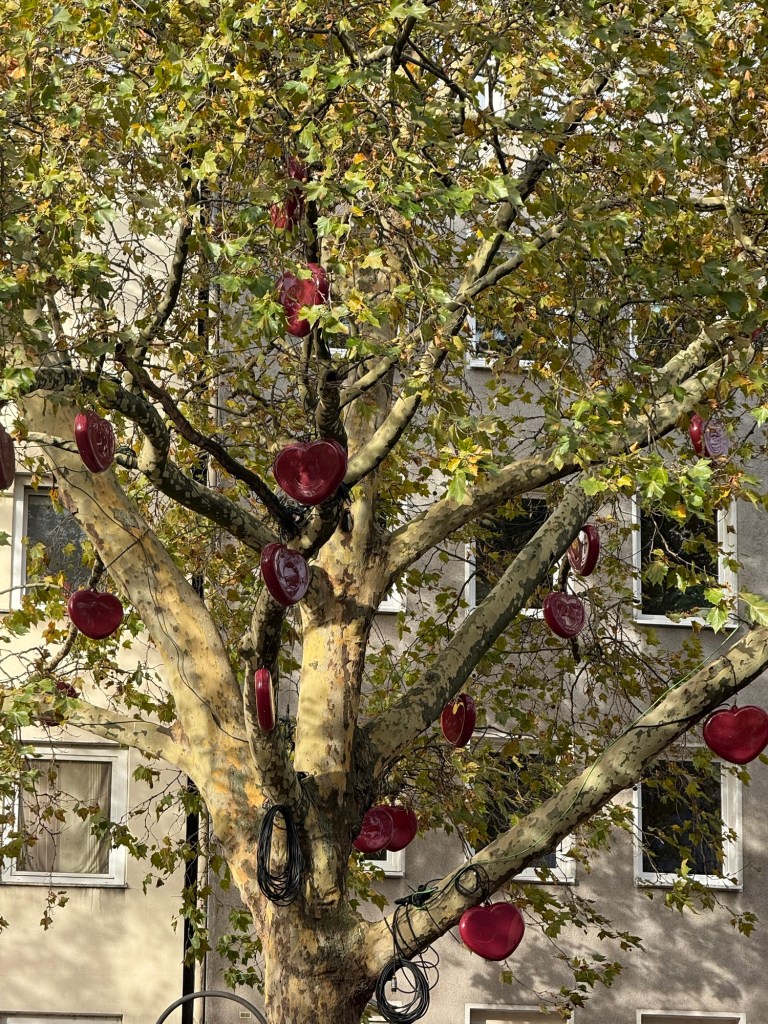
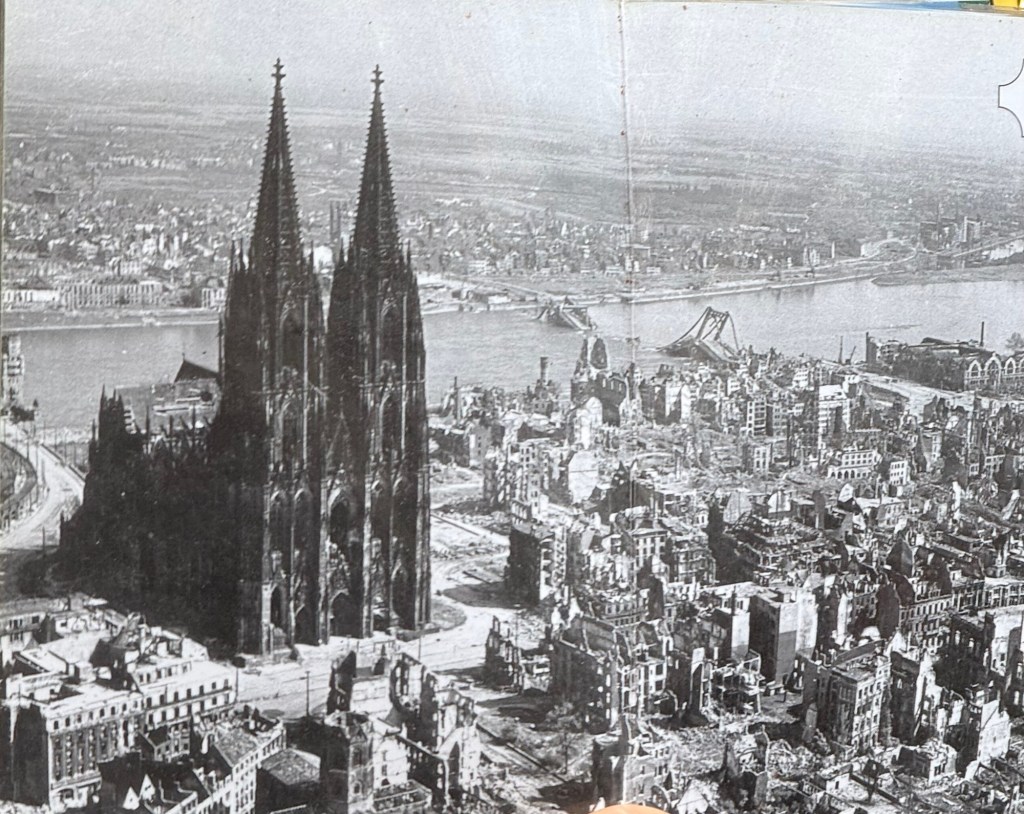
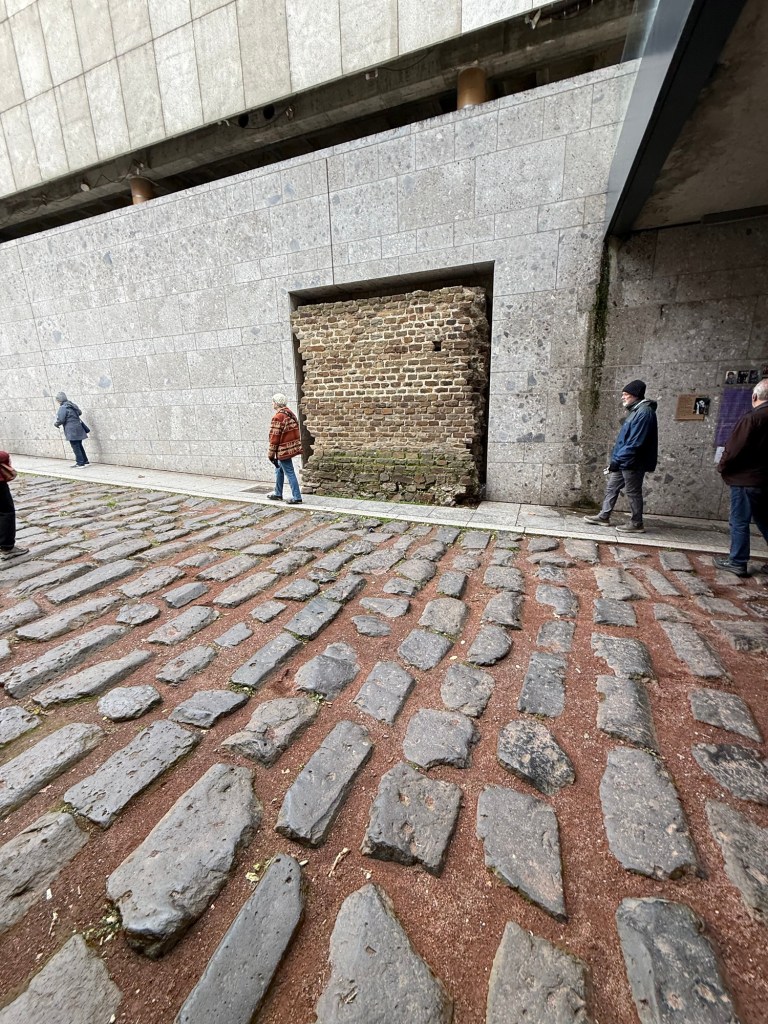
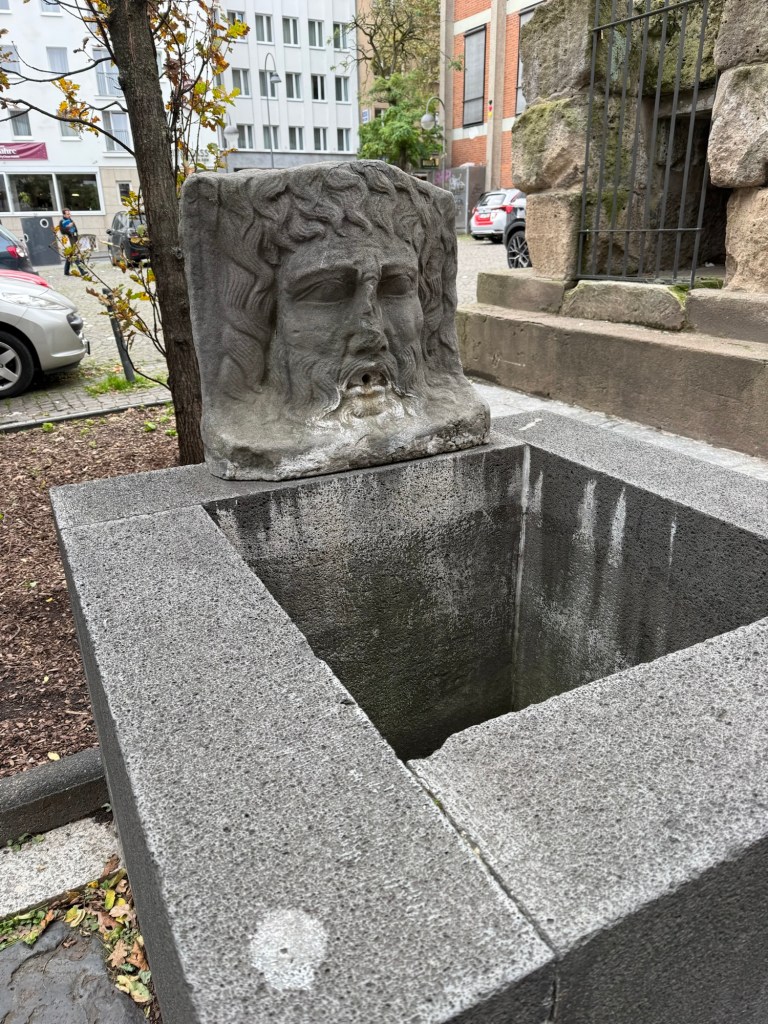
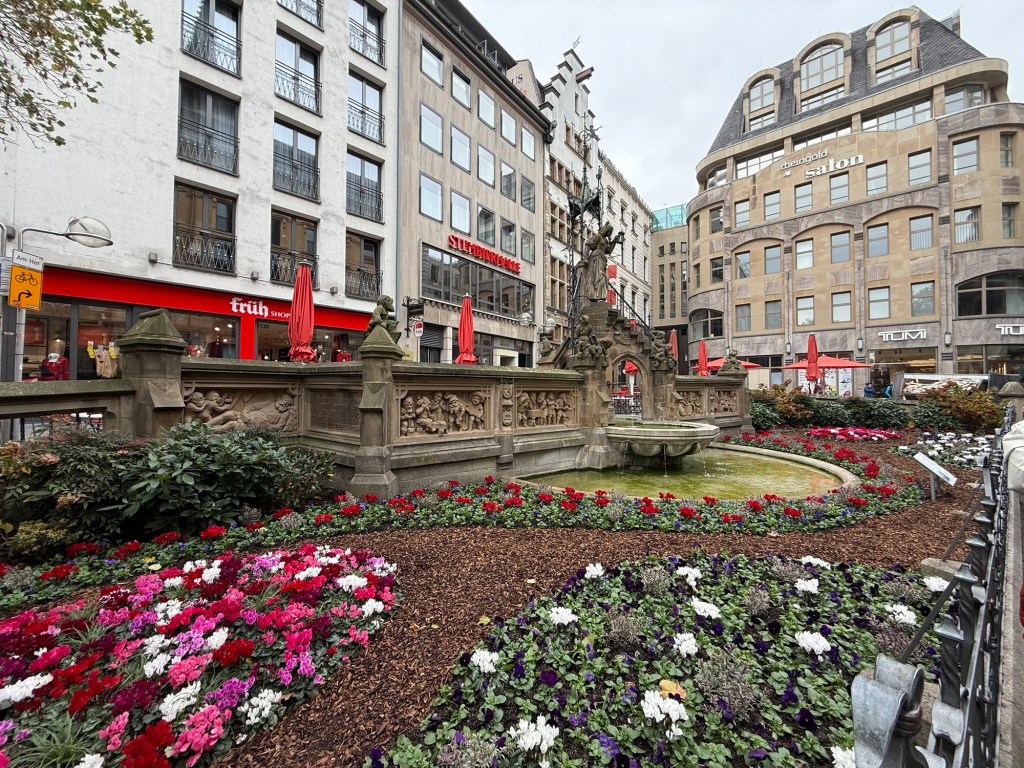
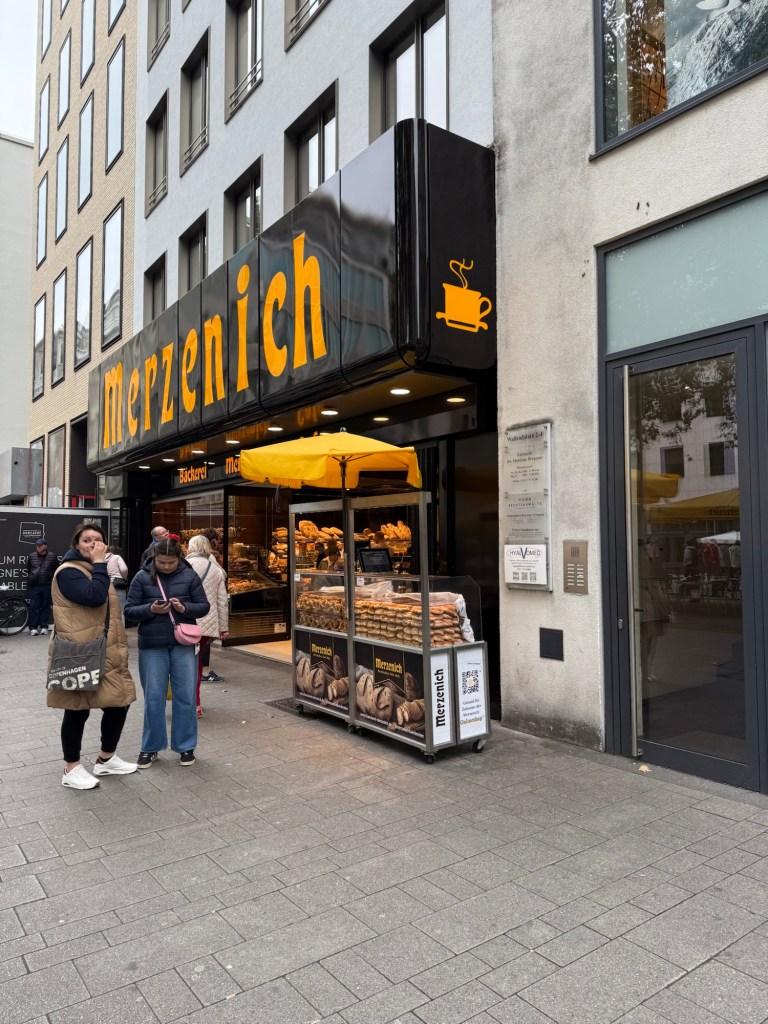
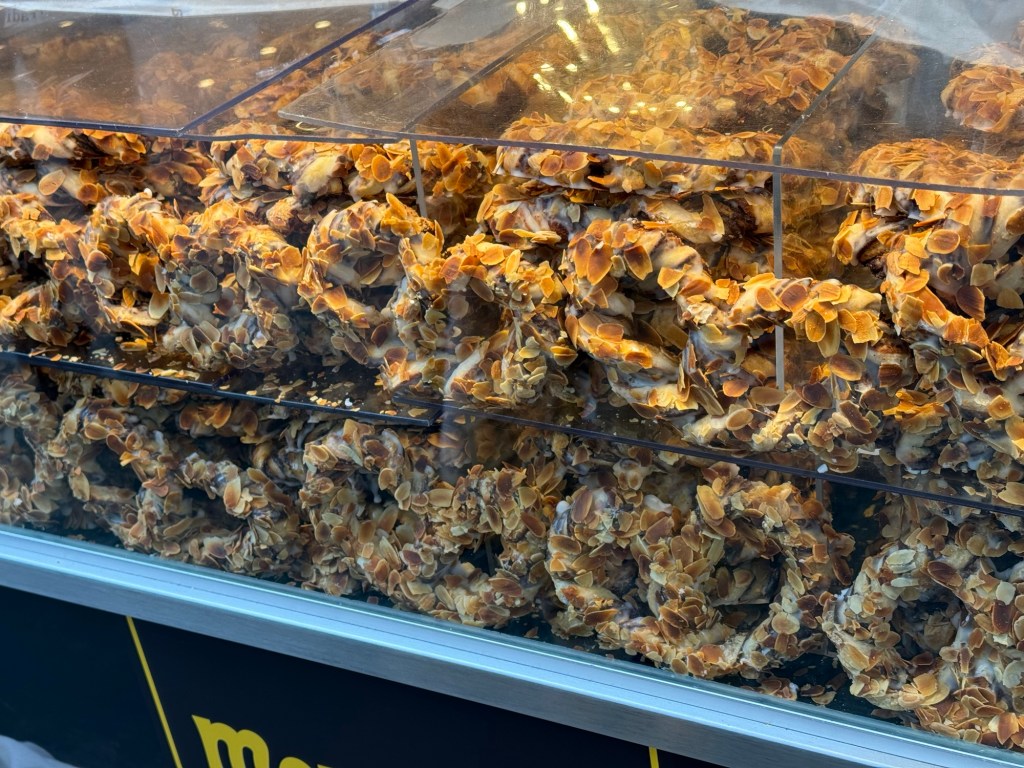
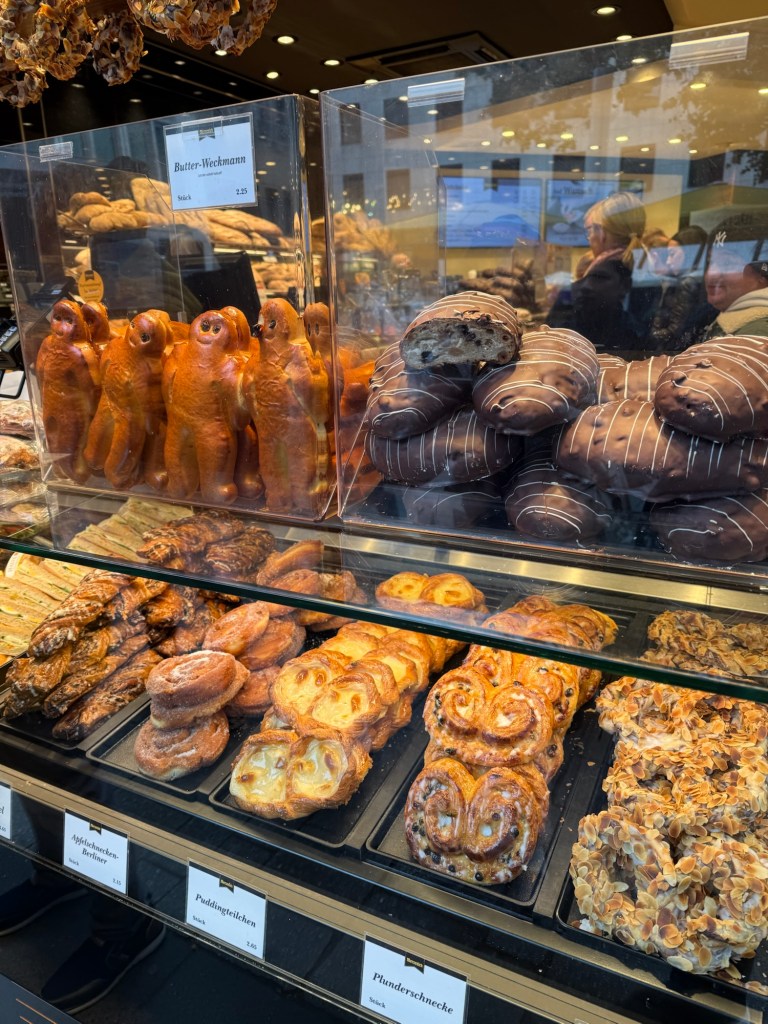
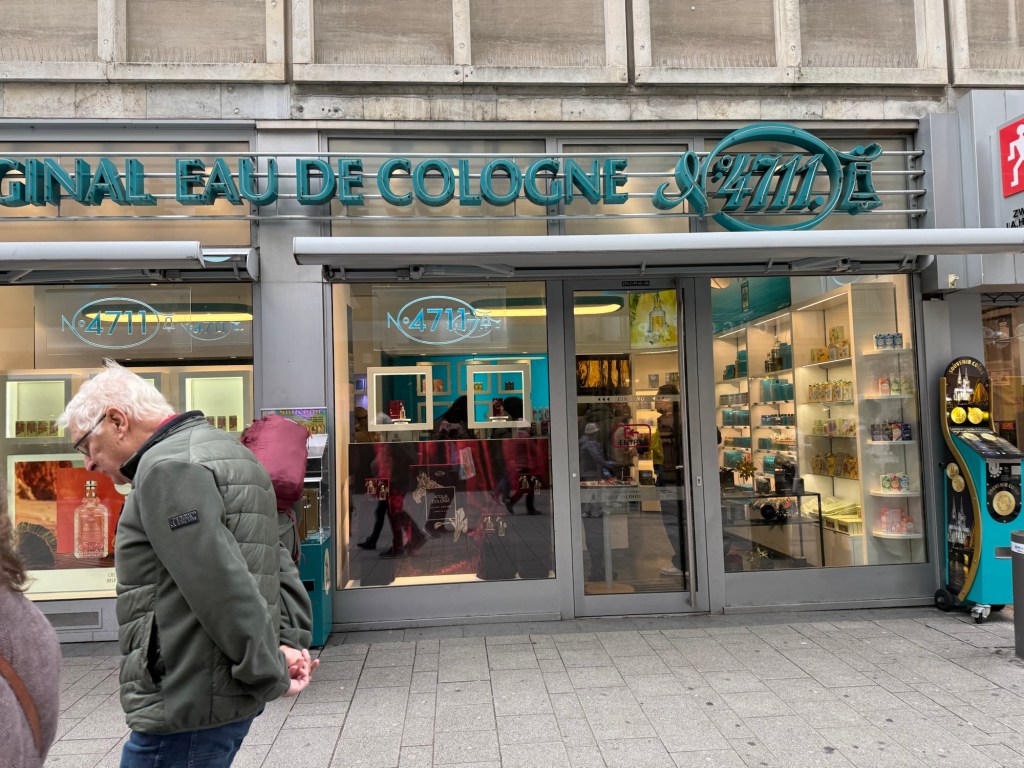
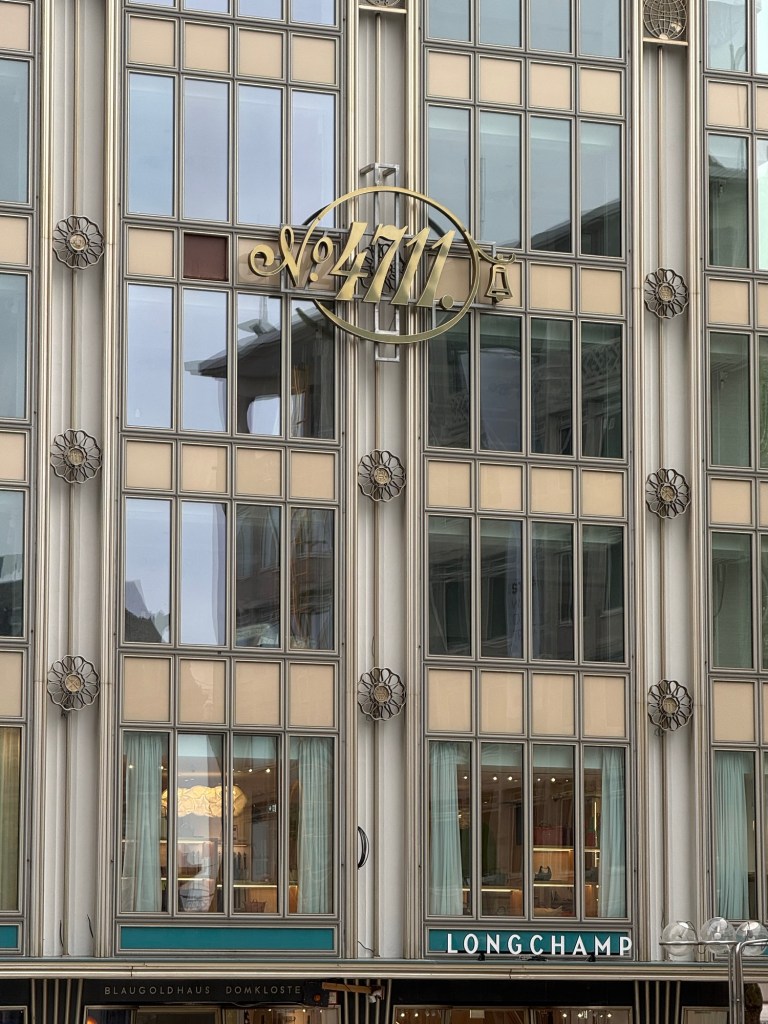
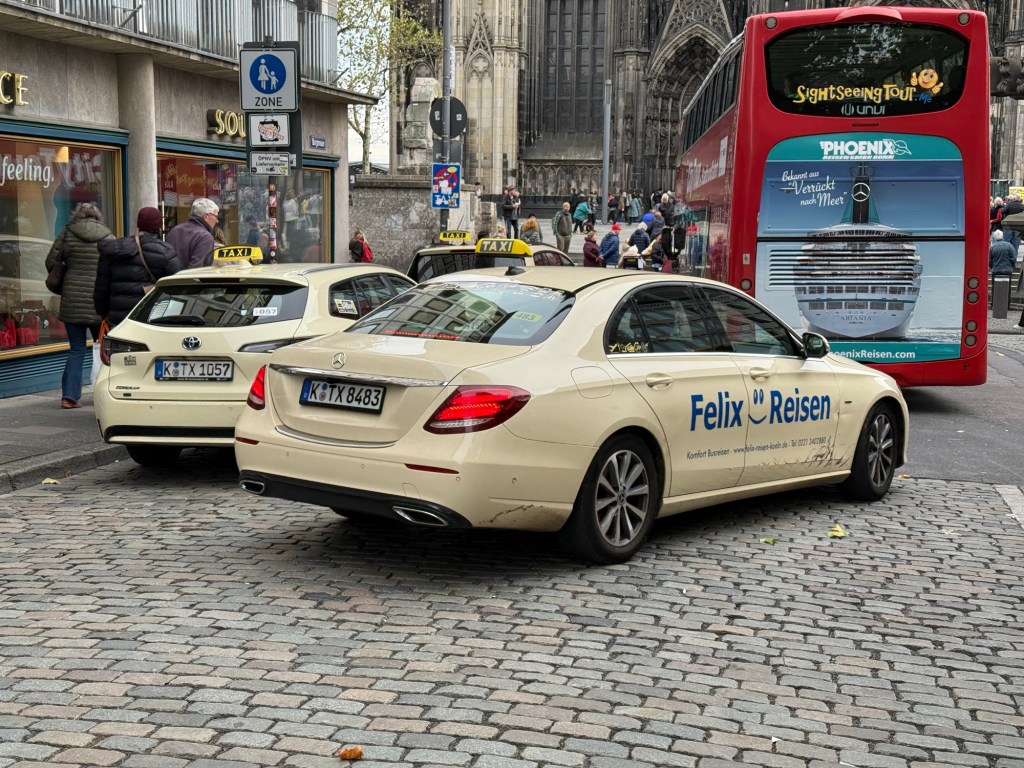
Sunrise in Cologne Sunrise in Cologne Entrance to Cologne from Our ShipCologne Church Restaurants Facing the Waterfront Older Housing That Survived WWIIGraffiti Is Everywhere In Austria & Germany Einstein’s PubCity Hall Where the Locals MaryAnother View of City Hall Fountain Near City Hall View of the city square near city hall Fun Tree in the Main Shopping Area Cologne Post WWIIA Display By a Business That Survived WWII Bombing Roman Part of TownRhinus Pater – Roman God the Rhine is Named After Part of Roman Sewer System Cologne Cathedral Pretty fountain area near the main shopping center Local Pretzel ShopCologne Specialty Pretzels Goodies At the Pretzel Shop The Original 4711All the Taxi Cabs Are MercedesThe Lindt Chocolate Museum The Lindt Chocolate Museum The Lindt Chocolate Museum The Lindt Gift Shop The Lindt Gift Shop The Lindt Gift Shop
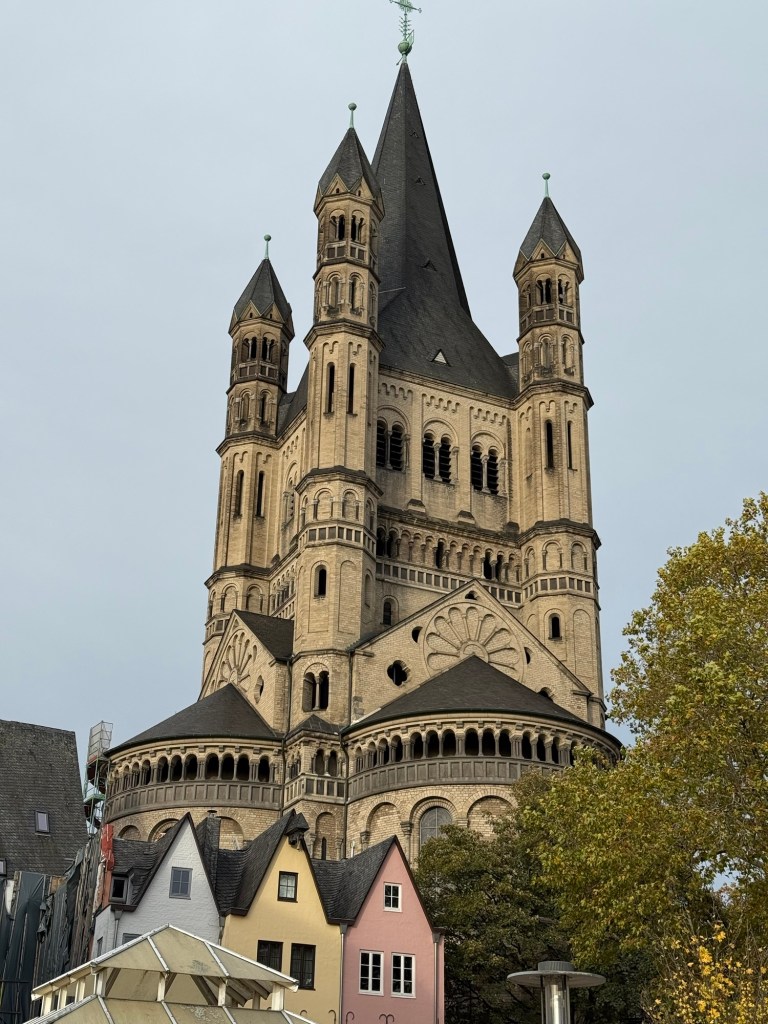
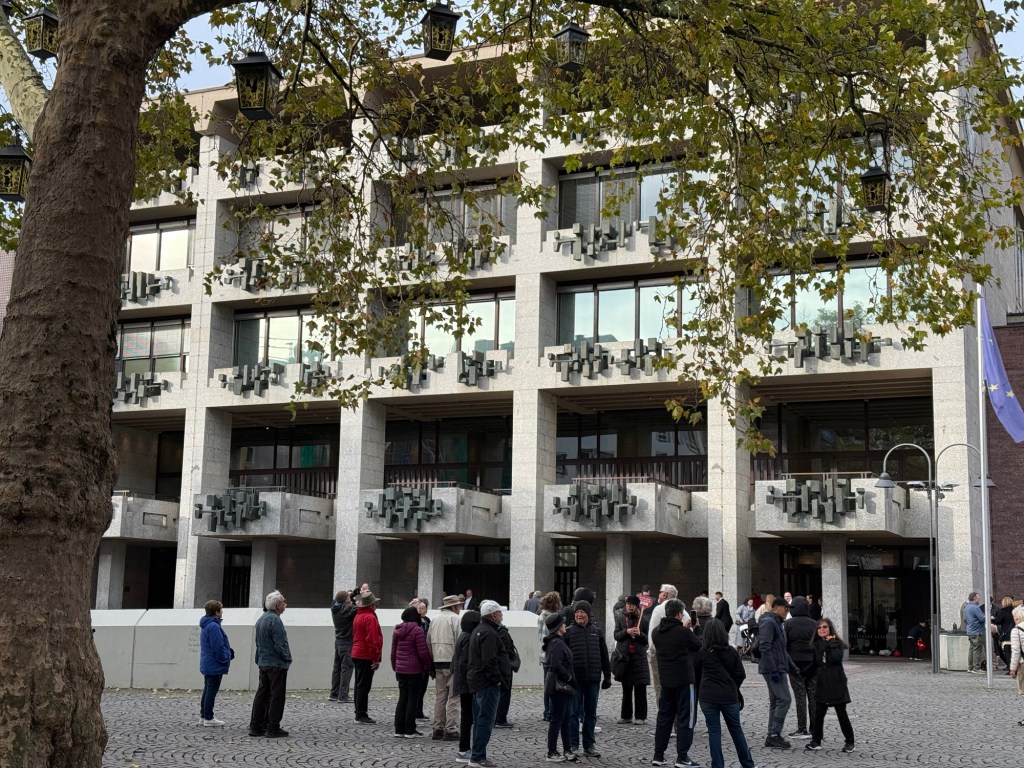
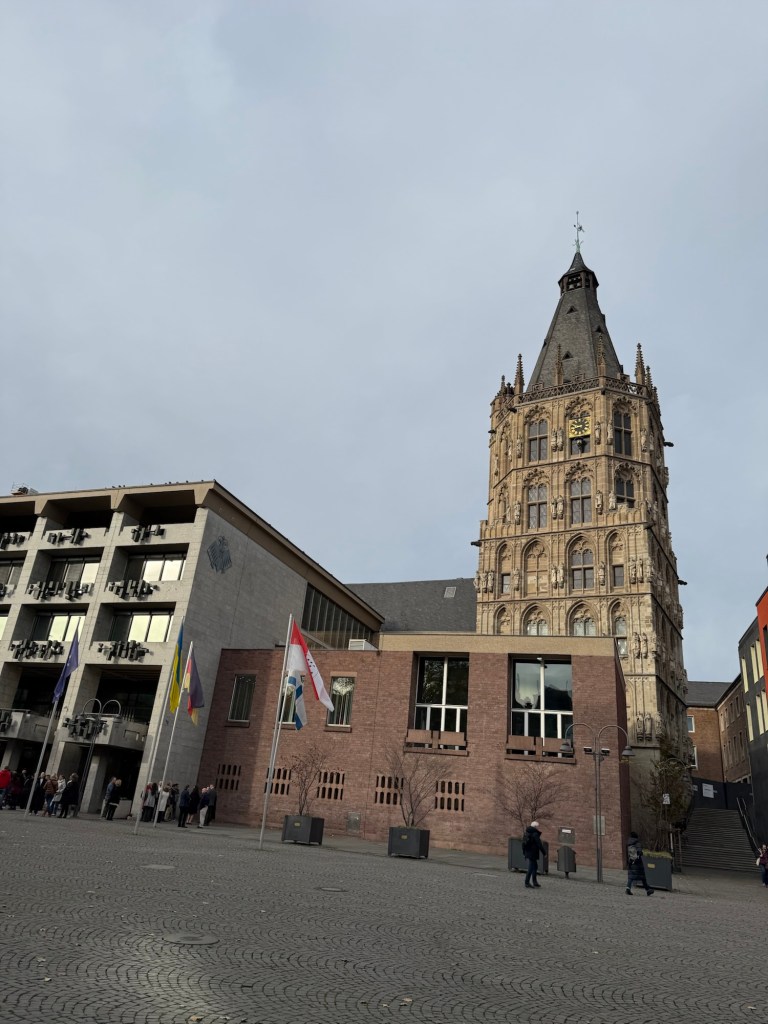
I wasn’t sure what to expect from Cologne Germany. First, the city experienced 95% destruction during WWII. Fortunately, the cathedral was the first of its kind – built with steel reinforcement so most of it survived. Overall, the city is a mixture of old and new. Some of the modern architecture is spectacular but other buildings, such as city hall, are really ugly and depressing.
Our tour guide explained that Cologne is more about a certain attitude. The locals appreciate being social and enjoying life much more than the more serious Berliners. Cologne natives, apparently, talk to everyone and are less reserved than other Germans. Consequently, bars in Cologne are much more likely to be filled with people chatting versus loud music drowning everyone out. At night, I did notice a few bars aimed at a younger crowd with blaring music.
The city seemed very safe. Our evening tour guide, for our pub crawl, confirmed my impression of Cologne. It is also a very walkable city with lots to explore as you walk. I actually got in almost 17,000 steps in one day of touring Cologne.
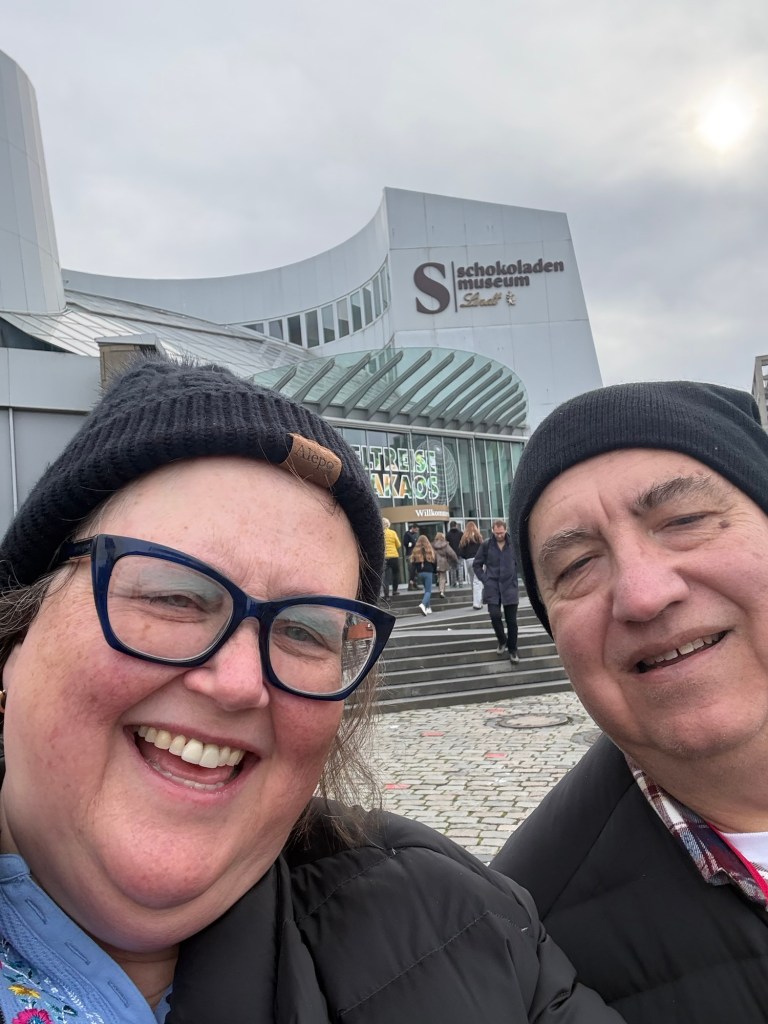
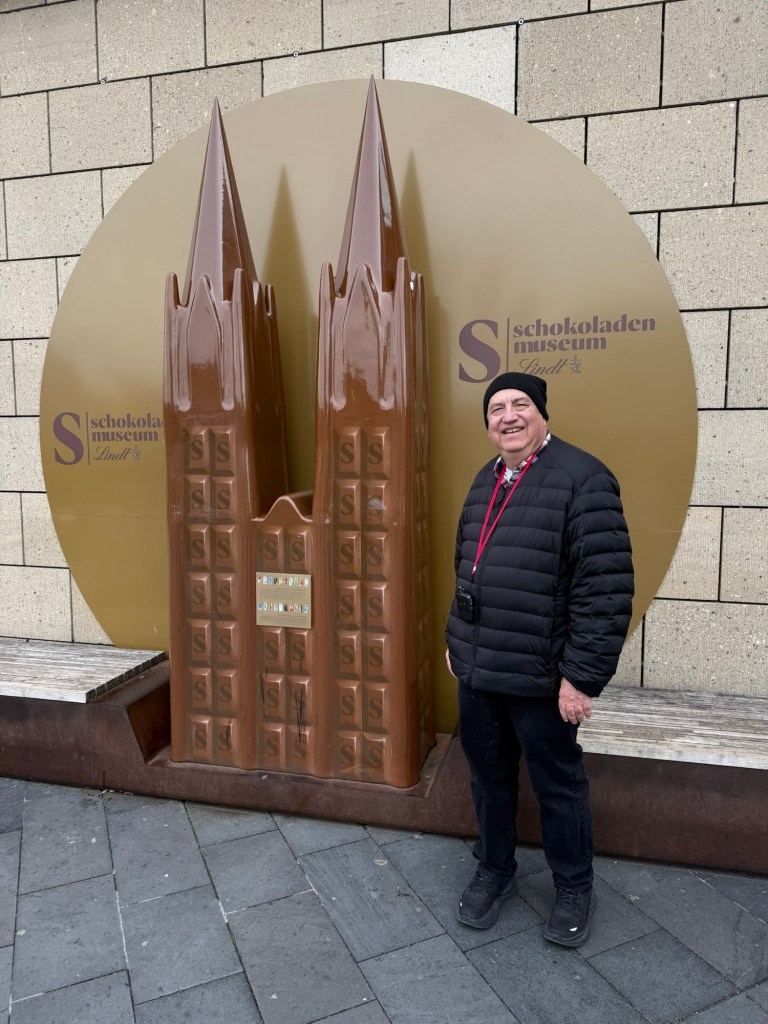
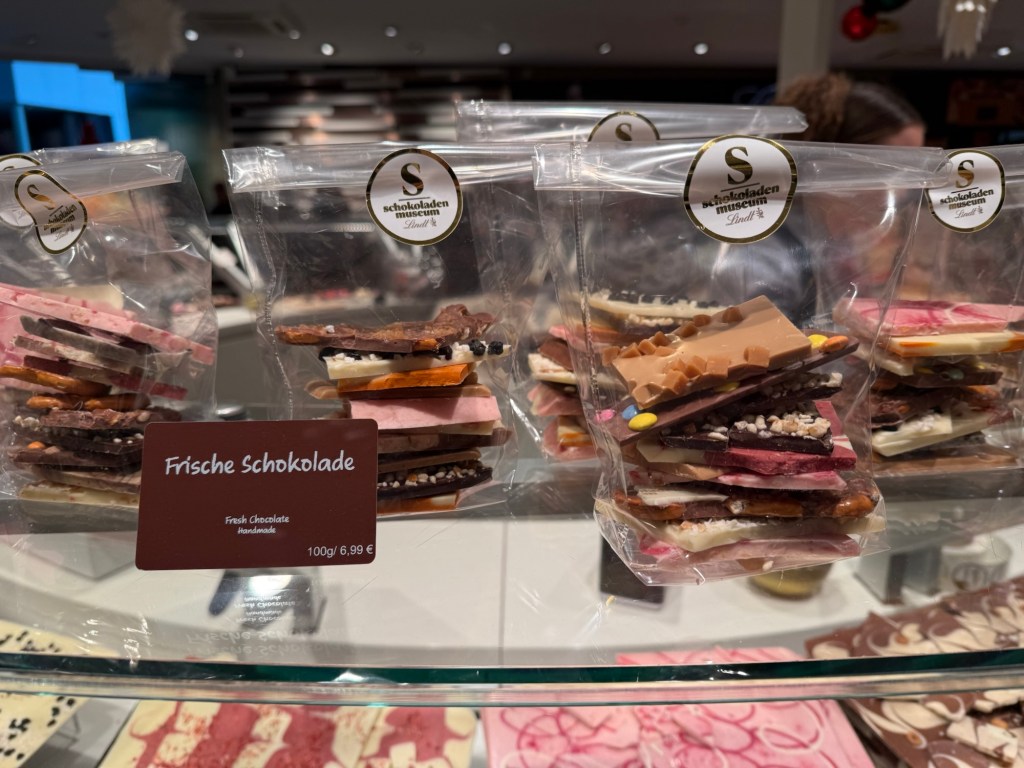
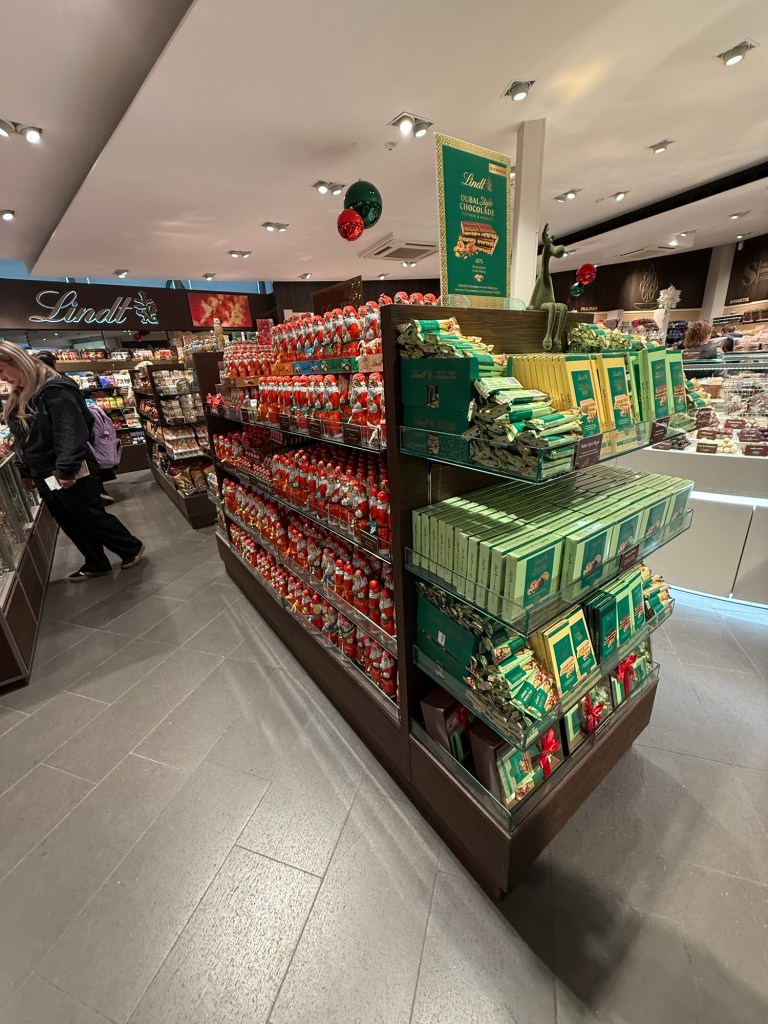
The city has a Lindt Chocolate Museum that is worth visiting. We found the gift shop to be almost overwhelming. My husband and I saw items that we never see at home in the U.S.
We did take a brief break from the city to visit the hunting lodge and Bruhl Palace. Both were impressive. When Bonn was the capital of West Germany, the government used the palace to entertain top visiting dignitaries such as Queen Elizabeth and Ronald Reagan. Both structures are impressive. Interestingly, both interiors incorporate the most beautiful Dutch blue and white tiles on the walls.
If given the opportunity, I would like to return to Cologne to spend a few more days. Our tour guide noted that the London Times describes the Cologne Christmas Markets as the best in the country. I see a December trip in my future!
Koblenz might be my favorite German city so far. First, it’s on the Rhine and Moselle Rivers surrounded by beautiful historic castles. Second, it’s a very walkable city with so many charming old buildings combined with interesting modern architecture. Koblenz is actually over 2000 years old.
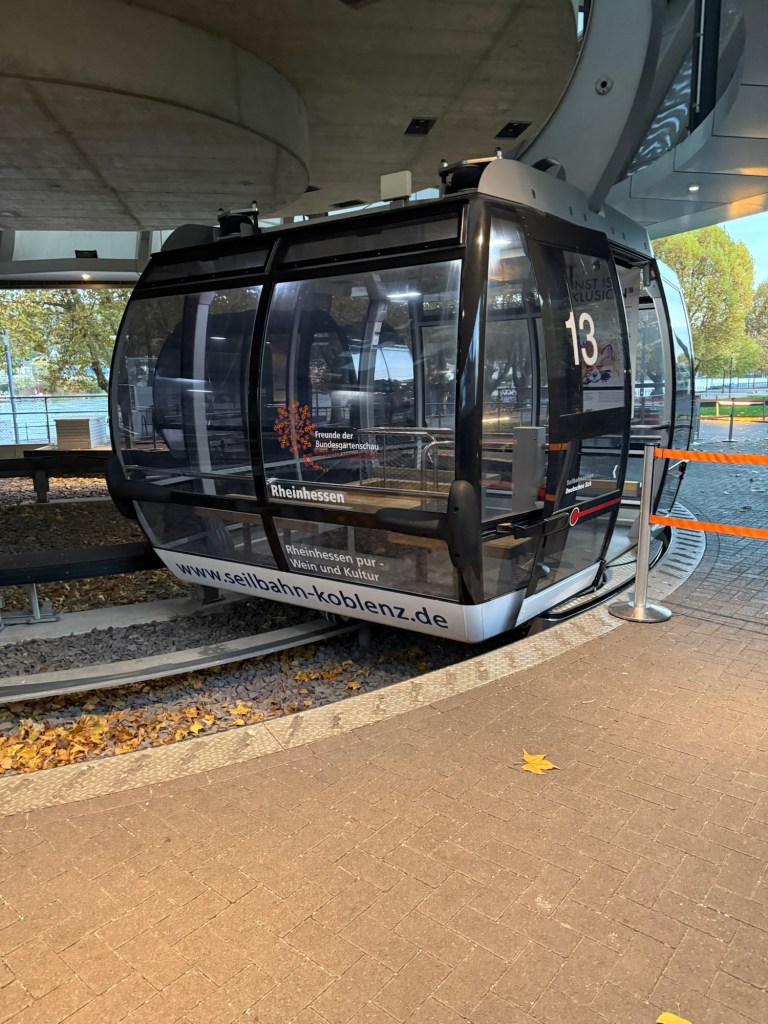
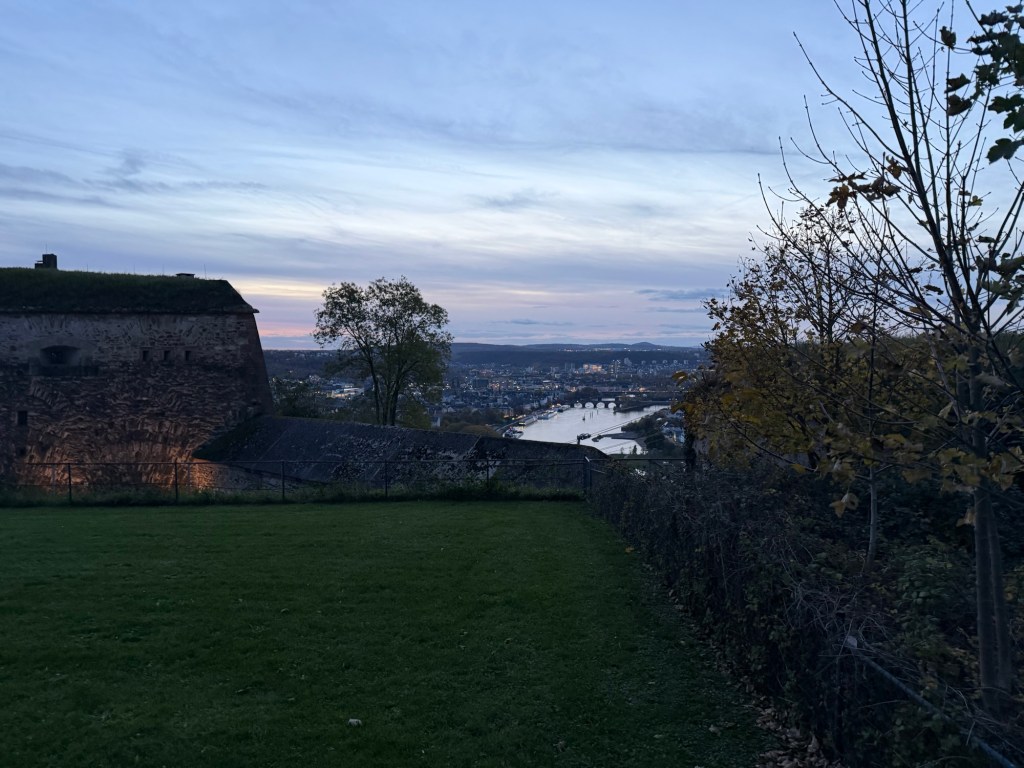
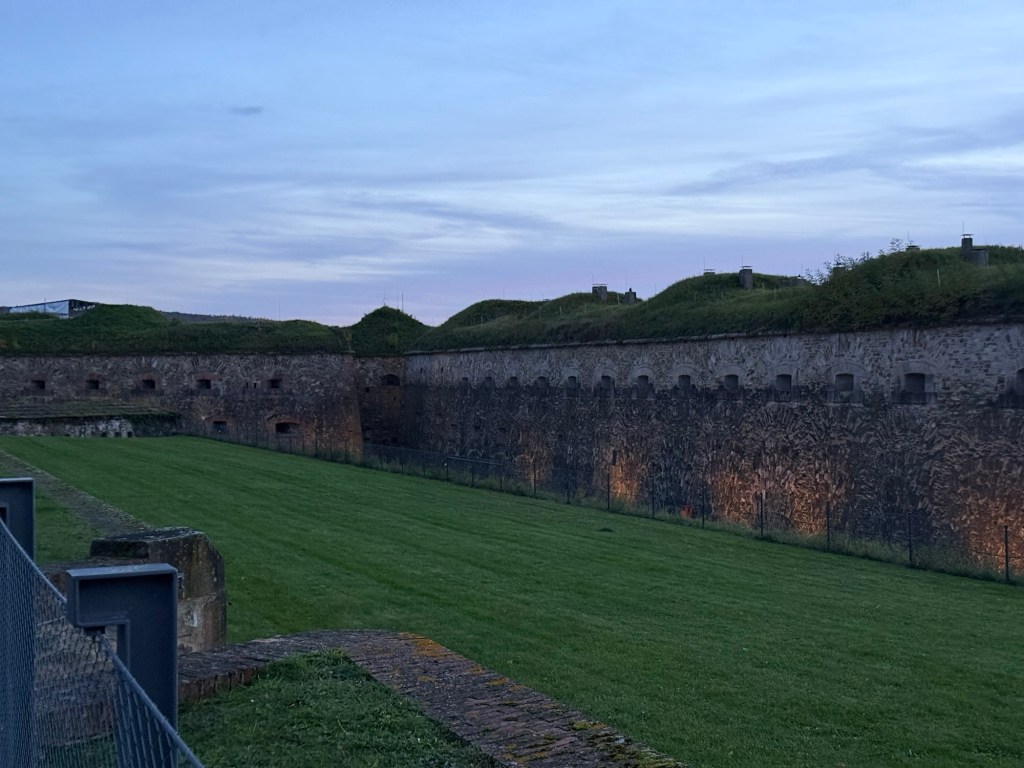
The tram system was initially installed as a temporary structure to celebrate the arrival of 2000. The city then wanted to keep it open post Millennium. It spent the next five years negotiating with UNESCO to keep the tram system without losing its UNESCO status for the valley. I am glad things worked out. The views from the cable cabins are spectacular. Plus, we were able to see the fortress which dates back to 1815. It actually occupies the same location of an earlier fortress that the French destroyed in 1801.
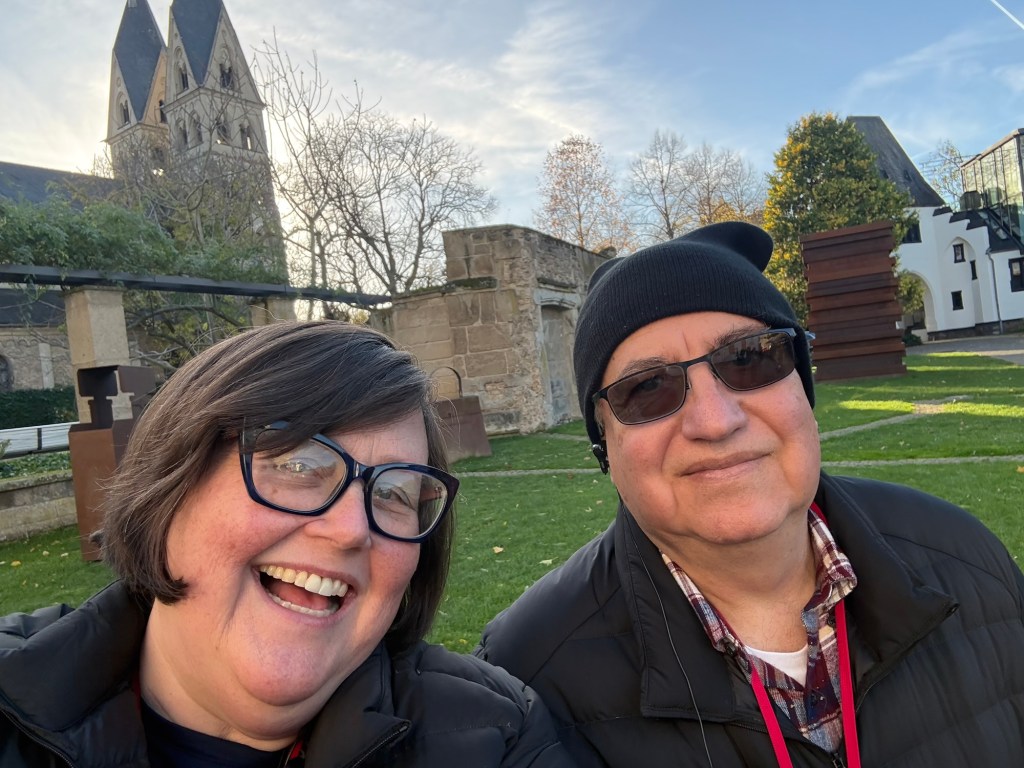
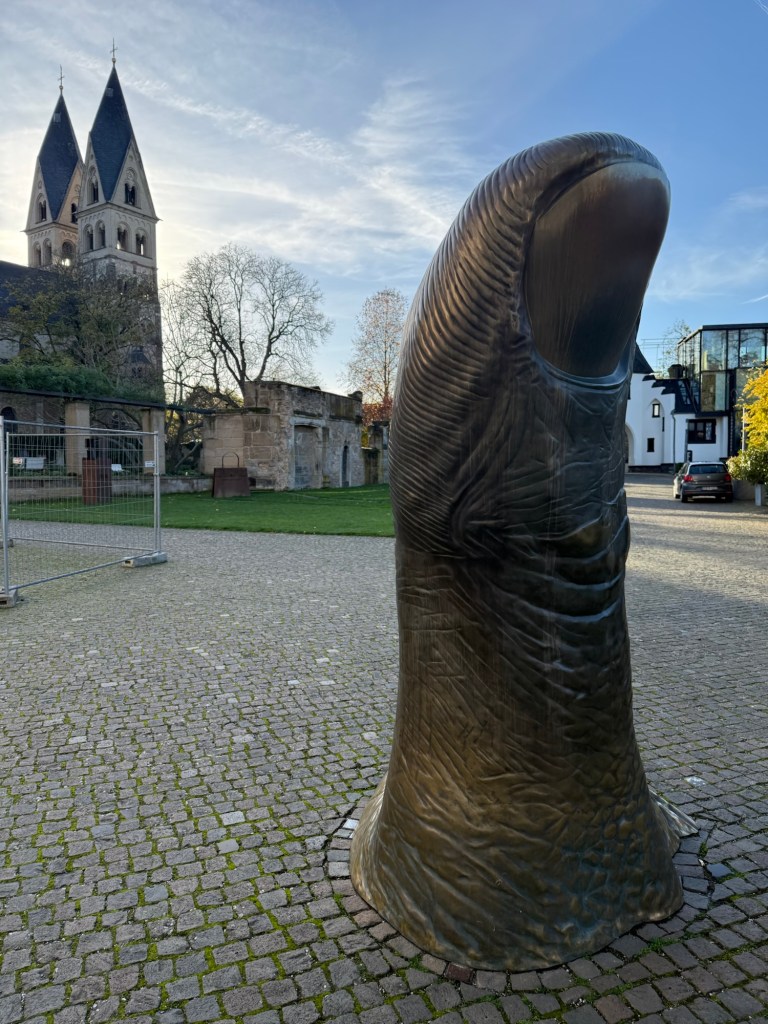
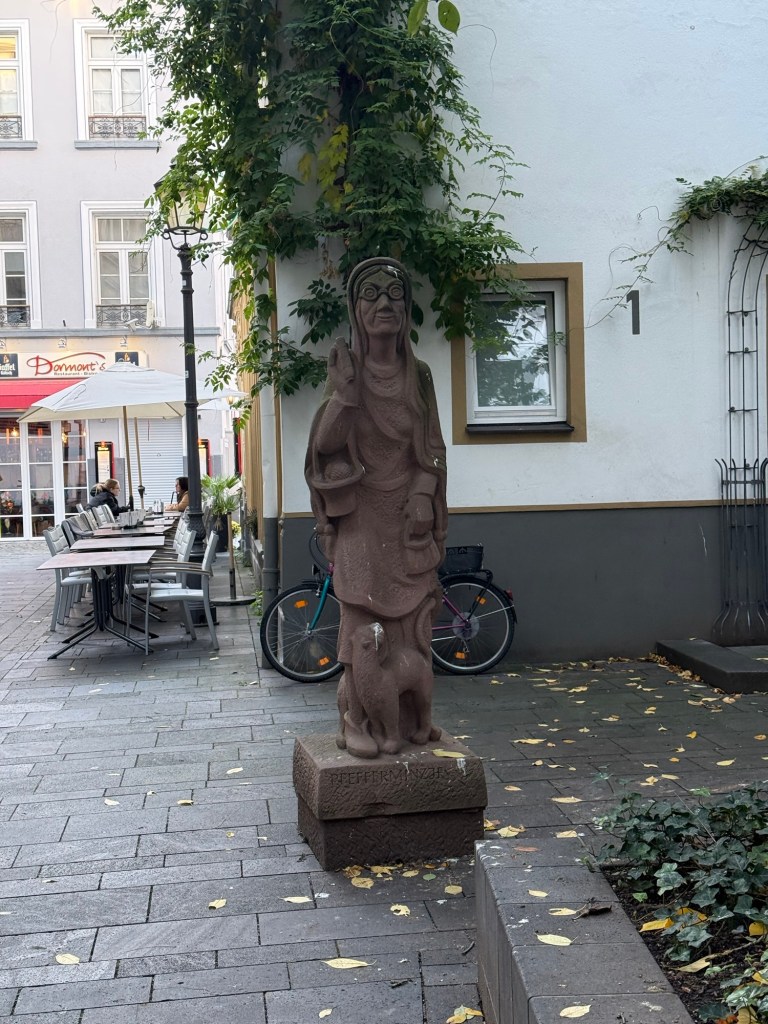
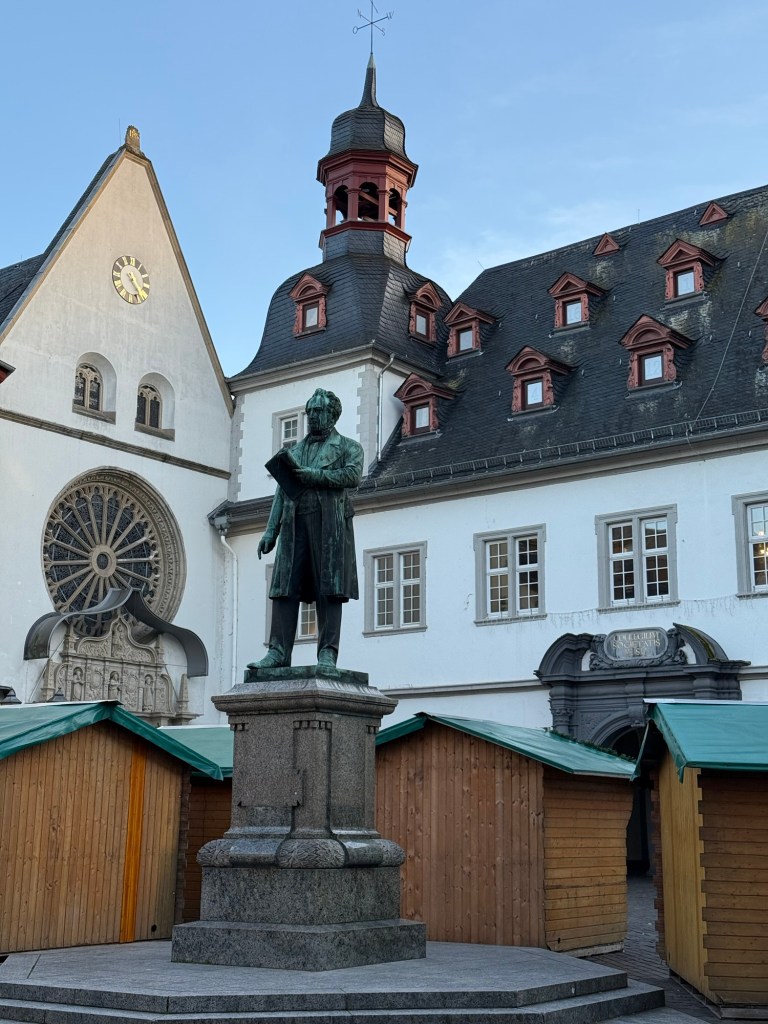
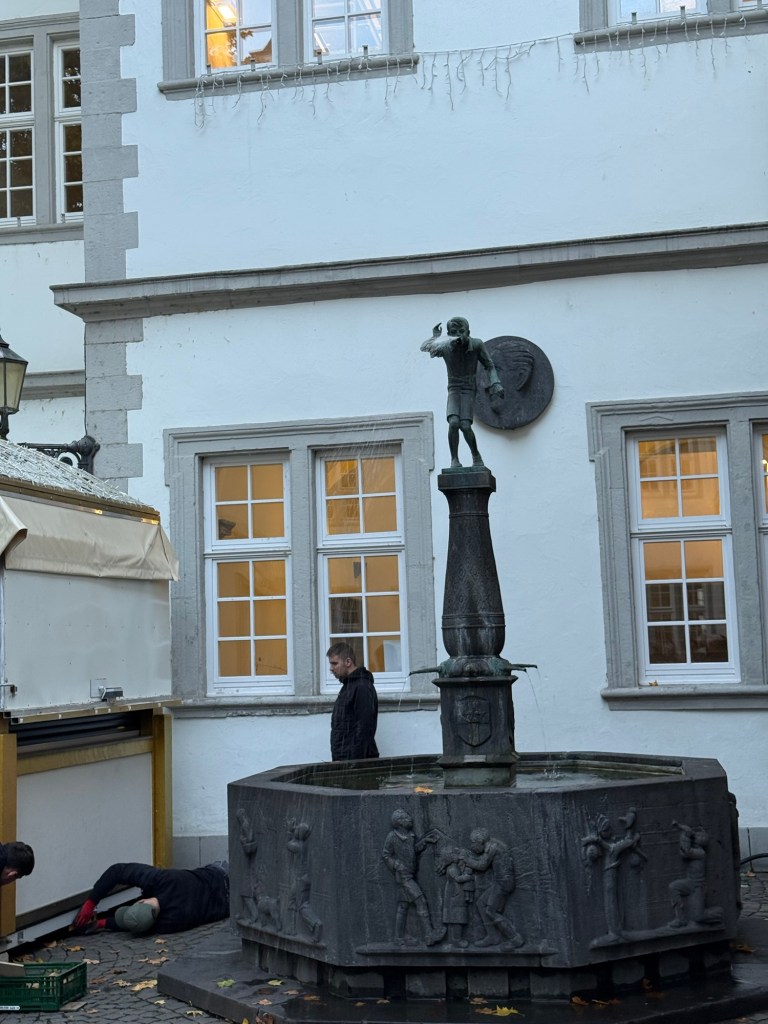
The city has been through a lot. The most is several severe storms that flooded out much of the town. Koblenz was severely bombed by the Allies during WWII. Yet there is a really positive energy and sense of whimsy. There is a really fun fountain in town that consists of a young boy who spits out water every few minutes. If you stand too close to the fountain, you will get soaked with water. It is called the Schangelbrunnen Fountain. Also, near the city’s modern art museum is a series of whimsical modern sculptures – a giant thumb, a purse and a bottle of Channel 5.
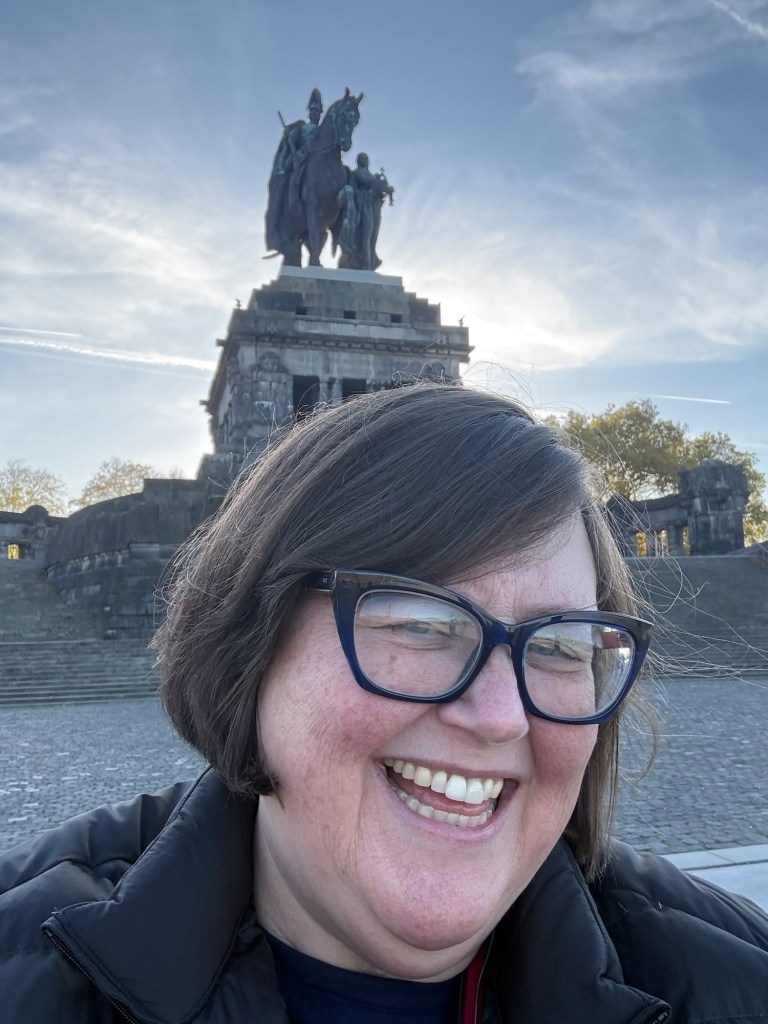
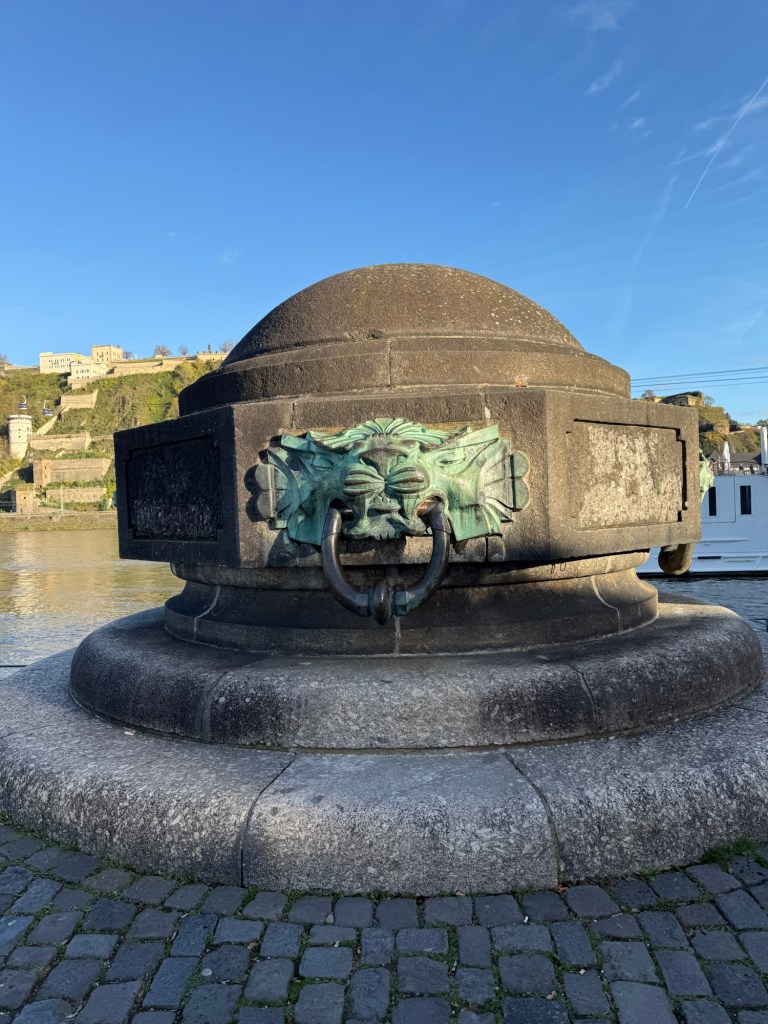
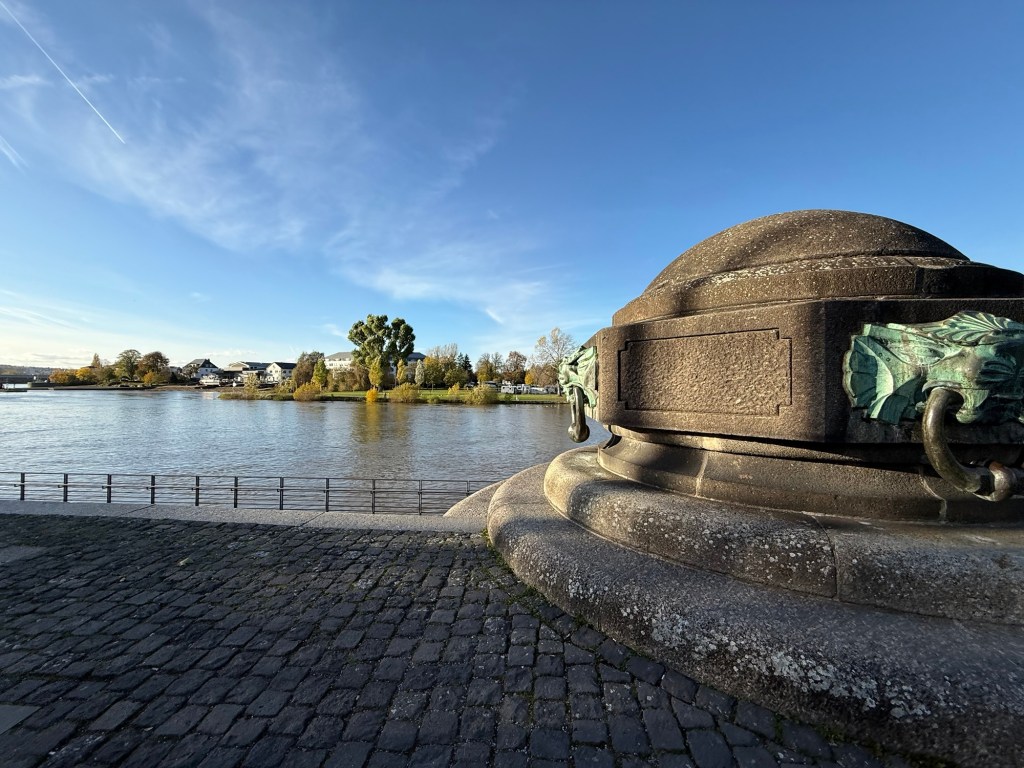
The huge memorial statue of Prince William is located where the two rivers meet. The original statue was copper and destroyed by the Allies during WWII. The current statue is a replica and only dates back to 1993.
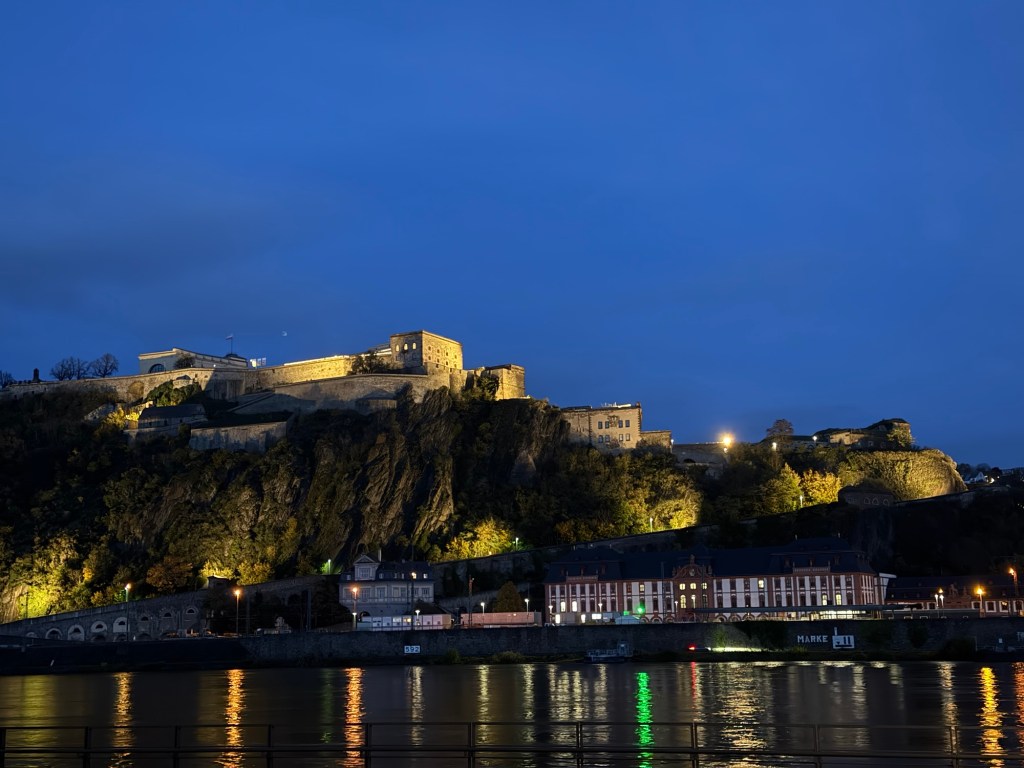
We ended our visit on a very high note with a round trip ride on the cable tram that took us across the Rhine to the city’s fortress and then back to where our ship was docked.
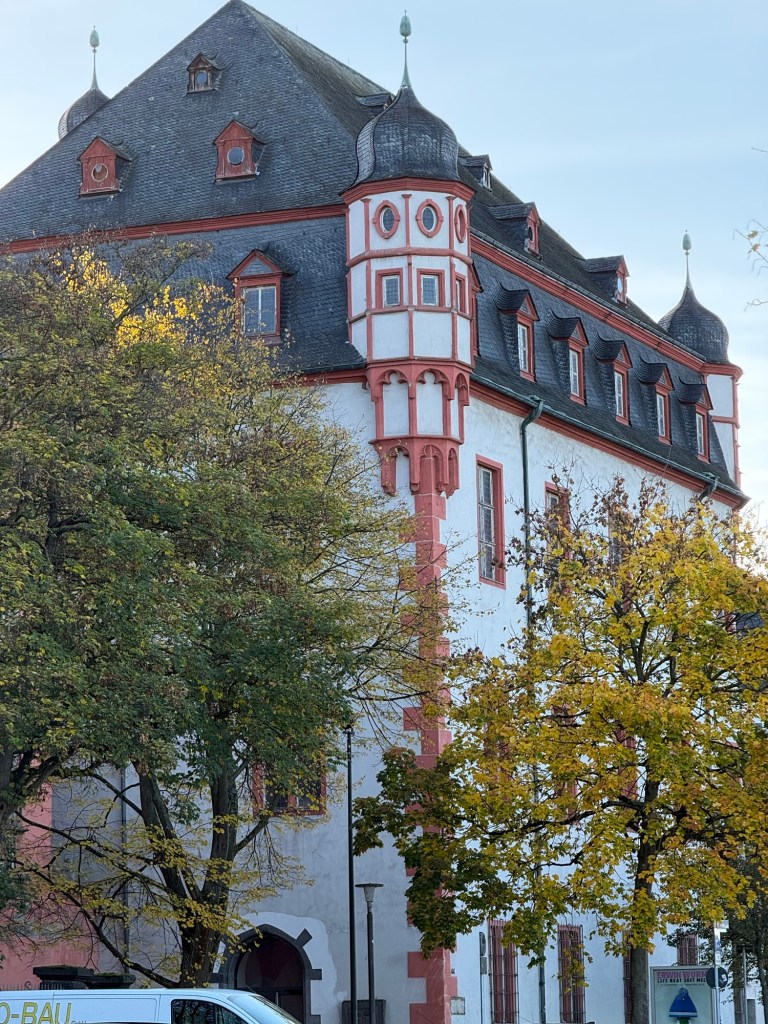
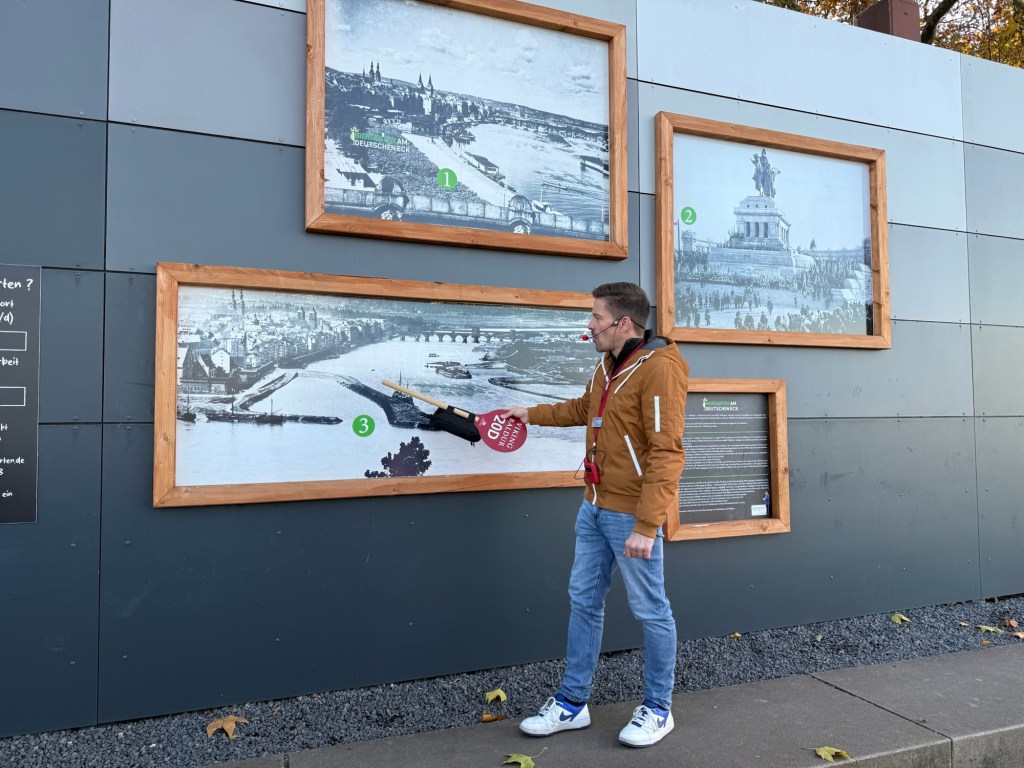
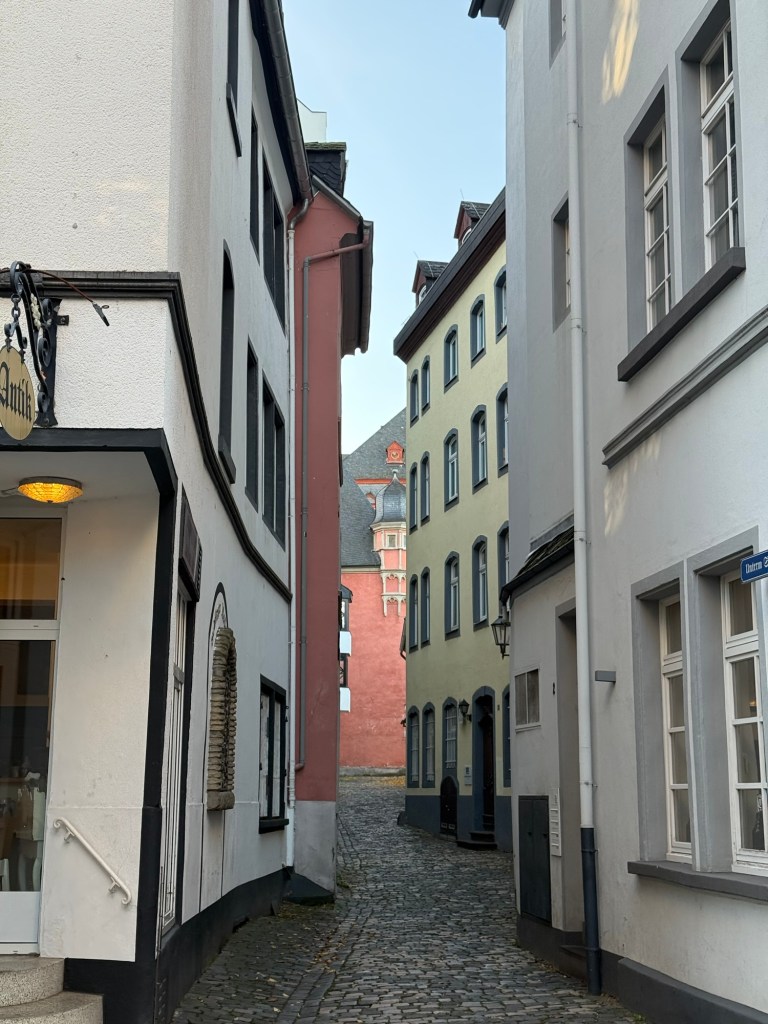
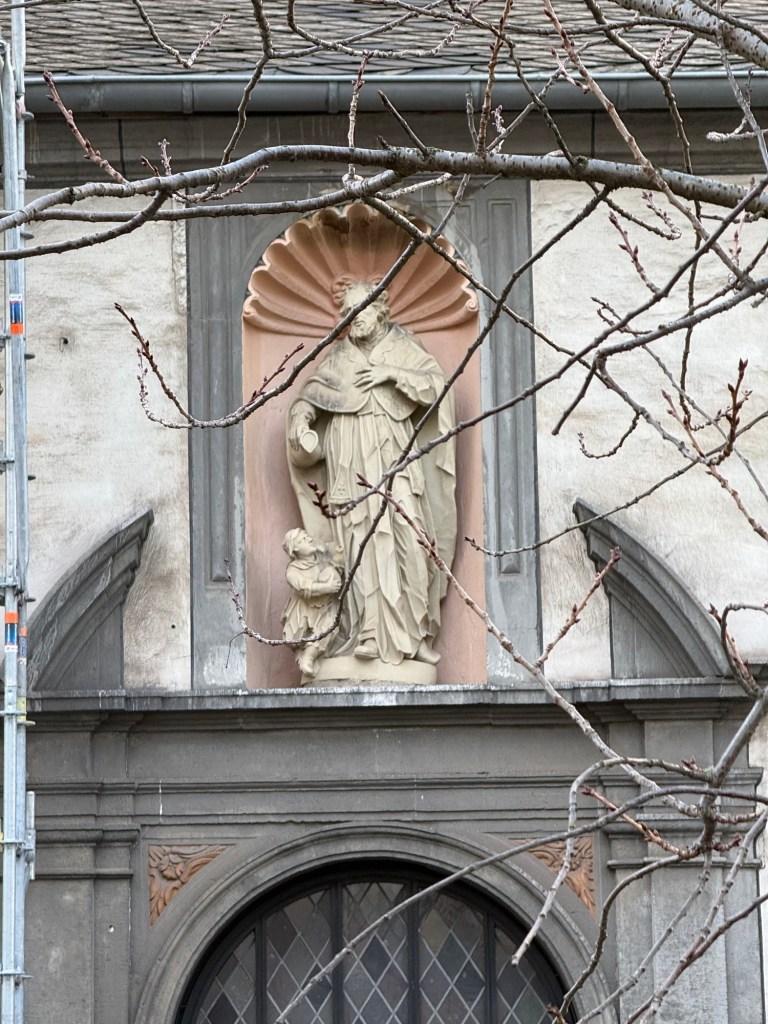
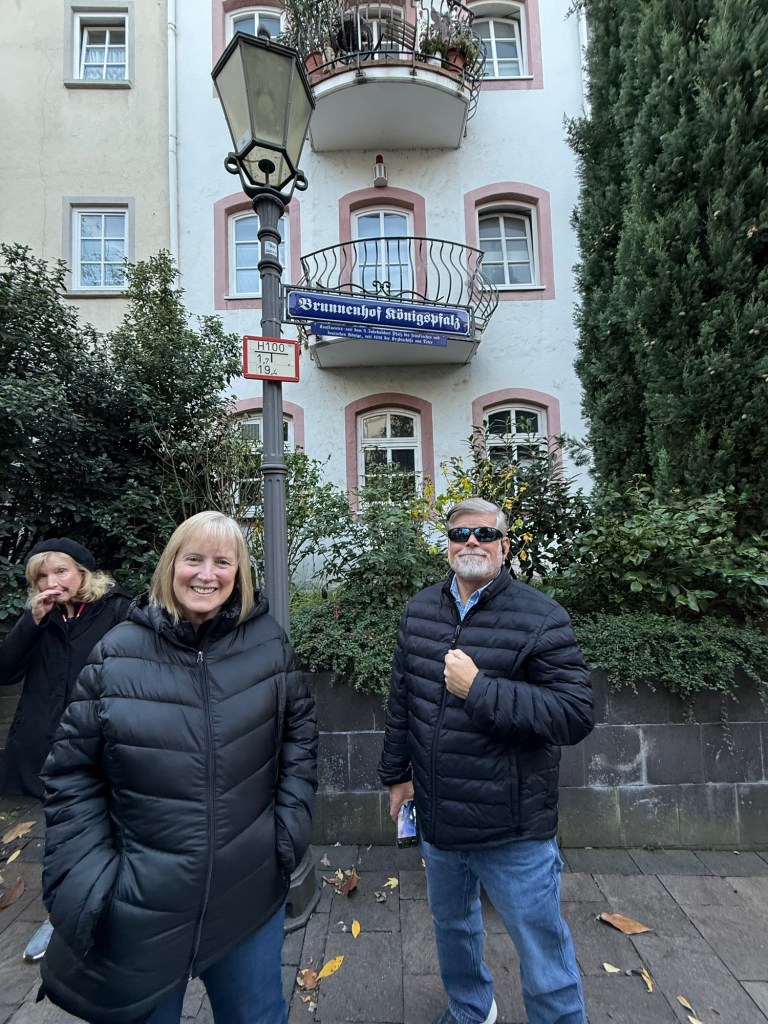
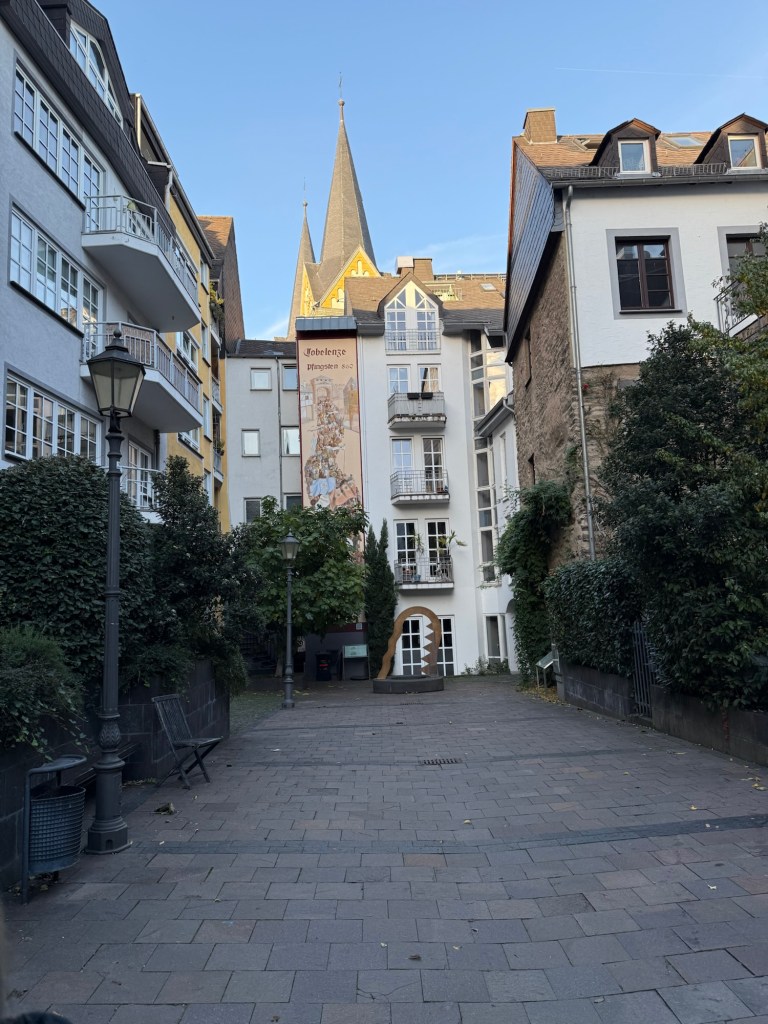
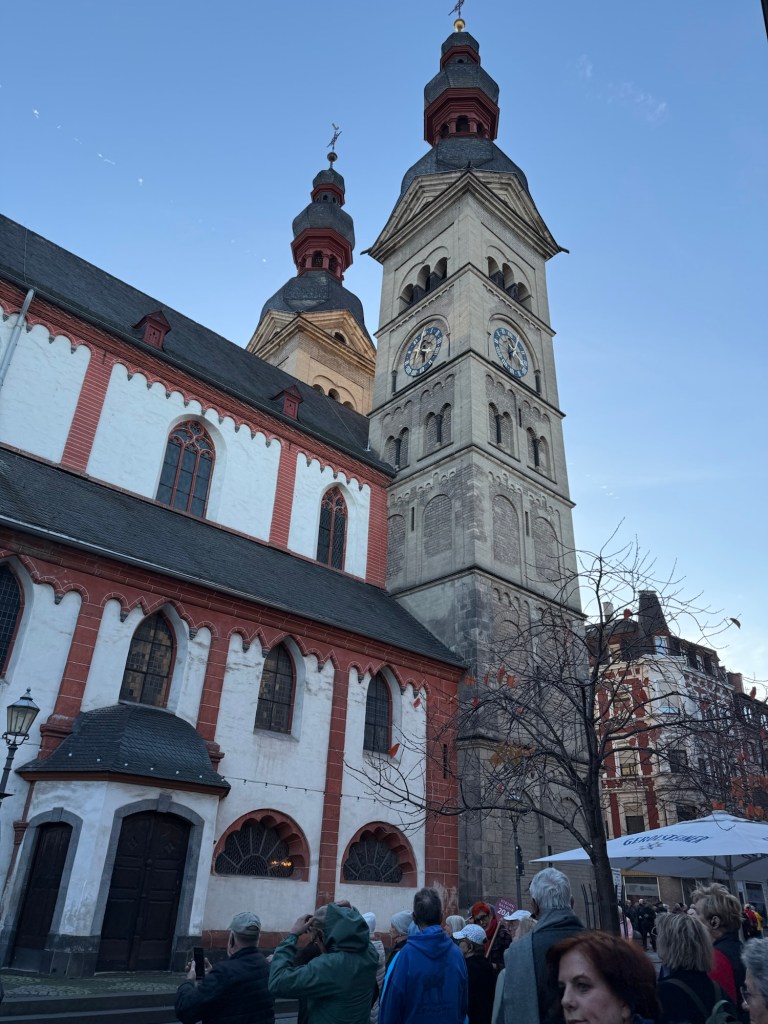
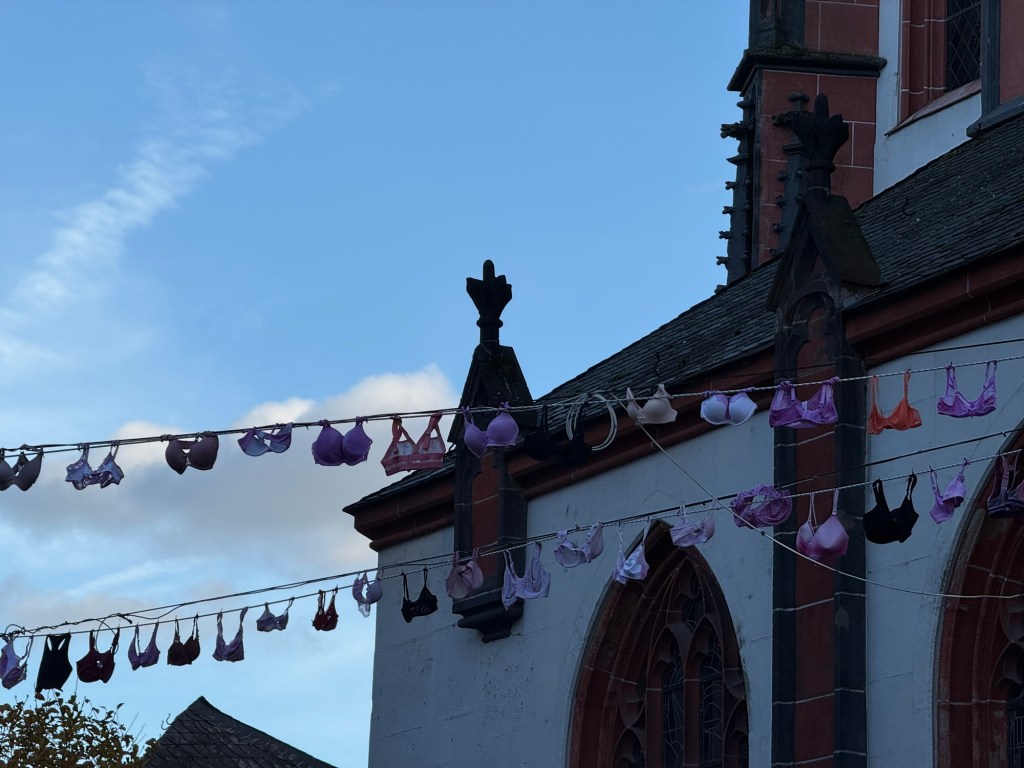
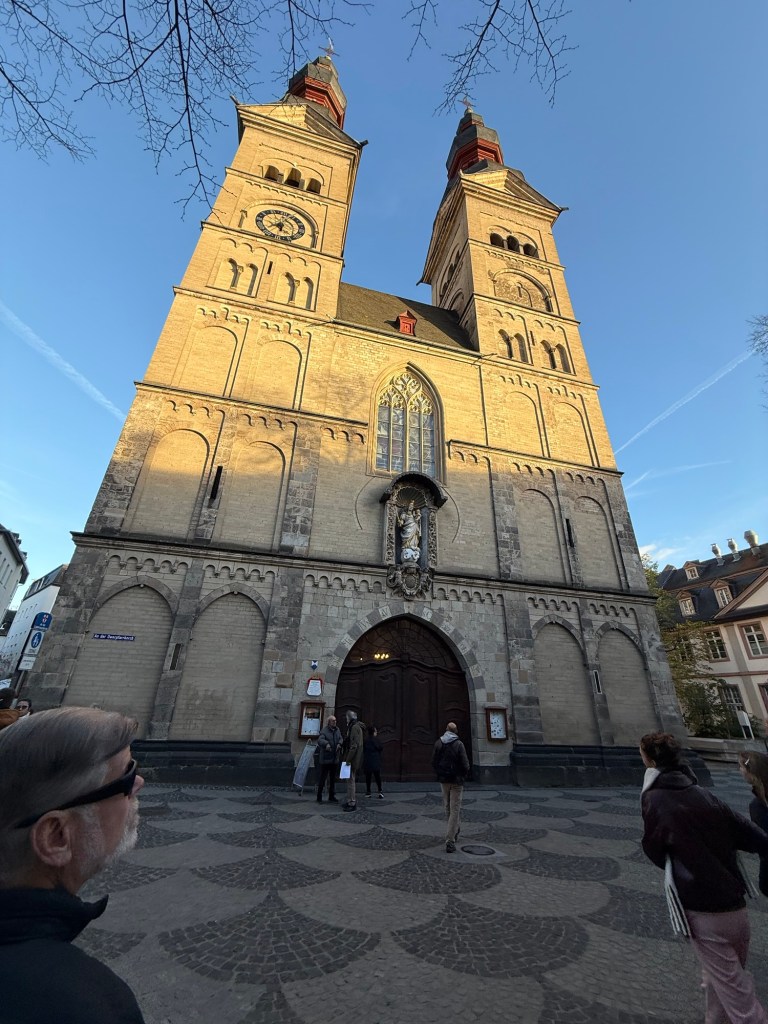
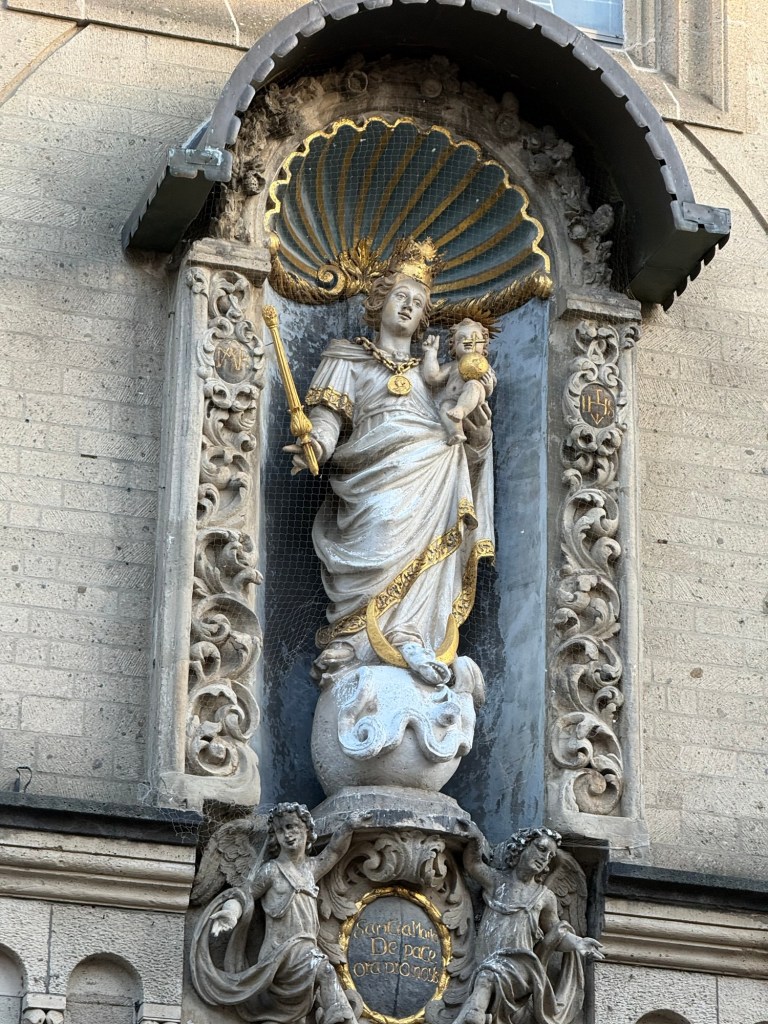
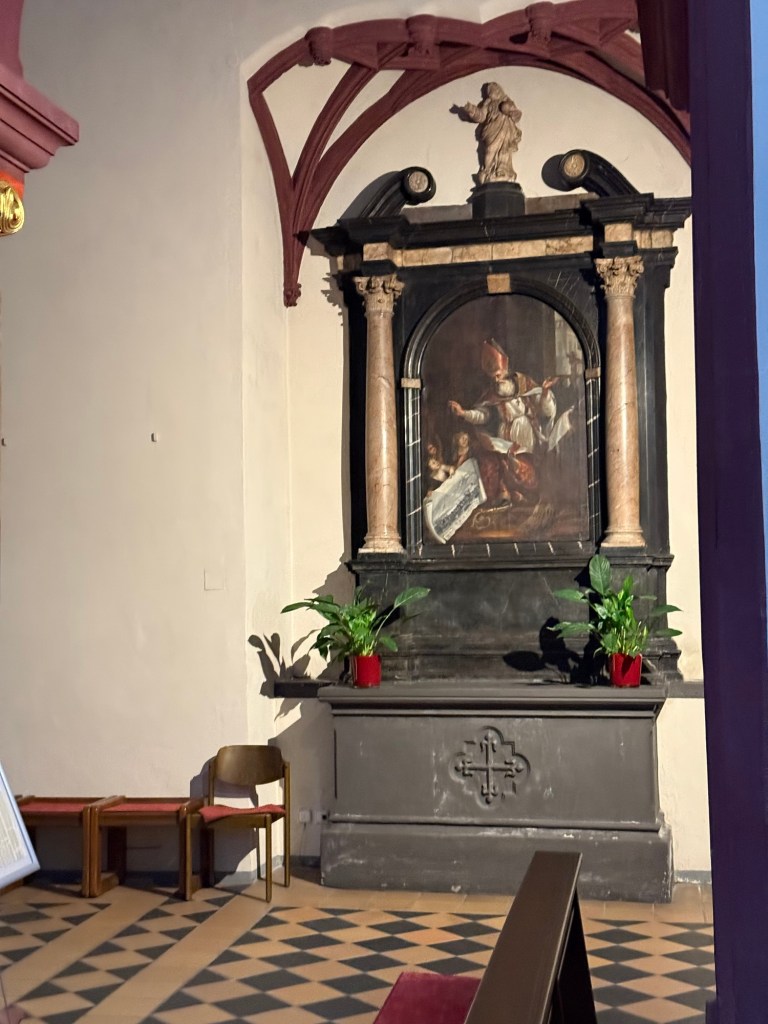
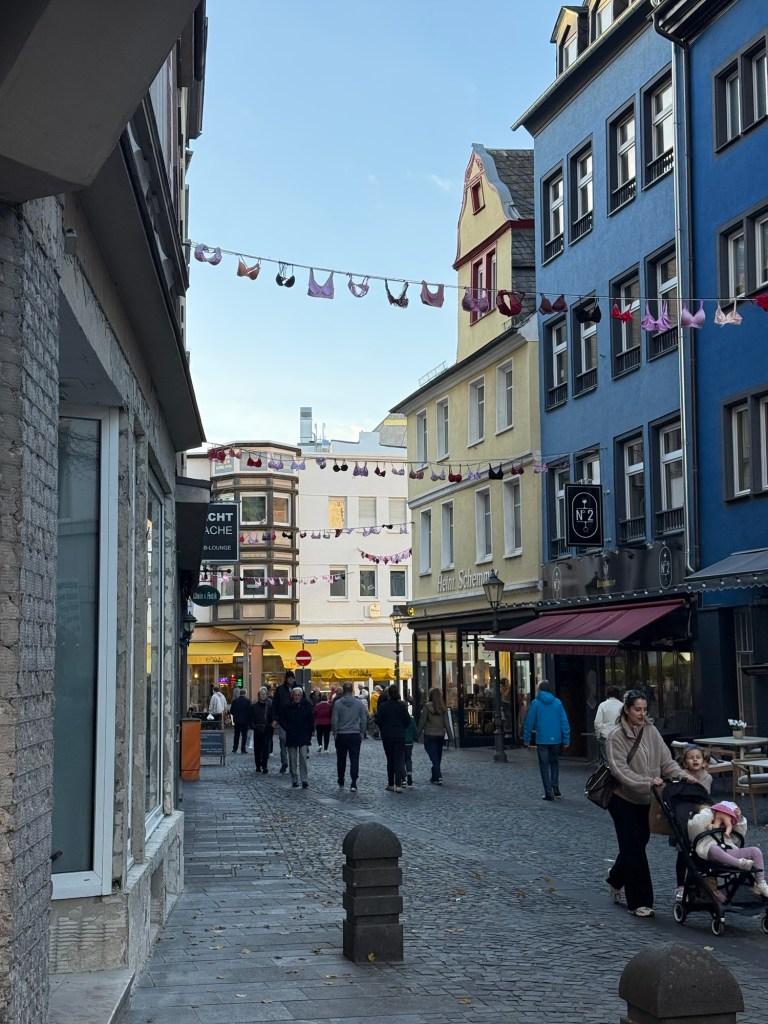
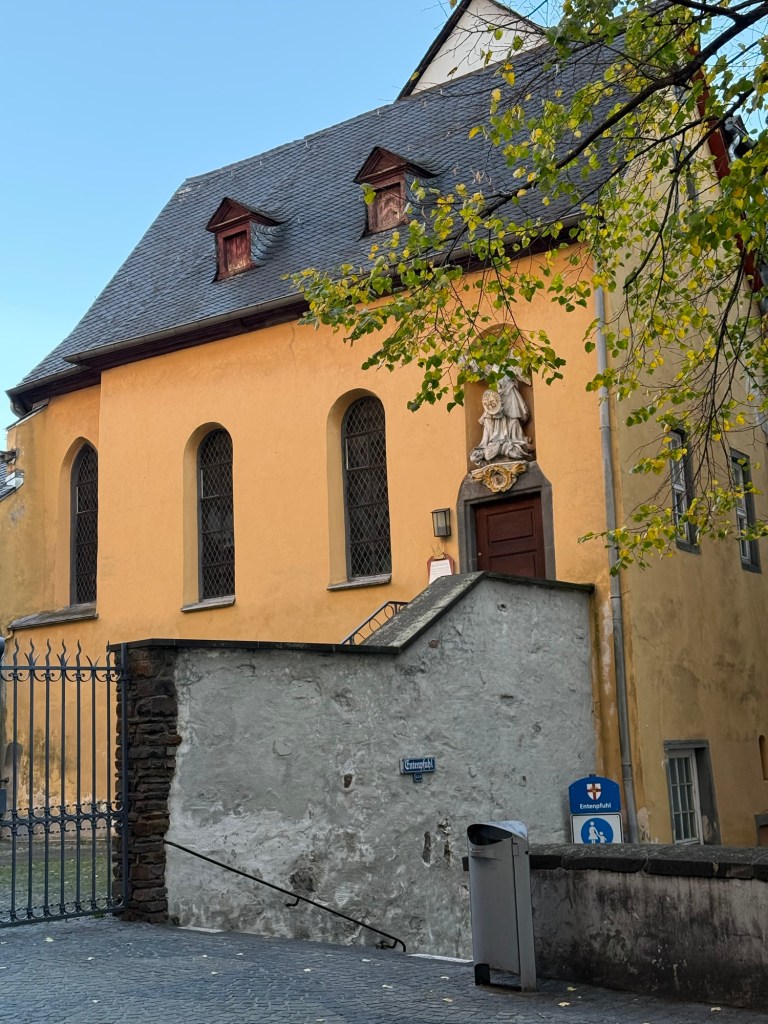
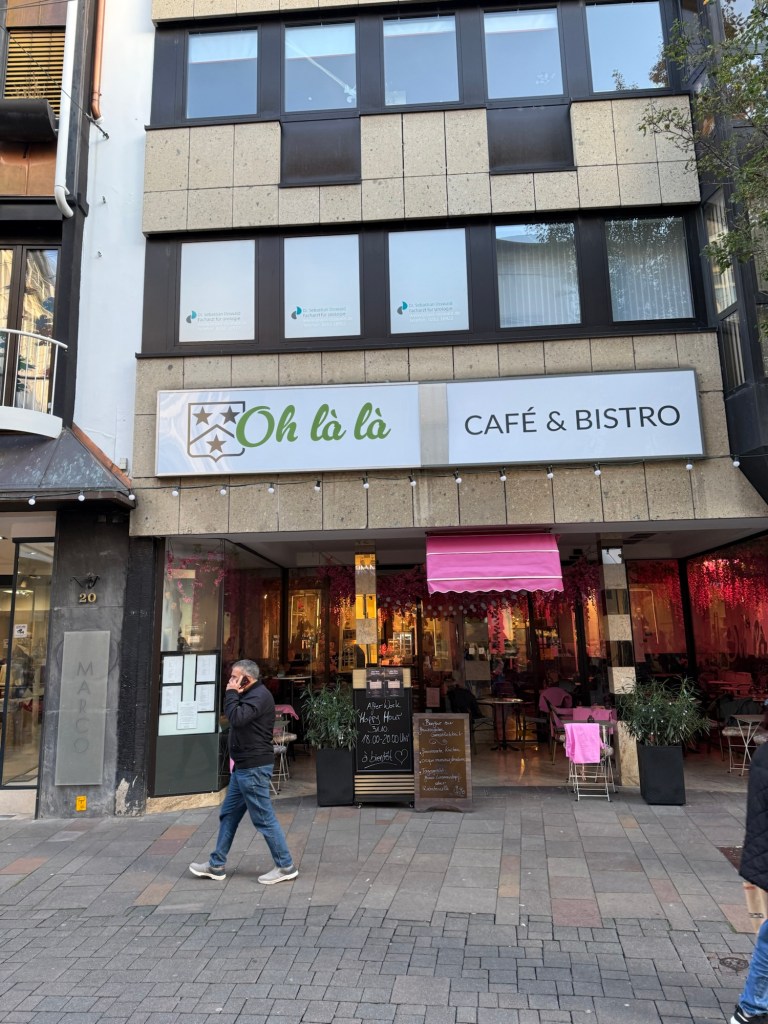
Prince WilliamCable Tram Over the Rhine Park Along the Rhine Park Along the Rhine Church Near the Rhine Church ParkHerz Jesu Kirche Near the RhineGiant Purse Sculpture Giant Channel No. 5The Famous ThumbIn Front of Prince WilliamWalkway Near Prince William Statue Near the Prince William Memorial Three Panels from the Berlin Wall Corner Red Building Survived Allied Bombing Older Downtown Building That Survived the WWII Bombing Our Guide ChristianTypical Alley in Older Neighborhood That Survived the Bombing During WWII Virgin Mary Above the Main Church Our New Friends Beth and Steve from Ohio Residential Courtyard Statue Tribute to an Eccentric Former Resident of Koblenz FlorinskircheAwareness of Breast Cancer Month FlorinskircheVirgin Mary at FlorinskircheInterior of Florinskirche Florinskirche Interior of Florinskirche Interior of Florinskirche Interior of Florinskirche Portrait of Saint Nicholas at Florinskirche More Hanging Bras Promoting Breast Cancer Awareness Fun Bistro on the Main Shopping Street The Main Shopping Street Johannes Muller 19th Century Respected Anatomist City HallThe Boy Who Spits Statue Local Bar & Restaurant The City is Preparing for the Christmas MarketsThe Cable Tram That Goes Over the Rhine John and I Taking the Cable Tram The Fortress Our View from the TramThe Outer Wall of the Fortress The Fortress Koblenz at Night The Night ViewIn Front of the Rhine Viking River Cruise Ship
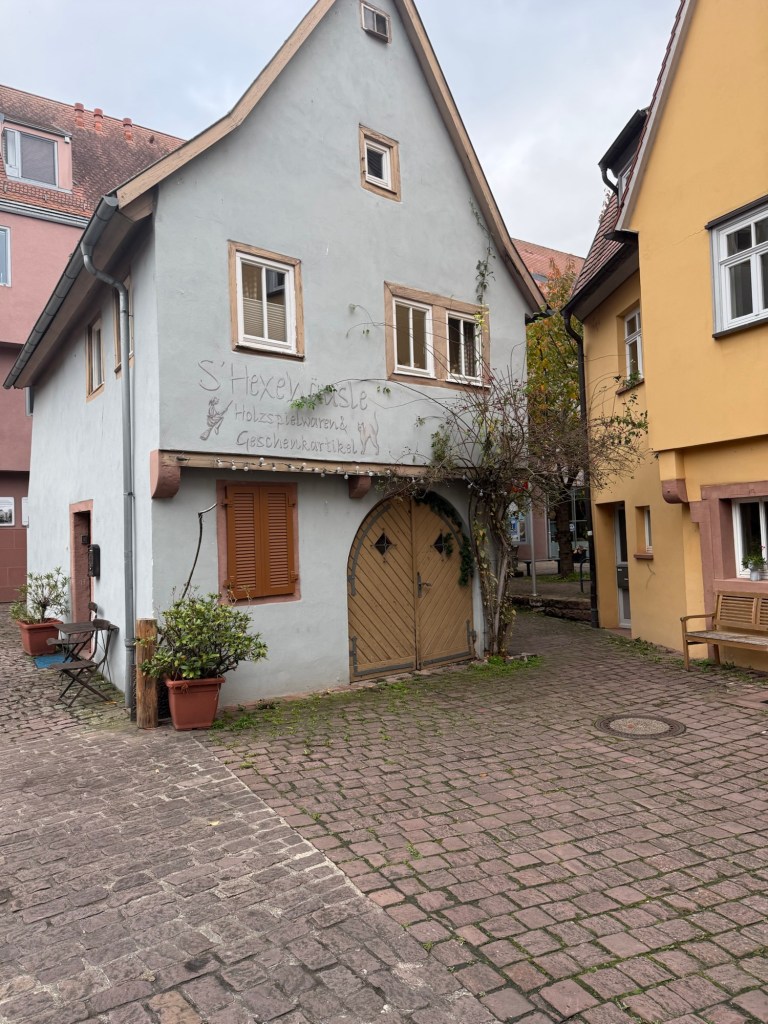
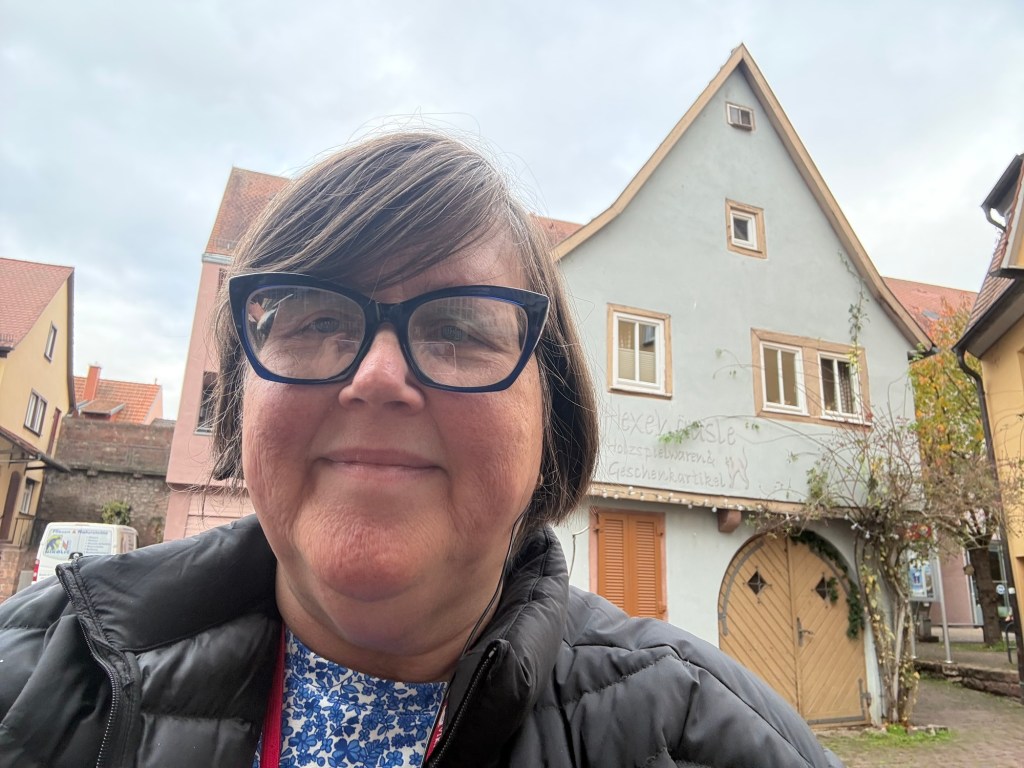
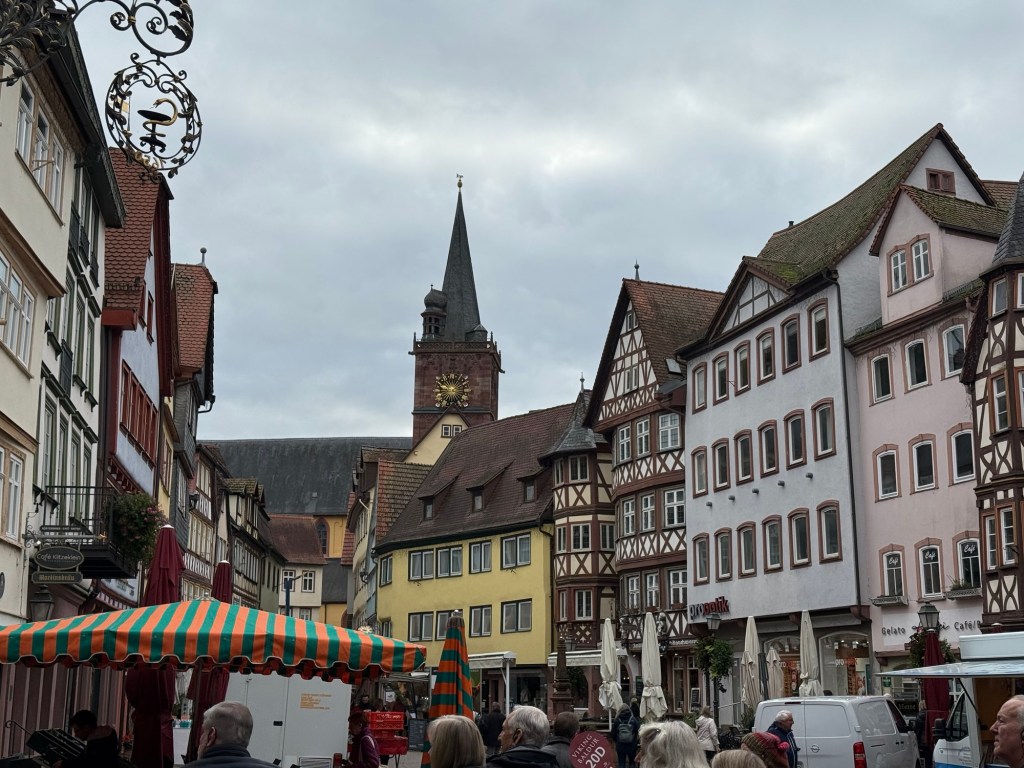
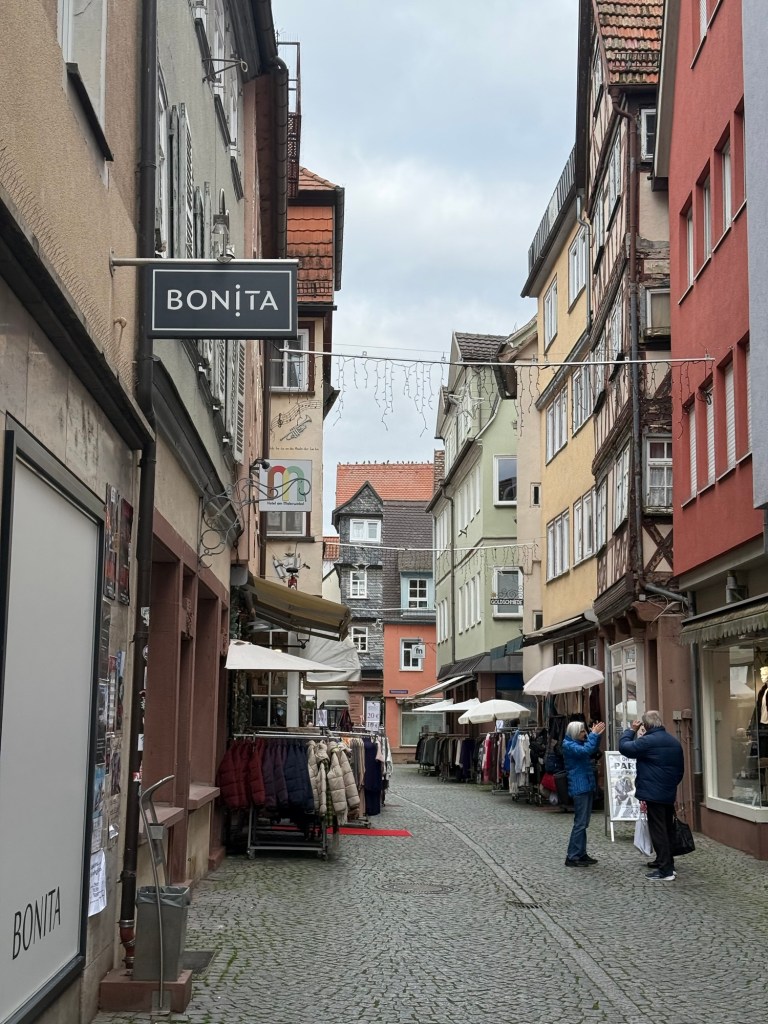
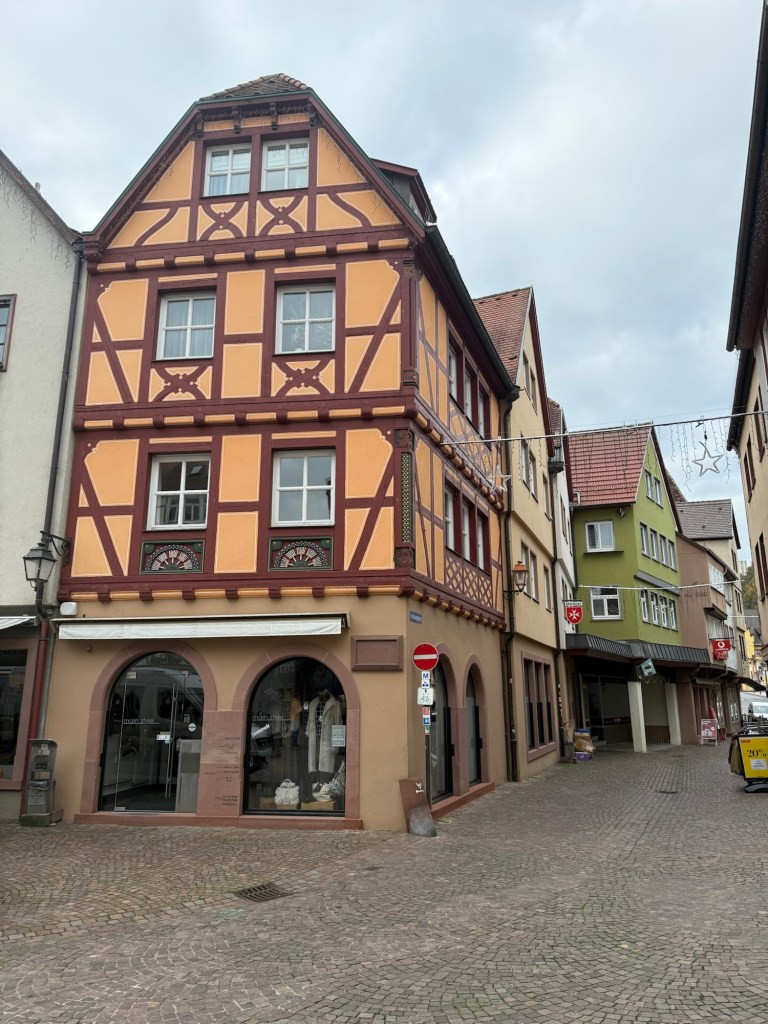
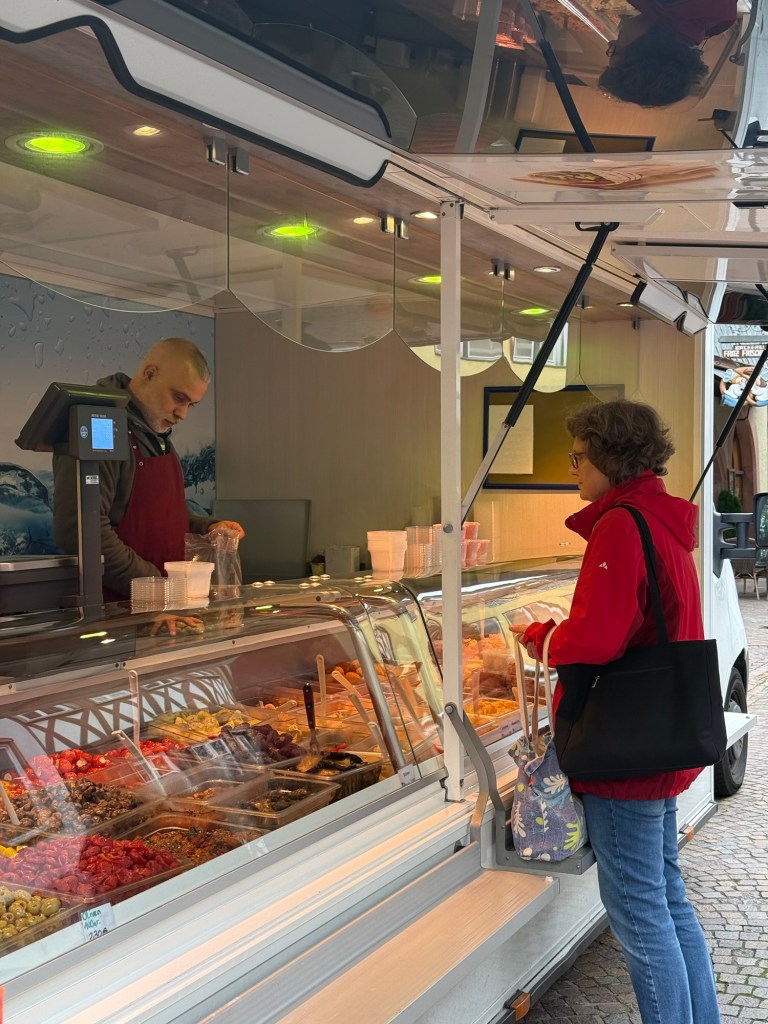
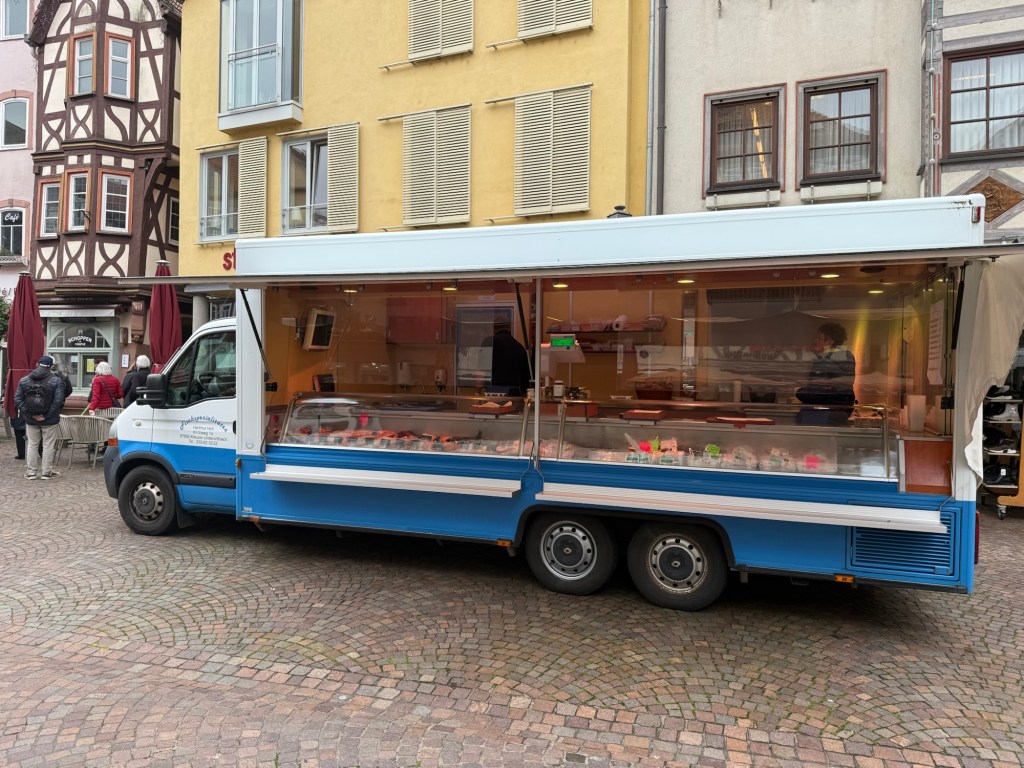
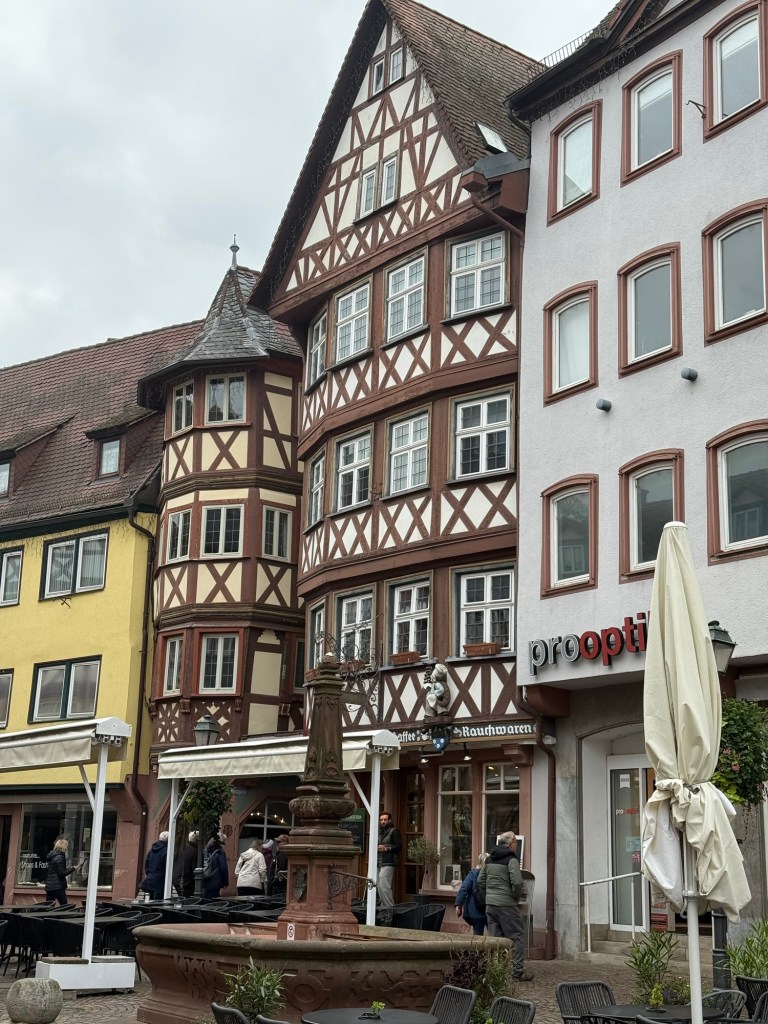
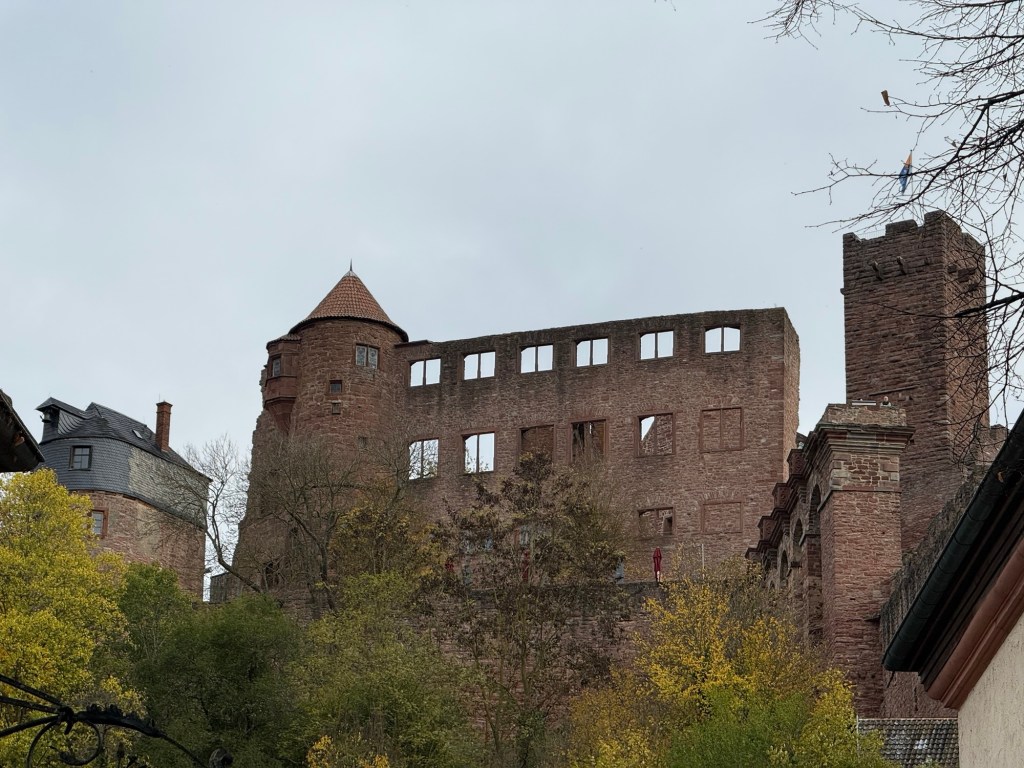
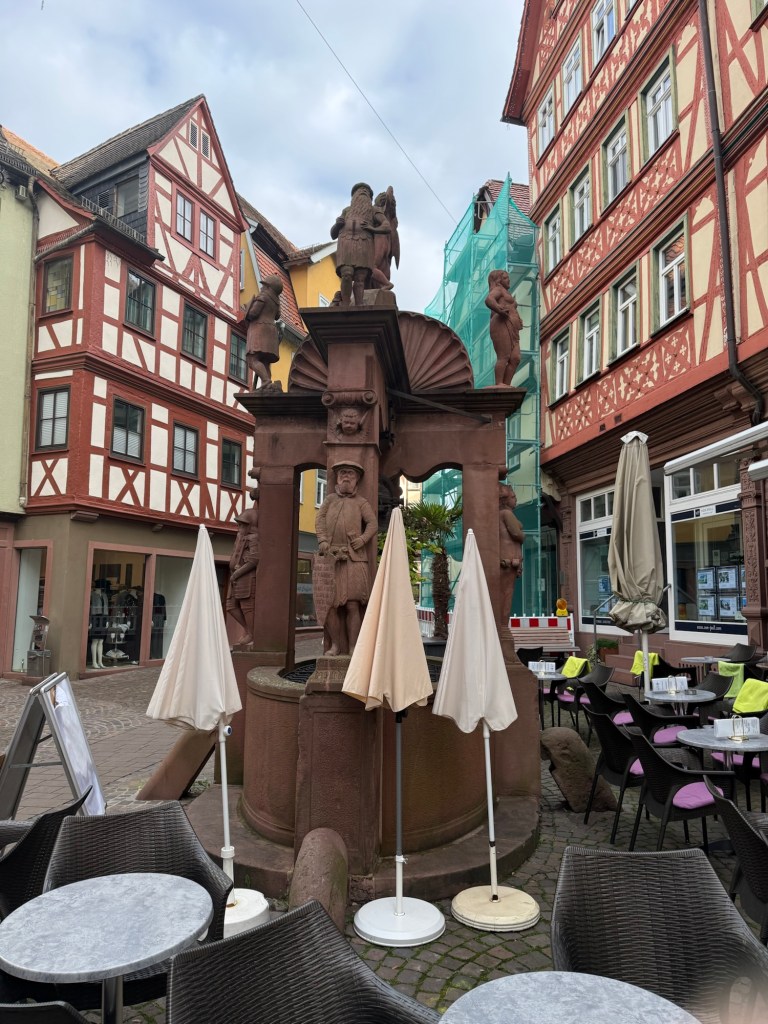
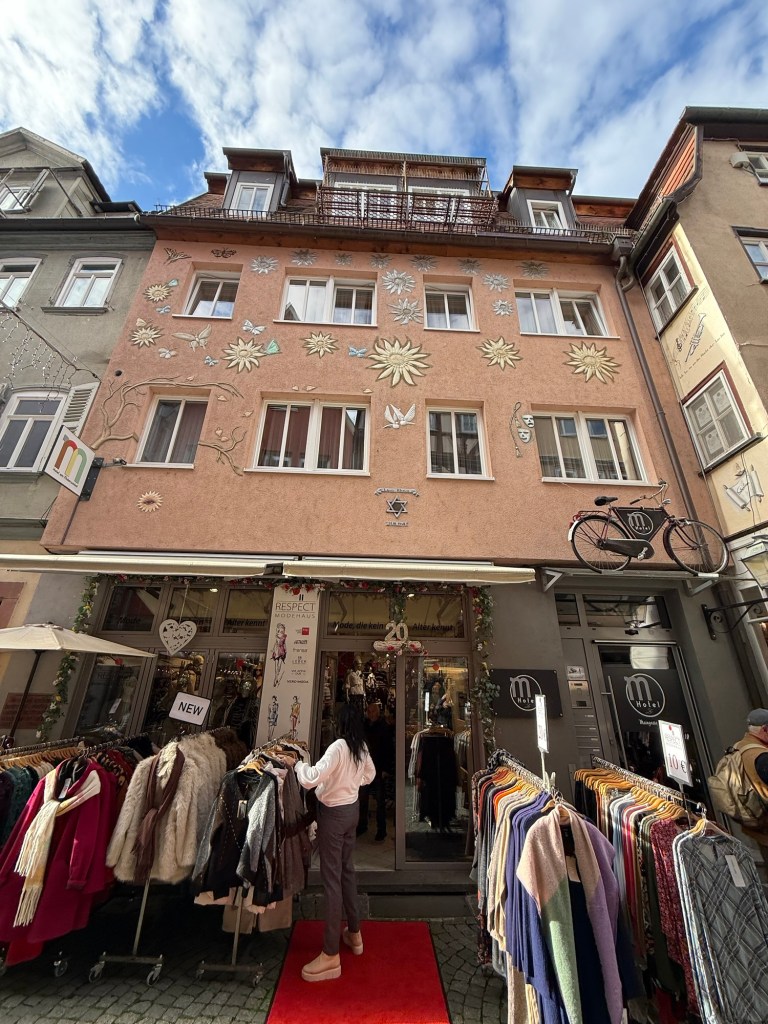
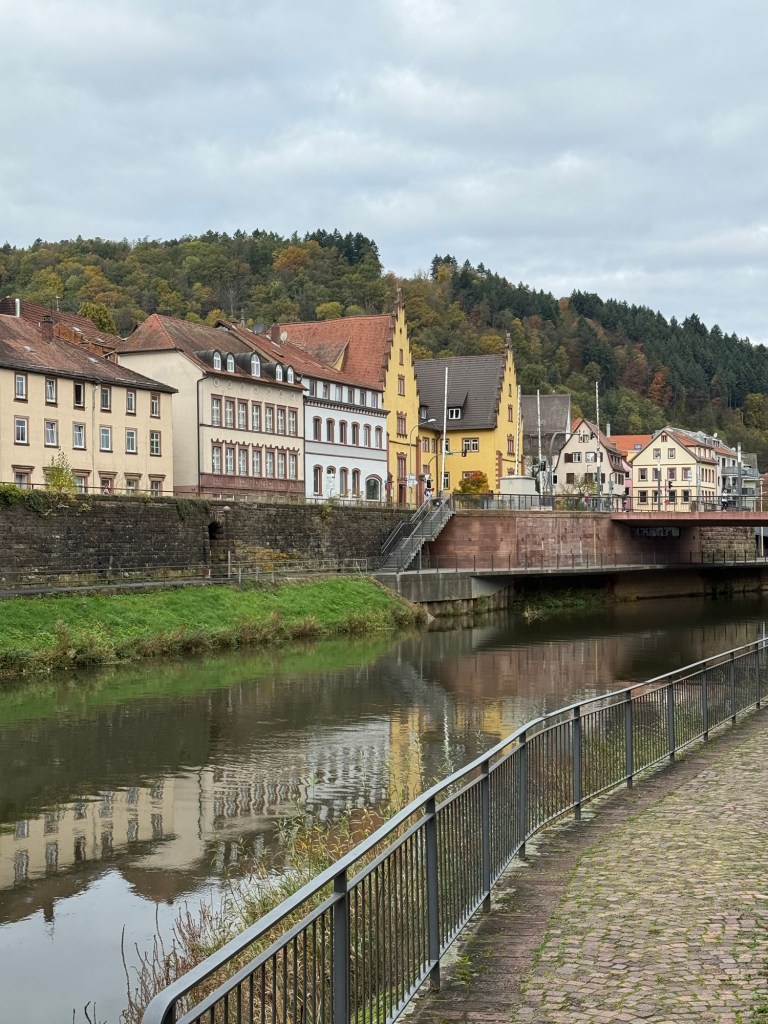
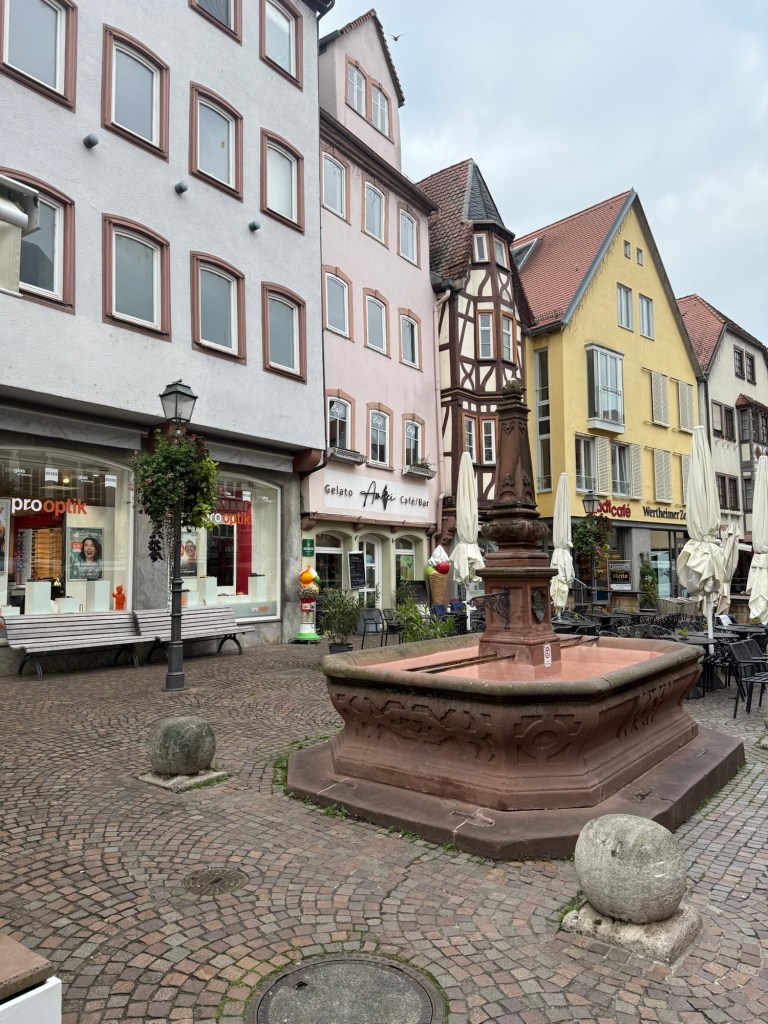
I loved all the genuinely old buildings of Wertheim but I also enjoyed seeing the local townspeople shop and interact with each other. We were lucky to be there for a Wednesday morning Market when several specialty merchants were there to sell produce, meats, seafood and other products such as olives. Business was brisk. The weather was nice so lots of locals sat in the outdoor cafes enjoying coffees and pastries, too. Prices at the local clothing shops were reasonable so many of our fellow travelers on the Baldur enjoyed shopping.
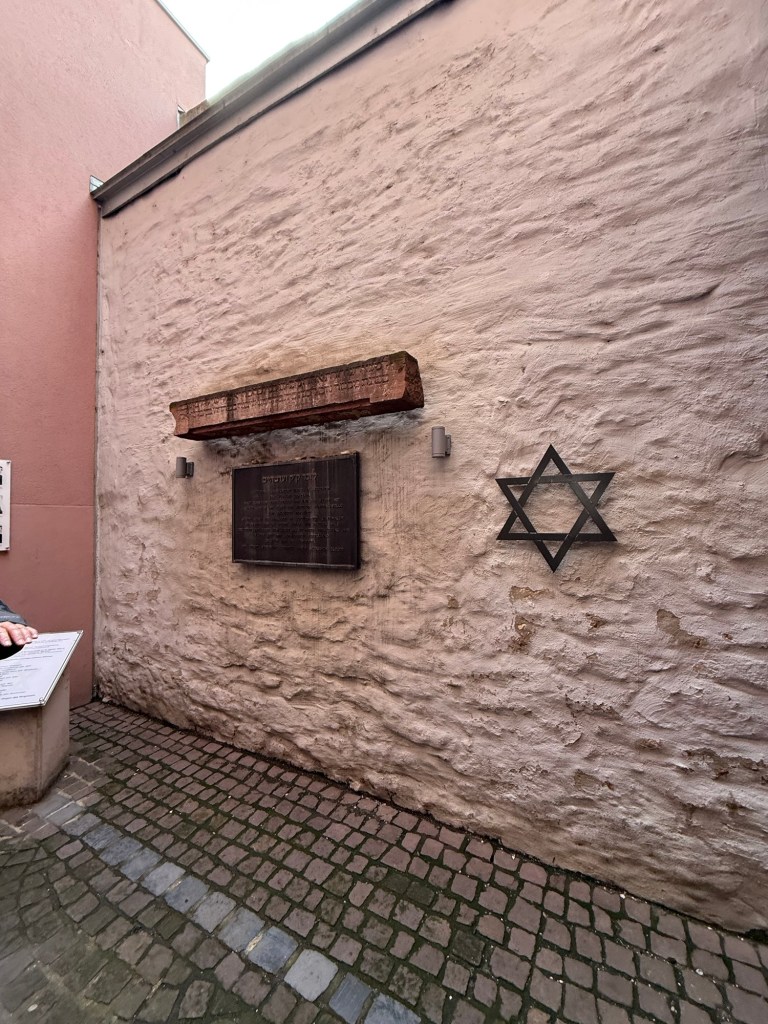
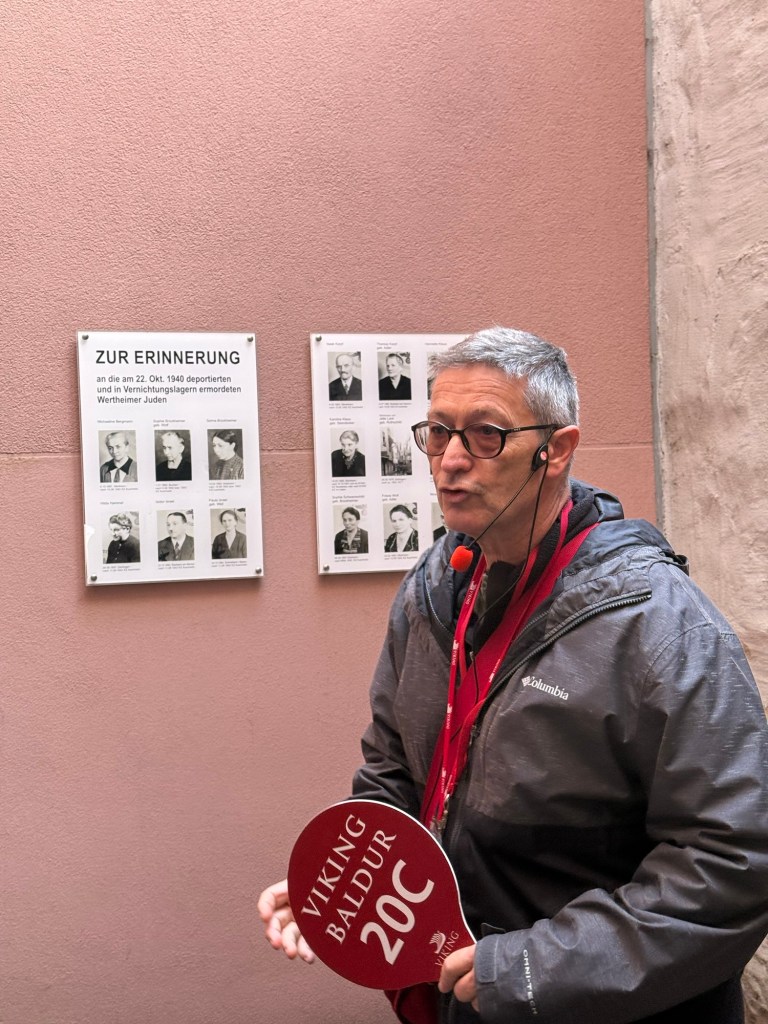
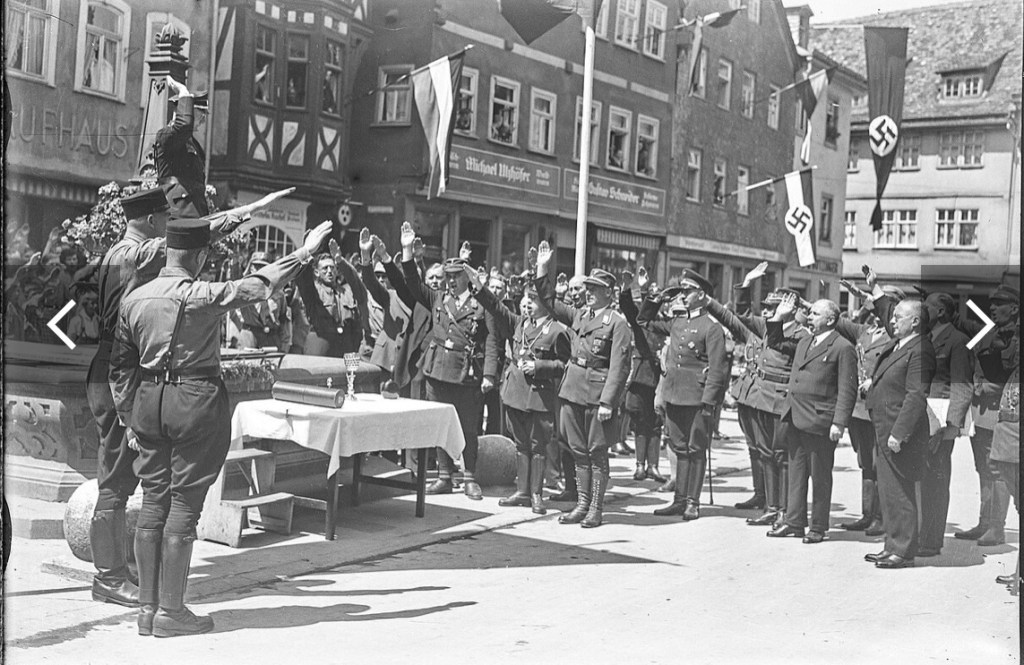
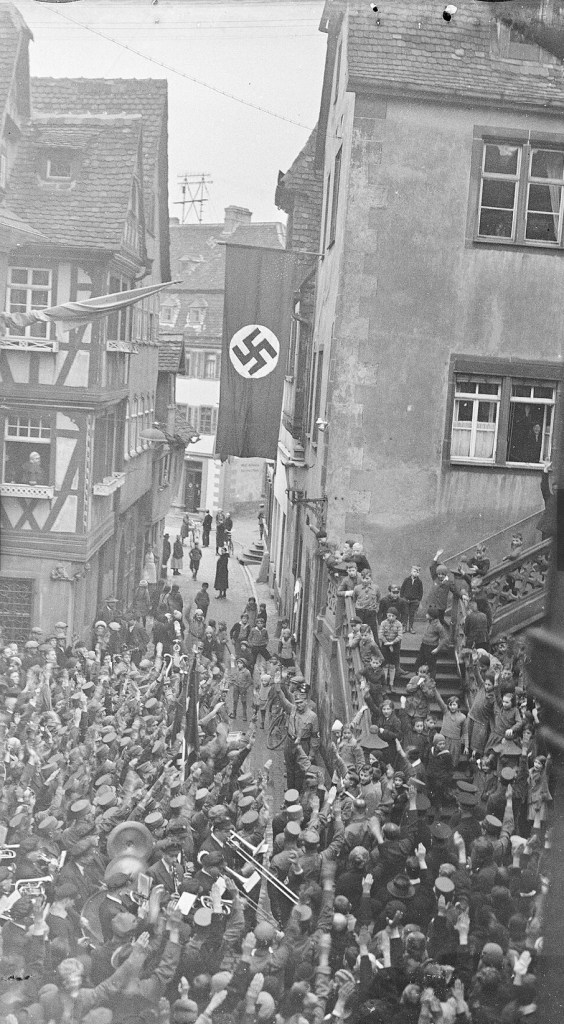
Besides taking an overview tour of the city, we enjoyed a second tour which went into the Jewish atrocities during WWII. Our tour guide took us to specific buildings and had photos from the Nazi era showing Nazis removing Jews from their homes as well as Nazi soldiers standing guard in front of Jewish-owned businesses to prevent sales.
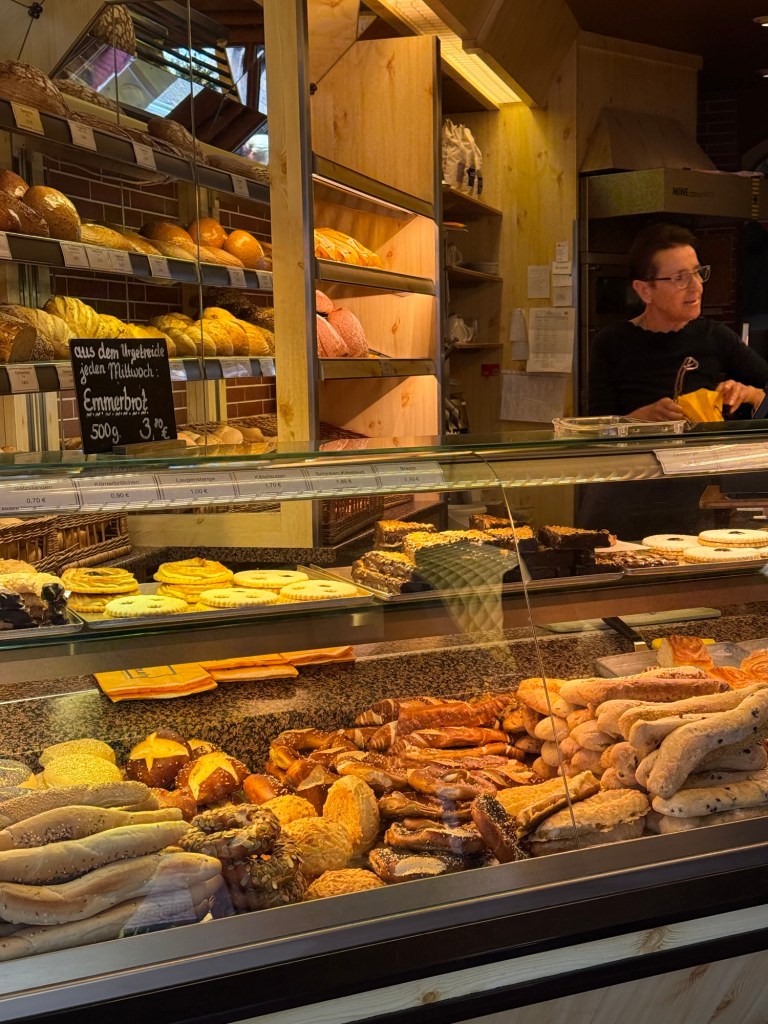
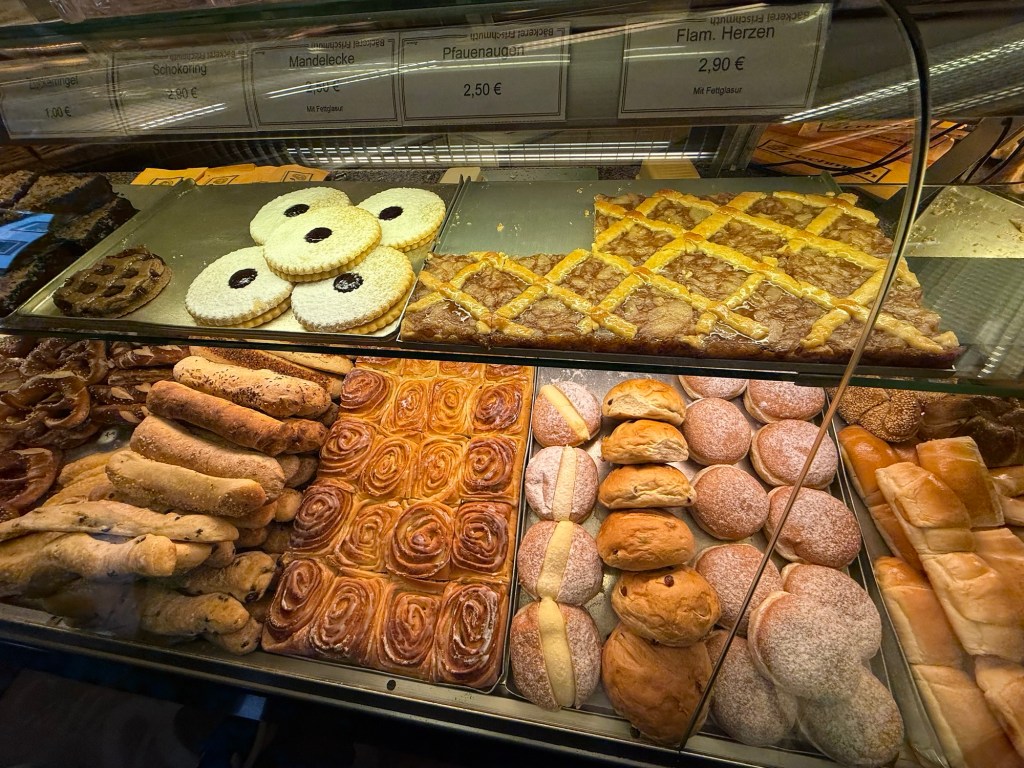
We ended our visit to Wertheim with a visit to the oldest bakery in town and bought several pastries. We sat outside and spit a a chocolate and almond type of cake that I have never seen before. It was delicious and not too sweet. We shared a linzer torte later that was also fantastic. I am glad that I am averaging between 12,000 and 14,000 steps per day; I am hoping that it will help me burn off some calories.
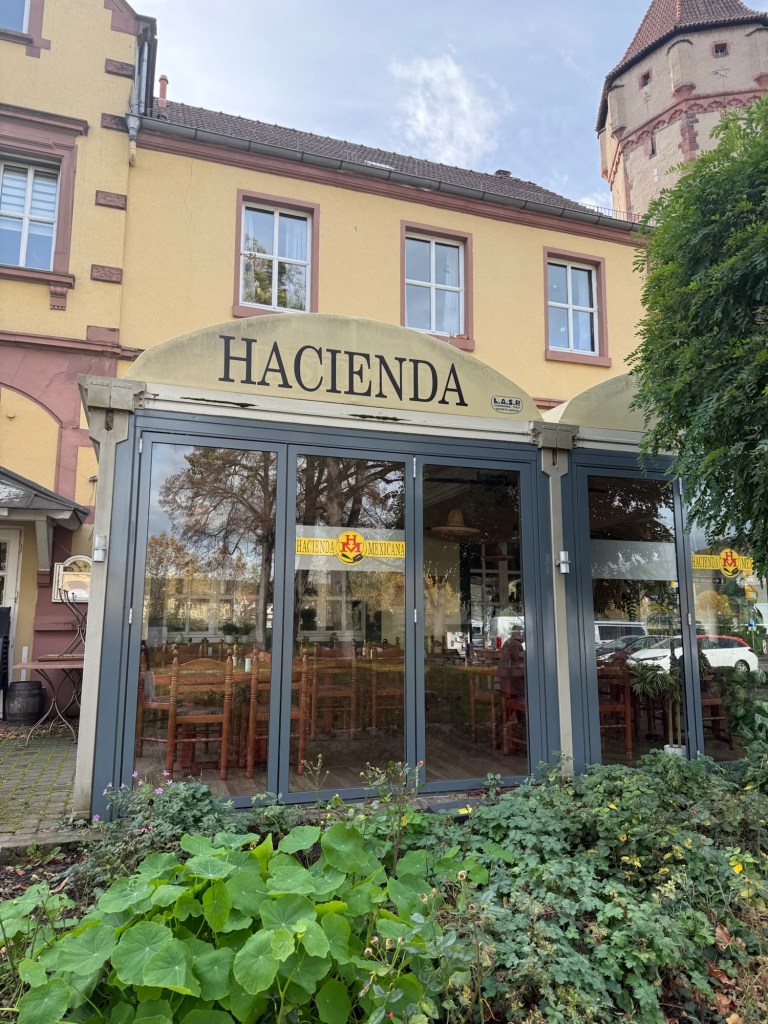
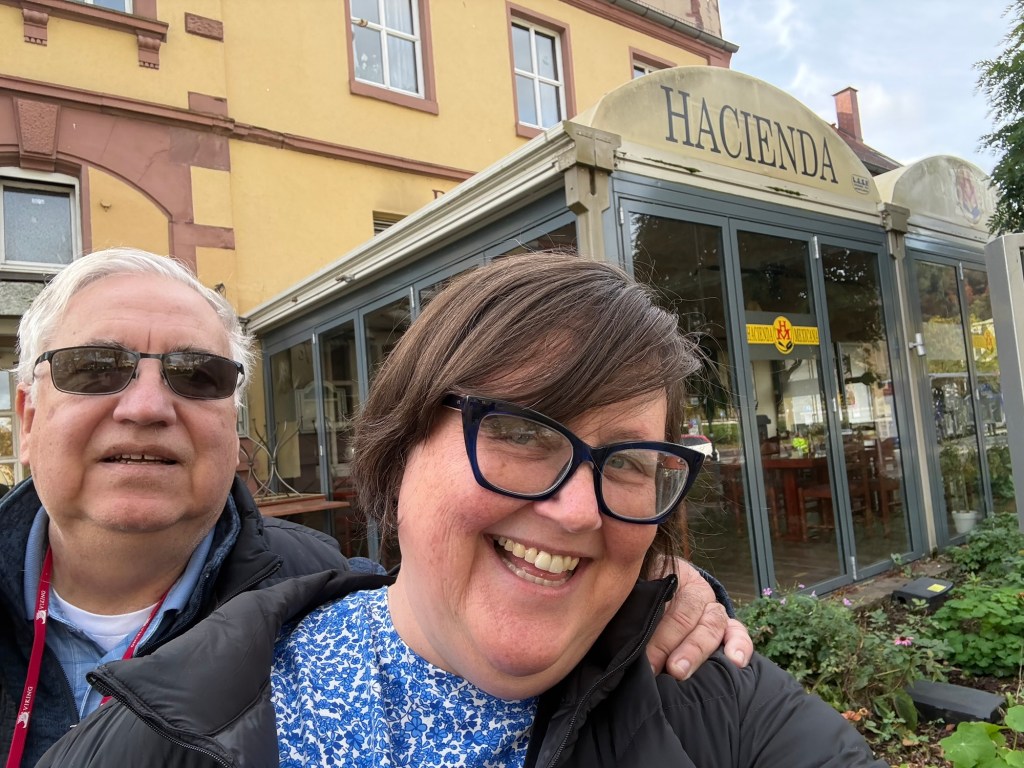
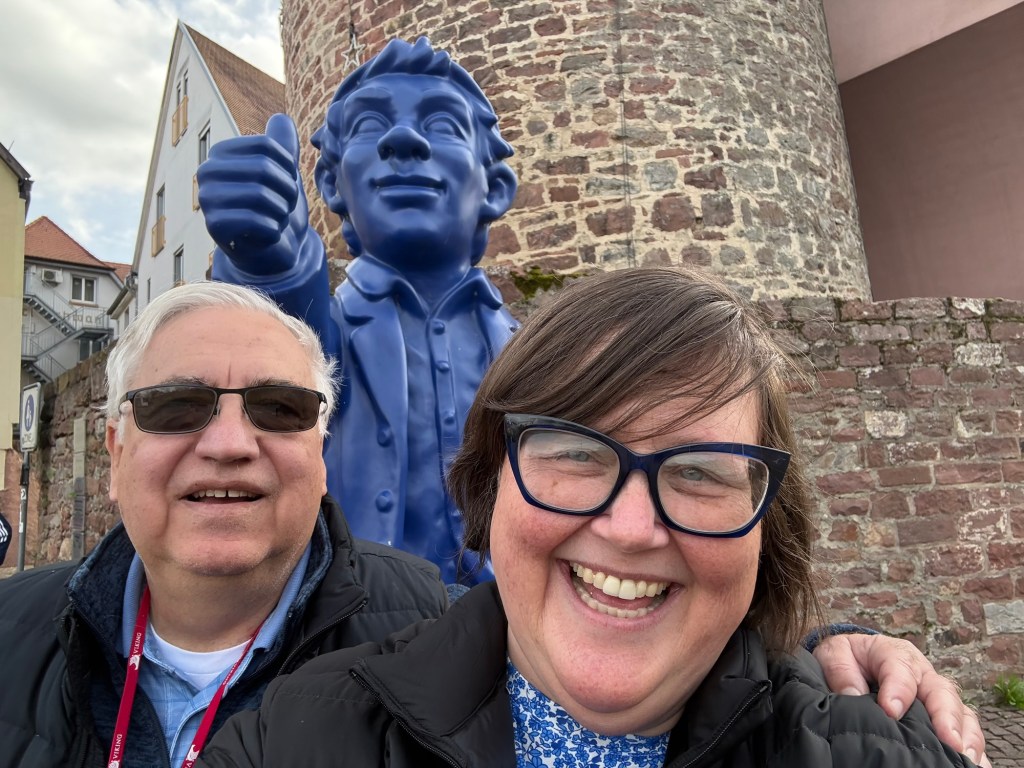
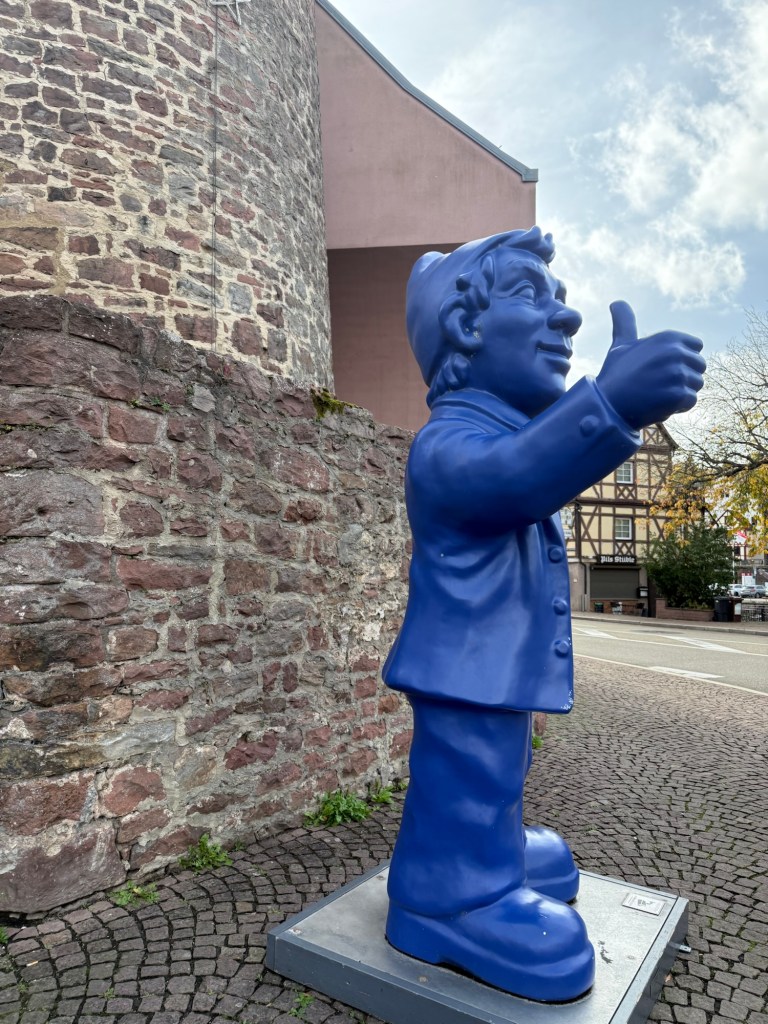
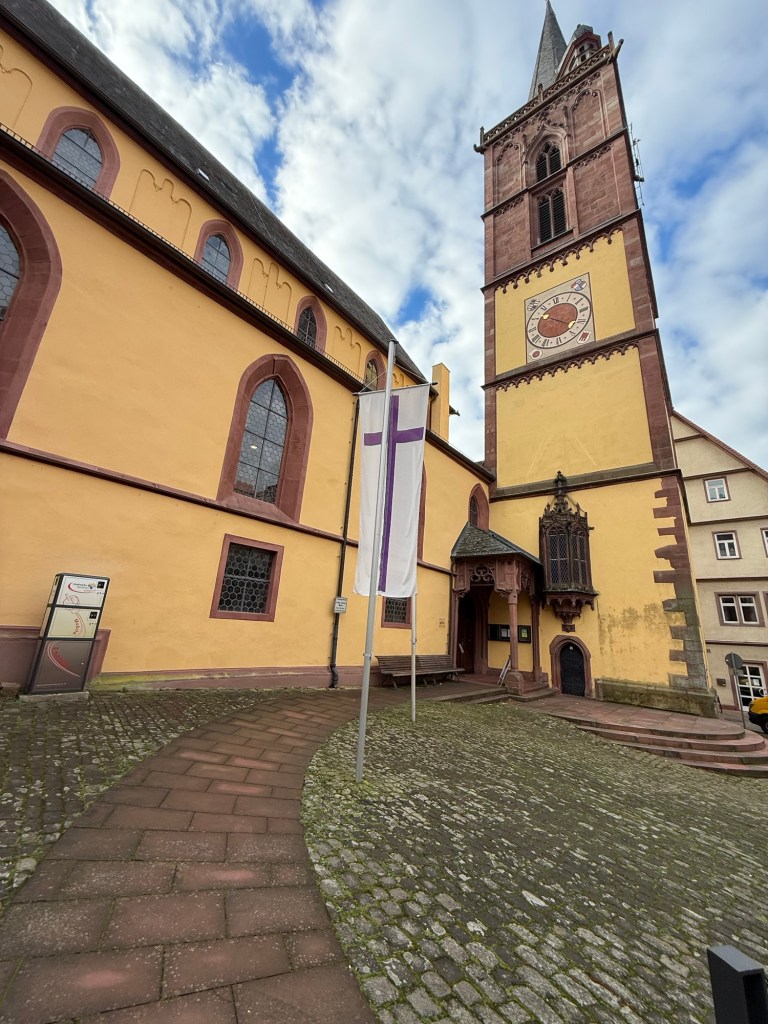
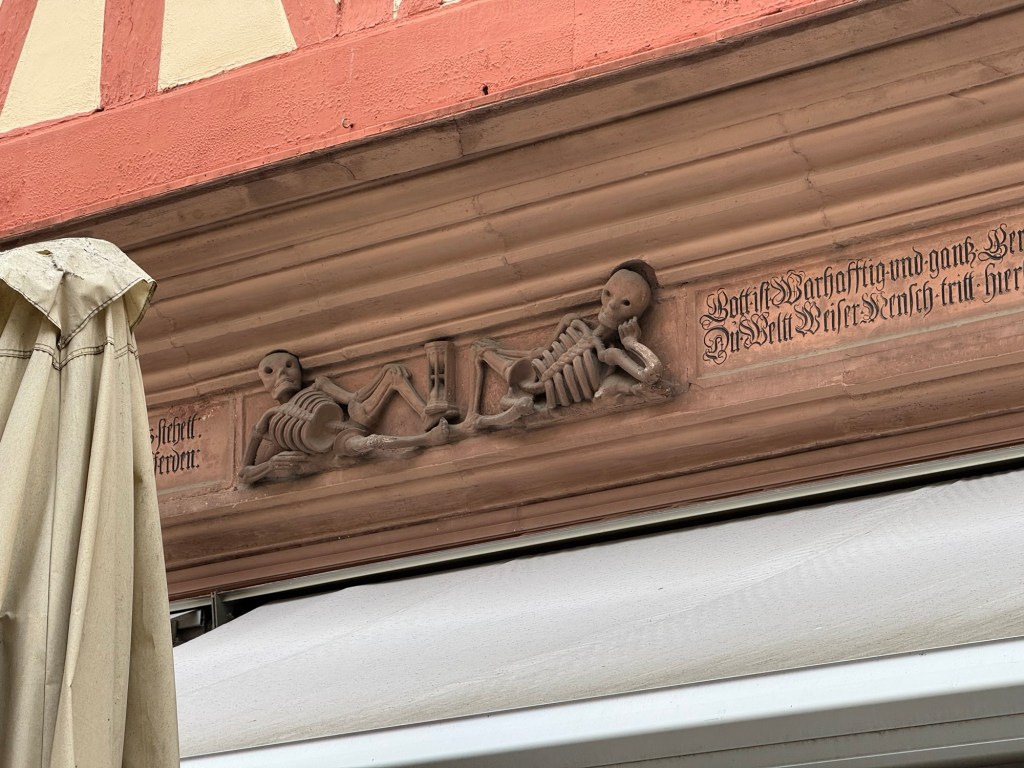
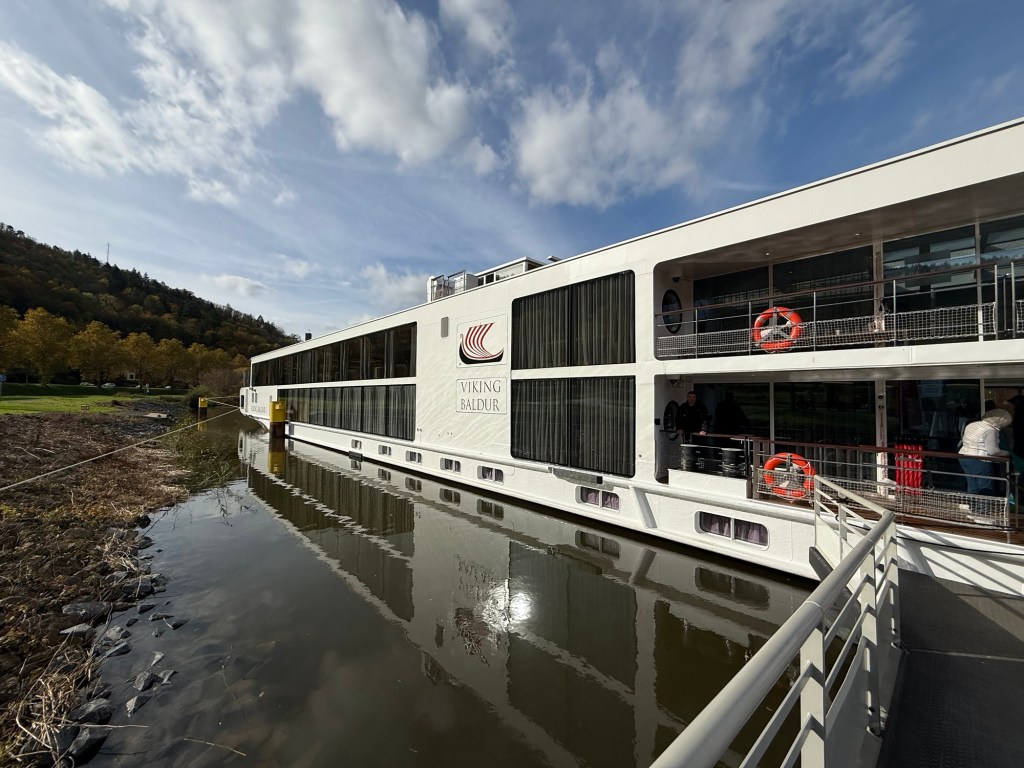
Wednesday’s Community Market Local Shops in Wertheim Charming Street Wednesday Community Market The Food Selection in a Tiny Town Is Impressive Wednesday Market Day Really Quaint Downtown The Exterior of the Oldest Bakery Interior of the Oldest Bakery The Baked Goods Are Spectacular Some of the Artisans Had a Vicious Sense of Humor An Old Gentry House That’s Now City HallAbandoned Castle A Mexican Restaurant No German Tacos for Us In Wertheim Memorial for the Jews Murdered by the Nazis This Tour Guide Gave a Great Tour Re the Town’s Jews During WWII Town Center Fountain Previous Jewish-Owned Home Confiscated By the Nazis Wertheim Under the Nazis Wertheim Under the Nazis Gnome Mascot for Town Gnome Mascot Adopted During COVID The Main Town Church Built in 1384A Reminder That No Matter Your Wealth, We Are Equal In Death An Older Building in the City Still a Private Residence in Town Very Lush Landscape View from the River Fun Detail on One of the Older Houses View from the River The Central Section of Town A few Fun purchases from Wertheim Our Viking Ship the BaldurOur Viking Ship the Baldur
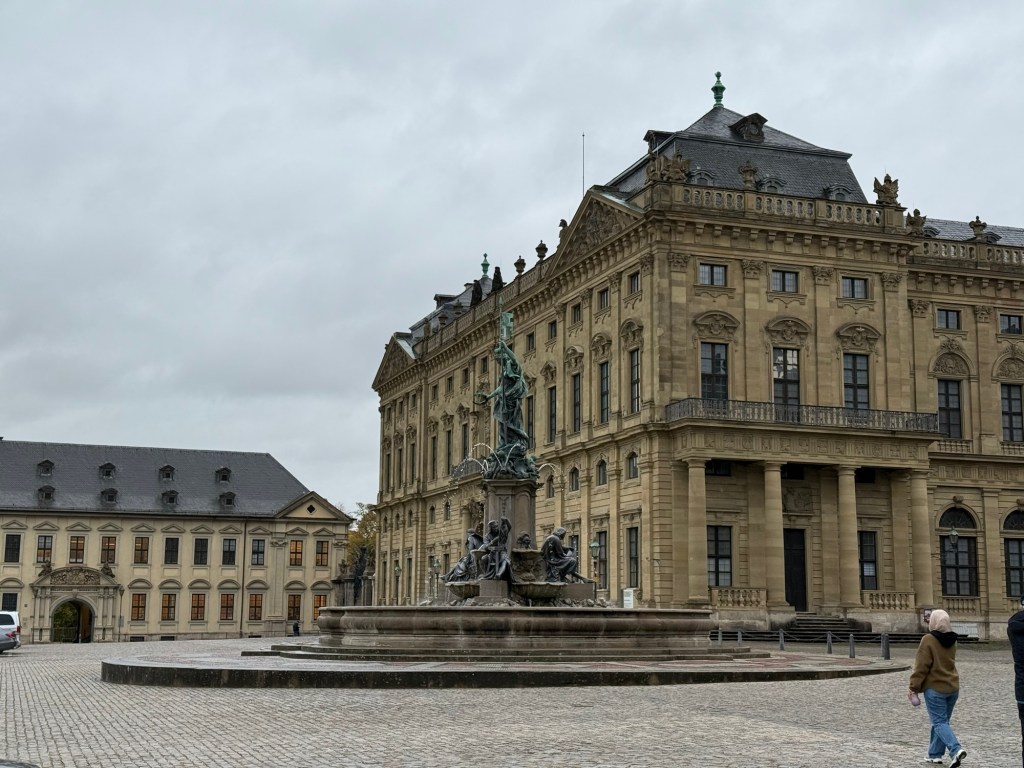
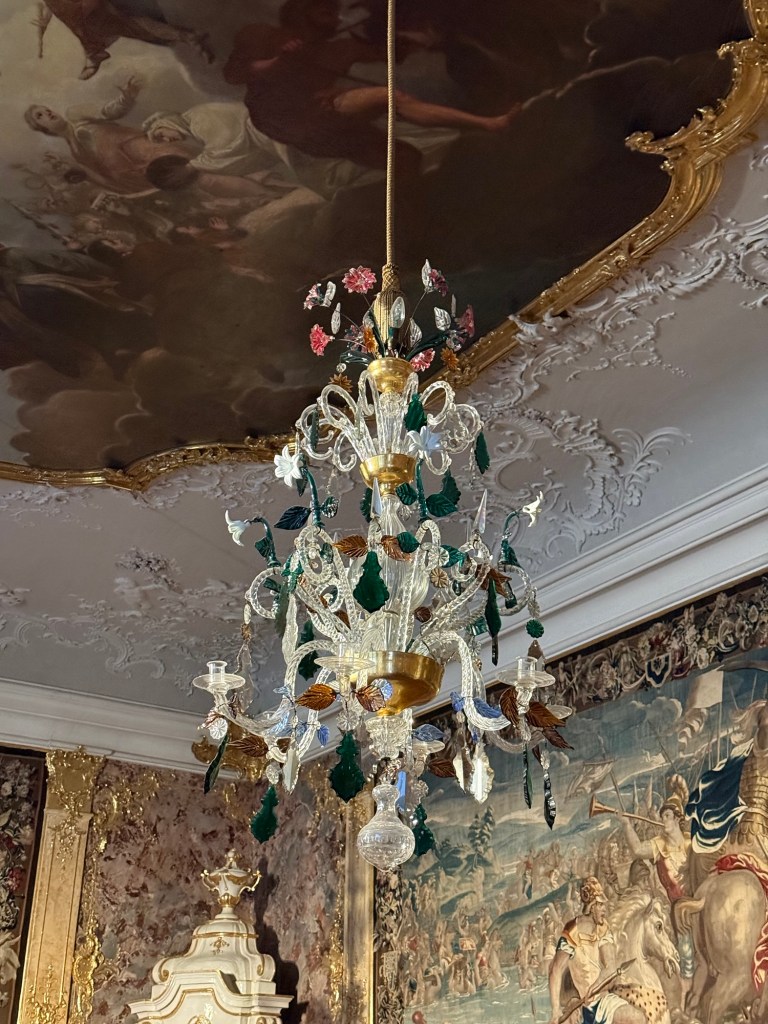
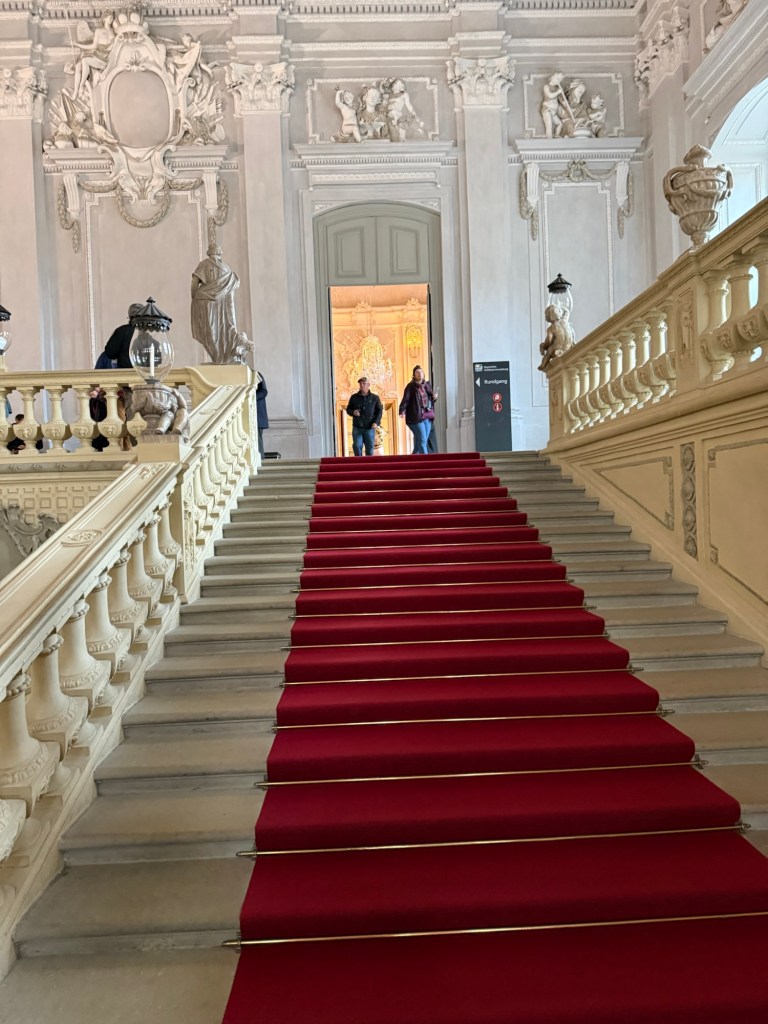
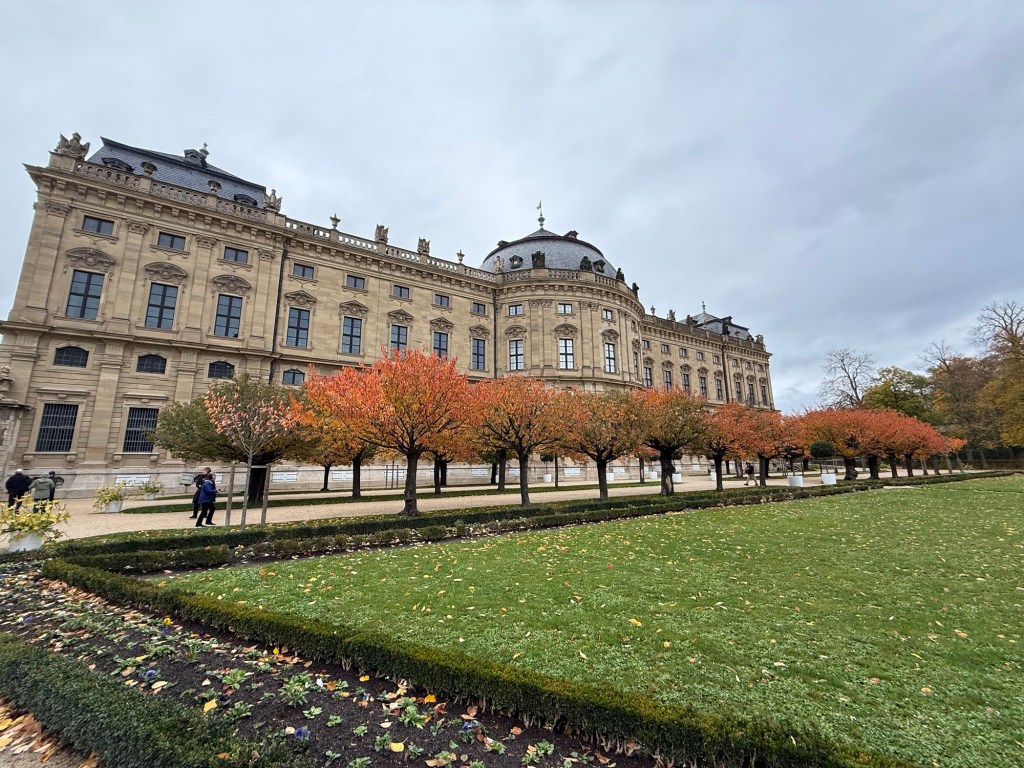
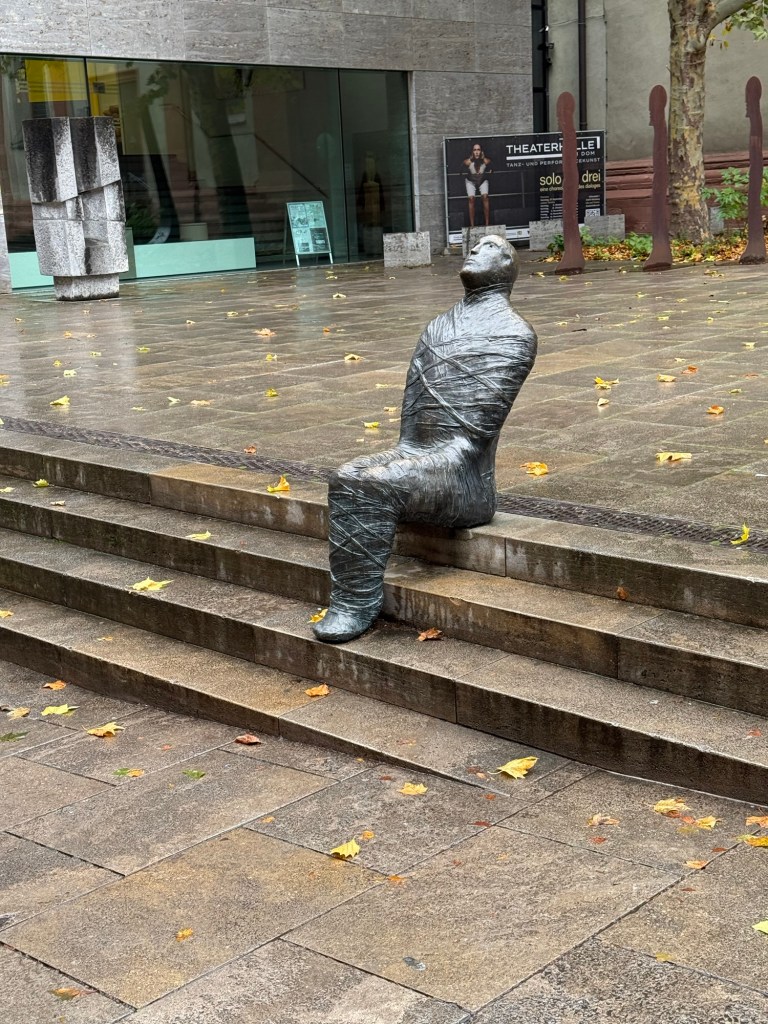
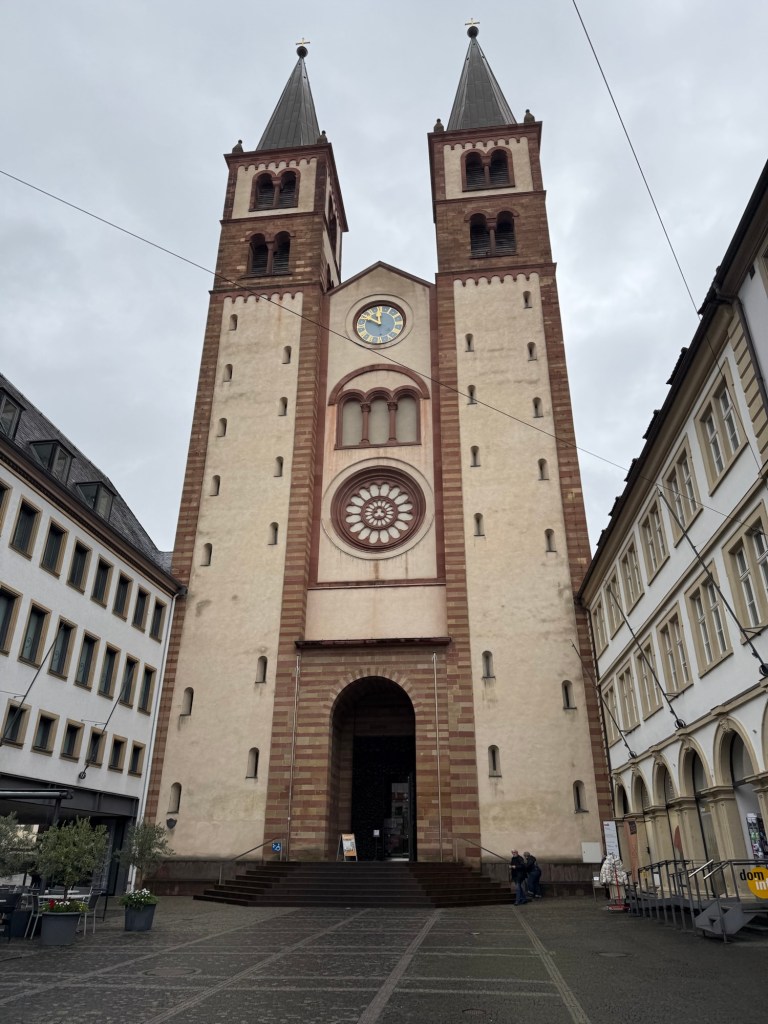
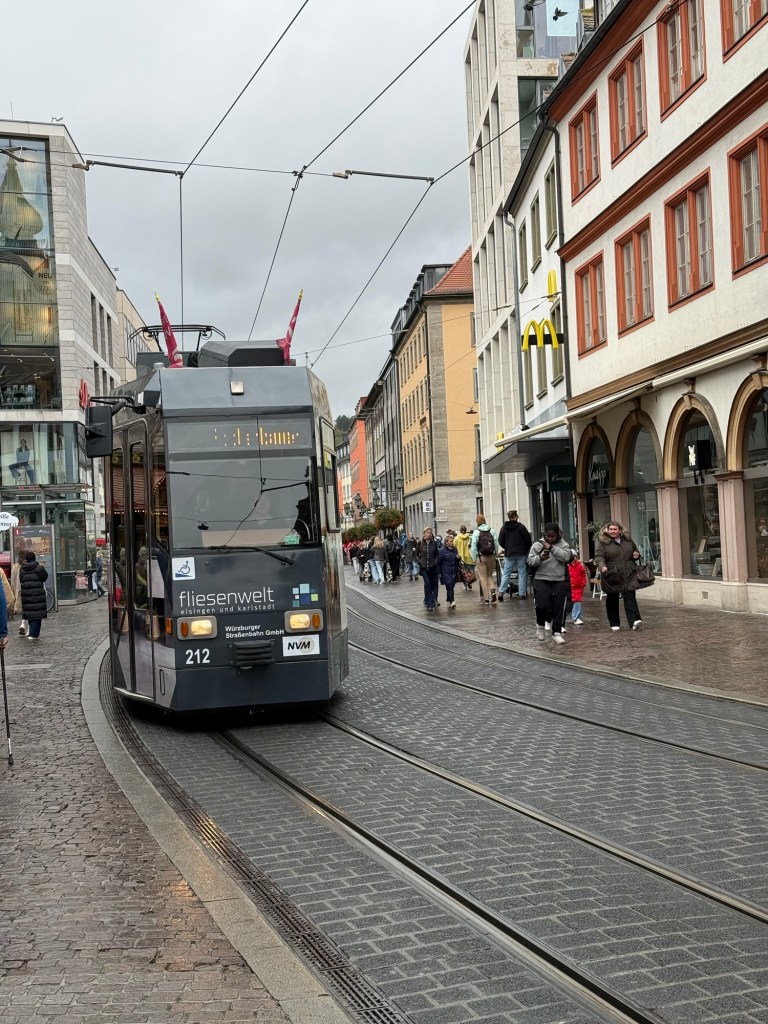
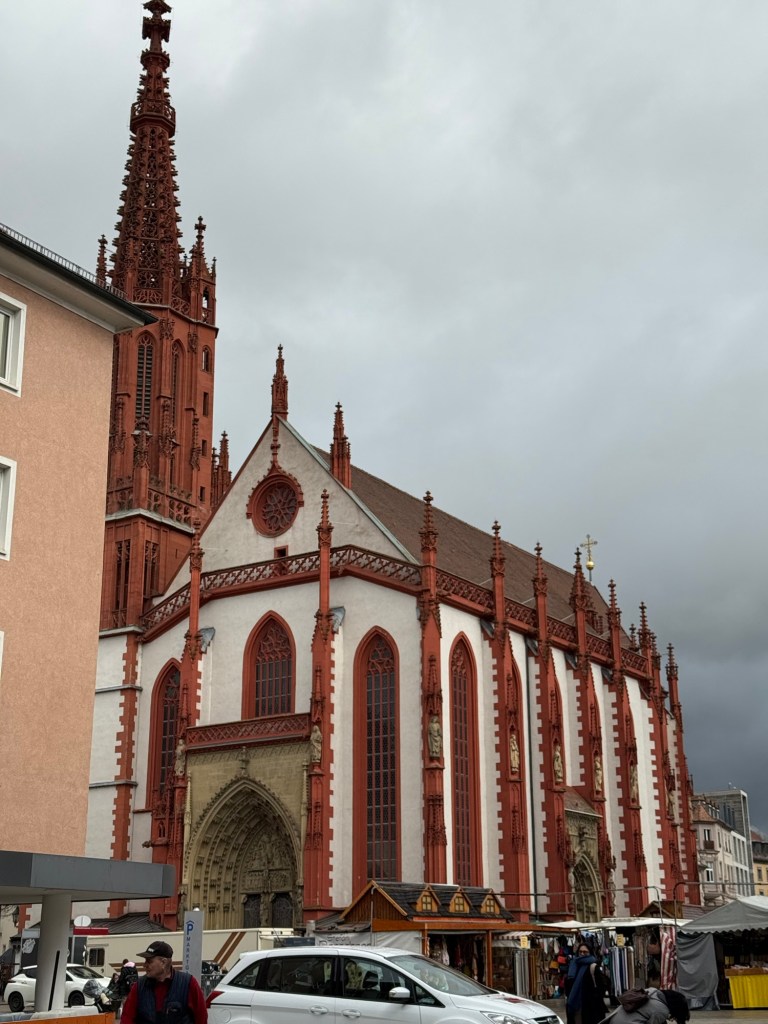
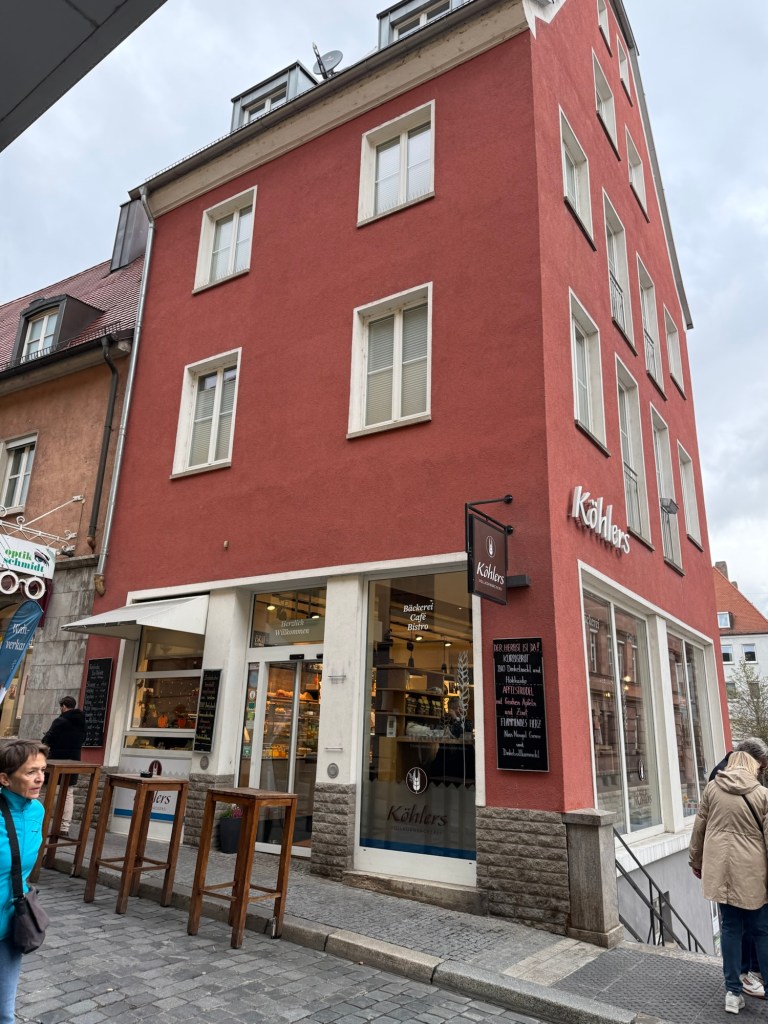
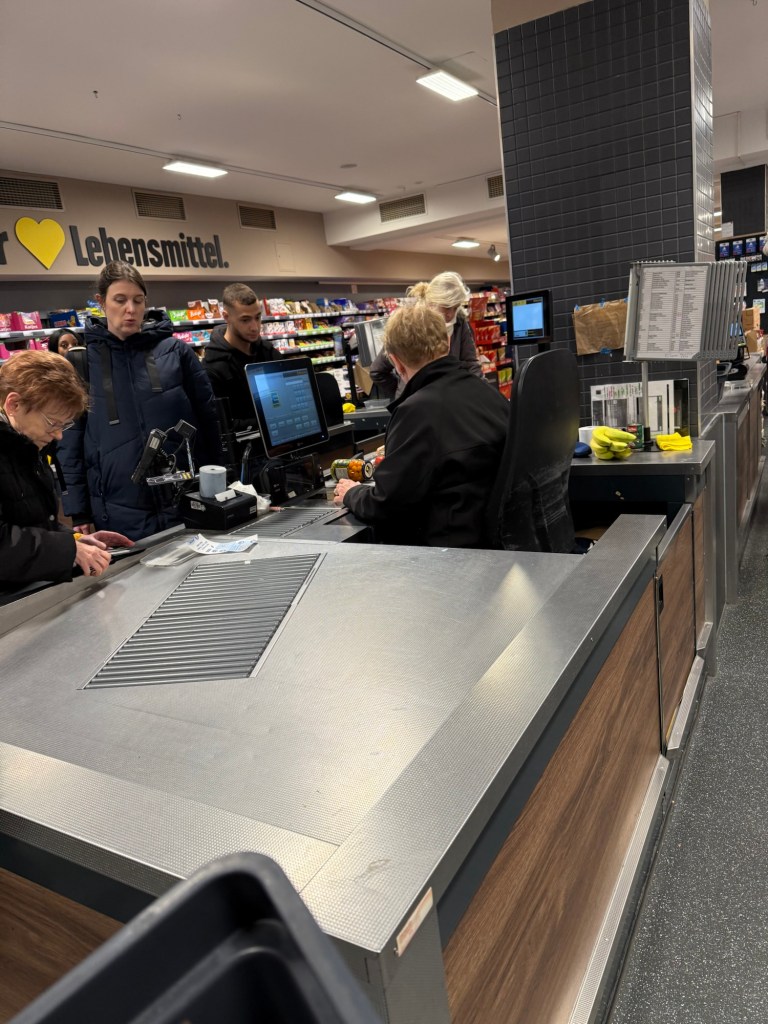
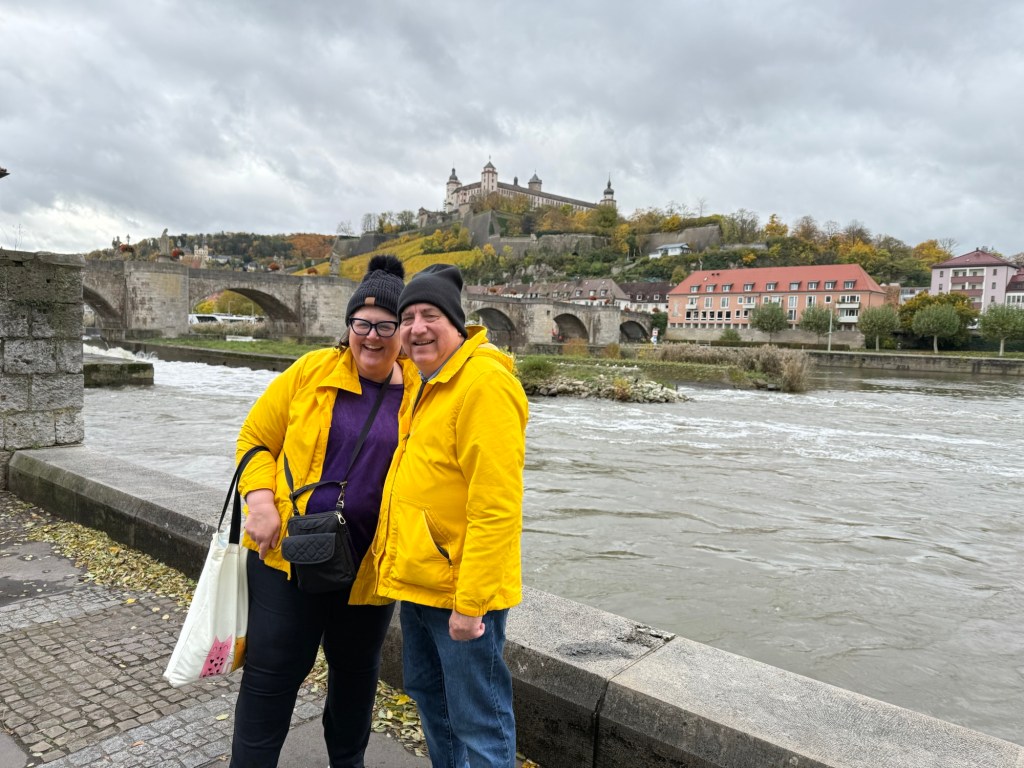
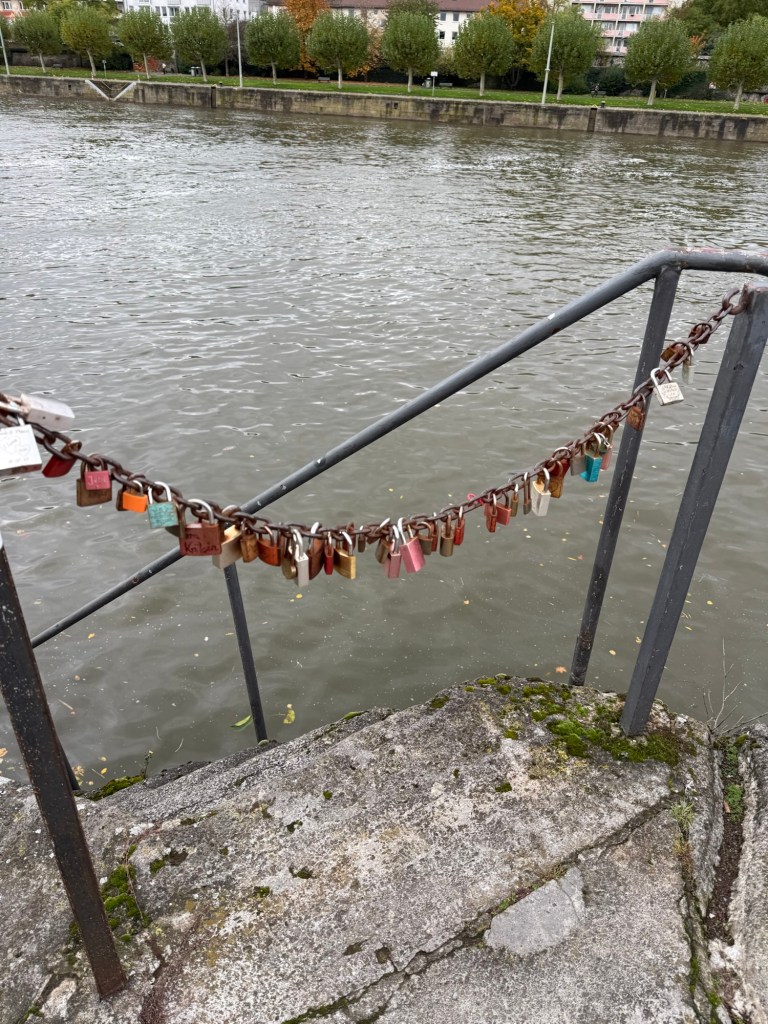
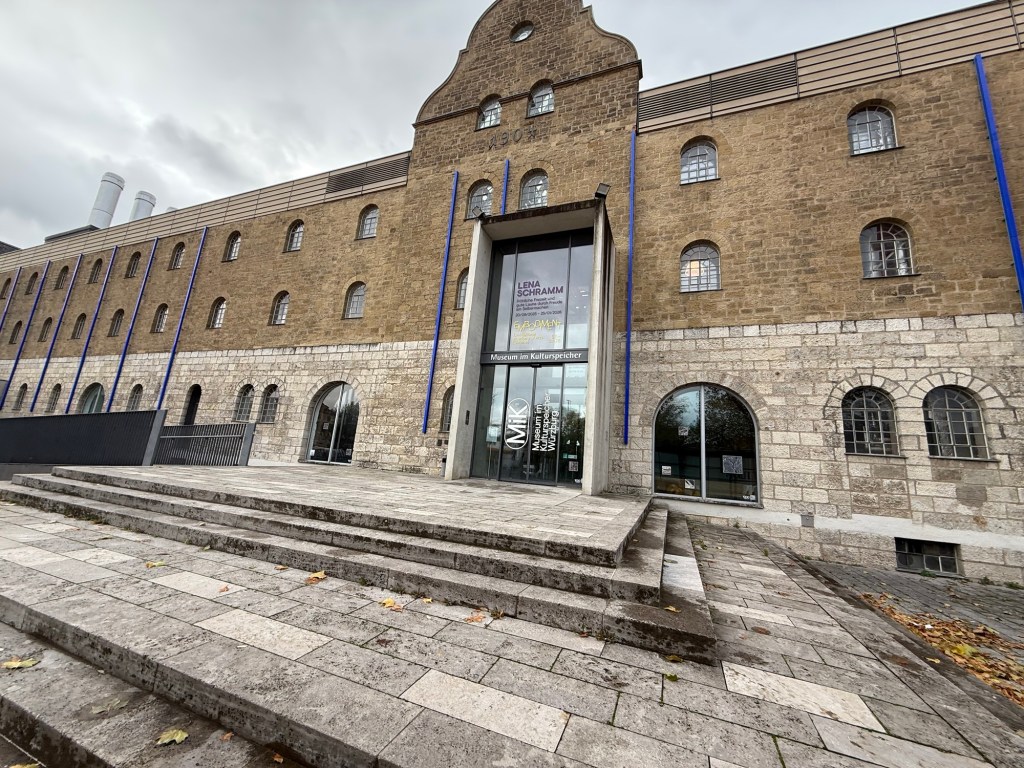
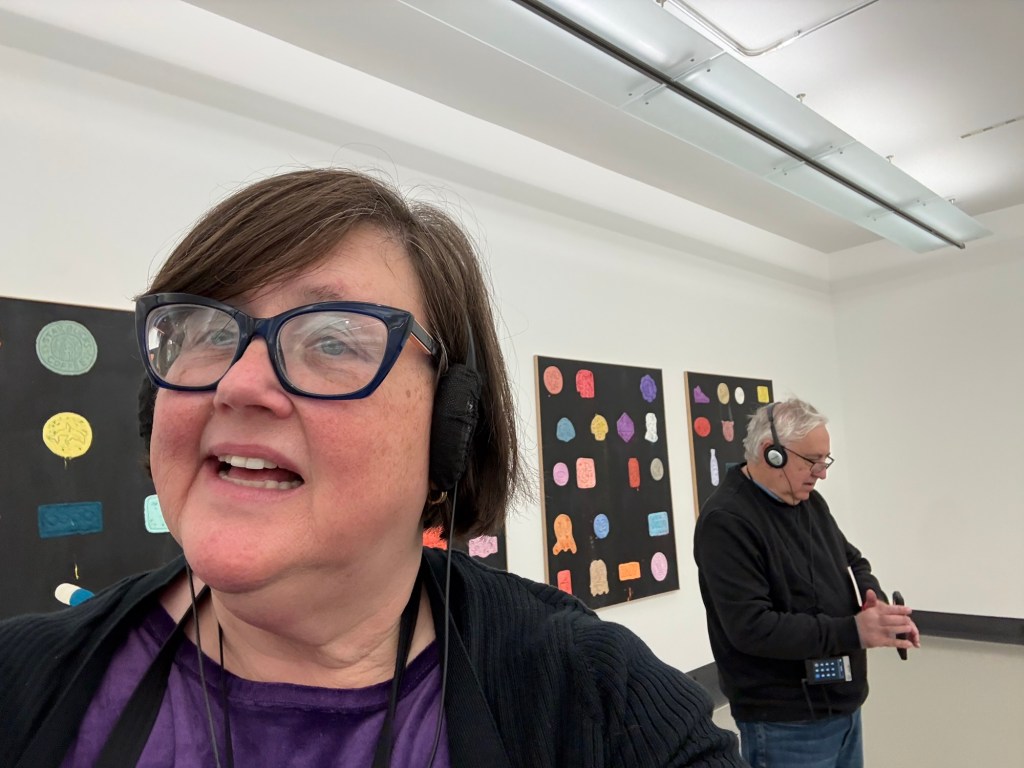
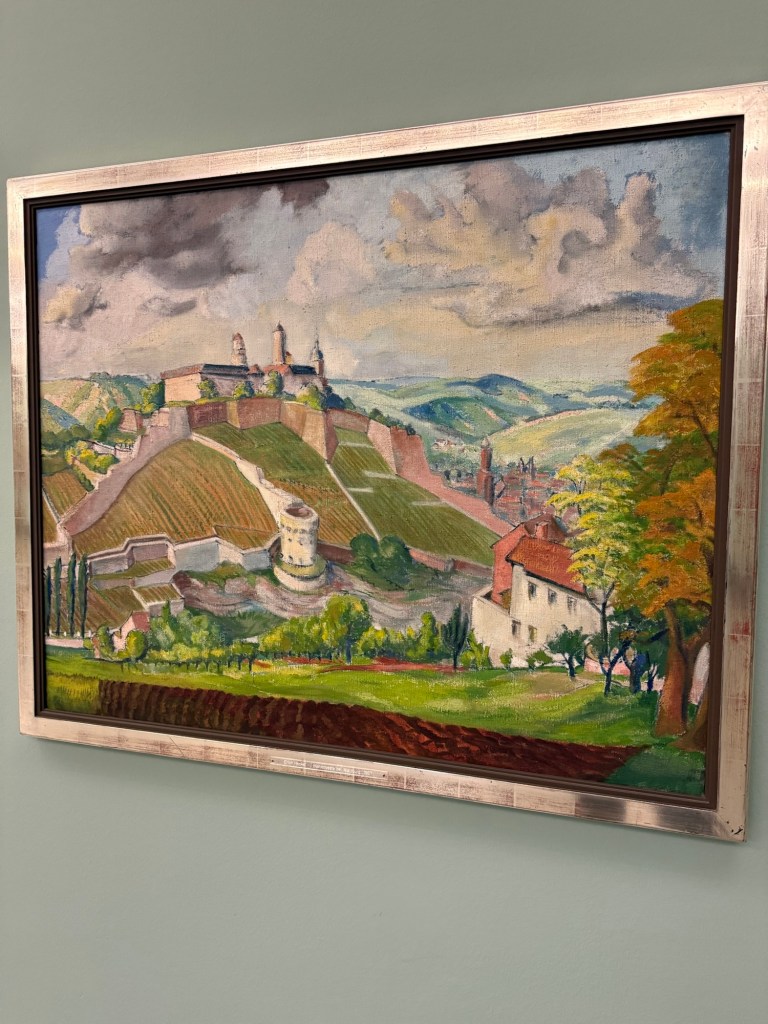
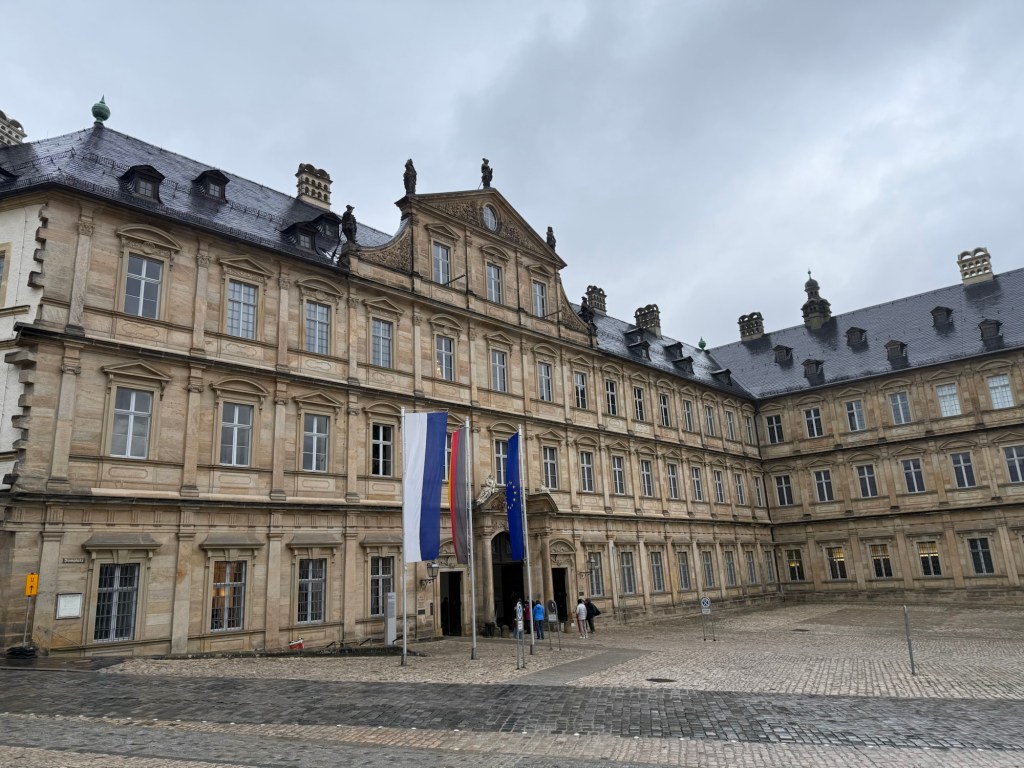
Front Entrance and Fountain at the Bishop’s Palace At the Bishop’s Palace Venetian Glass Chandelier from Murano IslandBishop’s Palace Hall of Mirrors Hall of Mirrors Hall of Mirrors Bishop’s Palace Top of the Main Staircase at the Bishop’s Palace Main Staircase at the Bishop’s Palace Bishop’s Palace Garden at the Bishop’s Palace Garden at the Bishop’s Palace Garden at the Bishop’s Palace Garden at the Bishop’s Palace Garden at the Bishop’s Palace The Great Seated ManDouble Bell Tower Center City Bakery Center City TramThe Pre-Christmas Market Has Started Old Wine Bar Marienkapelle Gothic Church Fun “Refueling” Stop Near the Bridge Local Cafe on the Bridge Center Ciy Fountain Local Grocery Store View of Original Bishop’s Palace and Grape VinesView from the Bridge Wine Bar on the Bridge The Bridge View from Canal Walkway Locks left in Memory Museum im Kultur Speicher Inside the Museum Inside the Museum Painting by Joseph Oppenheimer of the Hall of Mirrors at the Bishop’s Palace Painting of the Old Bishop’s Palace and VinesOld Main Bridgehead at Wurzburg Modern Painting at the Museum
We had one of our best travel days today in Wurzburg. There is much to do and the town is so manageable.
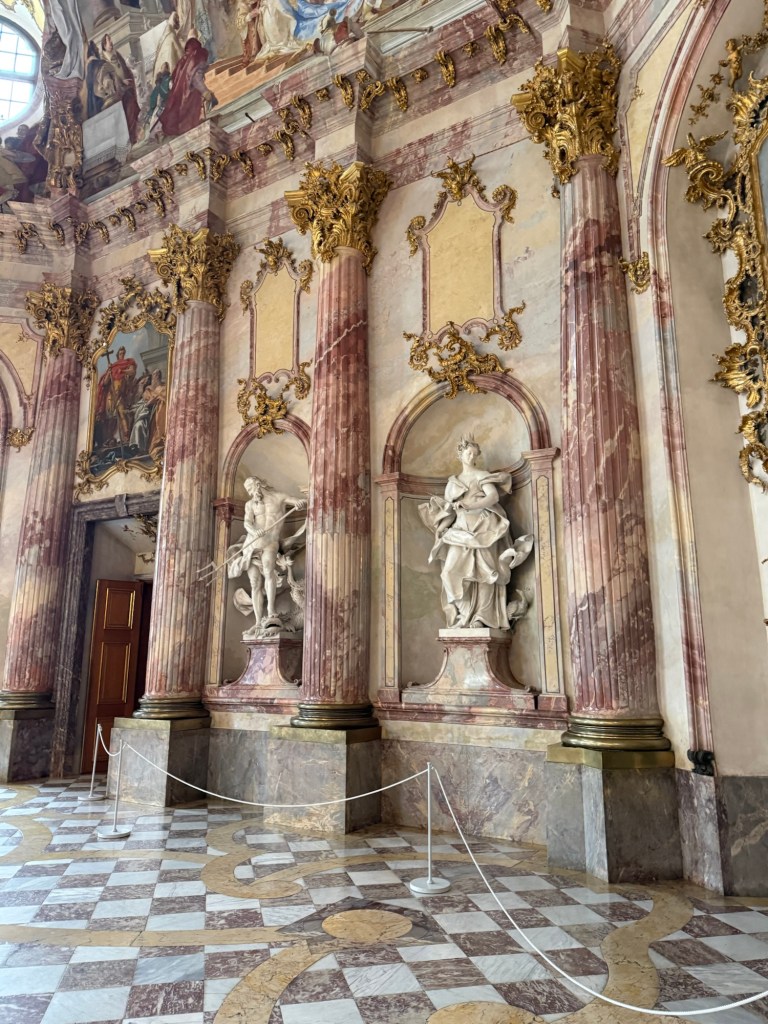
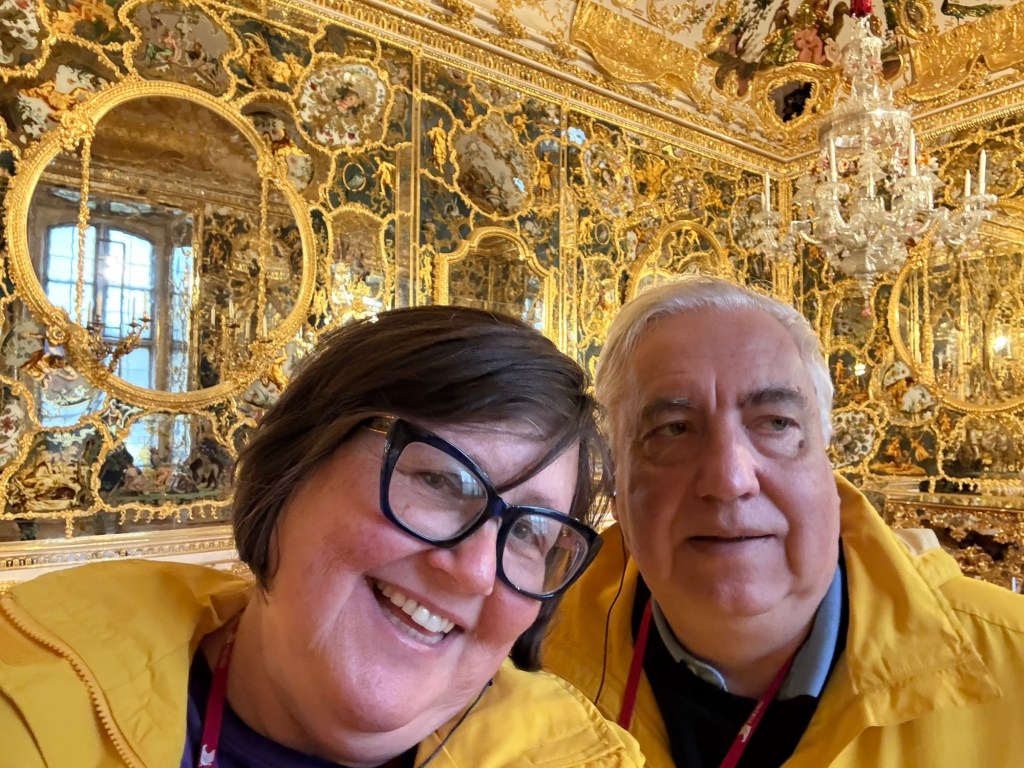
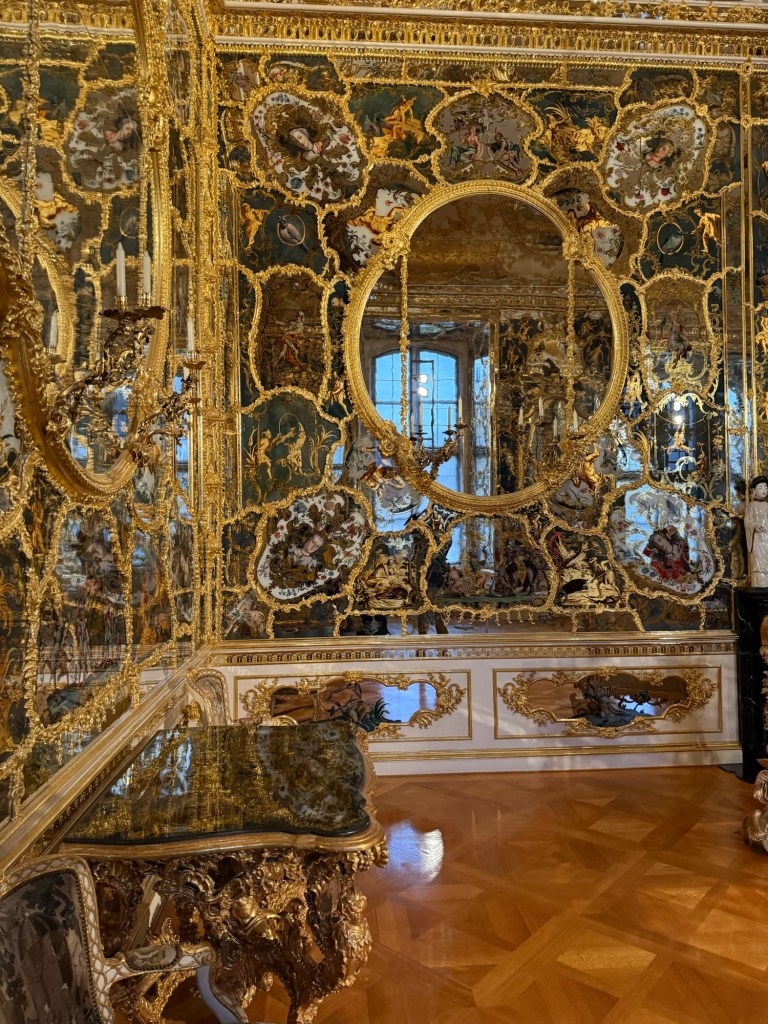
Like Nuremberg, the town was heavily bombed during WWII. Much of the area was rebuilt post WWII. Our first stop today was the Bishop’s Palace. Several of the rooms are original but much of the palace had to be restored after the war – including the Hall of Mirrors. The Palace has an exhibit that goes into the details of restoring the palace. The locals take tremendous pride in the palace and boast that it is more impressive than Versailles. Having visited Versailles, I disagree with the locals but this is a very impressive palace.
We then had a very pleasant walk from the palace to the downtown portion of Wurzburg. Like Bamberg, the town economically relies upon tourism, the university and about 100 other schools. In addition, Wurzburg holds many festivals and other special events. Everyone from Elton John to Michael Jackson has performed in Wurzburg. We were fortunate to experience an early Christmas market. The vendors included typical German arts and crafts as well as all kinds of food and beverages. I have to admit I was surprised to see a booth selling churros.
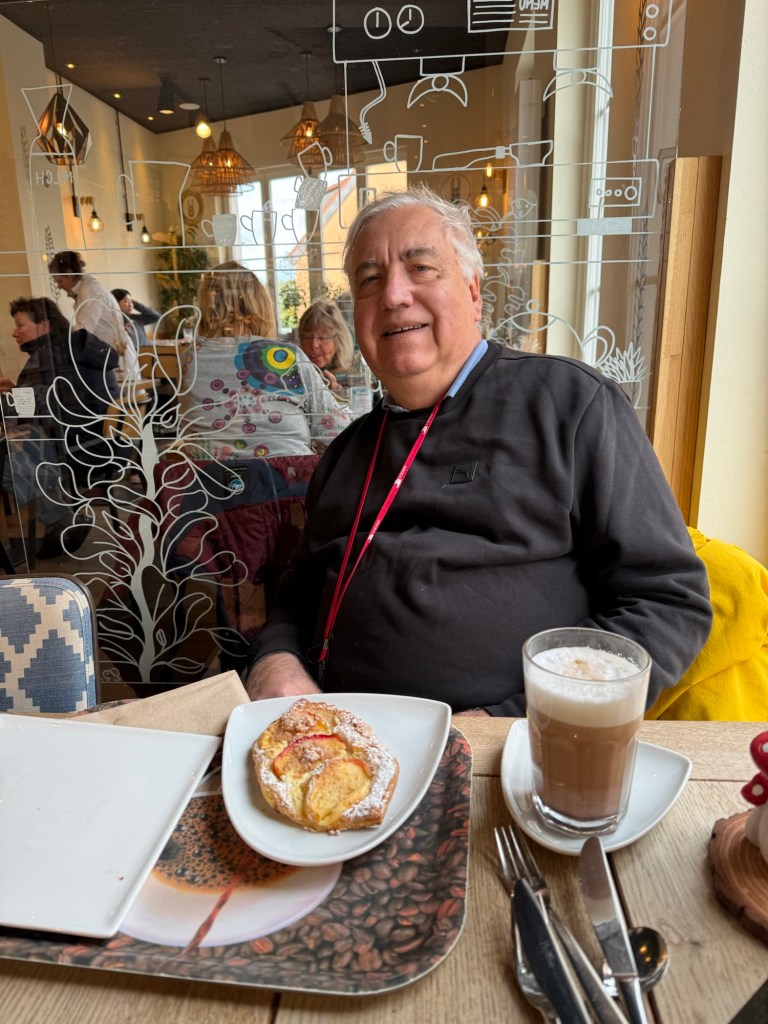
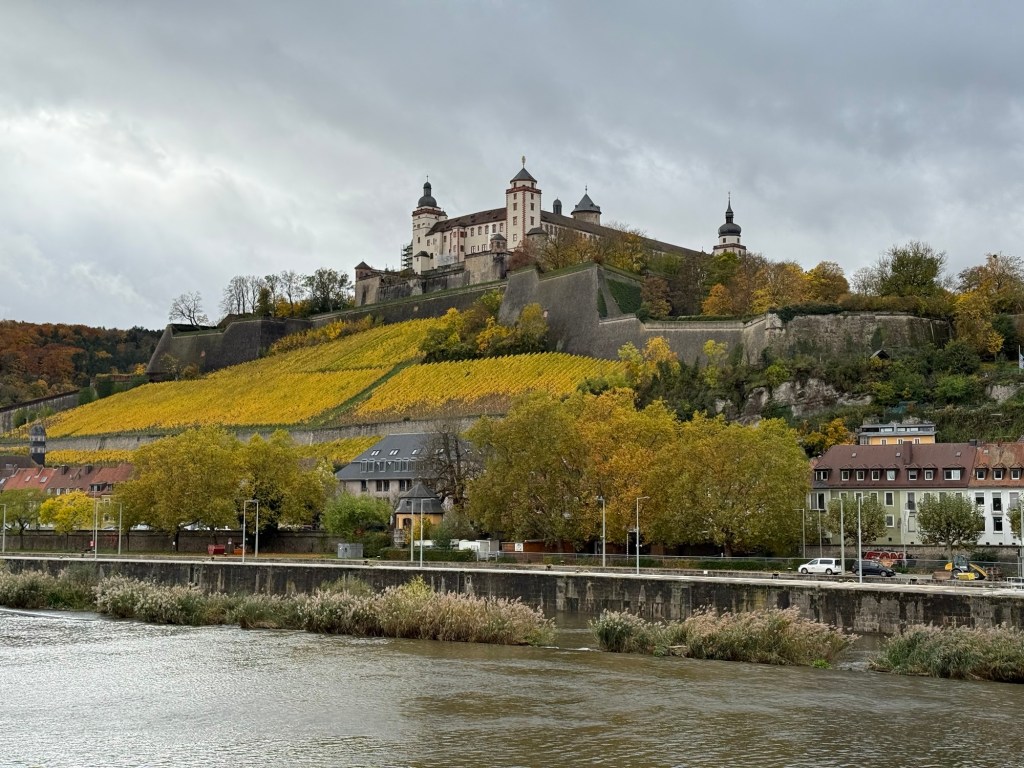
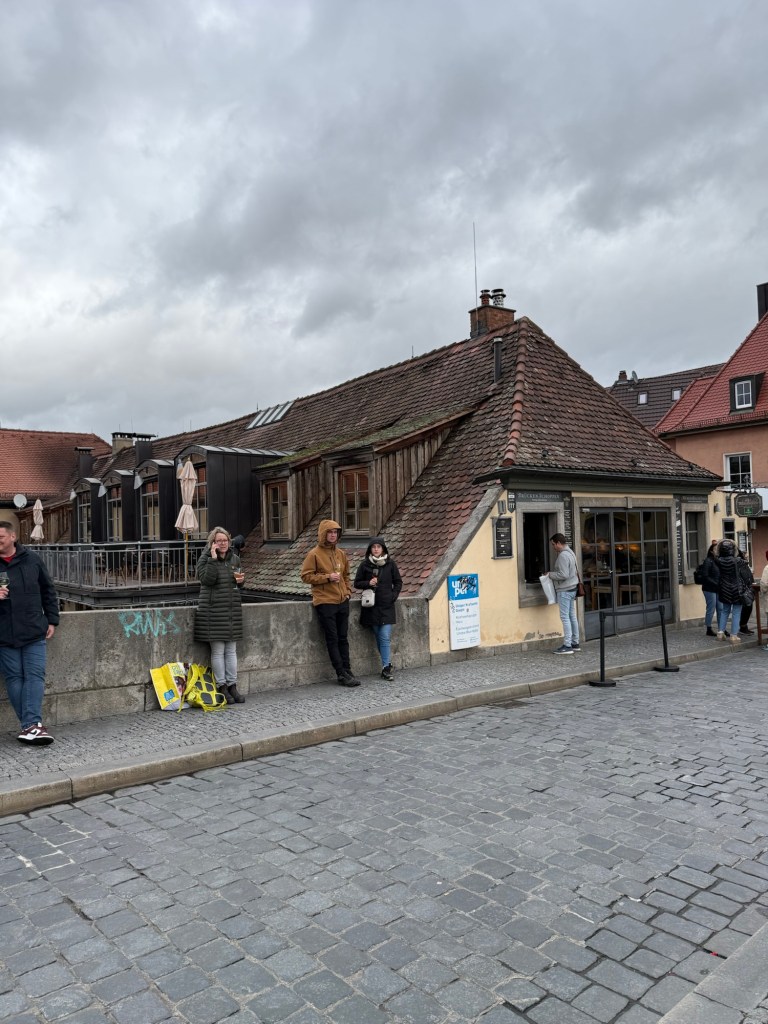
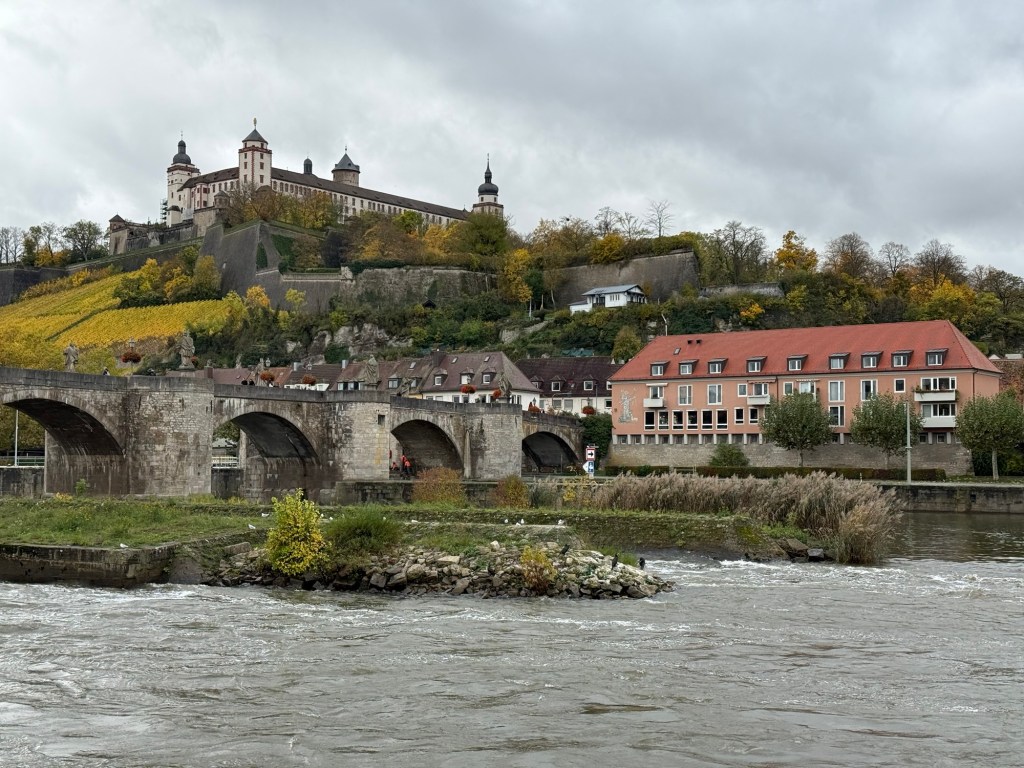
The area grows the largest amount of grapes in Germany and Wurzburg is known for its local white wines. Wine bars are everywhere and wine is definitely more popular than beer in this German town. There is even a wine bar on the bridge that serves its wines in glasses; my husband and I watched both Germans and tourists strolling the bridge with wine glasses in hand. We opted for coffee and pastries at a nearby cafe but those on our ship who partook said that the wines were really good.
I am really enjoying the Bavarian part of Germany.
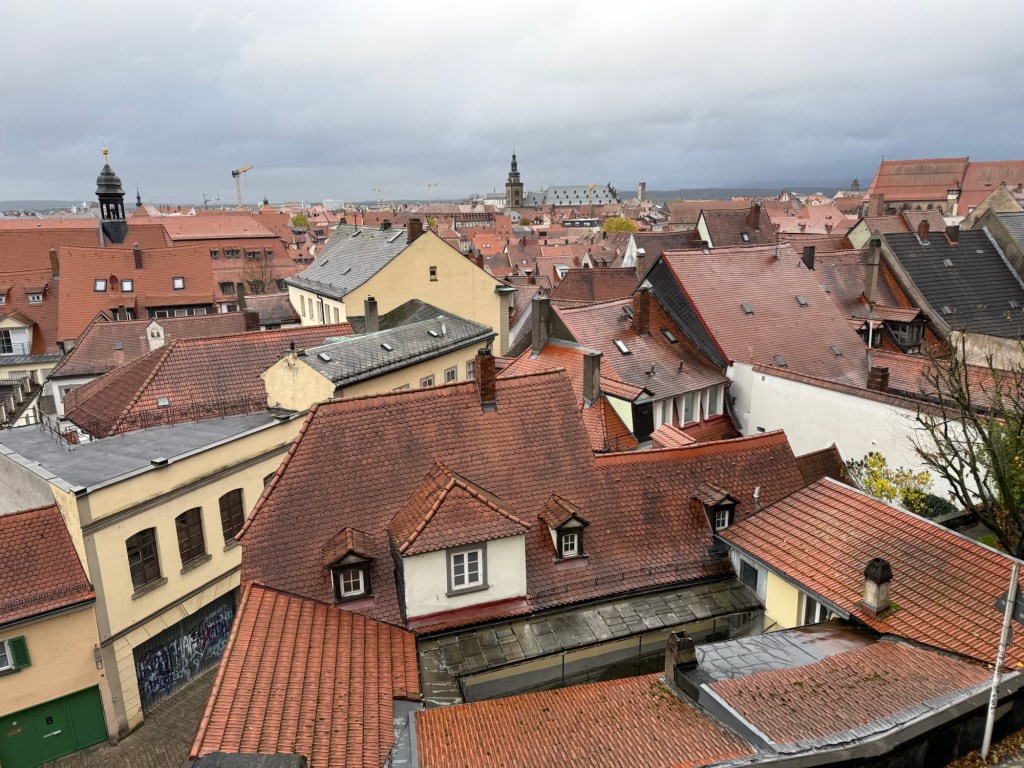
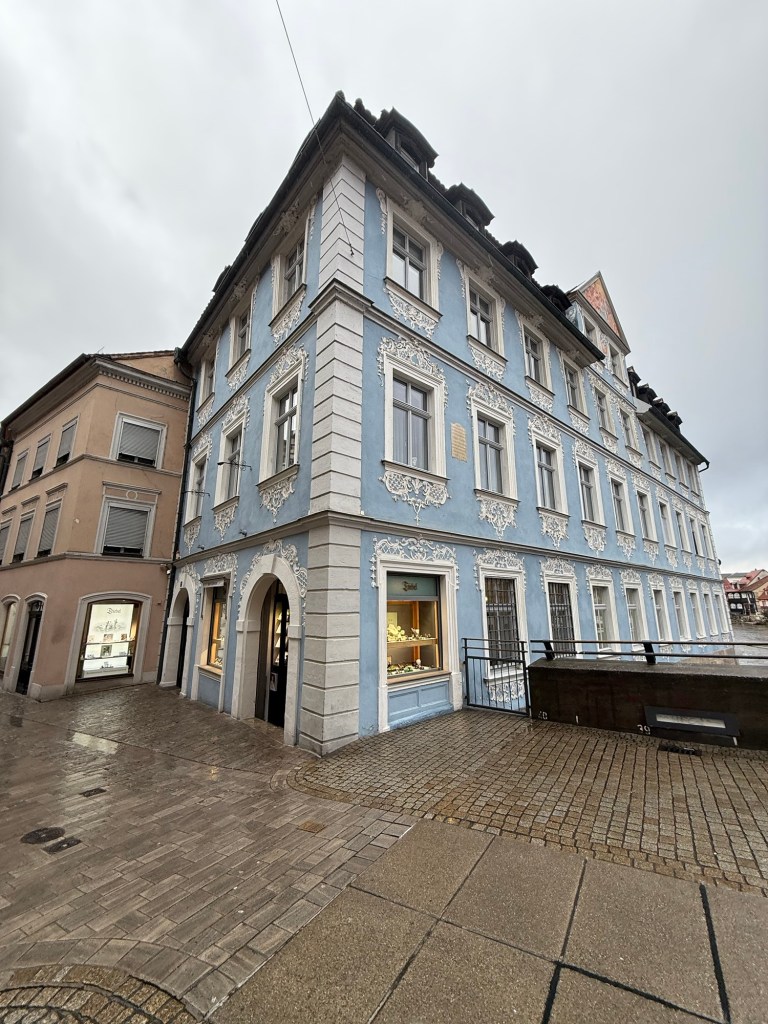
Founded in the 11th century, Bamberg is the most picturesque town in Germany with medieval architecture. It managed to escape the Allied bombs during WWII so it really is like stepping back in time. It is a small town with approximately 80,000 people. The university and tourism essentially support the town. There are a nice variety of stores and restaurants but, interestingly, there is only one tourism store that sells post cards and other typical tourist items.
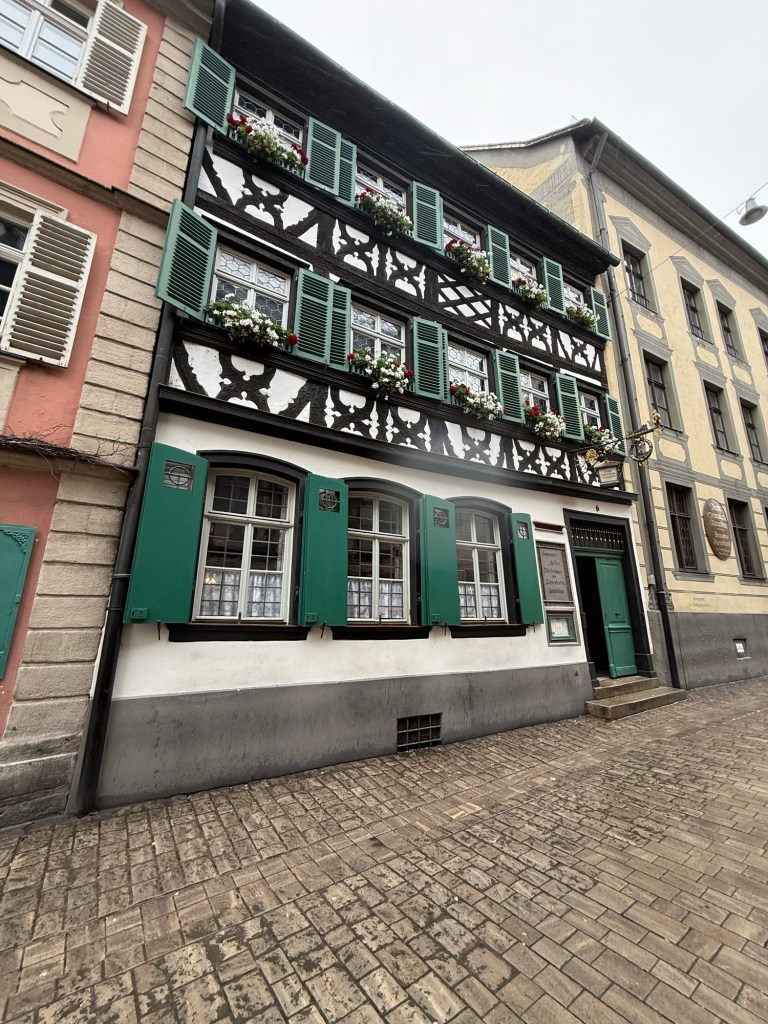
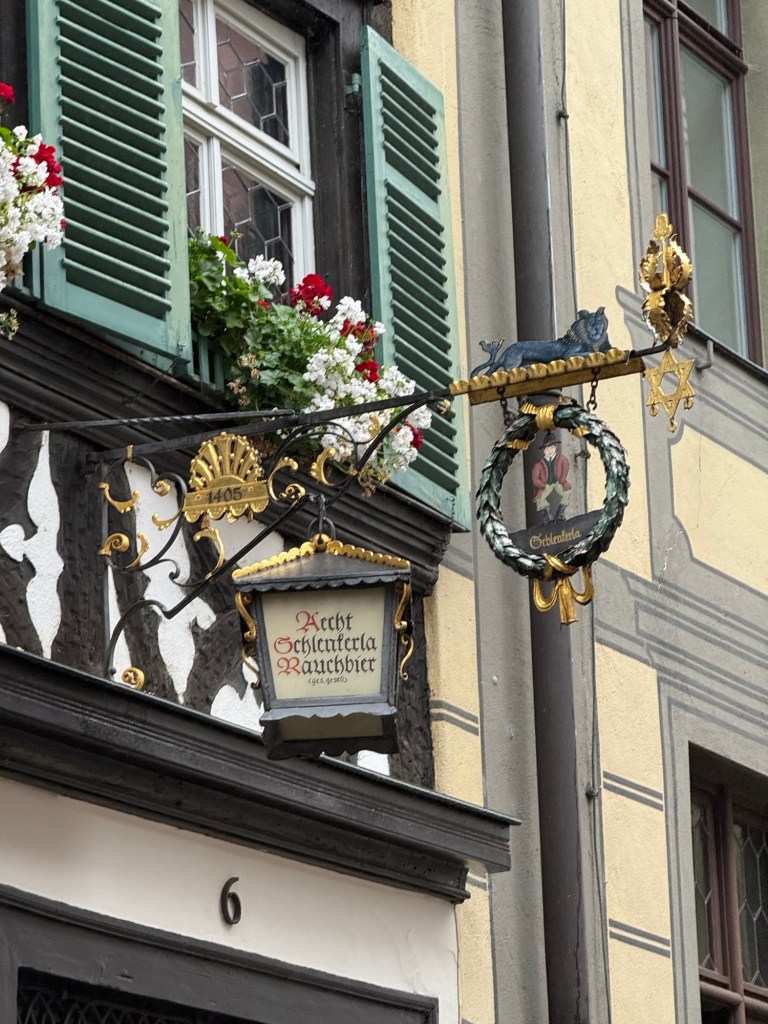
It is famous for its smoked beer. Once we heard it described as beer infused with an ashtray, my husband and I opted to pass on sampling this delicacy. Among those on our ship who did, most were not too enthusiastic. Beer, in general, became popular in Germany out of necessity. The local waters were polluted and made the people ill. Beer was a safe and cheap beverage that did not make one sick. The wealthier opted for the more expensive wine as their beverage of choice.
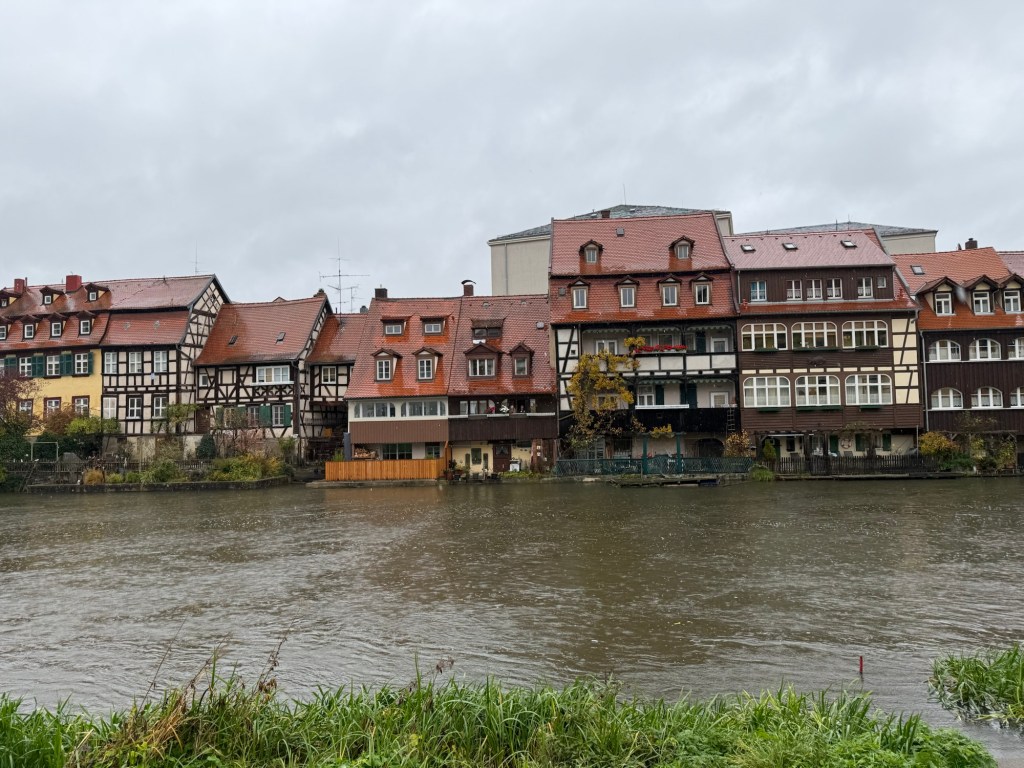
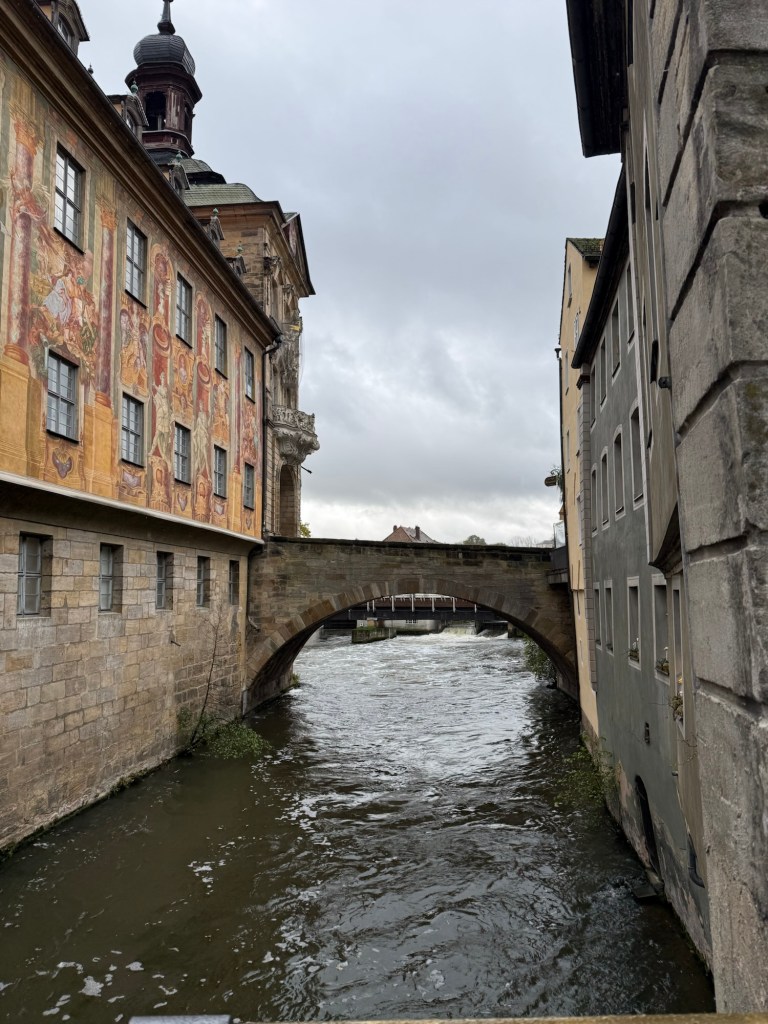
The outer area used to be called Little Italy or Venice due to the multi-level homes that are on the canal. The fishermen used to reside in these homes – it was considered the poorest part of Bamberg. The bottom level frequently flooded so most fishermen used it for boat parking. These days, the homes go on the market infrequently but when they do…they sell for well over $2,000,000.
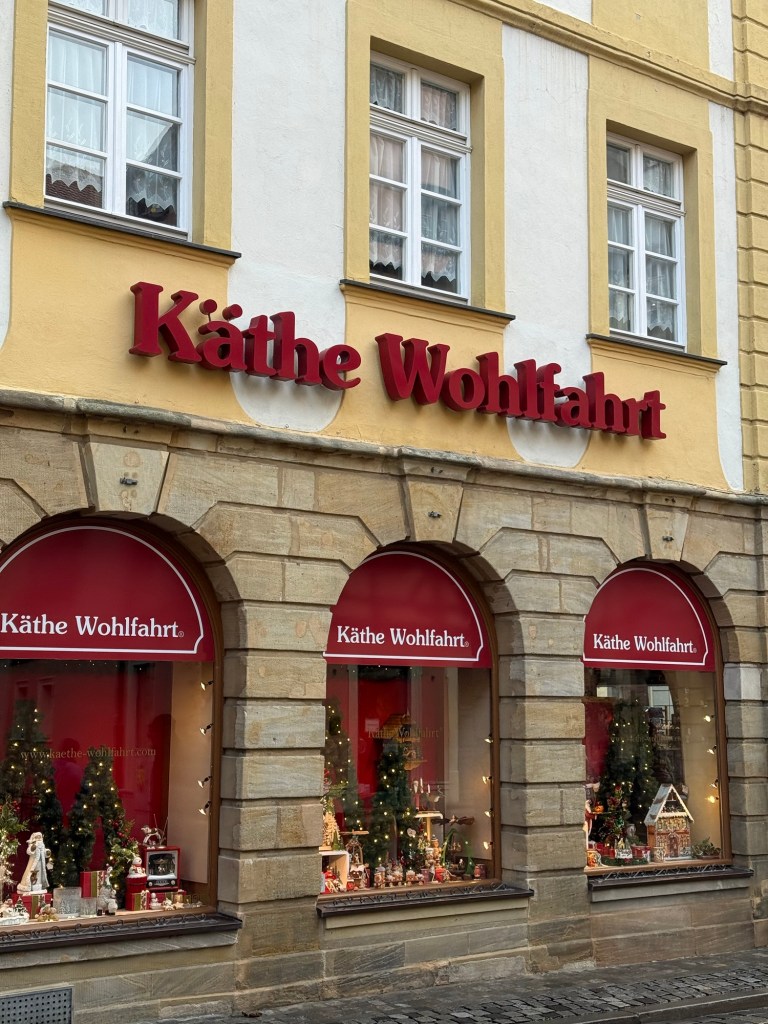
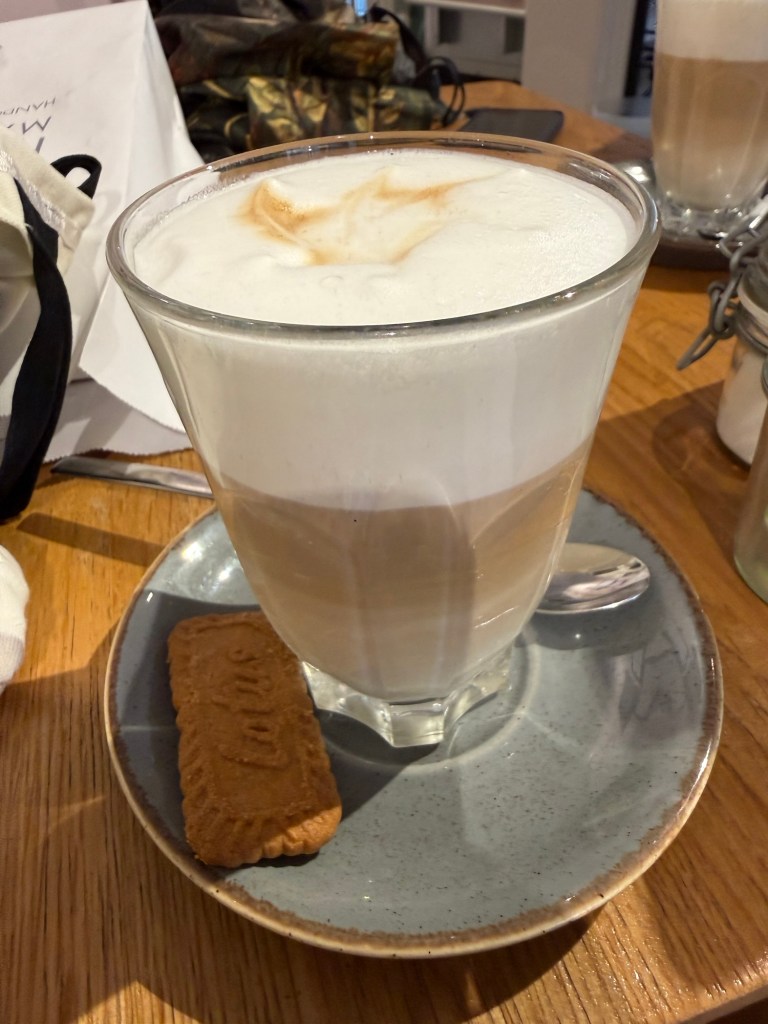
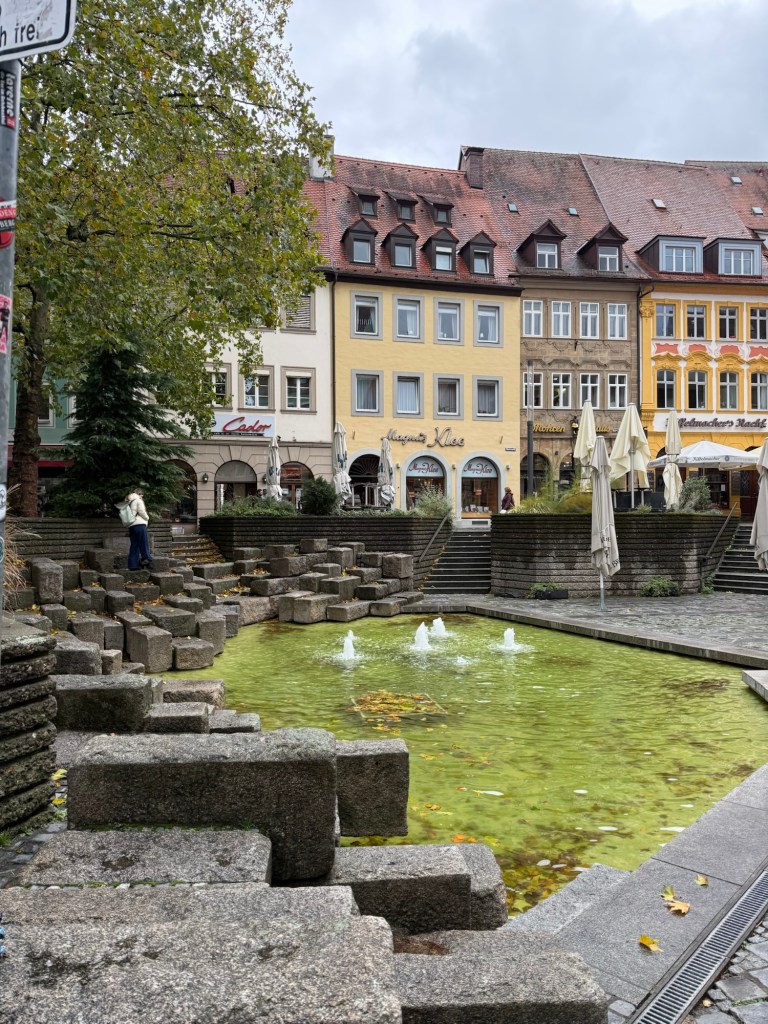
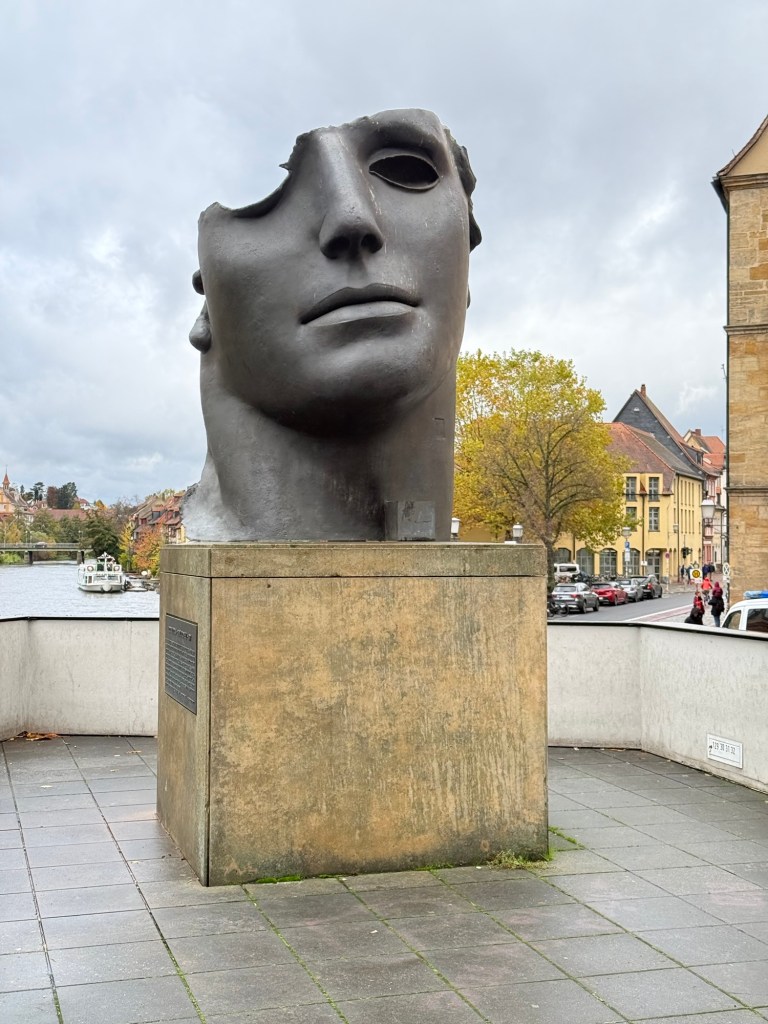
The Old Hospital Little Italy – Where the Fishermen LivedOld Pub Known for Serving Smoked BeerSign for Beer Pub Featuring Image of a Previous Owner Saint Peters’s & Saint George’s Cathedral Original Bishop’s Palace Bishop’s Palace Rose Garden Rose Garden at Bishop’s Palace Overview from Rose Garden at Bishop’s Palace Lower Bridge and Town Hall Old Store in Central Bamberg One of several dedicated Christmas stores in town Latte German Style Central Bamberg Popular Modern Sculpture
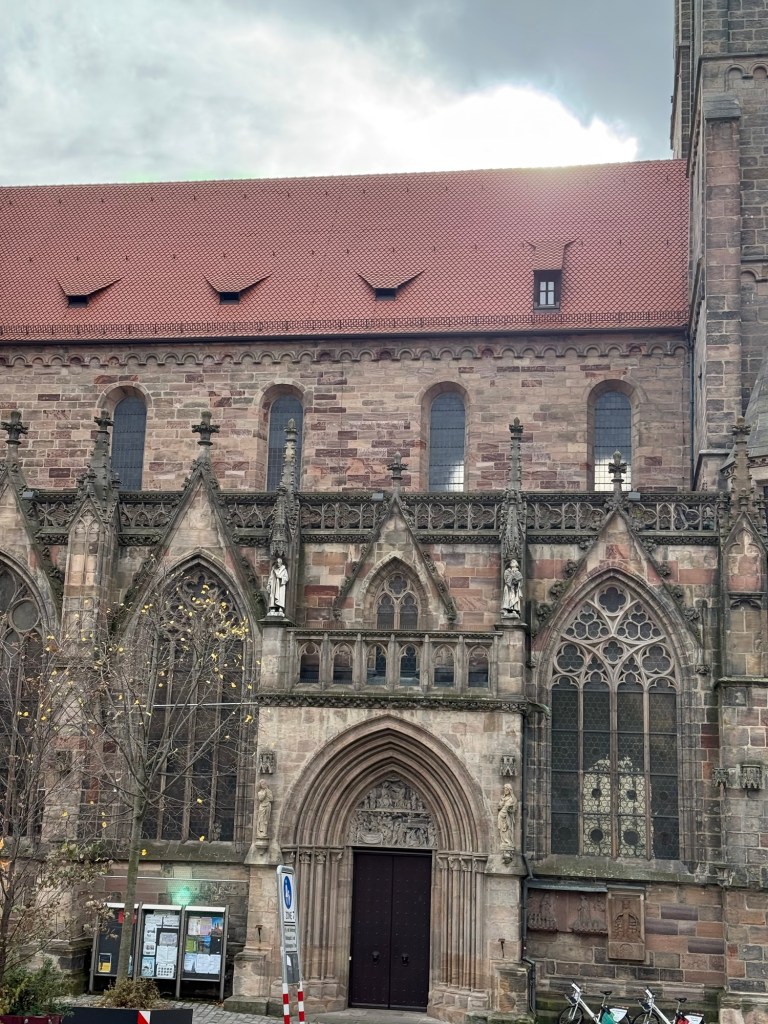
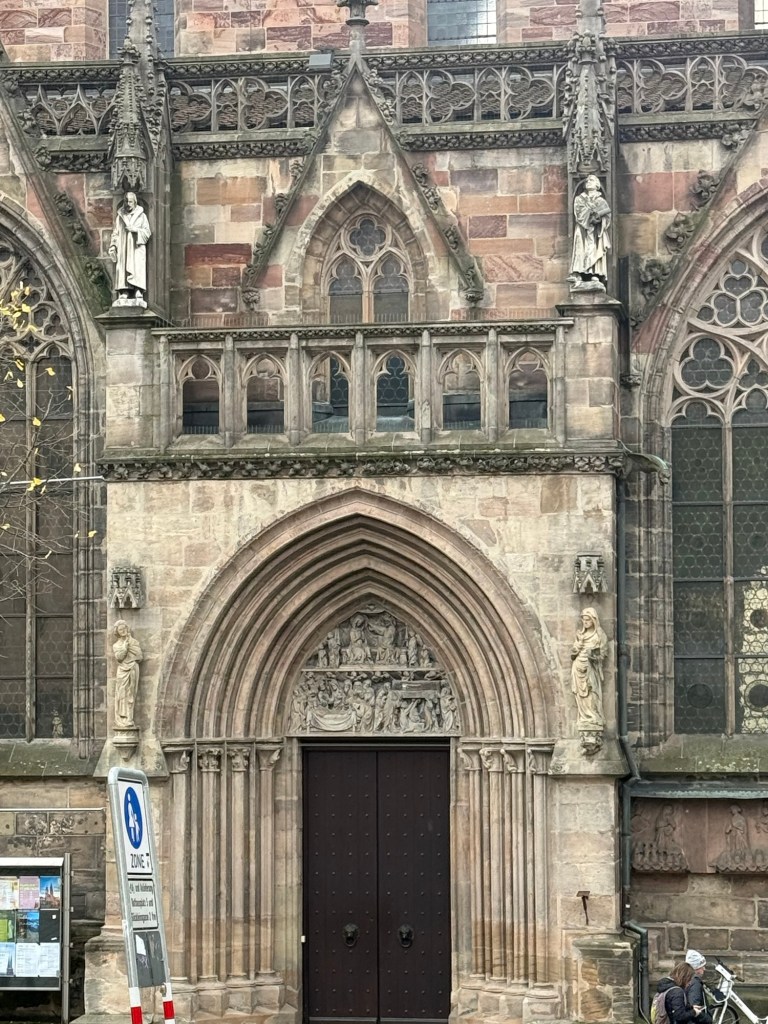
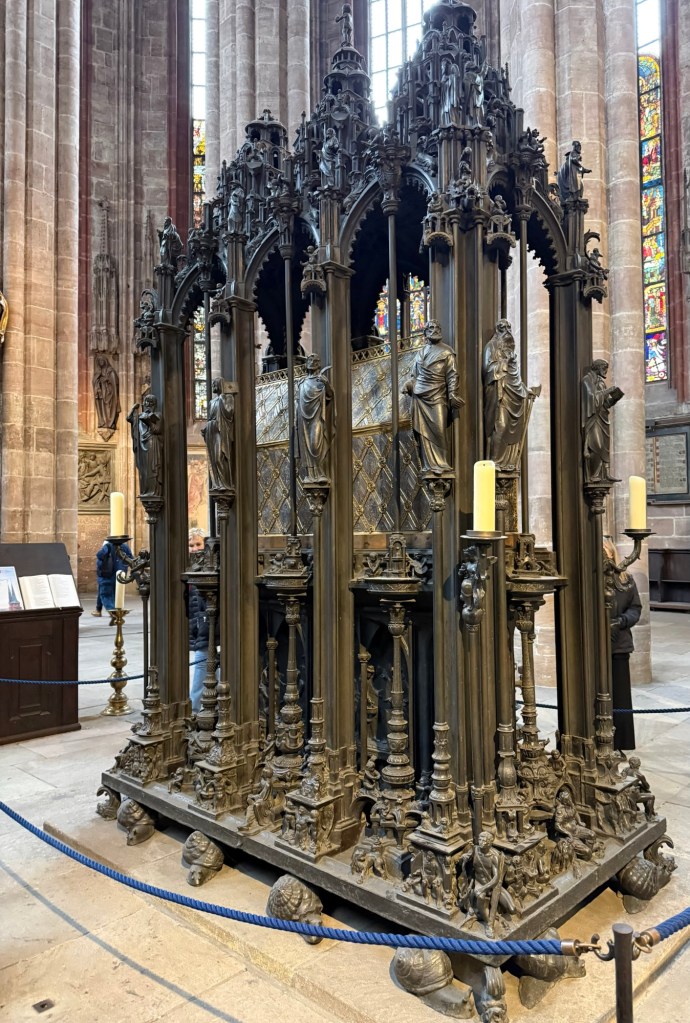
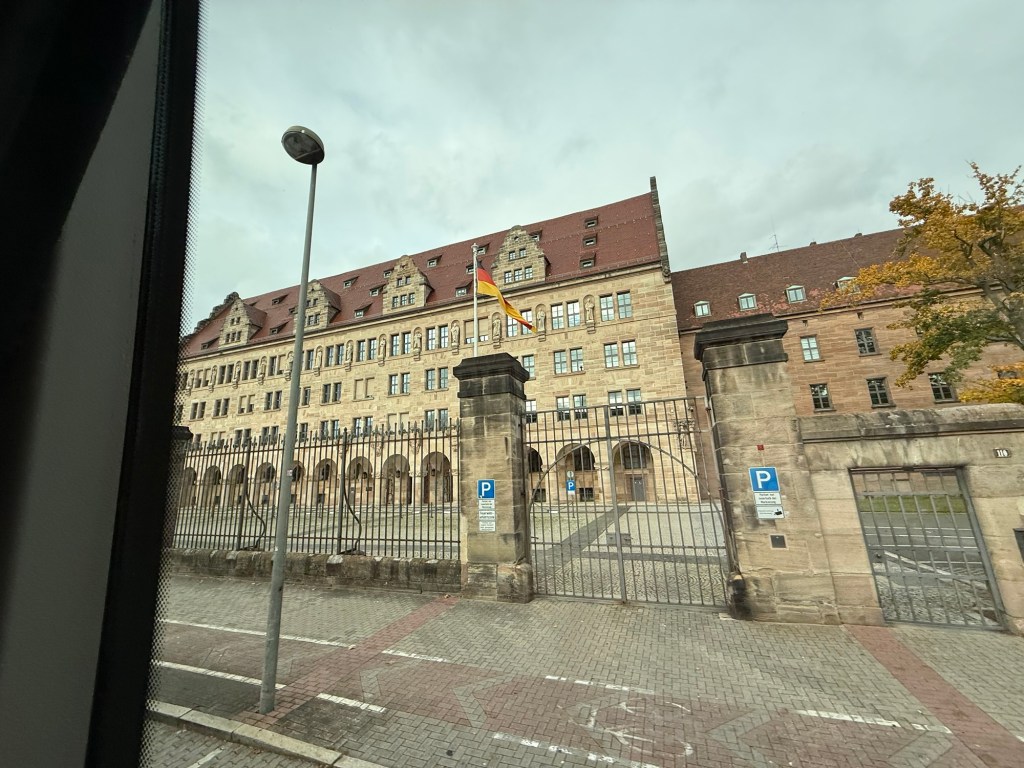
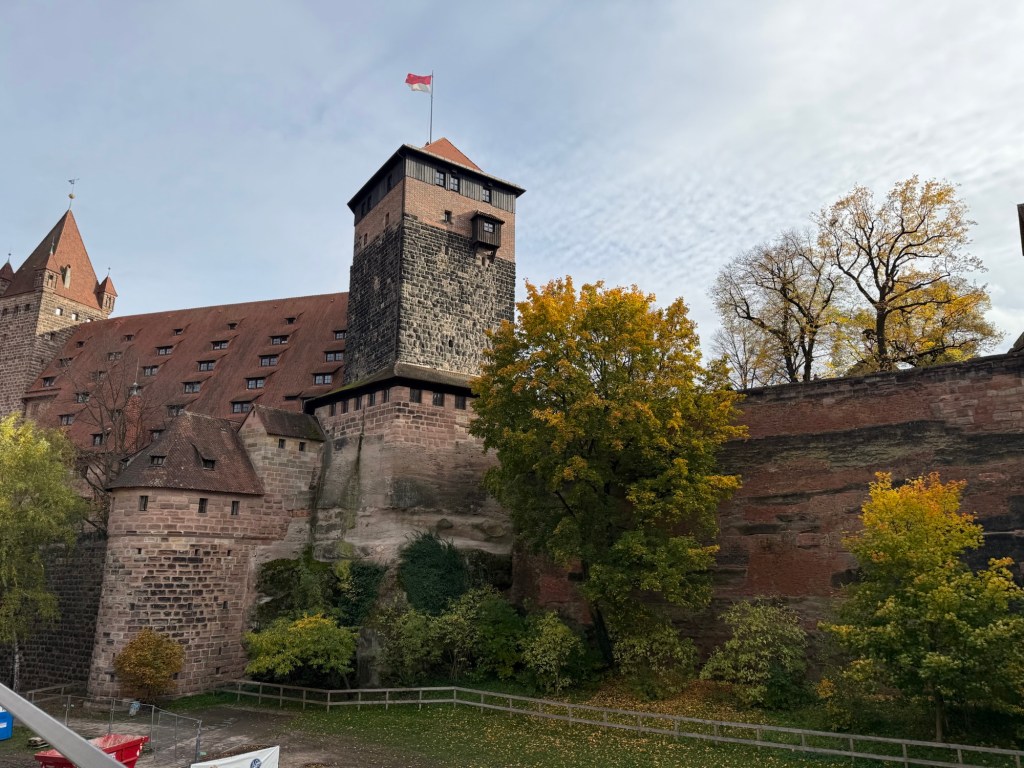
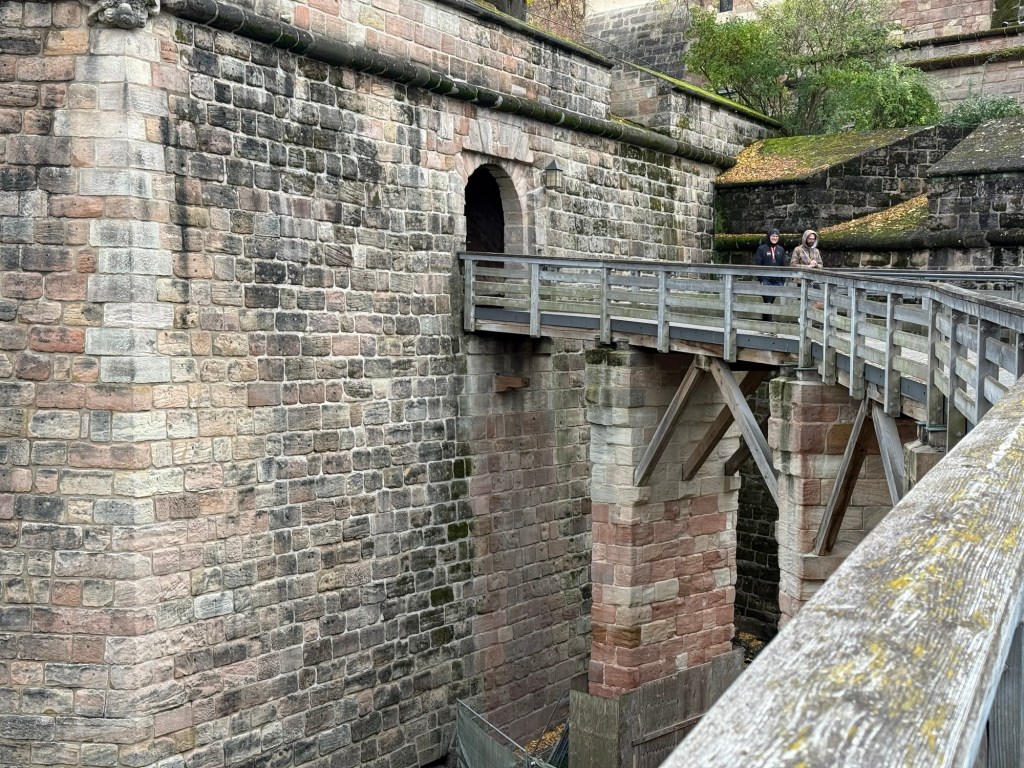
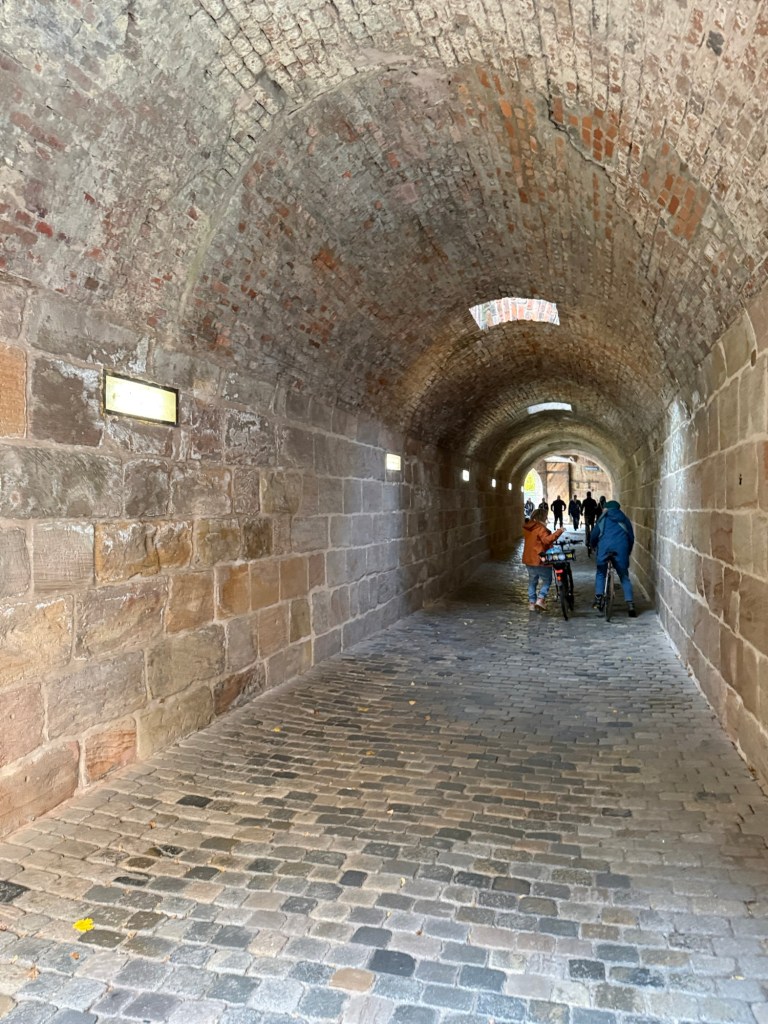
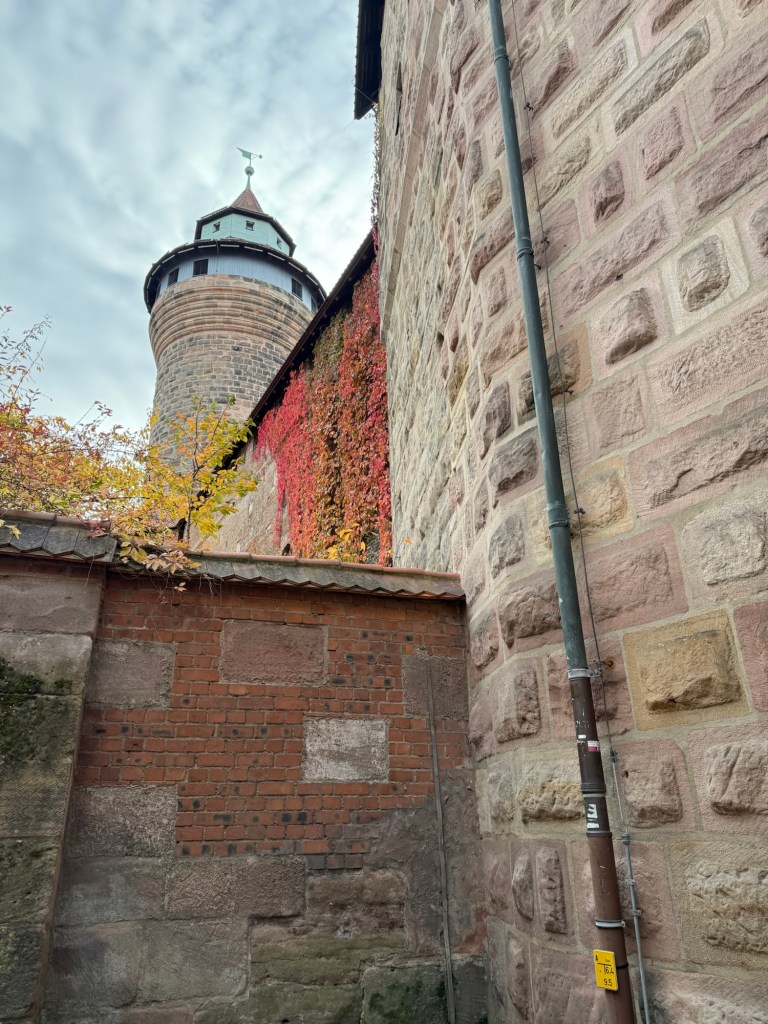
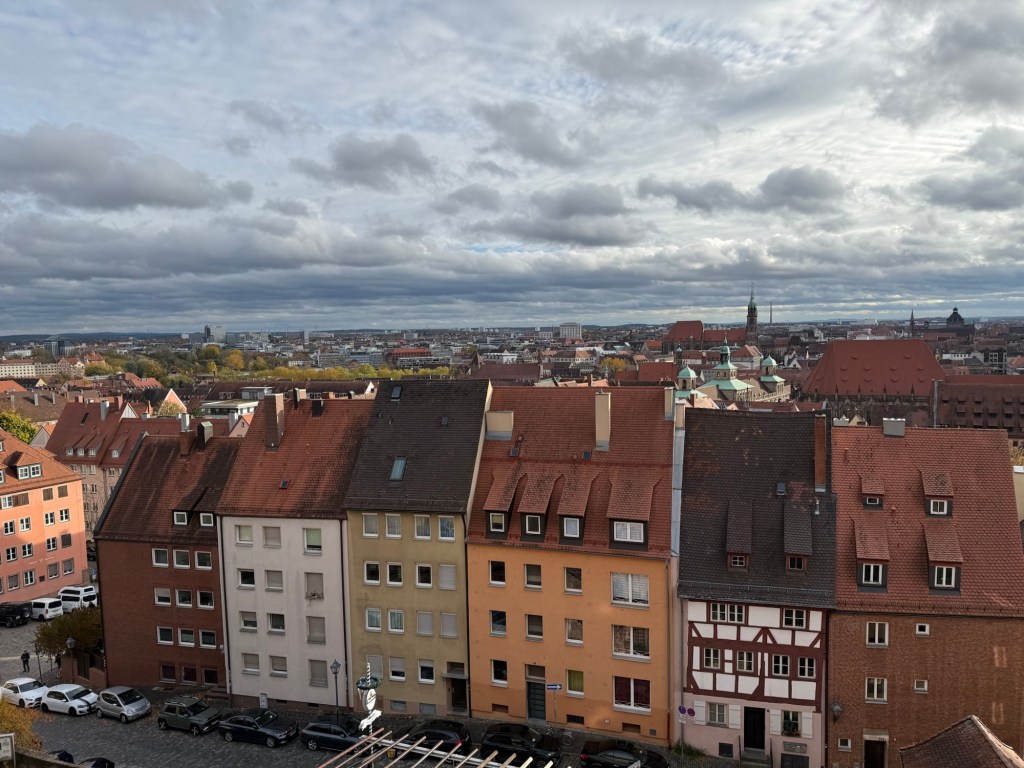
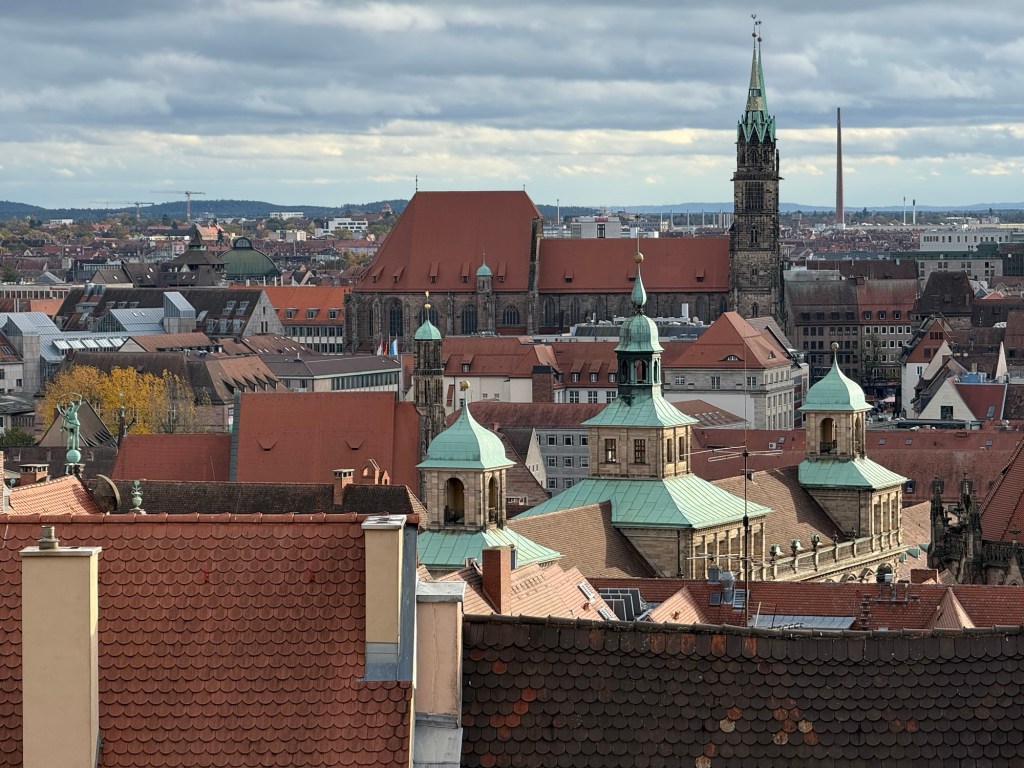
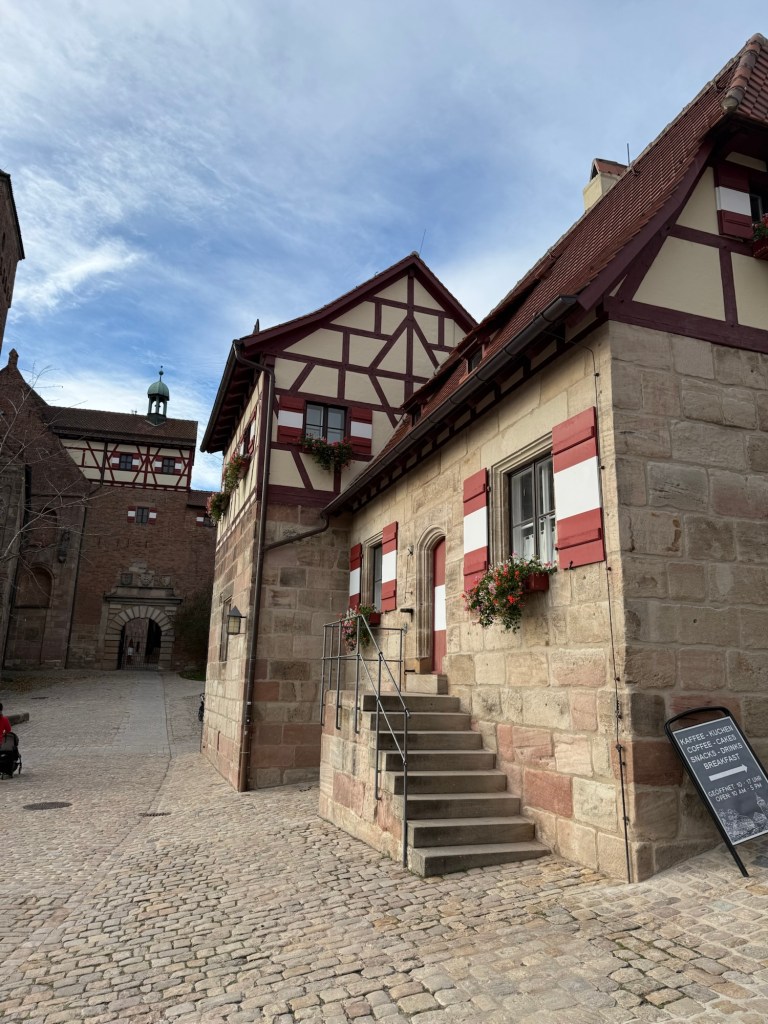
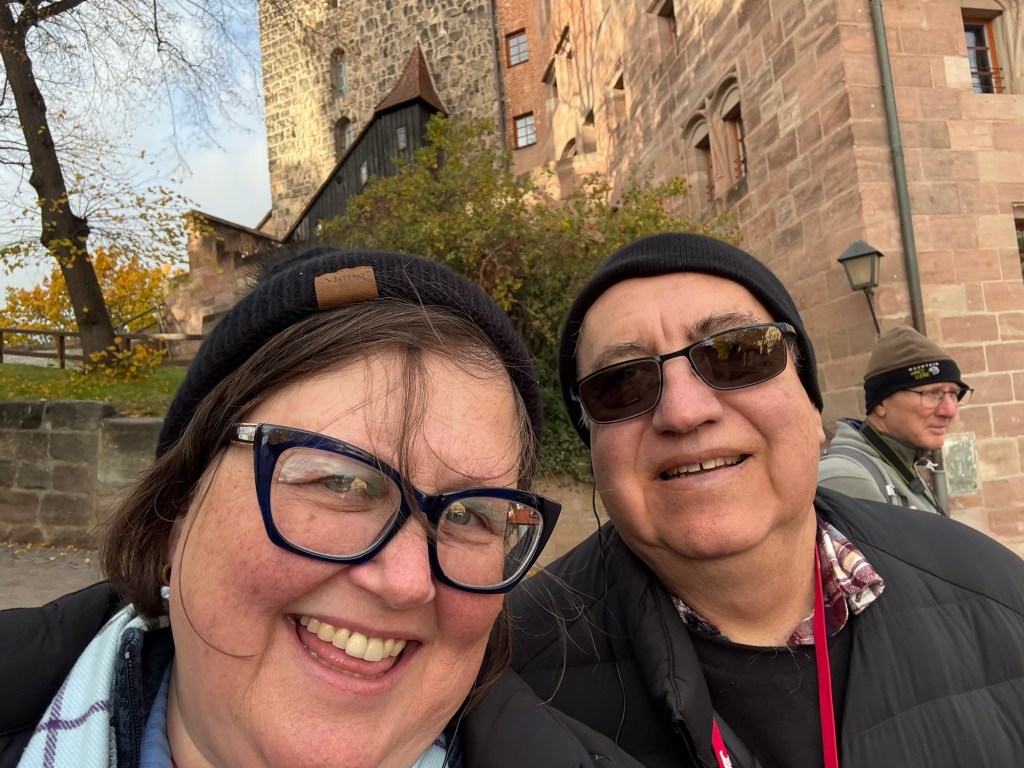
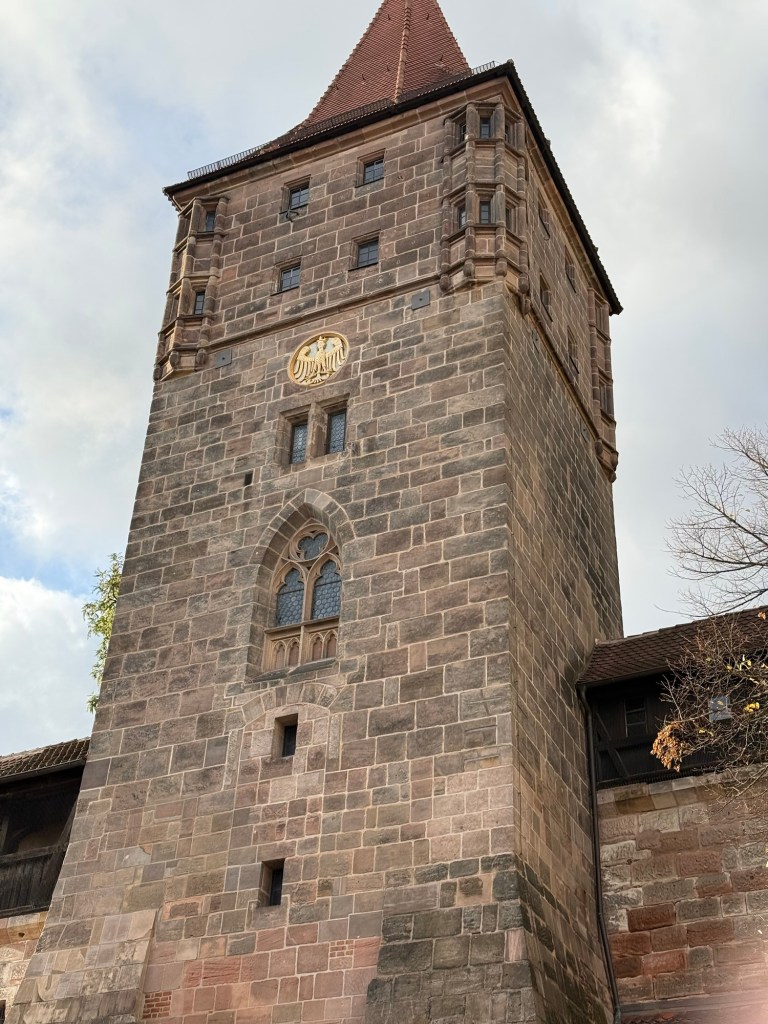
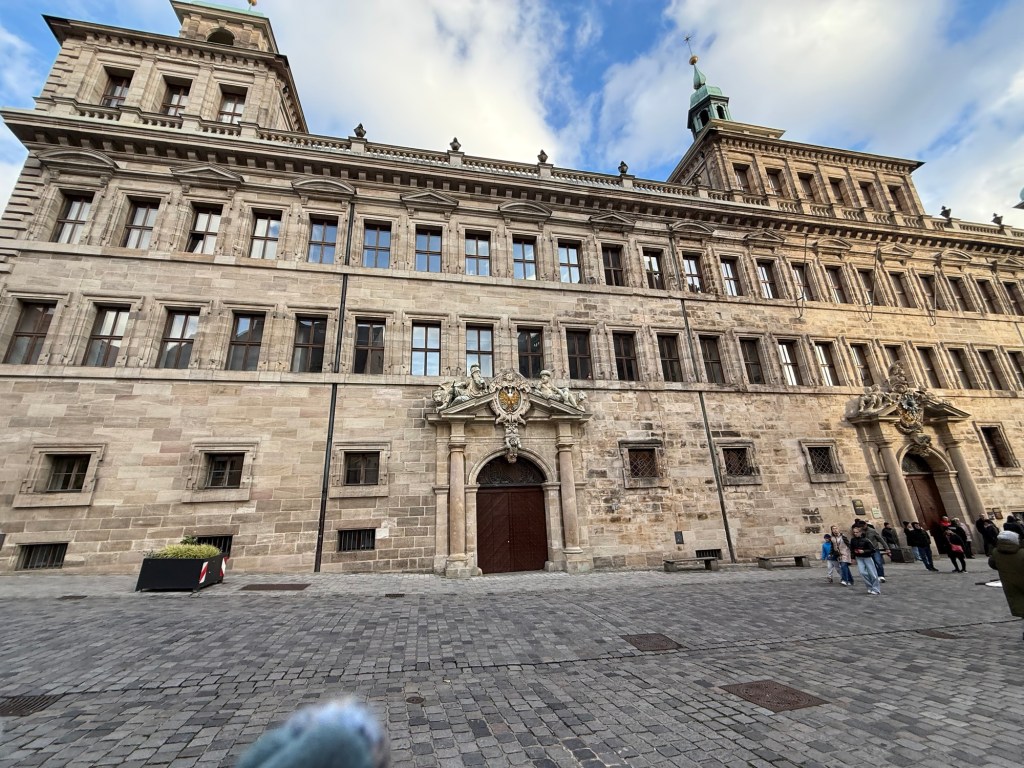
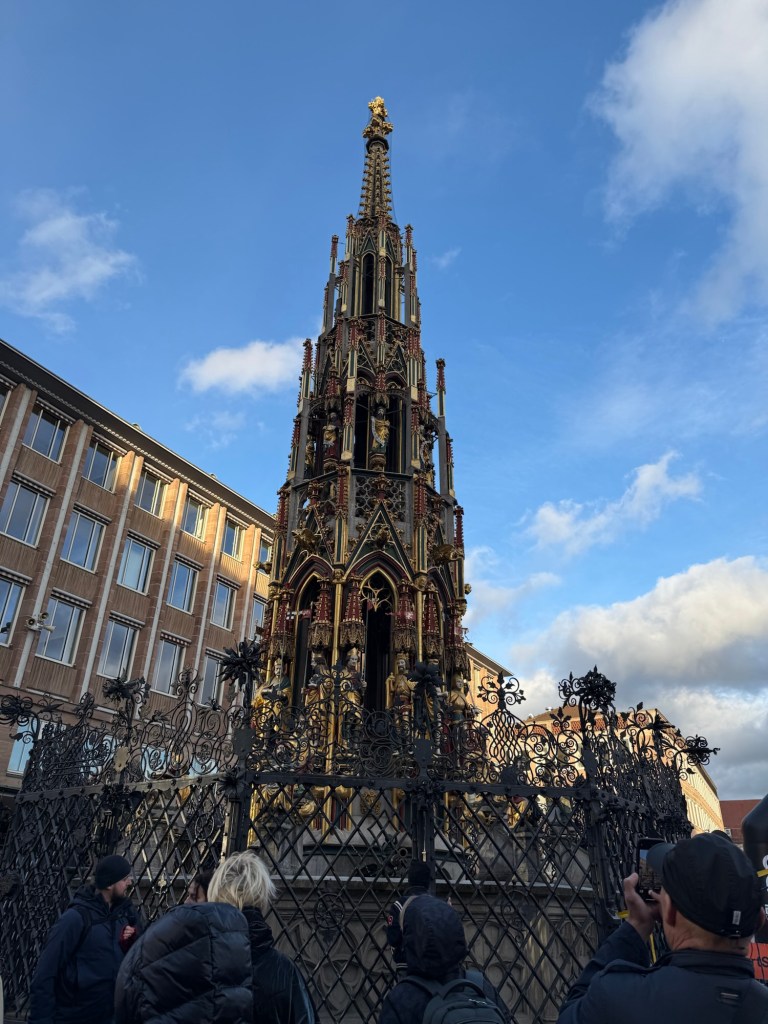
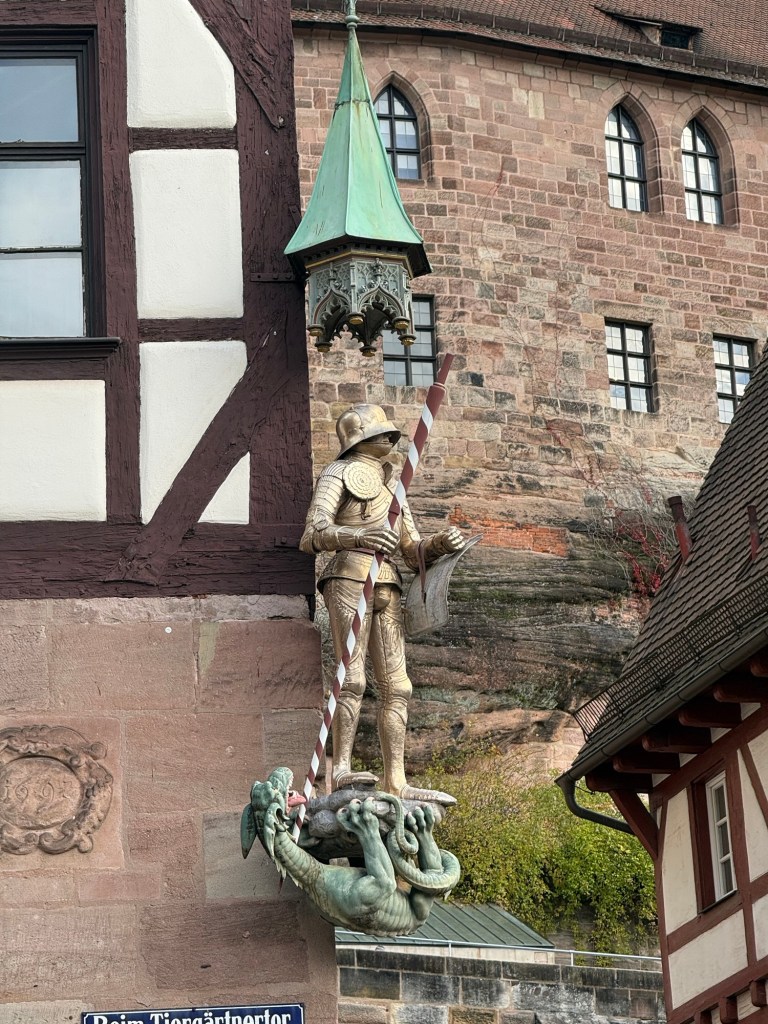
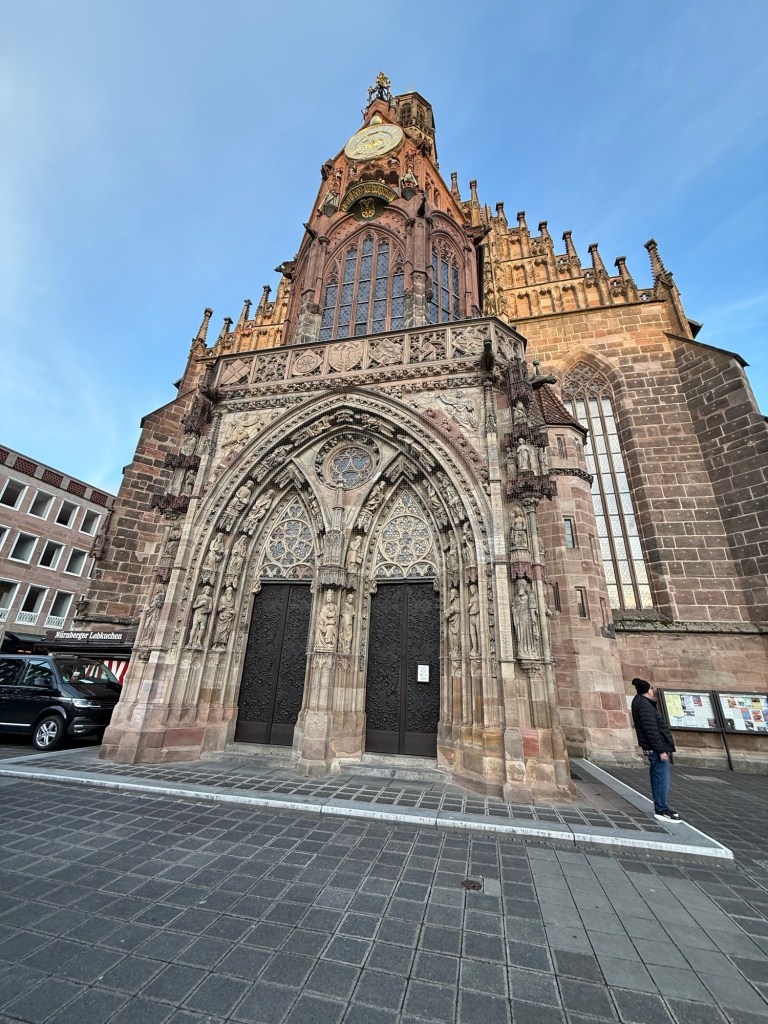
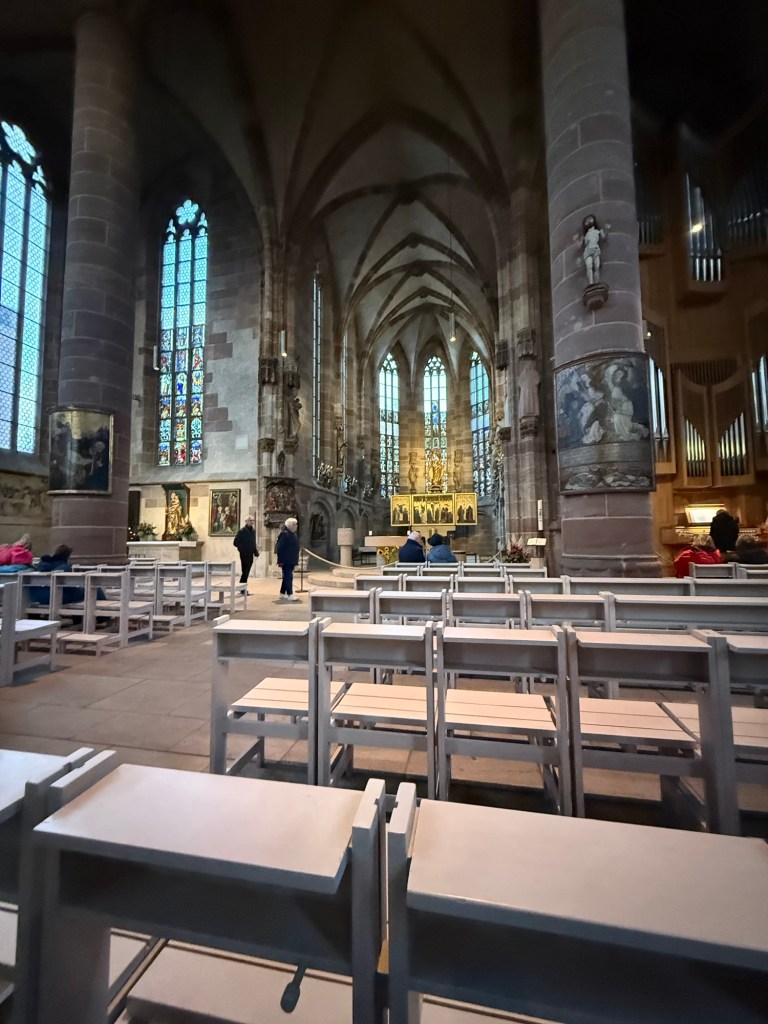
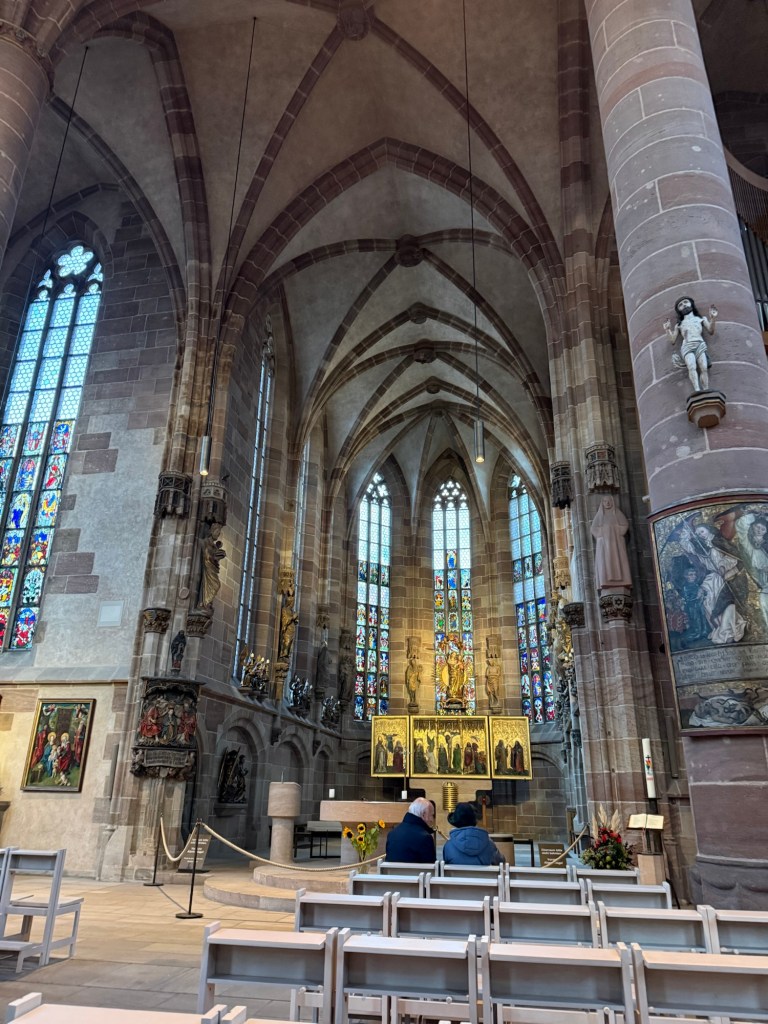
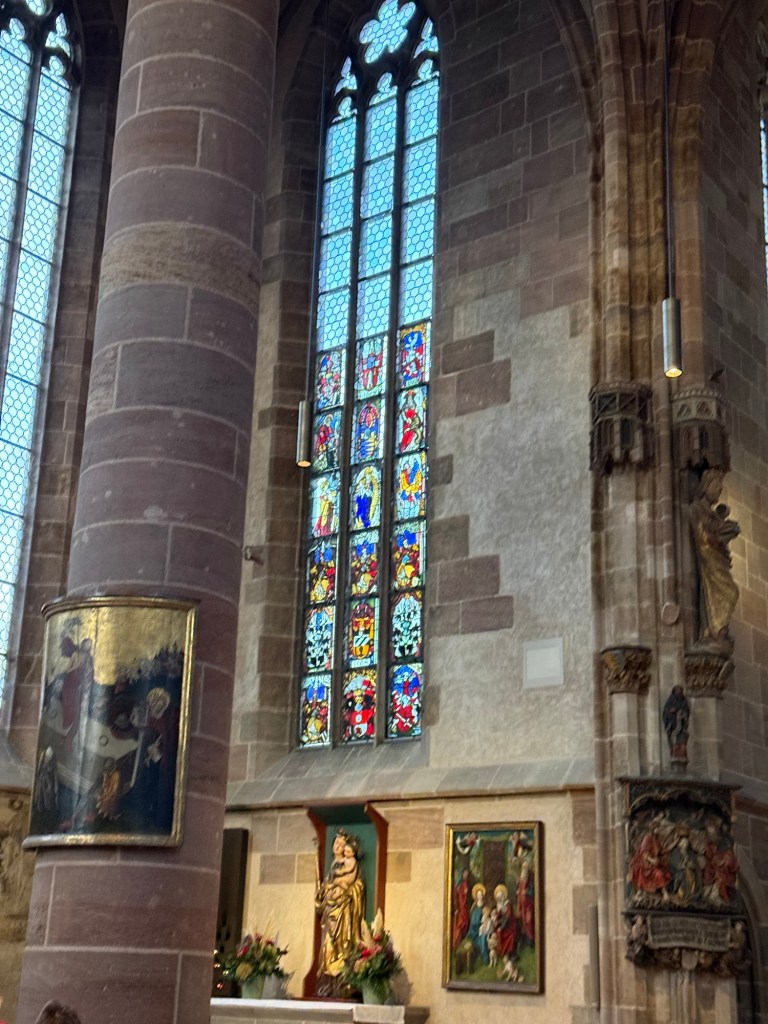
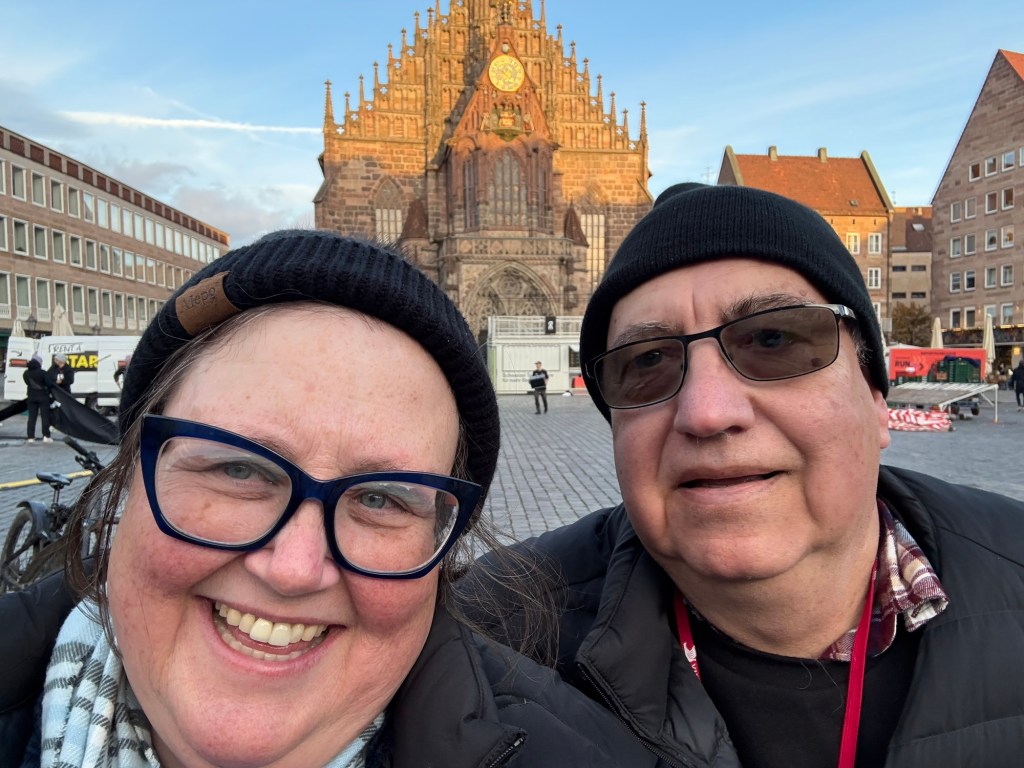
Saint SebaldusSaint SebaldusSaint Sebaldus Saint Sebaldus Interior of Saint Sebaldus Nuremberg CourtsCastle Tower Bridge to the Castle Tunnel to the Castle The Castle View from the Castle View from the Castle View from the Castle Newest Structure at the Castle City Hall Famous Downtown Fountain Underground Site Where Artwork Was Hidden During WWIIUnderground Site Where Artwork Was Hidden During WWII Nuremberg Gingerbread ShopNuremberg Gingerbread Church of Our LadyChurch of Our Lady Church of Our Lady Church of Our Lady In Front of Church of Our Lady of
I wasn’t sure what to expect from Nuremberg. During WWII, over 90 percent of the city was destroyed. What survived is a miracle. The rest was rebuilt and is very attractive. Hitler saw Nuremberg as his ideal German city so it is no surprise that the Allies went after it so aggressively. In addition, much of the German military manufacturing was based in Nuremberg.
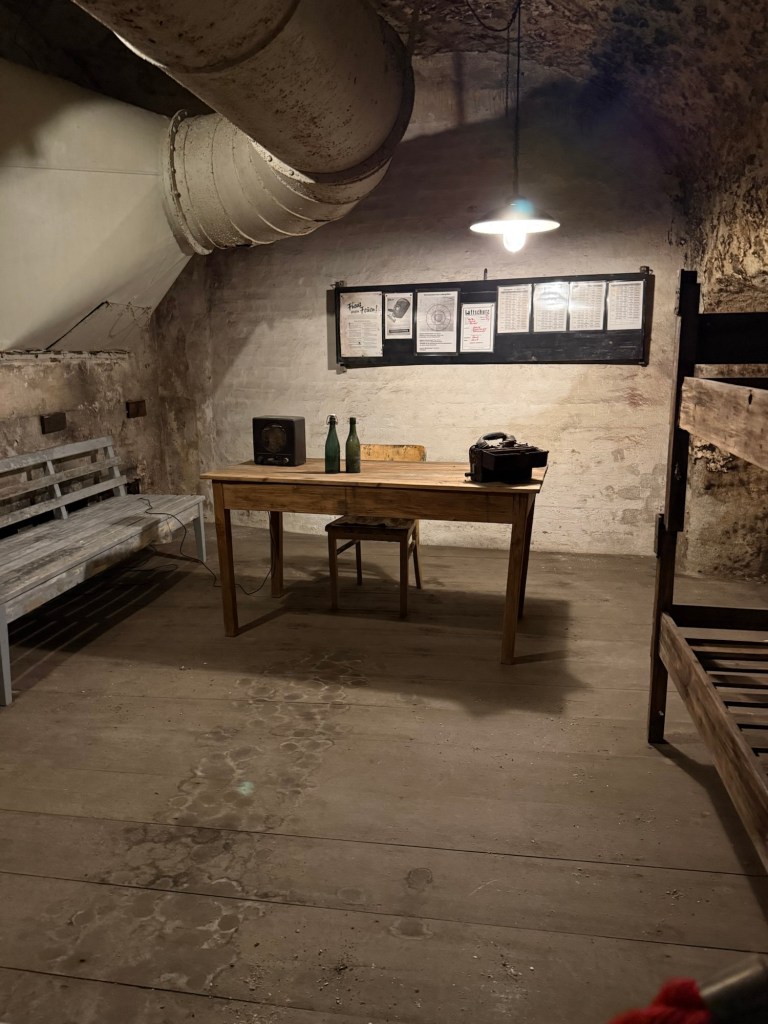
Nuremberg did a better job preparing for bombing during WWII than other German cities. Consequently, despite aggressive bombing by the Allies, the city lost far less residents than other cities. The city used its numerous underground beer storage sites to shelter both people and their artwork.
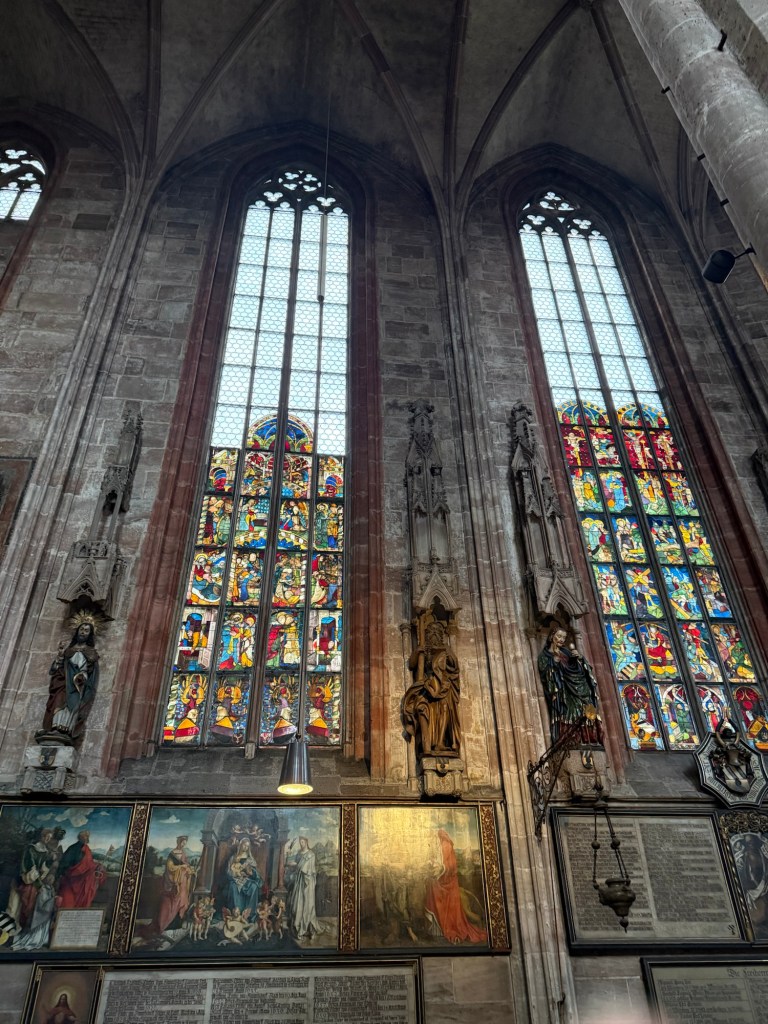
Luckily, we were able to take a tour of the places where the Nazis hid artwork during WWII, including stolen pieces. It was fascinating. Unlike the majority of Nuremberg’s buildings, these underground hiding spaces remained intact and safe from the bombings. One of the most miraculous things saved were all the stained glass windows from Saint Sebaldus. Much of the cathedral was damaged by the Allied bombing. After the war, the Germans rebuilt the cathedral and reinstalled the original glass panes.
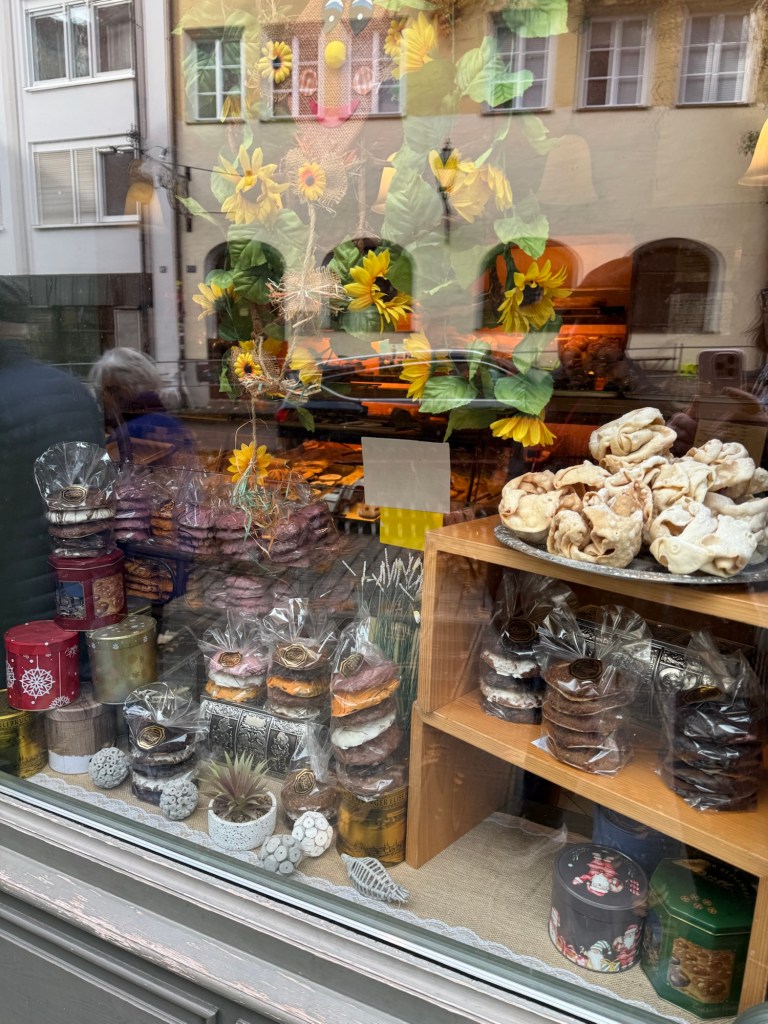
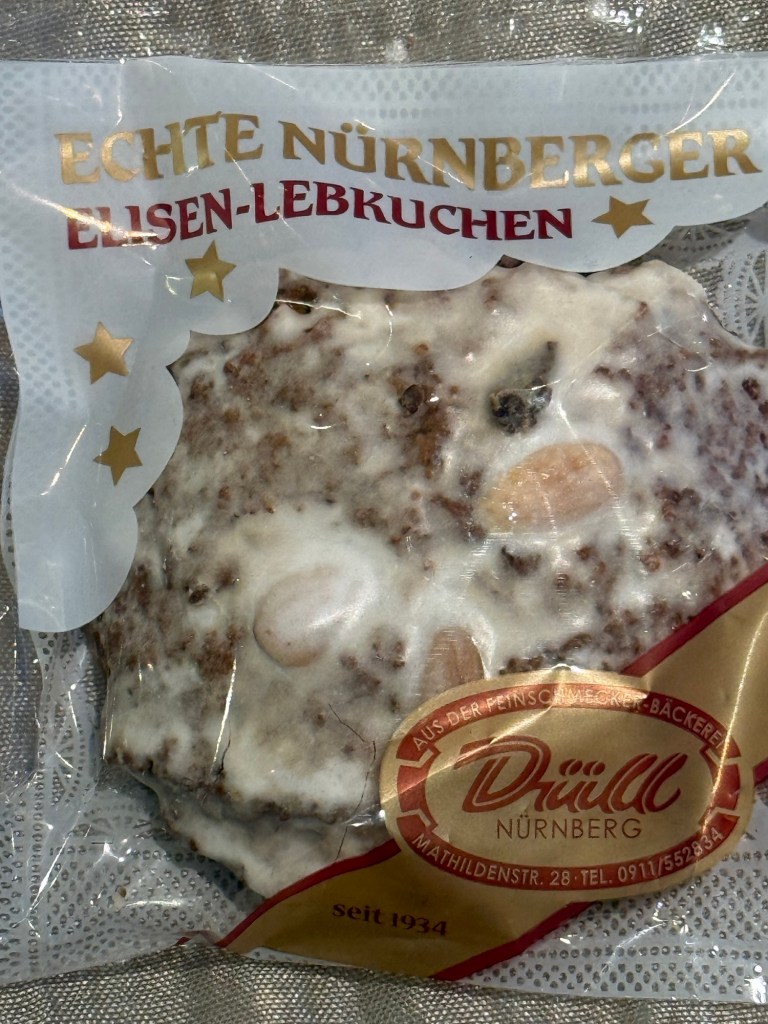
Unfortunately, we visited Nuremberg on a Sunday – In Germany, most stores are closed on Sundays. Luckily, two specialty stores for German gingerbread (more like a spice cookie) remain open on Sundays. The store we entered was packed with both local Germans and tourists. It was our only experience with an unhappy shop owner. Everywhere else has been so incredibly friendly. Most Germans not only speak English but do so with an American accent. As we travel along the rivers and canals, the German people have been so incredibly helpful and hospitable.
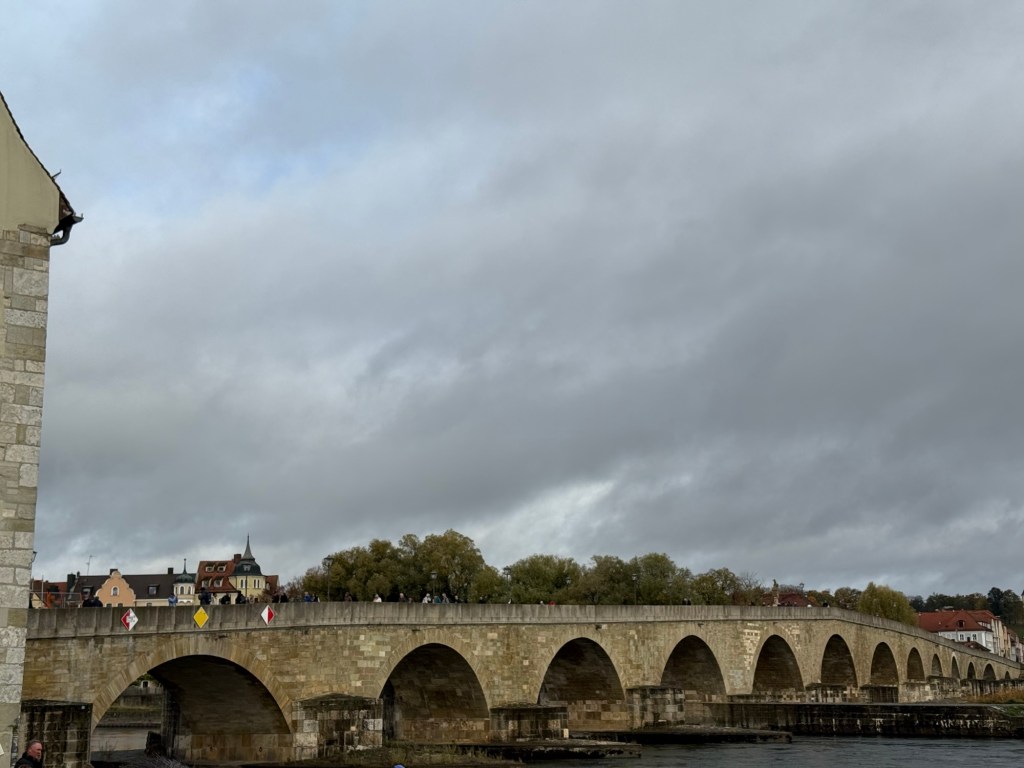
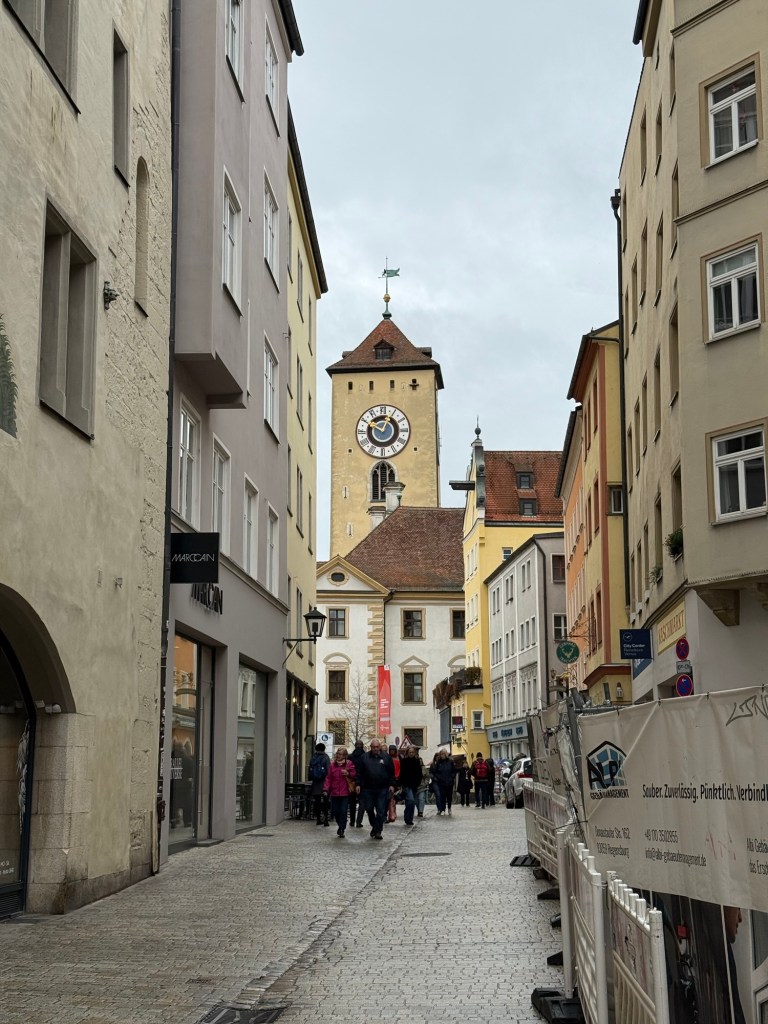
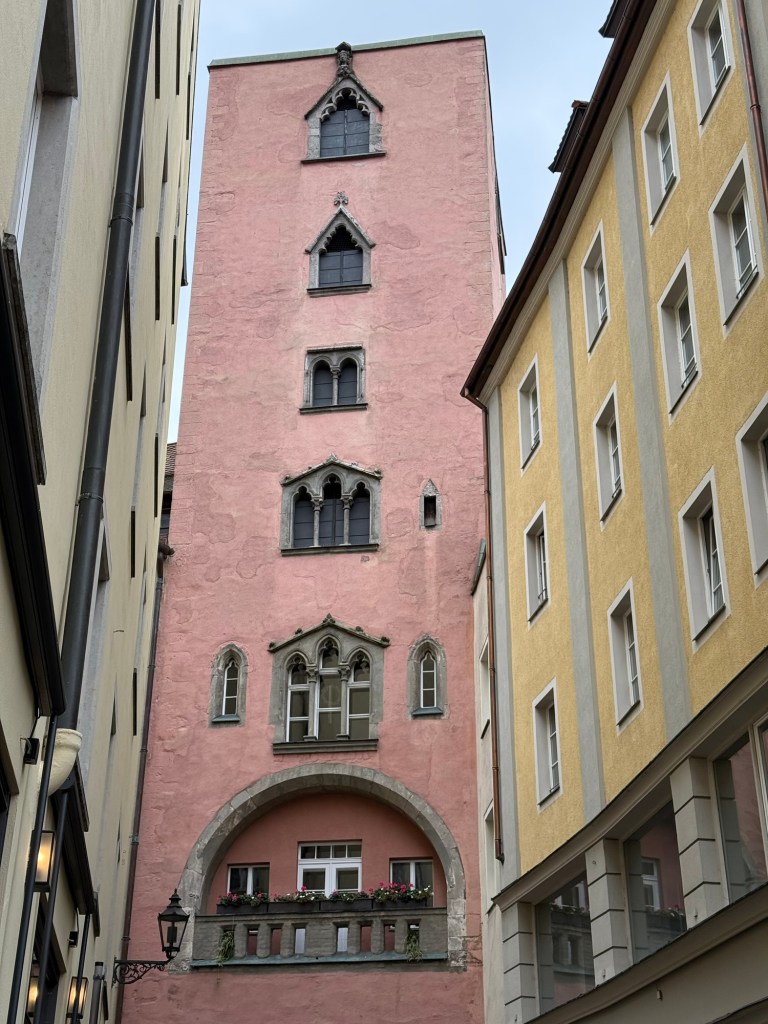
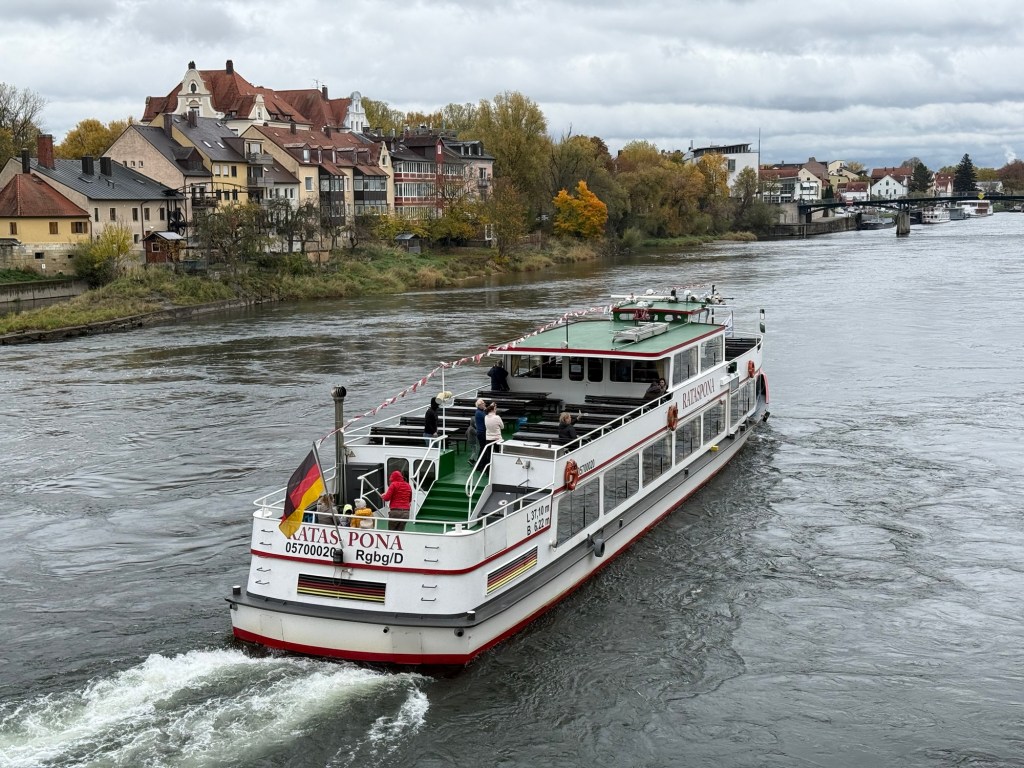
The minute we approached Regensburg, I knew I was in for a great experience. Luckily, Regensburg escaped bombing during WW II and most of the old buildings survived. For example, the Stone Bridge dates back to the 12th Century. My only disappointment was a certain amount of graffiti. This is not exclusive to Regensburg. We have spotted quite a bit of it in Vienna and Passau, too.
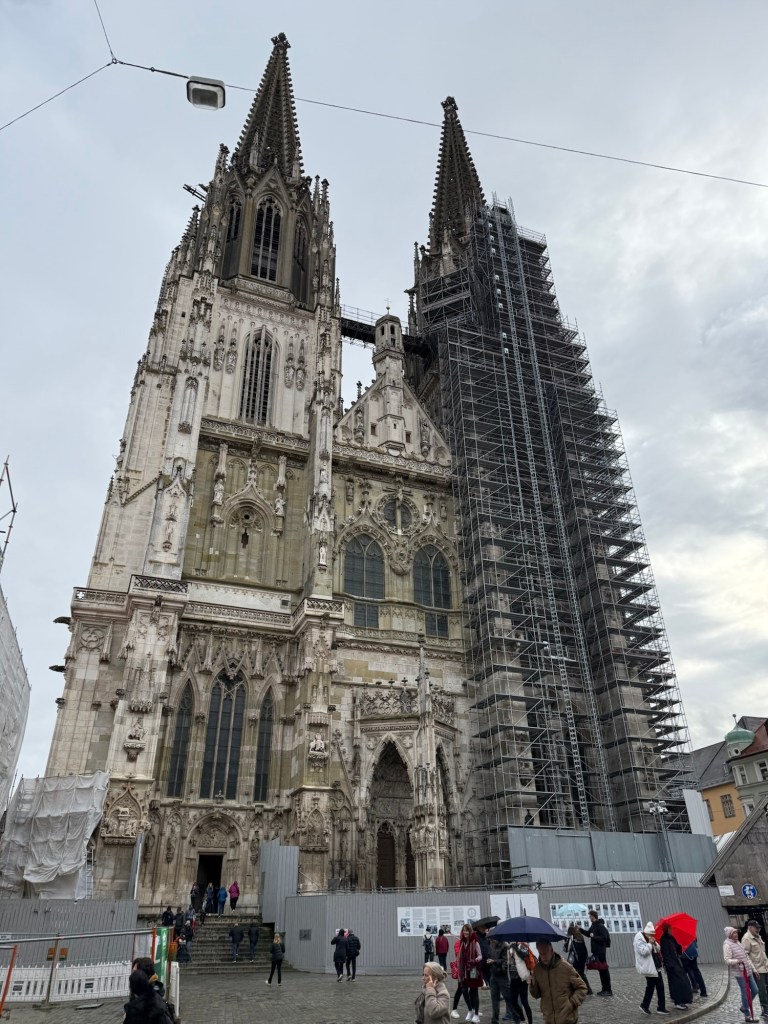
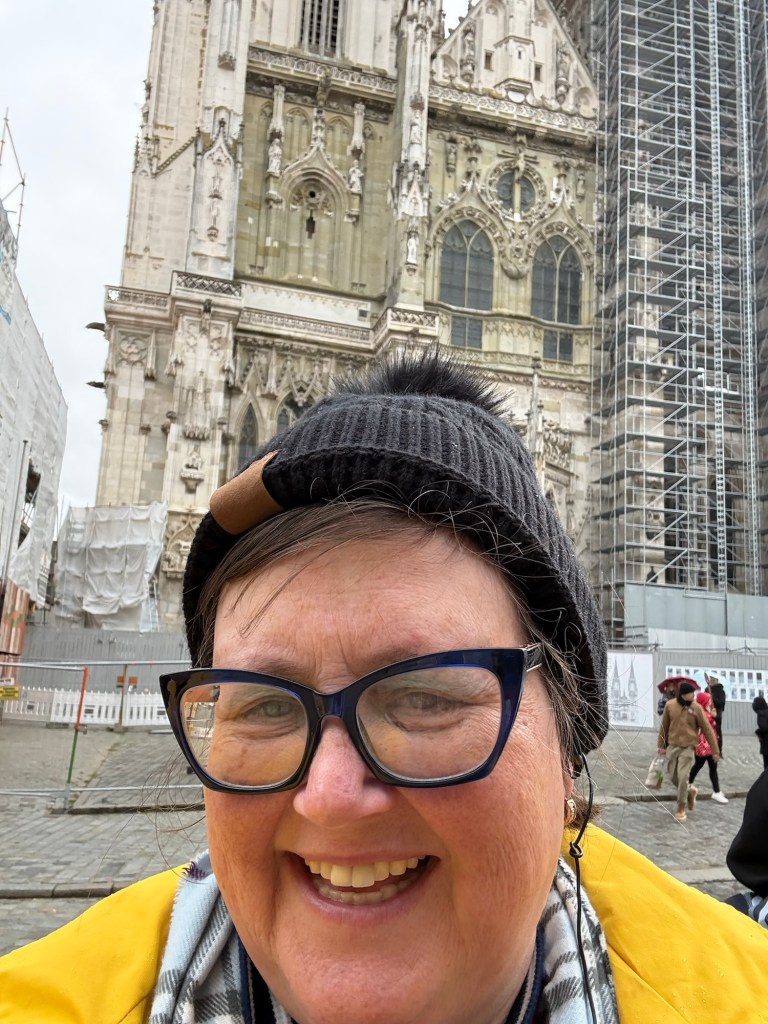
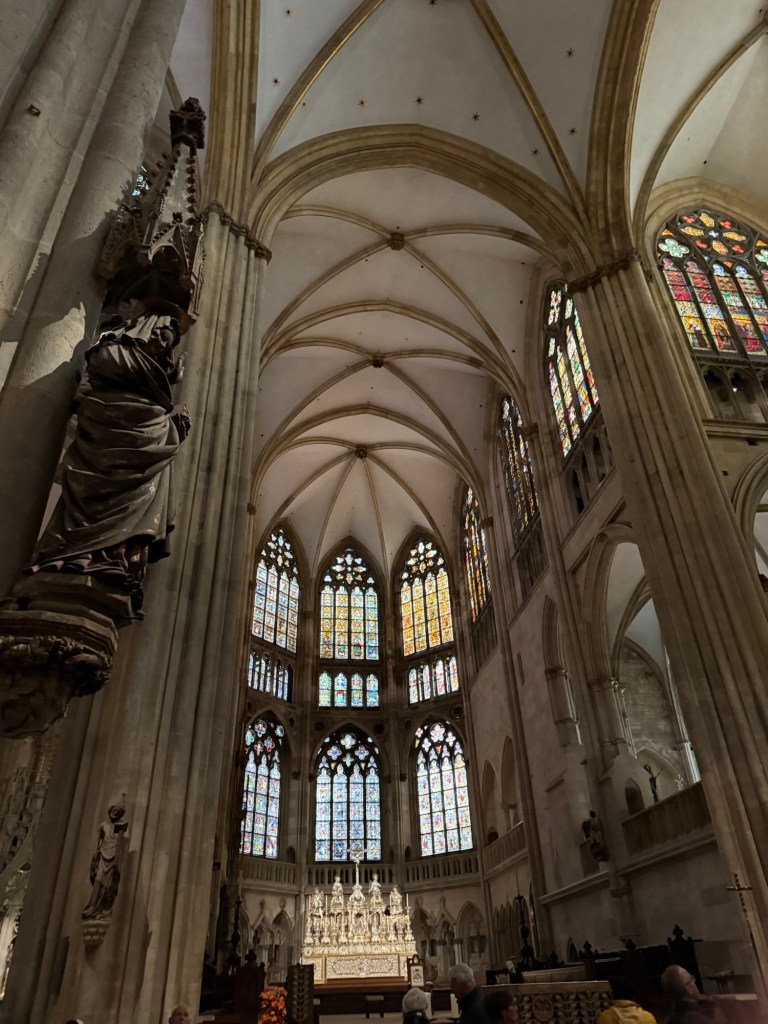
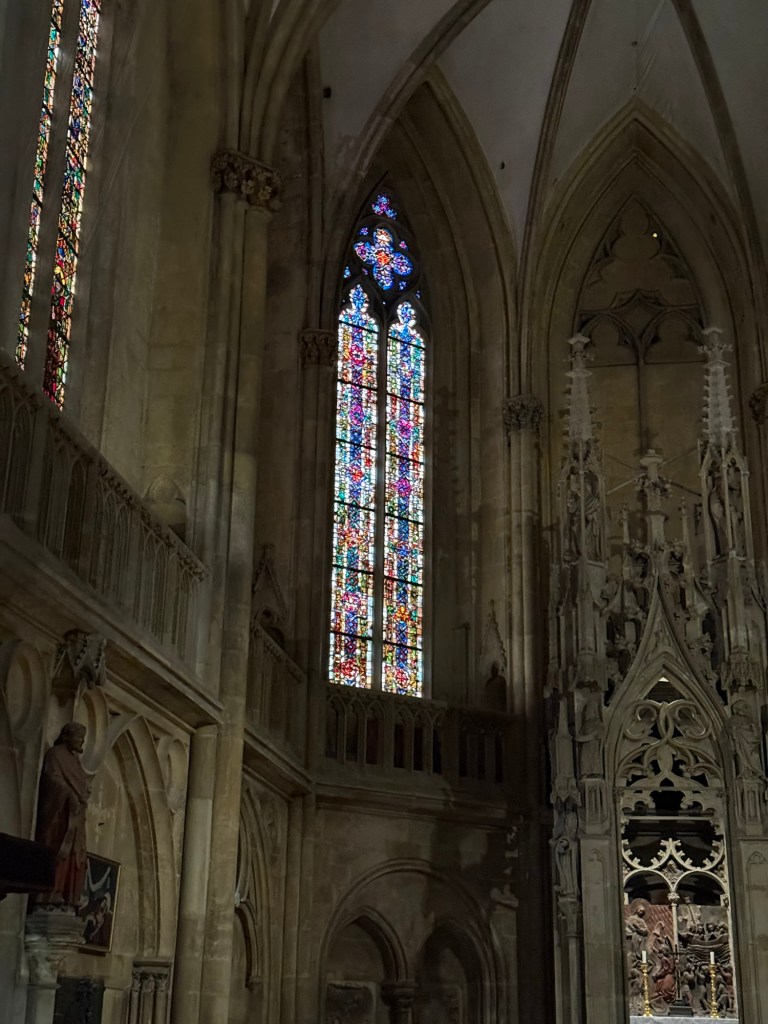
The cathedral is especially meaningful as it is the former home of the late Pope Benedict XVI. The cathedral has been under constant renovation with scaffolding surrounding the exterior for decades. Apparently, for the Pope’s visit to the cathedral the town temporarily removed the scaffolding for one week in 2006.
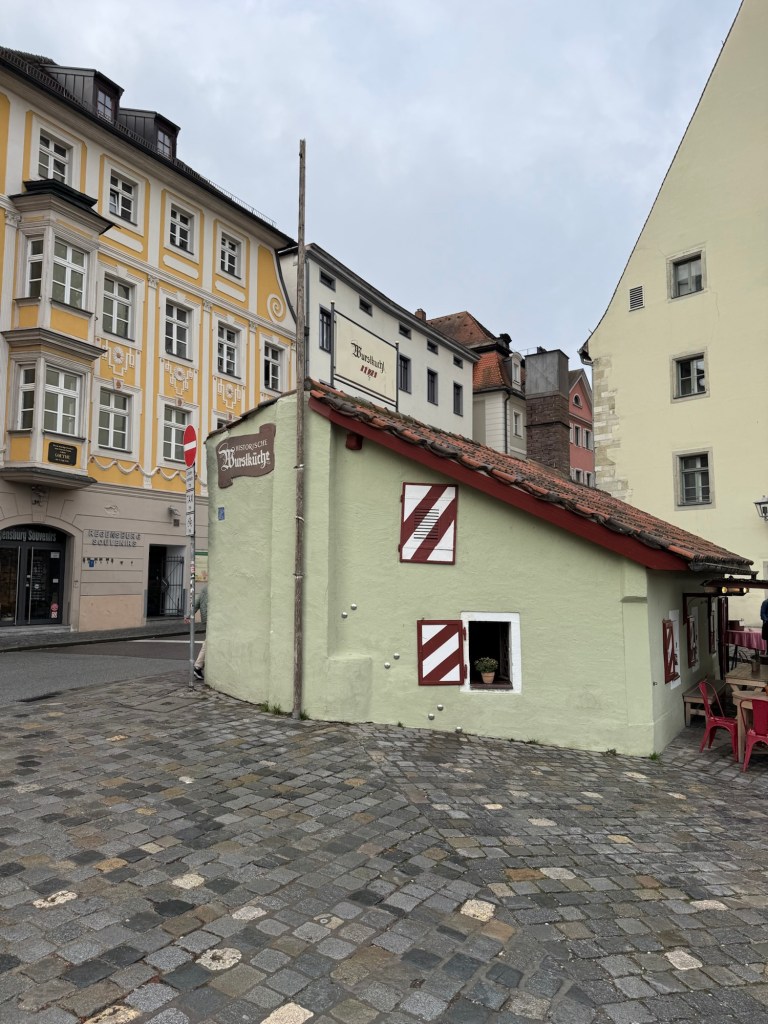
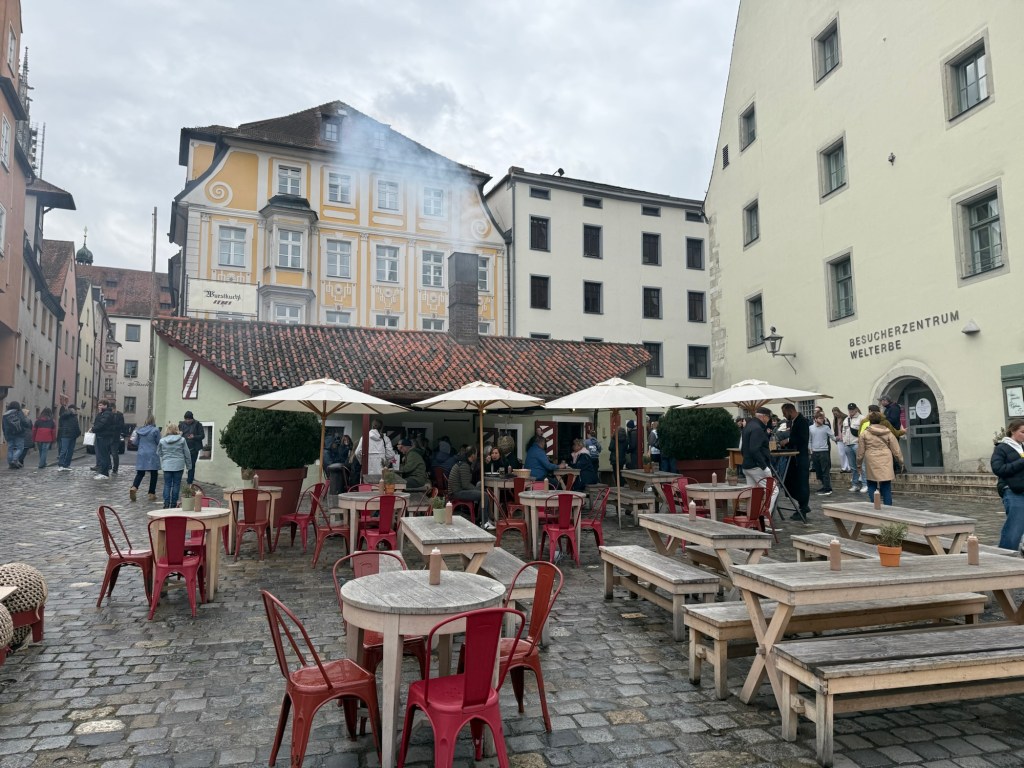
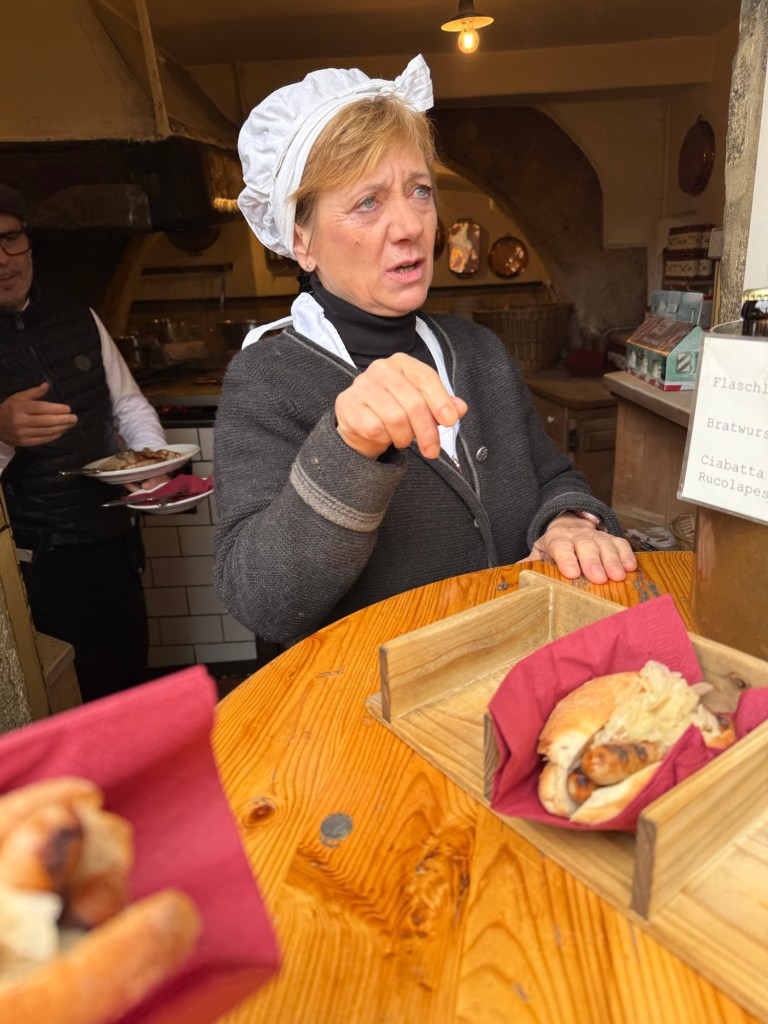
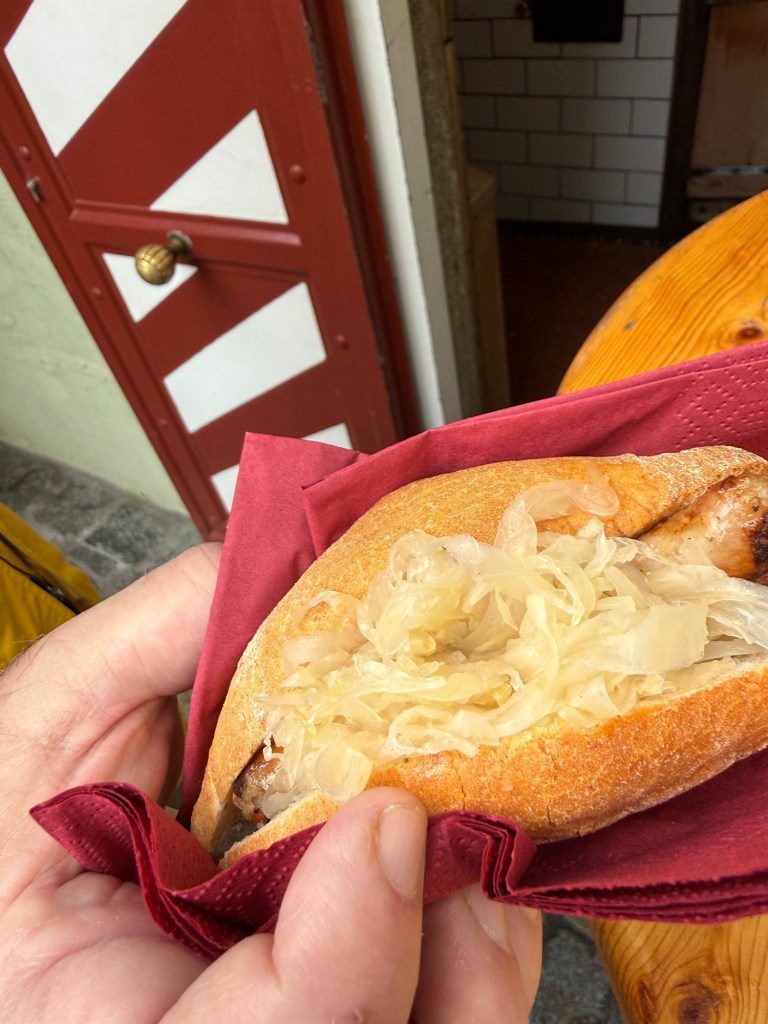
The highlight of the day was our visit to the Sausage Kitchen. The place has been in business for 900 years and, on average, the restaurant sells 6,000 sausages a day. We both ordered sausage sandwiches on rolls with sweet sauerkraut and the Sausage Kitchen’s amazing sweet mustard. We both agreed that it was the best version of this combination we’ve ever eaten. I was really excited to find bottles of this mustard for sale at a nearby store.
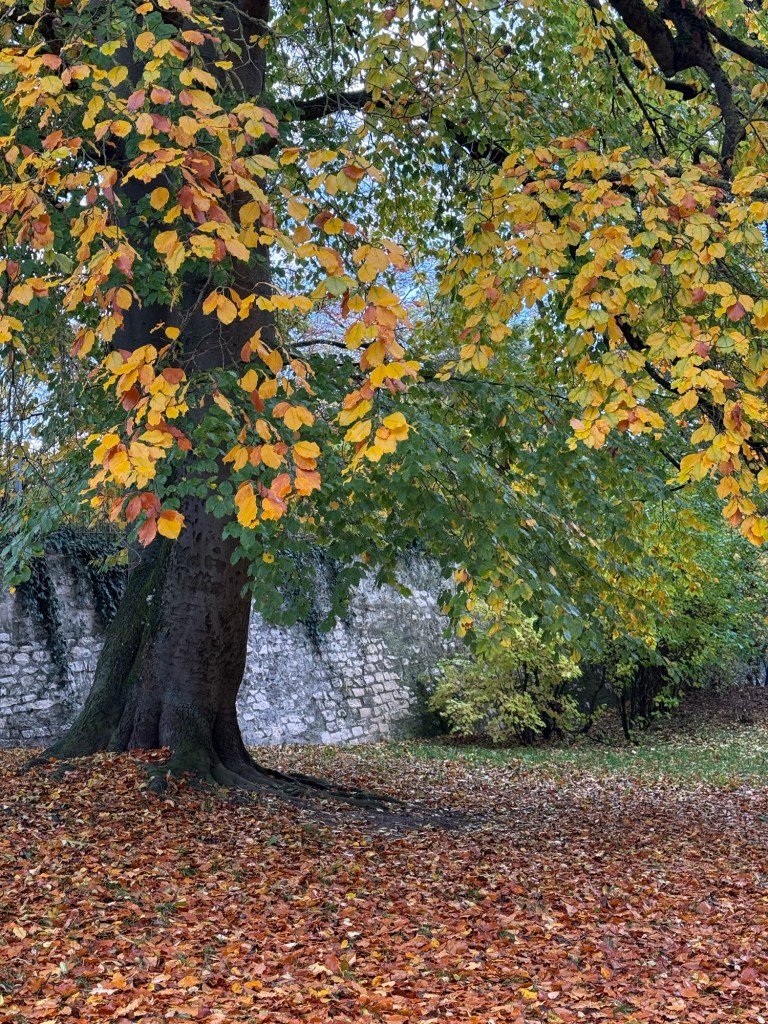
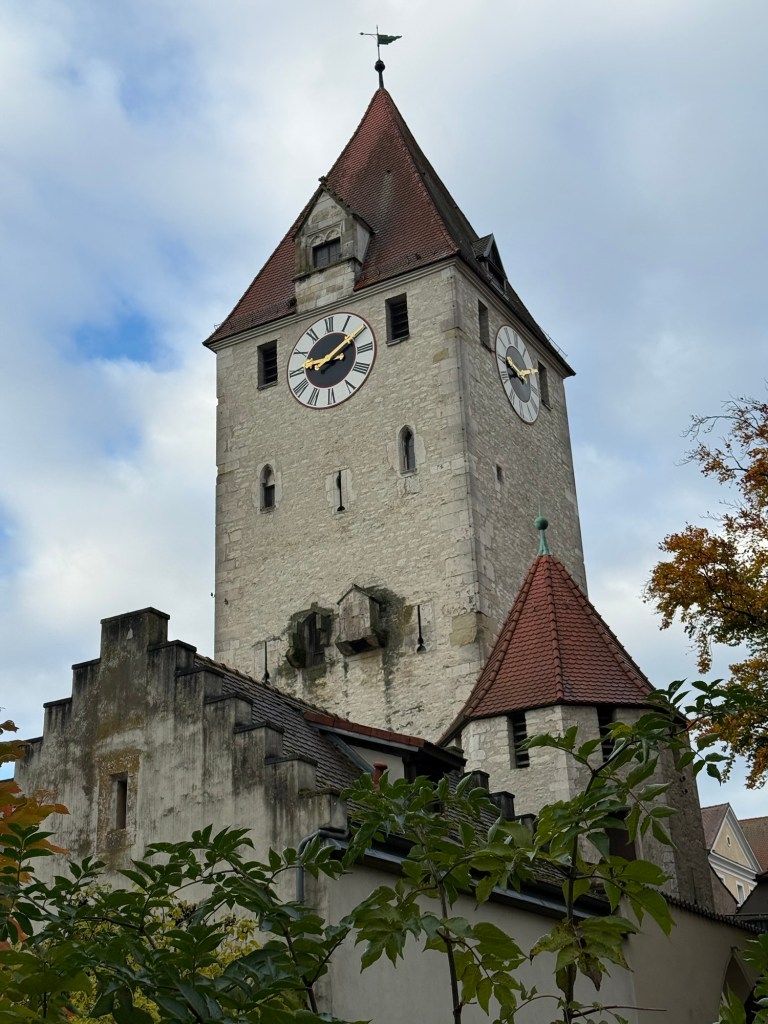
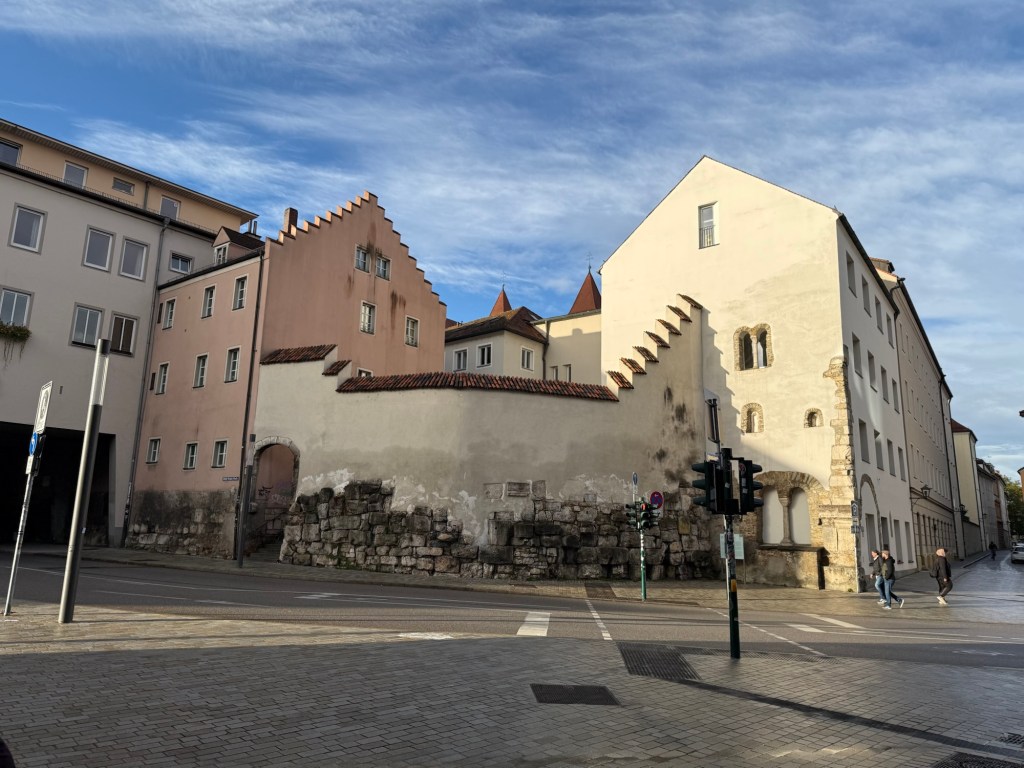
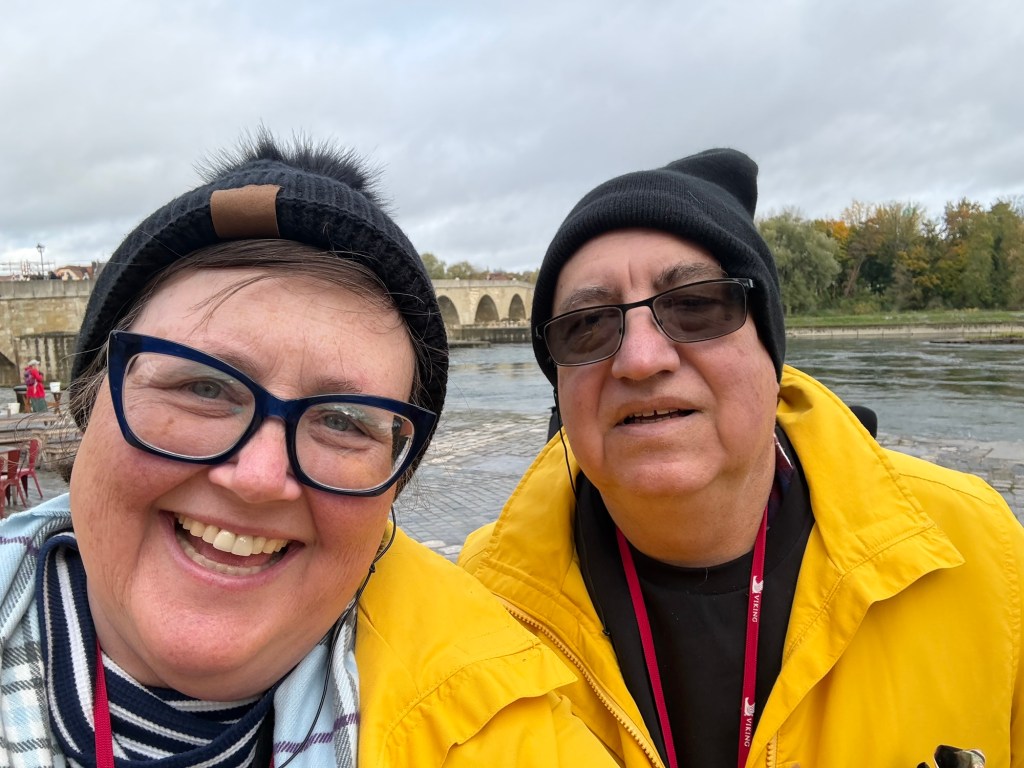
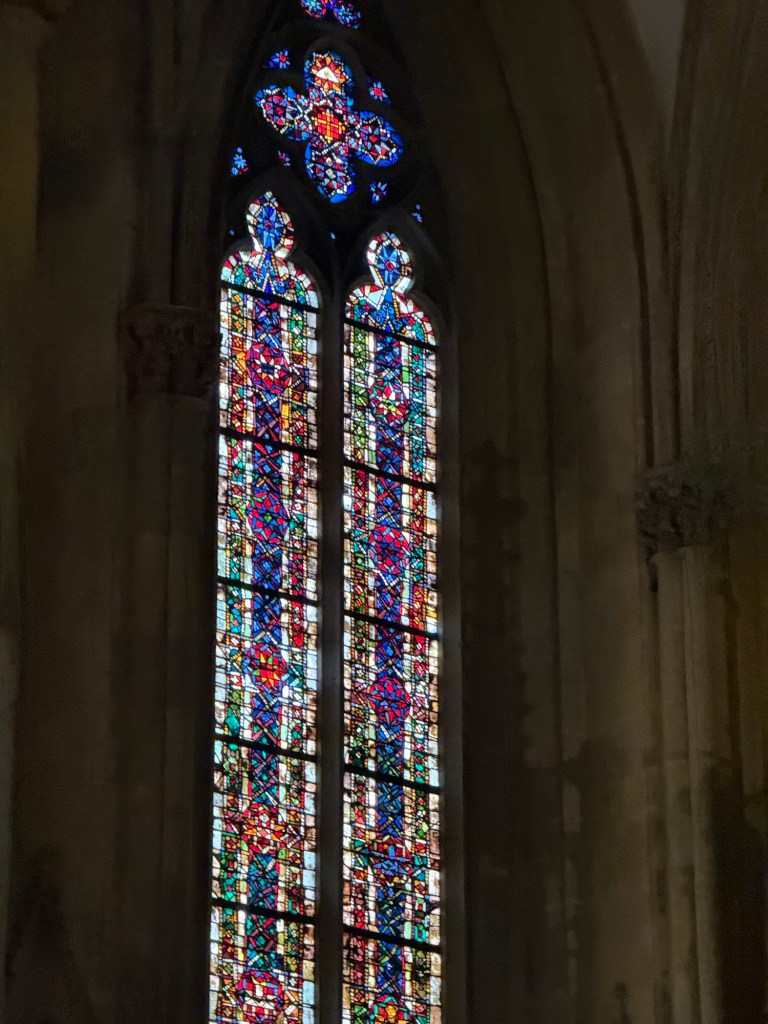
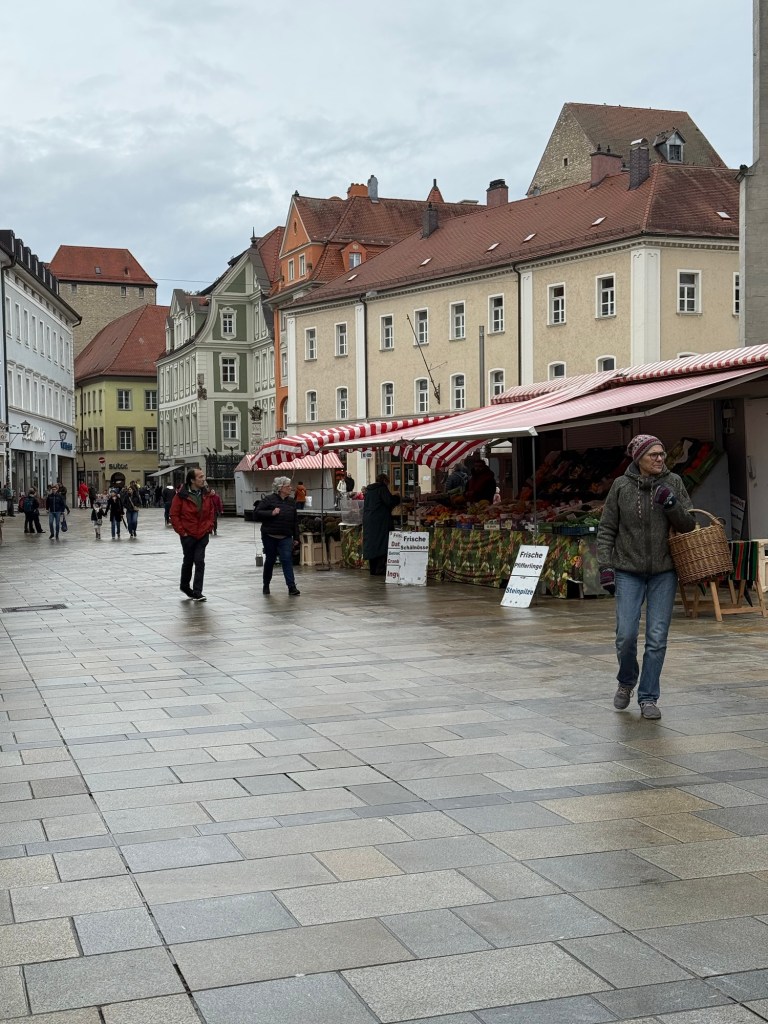
Amazing Fall Colors Beer House Structure with Part of the Old Roman Wall The 12th Century Stone Bridge Standing on a Bridge over the Danube The Famous Sausage Kitchen The Sausage Kitchen Ordering At the Sausage Kitchen The Sandwich At the Sausage Kitchen Chocolate – Ready for Christmas Quaint Part of Regensburg Very Old Nobility House Saint Peter’s Cathedral In Front of Saint Peters’s Interior of Saint Peters’s Interior of Saint Peters’s Interior of Saint Peters’s View from the Stone Bridge Market Stalls Near Saint Peters’s














































 NO time for boredom today